
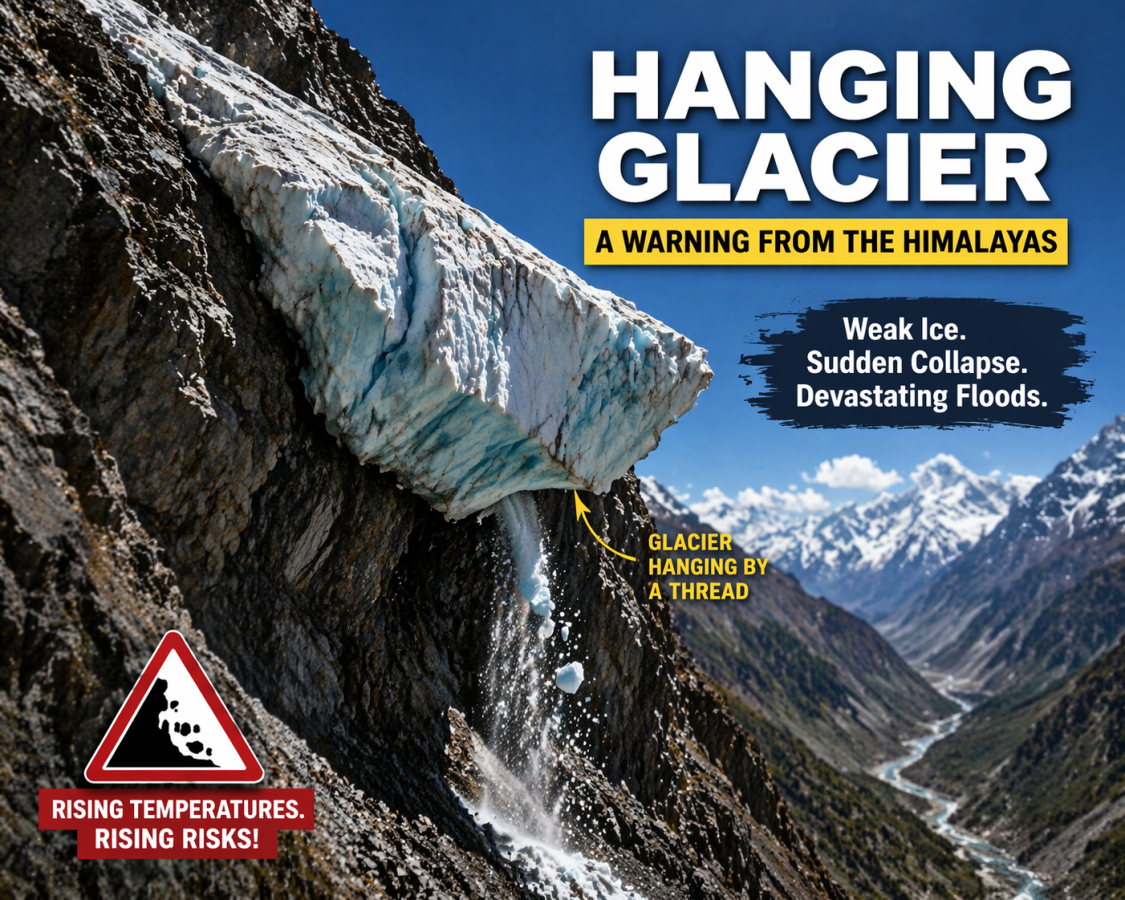
Hundreds of Himalayan glaciers are “hanging by a thread”—and their collapse could trigger deadly disasters. Here’s why it matters now.
The Himalayas are often called the “water towers of Asia” because they feed some of the largest rivers in the world. Millions of people depend on these rivers for drinking water, farming, and livelihoods. But a recent scientific finding has raised serious concerns: many glaciers in the Himalayas are becoming weak, unstable, and dangerous. These are now being called “hanging glaciers.”
In simple terms, a hanging glacier is a mass of ice that sits on steep mountain slopes and appears to cling to the rock, almost like it is hanging by a thread. Due to rising temperatures caused by climate change, these glaciers are becoming fragile. Large chunks of ice can suddenly break off, leading to disasters such as floods, avalanches, and landslides.
What the Study Found
Scientists studying the Alaknanda river basin in Uttarakhand have identified around 219 such unstable glacier fragments. These glaciers are located on steep slopes, making them more likely to collapse. What is even more worrying is that these fragile ice masses are increasing due to continuous warming in the region.
The Himalayas have been warming faster than the global average over the past few decades. This has caused glaciers to shrink, melt faster, and lose their stability. As a result, ice that was once firmly attached to mountains is now breaking apart.
Why Should We Be Concerned?
At first glance, glaciers may seem far away from our daily lives. But their impact is direct and serious. When a hanging glacier collapses, it can trigger a chain reaction. Ice falling from heights can cause avalanches, which may block rivers and create temporary lakes. These lakes can burst suddenly, leading to devastating floods downstream.
We have already seen such disasters. The 2021 Chamoli tragedy in Uttarakhand is one example, where a massive ice and rock avalanche caused destruction of infrastructure and loss of lives. Such events show how dangerous unstable glaciers can be.
Moreover, the number of people living in these mountain regions has increased significantly over the years. Towns, roads, and hydropower projects are being built close to glacier zones. This means more people and infrastructure are now at risk.
Impact on Environment and Society
Glaciers are not just frozen water; they are an essential part of the ecosystem. They regulate river flow, support biodiversity, and maintain the climate balance. When glaciers melt rapidly or collapse, it disrupts this balance.
For farmers, irregular water supply can damage crops. For cities, sudden floods can destroy homes and roads. For wildlife, changing temperatures can disturb habitats. In short, glacier instability affects both nature and human life.
There is also a long-term concern. If glaciers continue to melt, rivers may initially swell but later shrink, leading to water shortages. This can create serious problems for future generations.
What Does This Teach Us?
This situation teaches us an important lesson: climate change is not a distant problem—it is happening now, and its effects are visible. The weakening of glaciers is a clear warning sign that human activities are putting pressure on the environment.
It also shows that development must be planned carefully. Building infrastructure in sensitive mountain areas without proper study can increase risks. Scientific data must guide decisions to ensure safety.
What Can Be Done?
Addressing this issue requires action at multiple levels:
1. Reducing Climate Change:
The root cause of glacier weakening is global warming. Reducing greenhouse gas emissions by using clean energy, saving electricity, and promoting sustainable practices can help slow down warming.
2. Better Planning in Mountain Areas:
Construction projects in Himalayan regions should be carefully planned. Environmental impact assessments must be taken seriously.
3. Early Warning Systems:
Technology can help detect glacier movement and predict possible collapses. Early warning systems can save lives by giving people time to evacuate.
4. Public Awareness:
People need to understand the risks and take them seriously. Awareness campaigns can help communities prepare for disasters and adopt safer practices.
5. Scientific Research:
Continuous research is essential to monitor glaciers and understand their behavior. This will help governments make informed decisions.
Role of Environmentalists and Citizens
Environmentalists play a key role in spreading awareness and pushing for policy changes. But this is not just their responsibility. Every citizen can contribute by making environmentally friendly choices, such as reducing waste, conserving water, and supporting green initiatives.
Students and young people, especially, can become powerful voices for change. By learning about climate issues and spreading awareness, they can influence society and policymakers.
Final Take
The story of hanging glaciers in the Himalayas is not just about ice—it is about survival, safety, and responsibility. It reminds us that nature is delicate and must be respected. If we ignore these warning signs, the consequences can be severe.
But there is hope. With awareness, responsible action, and collective effort, we can reduce risks and protect our environment. The Himalayas are not just mountains; they are lifelines. Protecting them means protecting our future.
The Himalayas are often called the “water towers of Asia” because they feed some of the largest rivers in the world. Millions of people depend on these rivers for drinking water, farming, and livelihoods. But a recent scientific finding has raised serious concerns: many glaciers in the Himalayas are becoming weak, unstable, and dangerous. These are now being called “hanging glaciers.”
In simple terms, a hanging glacier is a mass of ice that sits on steep mountain slopes and appears to cling to the rock, almost like it is hanging by a thread. Due to rising temperatures caused by climate change, these glaciers are becoming fragile. Large chunks of ice can suddenly break off, leading to disasters such as floods, avalanches, and landslides.
What the Study Found
Scientists studying the Alaknanda river basin in Uttarakhand have identified around 219 such unstable glacier fragments. These glaciers are located on steep slopes, making them more likely to collapse. What is even more worrying is that these fragile ice masses are increasing due to continuous warming in the region.
The Himalayas have been warming faster than the global average over the past few decades. This has caused glaciers to shrink, melt faster, and lose their stability. As a result, ice that was once firmly attached to mountains is now breaking apart.
Why Should We Be Concerned?
At first glance, glaciers may seem far away from our daily lives. But their impact is direct and serious. When a hanging glacier collapses, it can trigger a chain reaction. Ice falling from heights can cause avalanches, which may block rivers and create temporary lakes. These lakes can burst suddenly, leading to devastating floods downstream.
We have already seen such disasters. The 2021 Chamoli tragedy in Uttarakhand is one example, where a massive ice and rock avalanche caused destruction of infrastructure and loss of lives. Such events show how dangerous unstable glaciers can be.
Moreover, the number of people living in these mountain regions has increased significantly over the years. Towns, roads, and hydropower projects are being built close to glacier zones. This means more people and infrastructure are now at risk.
Impact on Environment and Society
Glaciers are not just frozen water; they are an essential part of the ecosystem. They regulate river flow, support biodiversity, and maintain the climate balance. When glaciers melt rapidly or collapse, it disrupts this balance.
For farmers, irregular water supply can damage crops. For cities, sudden floods can destroy homes and roads. For wildlife, changing temperatures can disturb habitats. In short, glacier instability affects both nature and human life.
There is also a long-term concern. If glaciers continue to melt, rivers may initially swell but later shrink, leading to water shortages. This can create serious problems for future generations.
What Does This Teach Us?
This situation teaches us an important lesson: climate change is not a distant problem—it is happening now, and its effects are visible. The weakening of glaciers is a clear warning sign that human activities are putting pressure on the environment.
It also shows that development must be planned carefully. Building infrastructure in sensitive mountain areas without proper study can increase risks. Scientific data must guide decisions to ensure safety.
What Can Be Done?
Addressing this issue requires action at multiple levels:
1. Reducing Climate Change:
The root cause of glacier weakening is global warming. Reducing greenhouse gas emissions by using clean energy, saving electricity, and promoting sustainable practices can help slow down warming.
2. Better Planning in Mountain Areas:
Construction projects in Himalayan regions should be carefully planned. Environmental impact assessments must be taken seriously.
3. Early Warning Systems:
Technology can help detect glacier movement and predict possible collapses. Early warning systems can save lives by giving people time to evacuate.
4. Public Awareness:
People need to understand the risks and take them seriously. Awareness campaigns can help communities prepare for disasters and adopt safer practices.
5. Scientific Research:
Continuous research is essential to monitor glaciers and understand their behavior. This will help governments make informed decisions.
Role of Environmentalists and Citizens
Environmentalists play a key role in spreading awareness and pushing for policy changes. But this is not just their responsibility. Every citizen can contribute by making environmentally friendly choices, such as reducing waste, conserving water, and supporting green initiatives.
Students and young people, especially, can become powerful voices for change. By learning about climate issues and spreading awareness, they can influence society and policymakers.
Final Take
The story of hanging glaciers in the Himalayas is not just about ice—it is about survival, safety, and responsibility. It reminds us that nature is delicate and must be respected. If we ignore these warning signs, the consequences can be severe.
But there is hope. With awareness, responsible action, and collective effort, we can reduce risks and protect our environment. The Himalayas are not just mountains; they are lifelines. Protecting them means protecting our future.





















Leave a Comment