
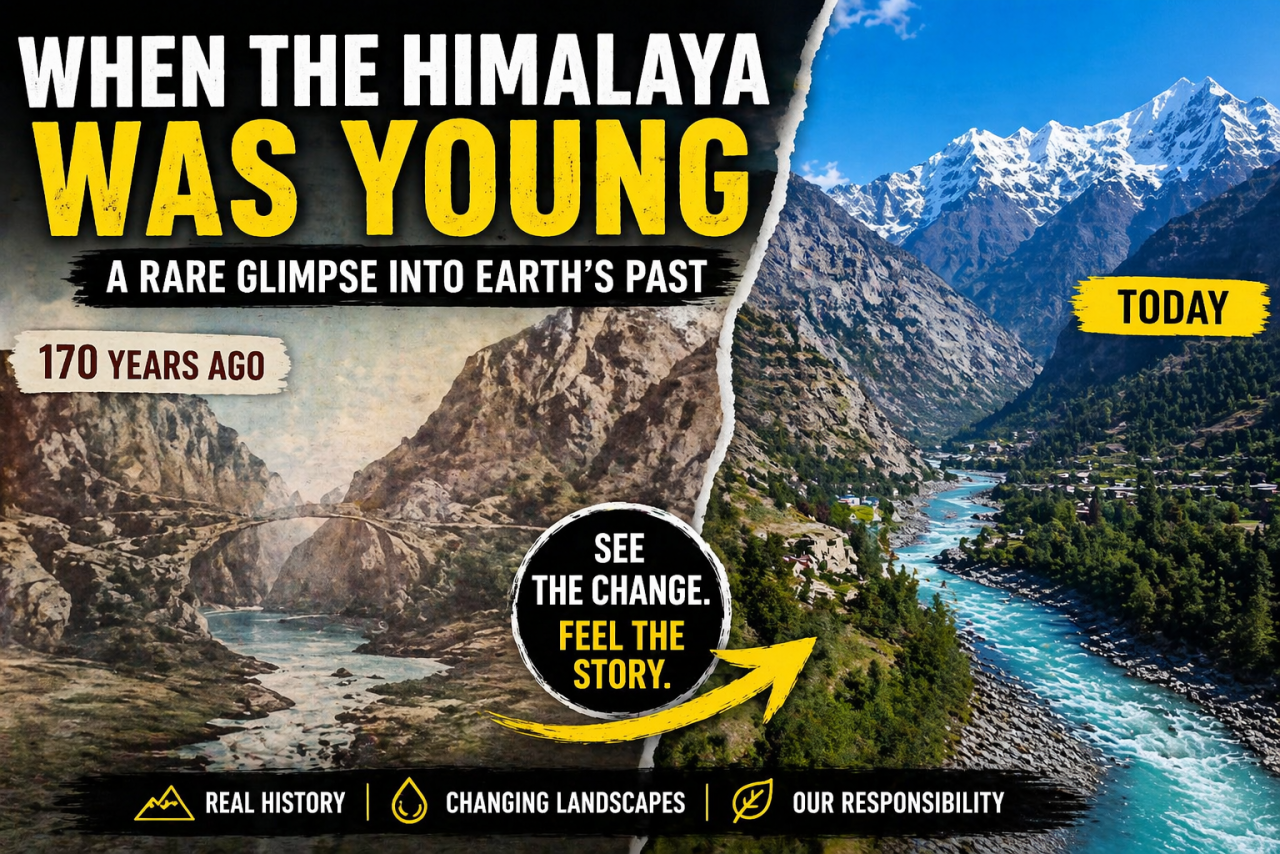
What did the Himalaya look like 170 years ago—and what does that reveal about the changes we can no longer ignore?
A quiet shift in how we see nature is taking place. A recent display has brought forward an image of the Himalaya from around 170 years ago. This is not just a photograph. It is a window into a past that most people have never seen. It allows us to compare what the mountains were and what they have become today.
The Himalaya is often viewed as timeless. Many believe it has always looked the same. This idea is comforting but not accurate. The new display challenges that belief. It shows a landscape that was raw and less altered. The valleys looked wider. The river paths seemed different. The slopes had fewer signs of human presence. This older image reminds us that even the strongest features of Earth are not fixed.
The importance of this display goes beyond curiosity. It helps us understand change. Over the last two centuries, the Himalaya has faced both natural and human pressure. Glaciers have receded. Forest cover has changed. Roads and towns have expanded. These shifts are not always easy to notice in daily life. A historical image makes the change visible in a clear way.
There is also a scientific value in such material. Researchers can study old images to track long-term patterns. They can compare river paths. They can examine glacier size. They can also look at erosion levels. This helps in building better climate models. It also supports planning for future risks such as landslides and floods.
The display also raises a question about memory. How do we remember landscapes that keep changing? Written records can describe a place. Paintings can capture a mood. Photographs bring a sense of reality. When we see an image from the past, we connect with it more directly. It becomes easier to understand what has been lost or transformed.
Another layer to this story is cultural. The Himalaya is not just a physical feature. It is a symbol in many traditions. It appears in stories, beliefs, and literature. When we see how it looked in the past, we also think about how people experienced it. The mountains shaped their lives. They influenced travel, trade, and spiritual practices. A visual record adds depth to this connection.
At the same time, we should not treat the past as perfect. The older Himalaya was not free from challenges. Nature has always been dynamic. Landslides, floods, and harsh weather were part of life. What has changed is the scale and speed of impact. Human activity has increased pressure on fragile zones. This makes the comparison between past and present more urgent.
The display also invites reflection on responsibility. If we can see change so clearly, we cannot ignore it. Awareness should lead to action. Protecting mountain ecosystems is not only about saving beauty. It is about securing water sources and biodiversity. It is also about protecting communities that depend on these regions.
Education plays a key role here. When students and young readers engage with such material, they learn to think critically. They understand that history is not limited to human events. It includes natural history as well. This builds a broader sense of awareness. It also encourages respect for the environment.
In the end, this rare glimpse of the Himalaya from 170 years ago is more than an exhibit. It is a reminder that change is constant. It shows that even the tallest mountains are part of an ongoing story. The image asks us to look closer at our present. It also urges us to think about the future we are shaping.
The Himalaya may still stand tall. Its peaks may still inspire awe. Yet its story is evolving. By learning from the past, we can make wiser choices today. This is the true value of looking back.
A quiet shift in how we see nature is taking place. A recent display has brought forward an image of the Himalaya from around 170 years ago. This is not just a photograph. It is a window into a past that most people have never seen. It allows us to compare what the mountains were and what they have become today.
The Himalaya is often viewed as timeless. Many believe it has always looked the same. This idea is comforting but not accurate. The new display challenges that belief. It shows a landscape that was raw and less altered. The valleys looked wider. The river paths seemed different. The slopes had fewer signs of human presence. This older image reminds us that even the strongest features of Earth are not fixed.
The importance of this display goes beyond curiosity. It helps us understand change. Over the last two centuries, the Himalaya has faced both natural and human pressure. Glaciers have receded. Forest cover has changed. Roads and towns have expanded. These shifts are not always easy to notice in daily life. A historical image makes the change visible in a clear way.
There is also a scientific value in such material. Researchers can study old images to track long-term patterns. They can compare river paths. They can examine glacier size. They can also look at erosion levels. This helps in building better climate models. It also supports planning for future risks such as landslides and floods.
The display also raises a question about memory. How do we remember landscapes that keep changing? Written records can describe a place. Paintings can capture a mood. Photographs bring a sense of reality. When we see an image from the past, we connect with it more directly. It becomes easier to understand what has been lost or transformed.
Another layer to this story is cultural. The Himalaya is not just a physical feature. It is a symbol in many traditions. It appears in stories, beliefs, and literature. When we see how it looked in the past, we also think about how people experienced it. The mountains shaped their lives. They influenced travel, trade, and spiritual practices. A visual record adds depth to this connection.
At the same time, we should not treat the past as perfect. The older Himalaya was not free from challenges. Nature has always been dynamic. Landslides, floods, and harsh weather were part of life. What has changed is the scale and speed of impact. Human activity has increased pressure on fragile zones. This makes the comparison between past and present more urgent.
The display also invites reflection on responsibility. If we can see change so clearly, we cannot ignore it. Awareness should lead to action. Protecting mountain ecosystems is not only about saving beauty. It is about securing water sources and biodiversity. It is also about protecting communities that depend on these regions.
Education plays a key role here. When students and young readers engage with such material, they learn to think critically. They understand that history is not limited to human events. It includes natural history as well. This builds a broader sense of awareness. It also encourages respect for the environment.
In the end, this rare glimpse of the Himalaya from 170 years ago is more than an exhibit. It is a reminder that change is constant. It shows that even the tallest mountains are part of an ongoing story. The image asks us to look closer at our present. It also urges us to think about the future we are shaping.
The Himalaya may still stand tall. Its peaks may still inspire awe. Yet its story is evolving. By learning from the past, we can make wiser choices today. This is the true value of looking back.
























Leave a Comment