
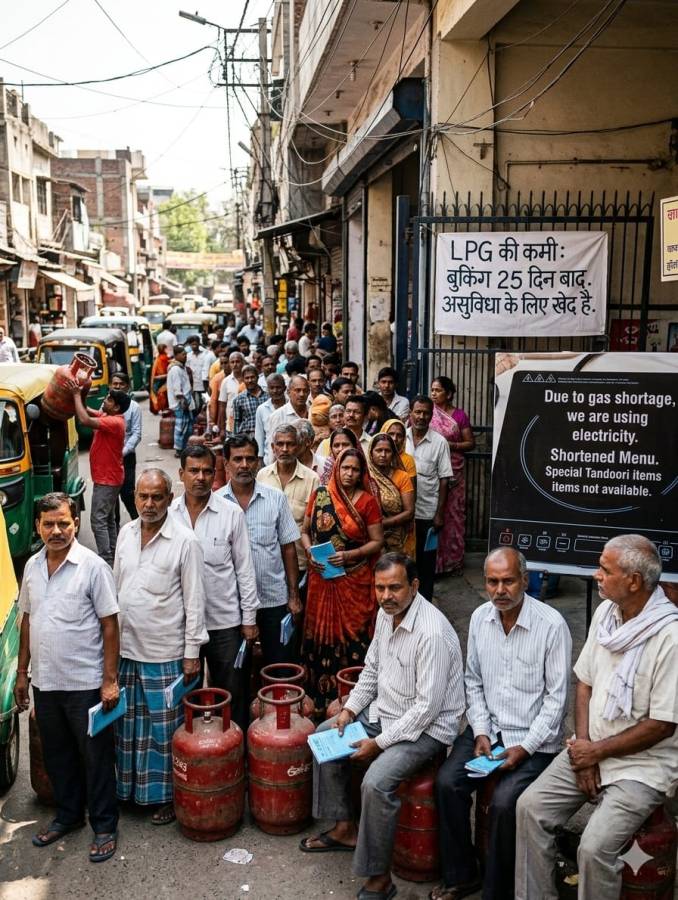
Across India, a silent kitchen crisis is unfolding. Restaurants are cutting popular dishes, factories are slowing production, and households are waiting weeks for a simple LPG refill. As supply disruptions linked to tensions in West Asia tighten the flow of cooking gas, the shortage is beginning to reshape how India cooks, eats, and runs its daily life.
The current energy landscape in India is facing a significant challenge as a shortage of liquefied petroleum gas (LPG) worsens across the country. This crisis is affecting various sectors, from the hospitality industry and large-scale manufacturing to individual households. The primary cause of this disruption is linked to ongoing geopolitical conflicts, particularly in West Asia, which have severely impacted the supply chain of commercial and domestic LPG cylinders.
Impact on the Restaurant Industry
One of the hardest-hit sectors is the restaurant industry. Establishments across major cities like Delhi, Mumbai, and Bengaluru are struggling to maintain their regular operations. Restaurant owners report that they are receiving significantly fewer commercial LPG cylinders than they require. For example, a restaurant that typically needs three cylinders a day is now lucky to receive one every few days.
To cope with this shortage, many eateries have been forced to "tweak" their menus. High-flame cooking, which is essential for many Asian and Indian dishes to achieve a specific flavor and texture, is being curtailed. Some restaurants have stopped serving popular items like tandoori dishes or certain stir-fries because they cannot maintain the necessary heat levels.
Furthermore, many establishments are shifting toward alternative energy sources. There is an increasing reliance on electric inductions and ovens. However, many chefs argue that electric cooking cannot replicate the "smoky" intensity that gas-fired cooking provides. In some regions, restaurants have even resorted to using charcoal, though this is often restricted by local environmental and municipal regulations. In extreme cases, smaller restaurants that cannot afford to transition to electric equipment are facing temporary closures.
Challenges for the Manufacturing Sector
The crisis is not limited to food service; it has also hit the industrial sector hard. In states like Gujarat, the ceramic industry—which is heavily dependent on natural gas and LPG—is seeing a slowdown. Several factories in hubs like Morbi have reportedly shut down or reduced production due to the non-availability of fuel.
Similarly, in Rajasthan, industries involved in the production of sanitaryware and glass are facing delays. The lack of fuel doesn't just halt machinery; it threatens the livelihoods of thousands of laborers. When factories stop running, workers are often asked to go on leave without pay, creating a ripple effect of financial instability for many families.
Domestic Struggles and Household Panic
For the average citizen, the shortage has manifested as longer waiting periods and stricter rationing. The government and oil marketing companies have increased the minimum waiting period for booking a domestic LPG refill. In many regions, this waiting period has been extended from the usual few days to 25 days or more.
This delay has sparked panic among households, especially large families. People are worried about running out of fuel before their next refill is scheduled to arrive. In several cities, long queues are seen outside LPG agencies as citizens try to book their cylinders in person, fearing that online booking systems are not reflecting the true gravity of the shortage.
To manage the limited supply, authorities are prioritizing domestic users over commercial ones, but the backlog remains high. Some families have started using induction stoves to supplement their cooking, though this has led to higher electricity bills. In urban hostels and paying guest accommodations, the situation is particularly dire, as hundreds of students and working professionals rely on a limited number of cylinders for their daily meals.
Official Response and Measures
Government officials and oil company representatives are working to manage the crisis. The National Restaurant Association of India (NRAI) has issued advisories to its members to adopt fuel conservation measures. This includes prioritizing dishes that require lower gas usage, using shorter cooking cycles, and ensuring that kitchen staff are trained to avoid wasting fuel.
Oil marketing companies are also being directed to increase production where possible and streamline distribution. However, they acknowledge that the supply chain disruptions are largely due to external factors beyond their immediate control. They have urged the public not to panic-buy or hoard cylinders, as this only worsens the shortage for others.
Final Take
The worsening LPG shortage in India highlights the country’s vulnerability to global geopolitical shifts. While the government is taking steps to prioritize domestic needs and encourage fuel conservation, the strain on the economy is evident. Restaurants are losing business, industries are halting production, and households are facing daily uncertainty. Until the global supply chain stabilizes, the focus remains on "tweaking" consumption habits and finding temporary alternatives to navigate this energy crunch.
















Leave a Comment