
They build the nation’s growth story, yet struggle to build their own lives—India’s factory workers remain trapped in low wages and deep insecurity.
India’s manufacturing sector is often described as a key driver of economic growth. It creates jobs and supports exports. Yet, behind this image lies a difficult truth. Factory workers, who form the backbone of this sector, continue to face low wages and weak job security. The data presented in the report shows a troubling picture of their everyday reality.
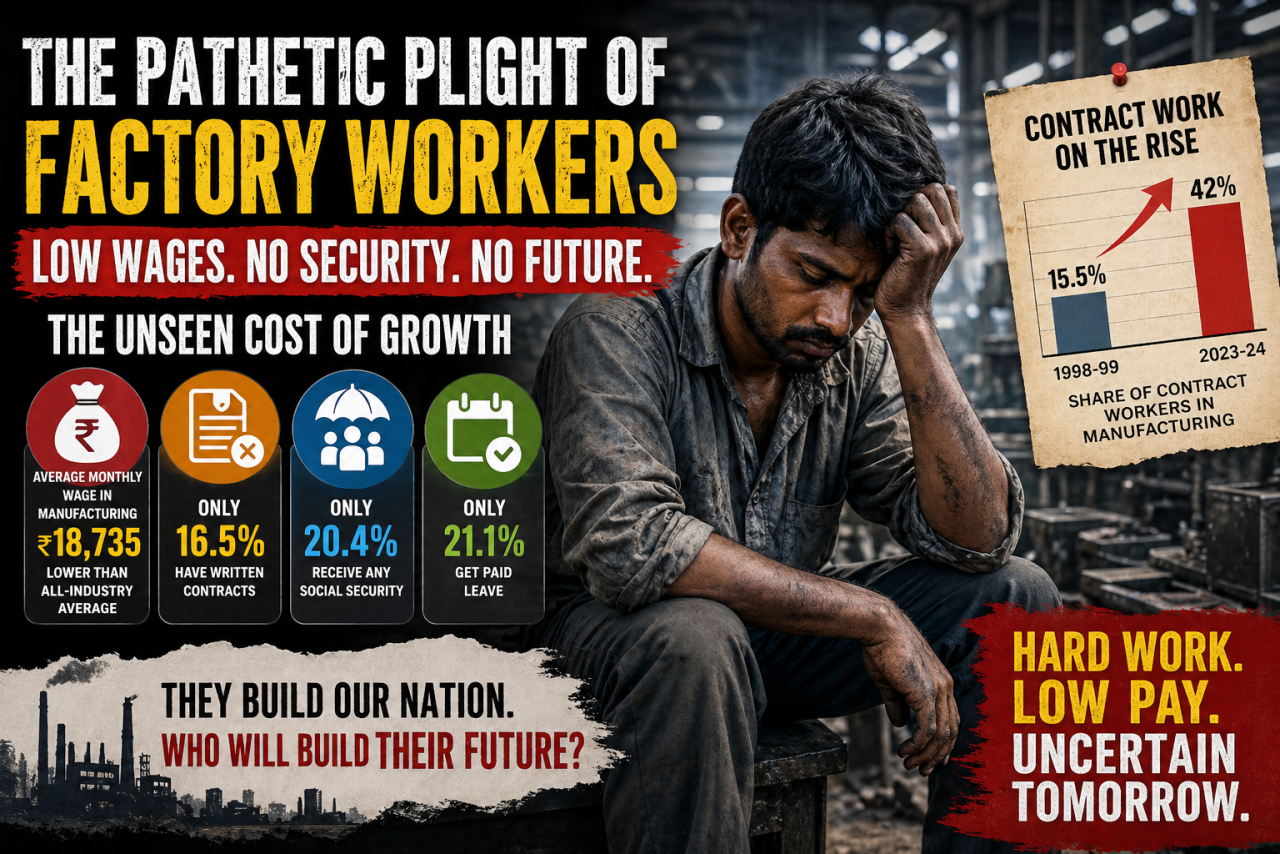
One of the most striking facts is the level of wages. A manufacturing worker earns an average monthly salary of about ₹18,735. This is lower than the average salary of ₹22,699 earned by workers across all industries. Even more concerning is the fact that a salary of ₹22,500 places a manufacturing worker among the top 20 percent of earners in this sector. This clearly shows how low the general wage levels are. For many workers, even basic needs become difficult to meet.
The situation becomes worse when we look at the distribution of wages. Workers in the lower deciles earn extremely small amounts. At the bottom level, wages can be as low as ₹7,000 to ₹10,000 per month. These numbers reflect a life of constant financial stress. Rising costs of food, rent, and healthcare make survival a daily challenge. There is little scope for savings or future planning.
Another major concern is the lack of job security. A large number of factory workers do not have written contracts. Only about 16.5 percent of manufacturing workers have formal contracts. This means that most workers are employed informally. They can lose their jobs at any time. There is no clear agreement on wages, working hours, or conditions. This creates a sense of uncertainty and fear among workers.
The lack of social security further deepens the problem. Only around 20.4 percent of manufacturing workers receive any form of social security benefits. This includes pensions, health insurance, or provident funds. Without these benefits, workers are left vulnerable. A medical emergency or accident can push a family into poverty. There is no safety net to support them in difficult times.
Paid leave is another area where factory workers suffer. Only about 21.1 percent of workers have access to paid leave. This means that most workers lose wages if they take time off. They often continue working even when they are sick. This affects both their health and productivity. It also reflects the lack of basic labour rights in the sector.
The rise of contract work has made the situation even worse. The share of contract workers in the manufacturing sector has increased sharply over the years. It has grown from about 15.5 percent in the late 1990s to around 42 percent in recent years. Contract workers are often paid less than permanent workers. They also receive fewer benefits. This trend shows that companies are focusing more on reducing costs than on improving worker welfare.
Age-based wage data also reveals inequality. Younger workers earn much less than older workers. For example, workers in the age group of 15 to 18 earn less than ₹10,000 per month on average. Even in the 19 to 24 age group, wages remain low. While earnings increase with age, they still lag behind other industries. Workers above 40 years of age in manufacturing earn significantly less than their counterparts in other sectors. This shows that even experience does not guarantee fair pay.
The report also highlights that manufacturing jobs are becoming less rewarding over time. For young workers, wages in manufacturing are now lower than the overall average wages in the economy. This discourages people from choosing factory jobs as a long-term career. It also affects the quality of the workforce entering the sector.
Another important point is the difference between self-employed and salaried workers. Many workers in manufacturing are forced into informal or self-employed roles. These roles often pay even less than salaried jobs. They also lack stability and benefits. This shows that the problem is not limited to factories alone but extends across the broader labour market.
The current situation raises serious questions about the future of India’s manufacturing sector. A strong economy requires a stable and fairly paid workforce. When workers struggle to meet basic needs, their productivity suffers. It also leads to social issues such as inequality and unrest.
There is a need for urgent policy action. Wages must be increased to match the rising cost of living. Labour laws must be enforced strictly to ensure that workers receive contracts and benefits. Companies should be encouraged to invest in worker welfare. At the same time, skill development programs can help workers move to better-paying jobs.
The plight of factory workers in India is a matter of concern. They work hard but receive little in return. Low wages, lack of security, and poor working conditions define their lives. If India aims to become a global manufacturing hub, it must first address these issues. Growth should not come at the cost of human dignity. A fair and inclusive approach is necessary for true progress.
India’s manufacturing sector is often described as a key driver of economic growth. It creates jobs and supports exports. Yet, behind this image lies a difficult truth. Factory workers, who form the backbone of this sector, continue to face low wages and weak job security. The data presented in the report shows a troubling picture of their everyday reality.
One of the most striking facts is the level of wages. A manufacturing worker earns an average monthly salary of about ₹18,735. This is lower than the average salary of ₹22,699 earned by workers across all industries. Even more concerning is the fact that a salary of ₹22,500 places a manufacturing worker among the top 20 percent of earners in this sector. This clearly shows how low the general wage levels are. For many workers, even basic needs become difficult to meet.
The situation becomes worse when we look at the distribution of wages. Workers in the lower deciles earn extremely small amounts. At the bottom level, wages can be as low as ₹7,000 to ₹10,000 per month. These numbers reflect a life of constant financial stress. Rising costs of food, rent, and healthcare make survival a daily challenge. There is little scope for savings or future planning.
Another major concern is the lack of job security. A large number of factory workers do not have written contracts. Only about 16.5 percent of manufacturing workers have formal contracts. This means that most workers are employed informally. They can lose their jobs at any time. There is no clear agreement on wages, working hours, or conditions. This creates a sense of uncertainty and fear among workers.
The lack of social security further deepens the problem. Only around 20.4 percent of manufacturing workers receive any form of social security benefits. This includes pensions, health insurance, or provident funds. Without these benefits, workers are left vulnerable. A medical emergency or accident can push a family into poverty. There is no safety net to support them in difficult times.
Paid leave is another area where factory workers suffer. Only about 21.1 percent of workers have access to paid leave. This means that most workers lose wages if they take time off. They often continue working even when they are sick. This affects both their health and productivity. It also reflects the lack of basic labour rights in the sector.
The rise of contract work has made the situation even worse. The share of contract workers in the manufacturing sector has increased sharply over the years. It has grown from about 15.5 percent in the late 1990s to around 42 percent in recent years. Contract workers are often paid less than permanent workers. They also receive fewer benefits. This trend shows that companies are focusing more on reducing costs than on improving worker welfare.
Age-based wage data also reveals inequality. Younger workers earn much less than older workers. For example, workers in the age group of 15 to 18 earn less than ₹10,000 per month on average. Even in the 19 to 24 age group, wages remain low. While earnings increase with age, they still lag behind other industries. Workers above 40 years of age in manufacturing earn significantly less than their counterparts in other sectors. This shows that even experience does not guarantee fair pay.
The report also highlights that manufacturing jobs are becoming less rewarding over time. For young workers, wages in manufacturing are now lower than the overall average wages in the economy. This discourages people from choosing factory jobs as a long-term career. It also affects the quality of the workforce entering the sector.
Another important point is the difference between self-employed and salaried workers. Many workers in manufacturing are forced into informal or self-employed roles. These roles often pay even less than salaried jobs. They also lack stability and benefits. This shows that the problem is not limited to factories alone but extends across the broader labour market.
The current situation raises serious questions about the future of India’s manufacturing sector. A strong economy requires a stable and fairly paid workforce. When workers struggle to meet basic needs, their productivity suffers. It also leads to social issues such as inequality and unrest.
There is a need for urgent policy action. Wages must be increased to match the rising cost of living. Labour laws must be enforced strictly to ensure that workers receive contracts and benefits. Companies should be encouraged to invest in worker welfare. At the same time, skill development programs can help workers move to better-paying jobs.
The plight of factory workers in India is a matter of concern. They work hard but receive little in return. Low wages, lack of security, and poor working conditions define their lives. If India aims to become a global manufacturing hub, it must first address these issues. Growth should not come at the cost of human dignity. A fair and inclusive approach is necessary for true progress.


























Leave a Comment