
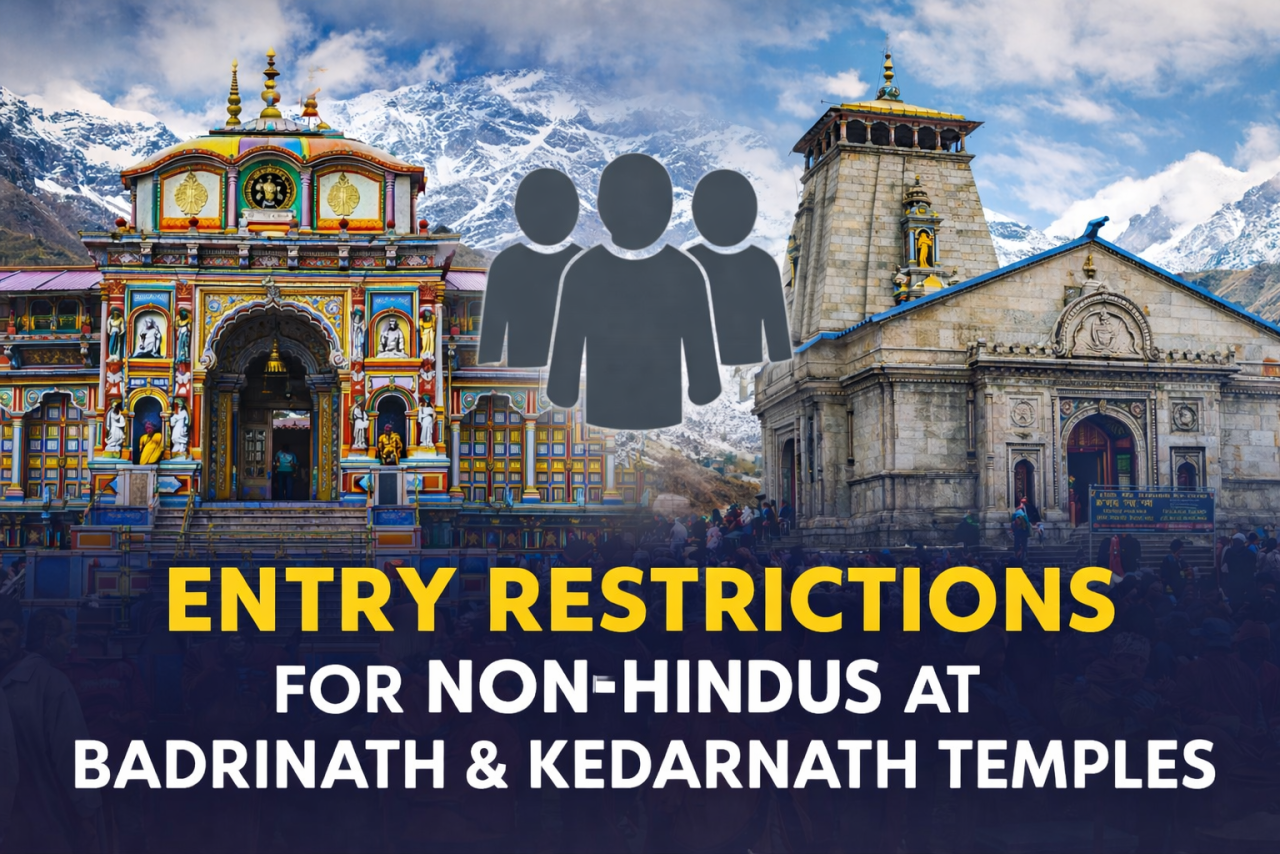
A major change may be coming to India’s sacred Himalayan pilgrimage. Authorities managing Badrinath Temple and Kedarnath Temple are considering restricting entry for non-Hindus, triggering a wider debate over faith, tradition, and access at two of the country’s holiest shrines.
India’s sacred geography is full of places where faith, history and culture meet. Among them, the Himalayan temples of Badrinath Temple and Kedarnath Temple hold a special place. These shrines are not only central to Hindu devotion but are also part of the revered Char Dham Yatra.
Recently, however, a proposal by the Badrinath-Kedarnath Temple Committee (BKTC) has sparked a fresh discussion about who should be allowed inside these sacred spaces.
A Proposal to Restrict Entry
The temple committee has proposed restricting entry of non-Hindus into the sanctum areas of the Badrinath and Kedarnath temples. According to BKTC chairman Hemant Dwivedi, the committee plans to verify the registration details of devotees before allowing entry.
The verification process may include identification such as an Aadhaar card during the pilgrimage registration. The aim, according to the committee, is to ensure that only followers of Sanatan traditions enter the temple premises during the yatra season.
The proposal was approved during a meeting in Dehradun while discussing preparations for the upcoming pilgrimage season.
Why the Committee Is Taking This Step
Temple authorities say the move is not meant to discriminate but to preserve the religious character of the shrines. Kedarnath and Badrinath are considered among the holiest spiritual centres in Hinduism and are deeply tied to rituals, customs and priestly traditions that have been followed for centuries.
Officials argue that these temples are not ordinary tourist attractions but sacred pilgrimage destinations where maintaining ritual purity and sanctity is central to religious practice.
The committee also pointed out that similar restrictions already exist at several other temples in India where entry is traditionally limited to followers of certain faiths.
What About Other Indian Religions?
According to the proposal, followers of traditions such as Sikhism, Buddhism and Jainism may still be allowed entry because they are historically connected with the broader Indic spiritual heritage.
However, people who do not follow Sanatan traditions may not be permitted inside the shrine area once the rule is formalised.
Wider Debate Around the Proposal
The proposal has triggered discussion across the country. Some devotees support the move, saying temples should retain their traditional customs. They argue that sacred places must maintain religious discipline, especially during large pilgrimages like the Char Dham Yatra.
Others believe that India’s spiritual sites should remain open to everyone who comes with respect and devotion, regardless of religion.
The debate touches on a larger question: how should ancient religious institutions balance tradition with the modern values of openness and inclusivity?
The Larger Context of Pilgrimage Management
The decision also comes at a time when authorities are trying to better manage the massive flow of pilgrims to the Himalayan shrines. Every year, millions of devotees travel through difficult terrain to reach Kedarnath and Badrinath, creating logistical and safety challenges.
Along with the proposed restrictions, the temple committee is also working on better registration systems, pilgrim facilities and stricter management during the yatra season.
Faith in the High Himalayas
For centuries, devotees have undertaken difficult journeys to these temples seeking spiritual peace and divine blessings. Whether the new rules are implemented or not, the discussion itself shows how important these sacred places remain in India’s religious life.
As the next pilgrimage season approaches, the conversation around access, tradition and devotion at Badrinath and Kedarnath will likely continue—reflecting the evolving relationship between faith and modern society.



























Leave a Comment