
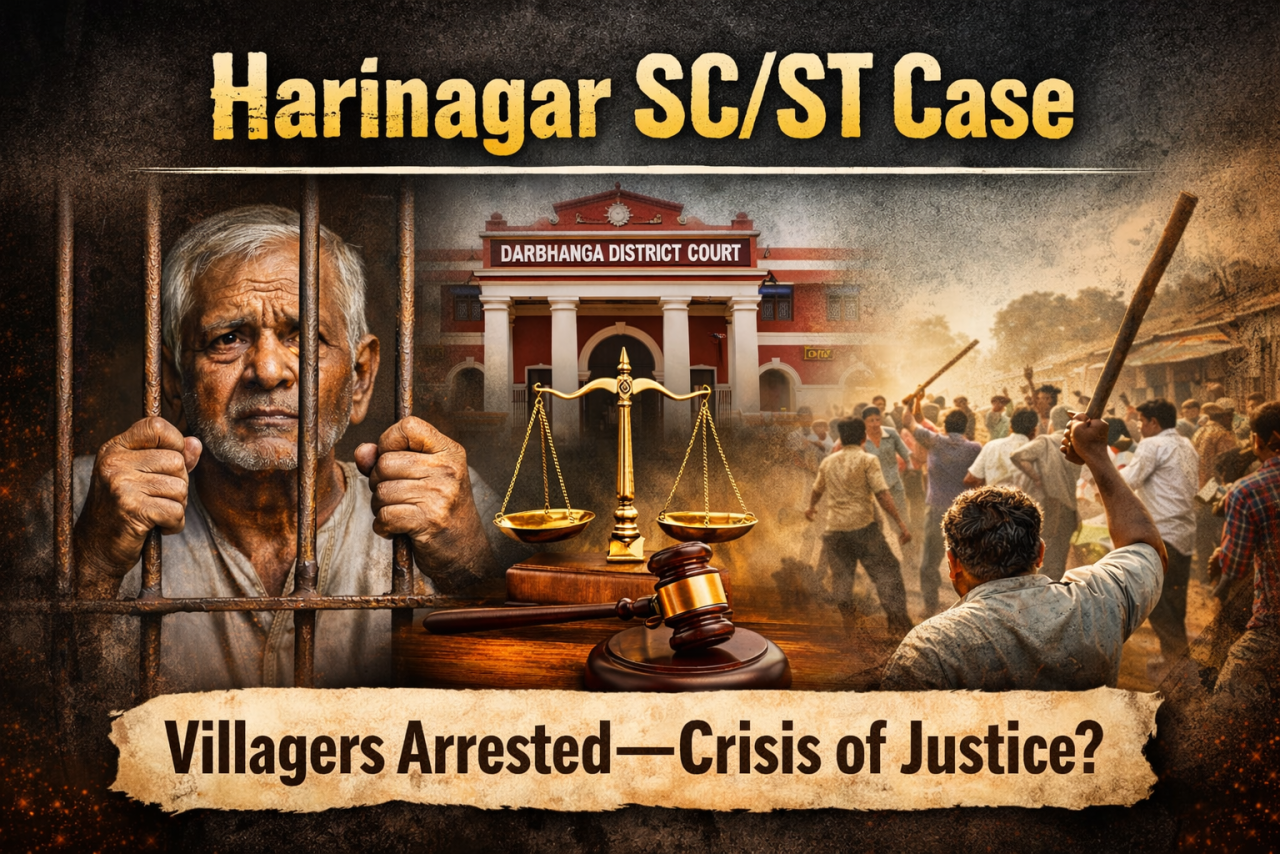
A village dispute in Bihar has escalated into a major SC/ST case involving dozens of accused—raising difficult questions about justice, retaliation, and the limits of the law.
In rural India, disputes often begin with something small—a wage disagreement, a quarrel in a village meeting, or long-standing social tension. But sometimes such conflicts escalate into legal battles that pull entire communities into the criminal justice system. The ongoing case emerging from Harinagar village in Darbhanga district raises precisely such troubling questions about law, justice, and the fragile balance between protecting victims and preventing misuse of powerful legal provisions.
The matter currently lies before the Darbhanga District Court, where an appeal has been filed seeking bail for three elderly villagers who were arrested under provisions of the Scheduled Castes and Scheduled Tribes (Prevention of Atrocities) Act, 1989. The appellants—Mahant Mishra (70), Lala Mishra (78), and Kashikant Jha (65)—are residents of Harinagar village in the Kusheshwarsthan police station area of Darbhanga district in Bihar. Their bail plea had earlier been rejected by the special court under the SC/ST Act, prompting them to approach the High Court.
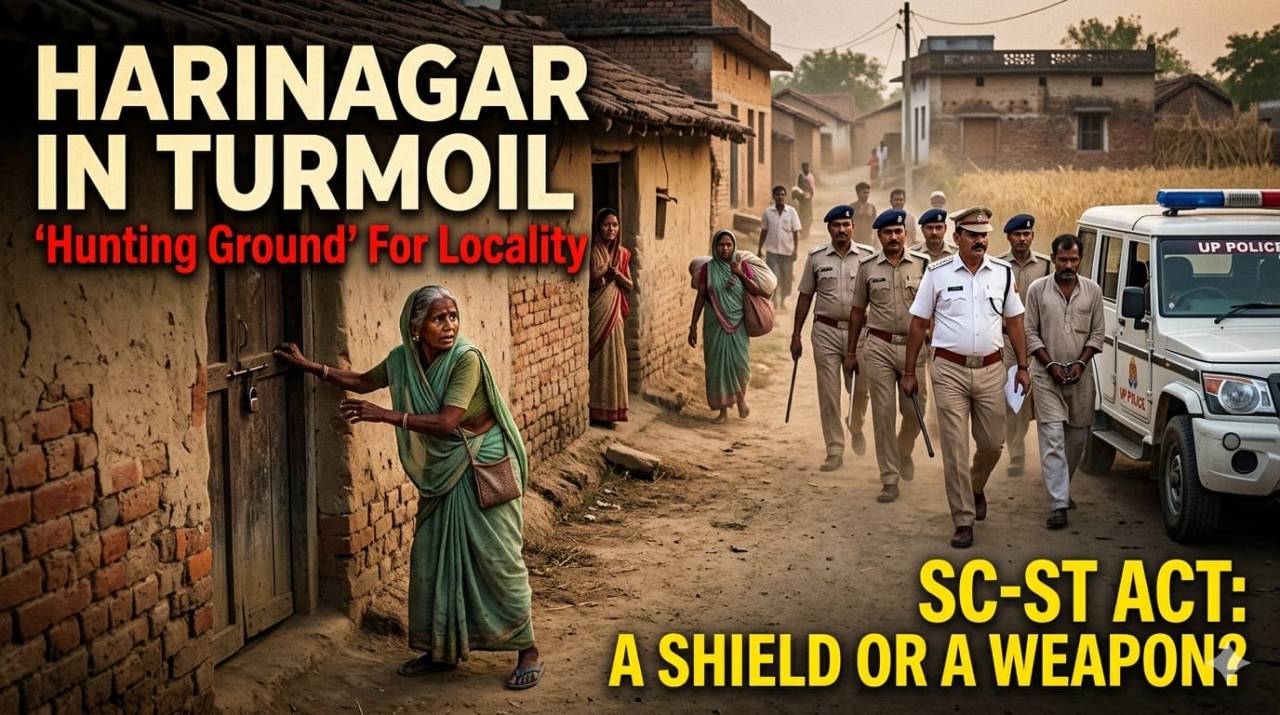
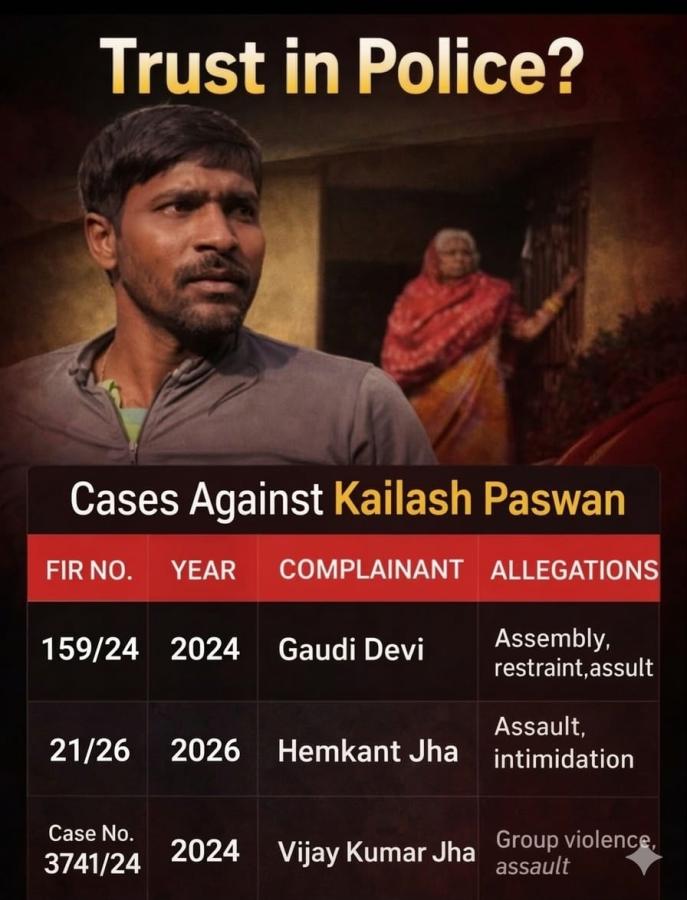
The case stems from an FIR lodged on January 31, 2026, by Asharfi Paswan, a resident of Harinagar. According to the complaint, a violent mob of around 70 named individuals along with 100–150 unidentified persons allegedly attacked members of the informant’s family. The FIR describes a chilling scene: armed villagers chasing the informant’s son Vikram Paswan, allegedly using caste slurs, dragging him from his home, and assaulting several family members with rods, sticks, and stones. The complaint further alleges looting of valuables and destruction of property.
Such allegations, if proven true, represent precisely the kind of caste-based violence that the SC/ST (Prevention of Atrocities) Act was designed to prevent. The law exists because historically marginalized communities in India have often faced systemic violence and discrimination. The Act imposes strict legal consequences to ensure swift justice and deterrence against such crimes.
However, the bail appeal filed before the Darbhanga District Court presents a dramatically different narrative.
The defense claims the case is a retaliatory complaint arising from a prior dispute between the two sides. According to the appeal, the conflict originated from a wage disagreement involving the informant’s son and another villager. A panchayat meeting was reportedly held to settle the issue, but tensions escalated. The appellants argue that before the present FIR was filed, a separate police case had already been lodged by their side against members of the informant’s family regarding an earlier altercation.
From the defense perspective, the present case is therefore a “counter-blast”—a retaliatory legal action aimed at pressuring the opposing side. The appeal further claims that the FIR contains sweeping and generalized allegations against a large number of villagers, including elderly persons who may not have been present at the scene.
One of the most striking aspects of the complaint is the scale of the alleged attack. The FIR names 70 individuals and claims that another 100–150 unknown persons participated in the assault. In small rural communities such as Harinagar, this effectively means that a substantial portion of the village has been implicated.
The defense also argues that the medical reports attached to the case do not correspond to the scale of violence alleged in the FIR. According to the appeal, the injuries described include stitched wounds, swelling, and tenderness, with doctors recommending X-rays. The appellants contend that these injuries do not align with an attack supposedly carried out by nearly 200 armed individuals.
Another argument presented in the appeal concerns the age and health of the appellants. All three are elderly men, and their lawyers argue that there are no specific allegations directly attributing acts of violence to them. The defense maintains that they have no prior criminal record and were arrested despite a lack of individual evidence linking them to the alleged assault.
Cases like this highlight the complex reality of rural justice in India. On the one hand, the SC/ST Act is a vital legal instrument designed to address the historical injustices faced by Dalit and tribal communities. Weakening its enforcement would risk leaving vulnerable groups without protection against discrimination and violence.
On the other hand, the law’s strict provisions—especially regarding arrest and bail—can become controversial when large numbers of individuals are accused with broad, generalized allegations. In such situations, courts are often forced to walk a tightrope: ensuring that genuine victims receive justice while also protecting the rights of the accused.
The Harinagar case underscores how easily local disputes can spiral into legal confrontations that involve entire communities. Wage disagreements, family rivalries, and village politics frequently intersect with caste identities in rural India. When these tensions reach the police station or courtroom, the resulting cases often carry both legal and social implications.
Ultimately, the responsibility now lies with the judiciary. The Court will need to examine whether the evidence justifies continued detention of the accused or whether bail should be granted while the investigation proceeds. Bail, after all, does not determine guilt or innocence—it simply ensures that the accused can defend themselves without being unnecessarily incarcerated.
But beyond the courtroom, the Harinagar episode also raises a deeper question: how can rural disputes be resolved before they explode into criminal cases involving hundreds of villagers?
Unless India strengthens mechanisms for local dispute resolution and community mediation, the justice system will continue to face such complicated and emotionally charged cases. And when entire villages become battlegrounds for legal wars, justice itself risks becoming another casualty.






















Leave a Comment