

A new India-New Zealand trade era begins on October 20, with zero-duty access, investment commitments and new opportunities for Indian exporters and professionals.
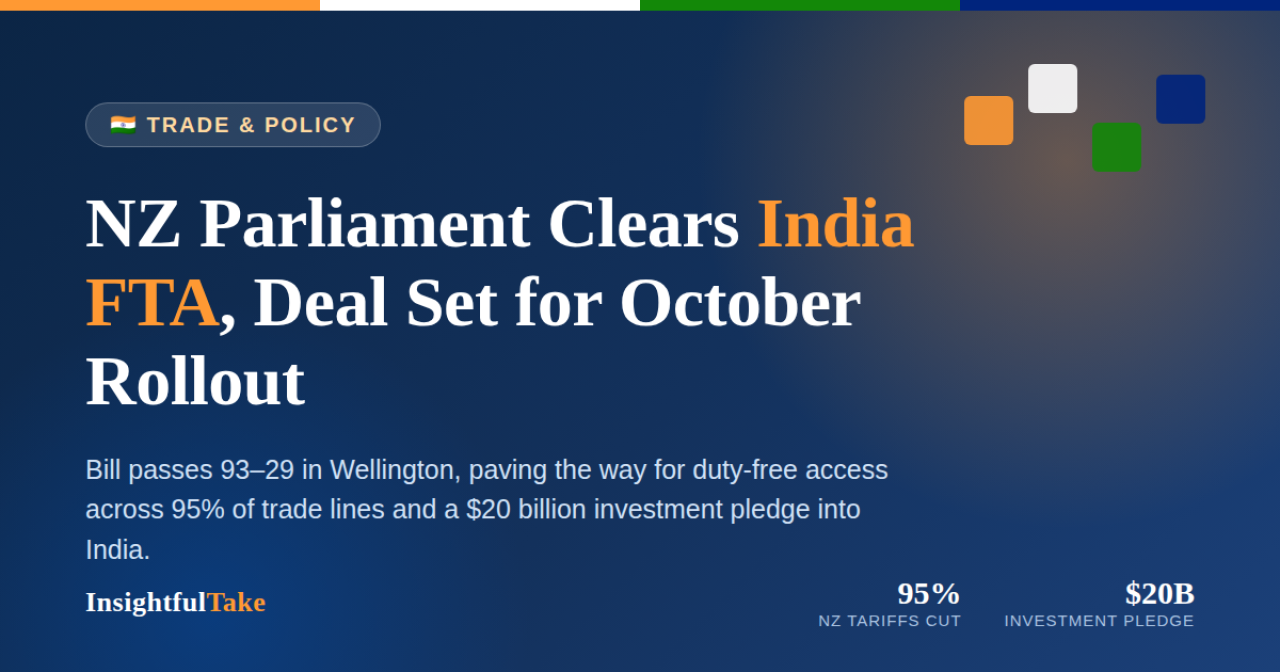
India and New Zealand will bring their Free Trade Agreement (FTA) into force on October 20, 2026, opening a new phase in trade, investment, services and professional mobility between the two countries.
Commerce and Industry Minister Piyush Goyal and New Zealand’s Trade and Investment Minister Todd McClay announced the implementation date after both countries completed their domestic processes. New Zealand’s Parliament passed the legislation required to give effect to the agreement on September 16.
The date also falls on Vijay Dashami, or Dussehra, which marks the traditional celebration of the victory of good over evil.
The agreement was signed in New Delhi on April 27, 2026. Negotiations had begun on March 16, 2025, and concluded on December 22, 2025, after nine months and five formal rounds. The Commerce Ministry describes it as one of India’s fastest-concluded FTAs.
Indian Exports to Get Zero-Duty Access
One of the most important provisions is New Zealand’s commitment to eliminate duties on 100 percent of Indian exports from the first day the agreement takes effect.
Indian exporters in textiles, apparel, leather and footwear, engineering goods, pharmaceuticals, processed food and other manufacturing sectors are expected to gain from the removal of tariffs. Earlier, New Zealand had peak tariffs of up to 10 percent on some Indian products, including textiles, leather, ceramics, carpets, automobiles and auto components.
The agreement is also expected to reduce the cost of some industrial inputs used by Indian manufacturers. These include wooden logs, coking coal and metal waste and scrap.
For small and medium enterprises, lower tariffs could make it easier to compete in the New Zealand market, although exporters will still have to meet the country’s product standards, regulations and other market requirements.
India Keeps Sensitive Farm Sectors Outside the Deal
India has adopted a more selective approach to opening its own market.
The country has offered tariff concessions on about 70 percent of tariff lines, covering around 95 percent of bilateral trade value. Nearly 30 percent of tariff lines remain excluded.
Dairy remains outside the tariff concessions. Products such as milk, cream, whey, yoghurt, cheese and butter are protected, along with several sensitive agricultural and food products.
The exclusion list also covers products such as onions, chickpeas, peas, corn, almonds, sugar, artificial honey and several vegetable fats and oils. Certain other products will receive phased tariff reductions rather than immediate duty elimination.
For products such as apples, kiwifruit and Manuka honey, the agreement provides controlled access through tariff-rate quotas and other safeguards. The aim is to increase trade while limiting sudden pressure on sensitive domestic markets.
$20 Billion Investment Commitment
Investment is another major part of the agreement.
New Zealand has committed to facilitate investment of up to US$20 billion in India over 15 years. The proposed areas include agriculture, manufacturing, infrastructure, startups, technology, renewable energy and digital services. The agreement also includes a mechanism to address possible shortfalls in the investment commitment.
The two countries will also work together on agricultural productivity. Partnerships involving apples, kiwifruit and Manuka honey are intended to facilitate the exchange of technology, knowledge and farming practices.
New Opportunities for Indian Professionals
The agreement extends beyond merchandise trade.
New Zealand has made commitments across 118 services sectors, including information technology, professional services, construction, education, tourism, telecommunications and other business services. It has also provided most-favoured-nation treatment across around 139 sub-sectors.
A dedicated Temporary Employment Entry pathway will allow up to 5,000 skilled Indian professionals to work in New Zealand at any given time, with stays of up to three years. The pathway includes professionals in IT, engineering, healthcare, education and construction, along with AYUSH practitioners, yoga instructors, Indian chefs and music teachers.
The agreement also creates a working-holiday pathway for 1,000 young Indians each year.
Student mobility has received attention as well. Indian students will have access to post-study work opportunities of up to three years for eligible STEM bachelor’s and master’s graduates and up to four years for doctoral scholars.
Pharmaceuticals and Medical Devices
The agreement also addresses regulatory barriers affecting Indian pharmaceutical and medical-device companies.
New Zealand will accept certain inspection approvals from comparable international regulators, including the US Food and Drug Administration, the European Medicines Agency, the UK Medicines and Healthcare products Regulatory Agency and Health Canada. The provision is intended to reduce duplication in inspections and shorten the time required for market entry.
Trade Target of ₹35,000 Crore
India and New Zealand have set an aspirational goal of doubling bilateral trade in goods and services to around NZ$7 billion, or approximately ₹35,000 crore, by 2030. The target is part of the broader India-New Zealand Strategic Partnership and its Roadmap to 2030.
The agreement therefore combines tariff reductions with investment, services, professional mobility, student opportunities, agricultural cooperation and regulatory facilitation.
For Indian businesses, the immediate change will be the opening of New Zealand’s market to Indian exports without tariffs on day one. For New Zealand companies, the agreement provides greater access to the Indian market while India retains protection for several sensitive agricultural and dairy sectors.
The real test will begin after October 20, when businesses, exporters, investors, professionals and students start using the provisions of the agreement. Its impact will depend not only on lower tariffs but also on how effectively companies use the new market access and how quickly the promised investment and mobility pathways translate into actual economic activity.
India and New Zealand will bring their Free Trade Agreement (FTA) into force on October 20, 2026, opening a new phase in trade, investment, services and professional mobility between the two countries.
Commerce and Industry Minister Piyush Goyal and New Zealand’s Trade and Investment Minister Todd McClay announced the implementation date after both countries completed their domestic processes. New Zealand’s Parliament passed the legislation required to give effect to the agreement on September 16.
The date also falls on Vijay Dashami, or Dussehra, which marks the traditional celebration of the victory of good over evil.
The agreement was signed in New Delhi on April 27, 2026. Negotiations had begun on March 16, 2025, and concluded on December 22, 2025, after nine months and five formal rounds. The Commerce Ministry describes it as one of India’s fastest-concluded FTAs.
Indian Exports to Get Zero-Duty Access
One of the most important provisions is New Zealand’s commitment to eliminate duties on 100 percent of Indian exports from the first day the agreement takes effect.
Indian exporters in textiles, apparel, leather and footwear, engineering goods, pharmaceuticals, processed food and other manufacturing sectors are expected to gain from the removal of tariffs. Earlier, New Zealand had peak tariffs of up to 10 percent on some Indian products, including textiles, leather, ceramics, carpets, automobiles and auto components.
The agreement is also expected to reduce the cost of some industrial inputs used by Indian manufacturers. These include wooden logs, coking coal and metal waste and scrap.
For small and medium enterprises, lower tariffs could make it easier to compete in the New Zealand market, although exporters will still have to meet the country’s product standards, regulations and other market requirements.
India Keeps Sensitive Farm Sectors Outside the Deal
India has adopted a more selective approach to opening its own market.
The country has offered tariff concessions on about 70 percent of tariff lines, covering around 95 percent of bilateral trade value. Nearly 30 percent of tariff lines remain excluded.
Dairy remains outside the tariff concessions. Products such as milk, cream, whey, yoghurt, cheese and butter are protected, along with several sensitive agricultural and food products.
The exclusion list also covers products such as onions, chickpeas, peas, corn, almonds, sugar, artificial honey and several vegetable fats and oils. Certain other products will receive phased tariff reductions rather than immediate duty elimination.
For products such as apples, kiwifruit and Manuka honey, the agreement provides controlled access through tariff-rate quotas and other safeguards. The aim is to increase trade while limiting sudden pressure on sensitive domestic markets.
$20 Billion Investment Commitment
Investment is another major part of the agreement.
New Zealand has committed to facilitate investment of up to US$20 billion in India over 15 years. The proposed areas include agriculture, manufacturing, infrastructure, startups, technology, renewable energy and digital services. The agreement also includes a mechanism to address possible shortfalls in the investment commitment.
The two countries will also work together on agricultural productivity. Partnerships involving apples, kiwifruit and Manuka honey are intended to facilitate the exchange of technology, knowledge and farming practices.
New Opportunities for Indian Professionals
The agreement extends beyond merchandise trade.
New Zealand has made commitments across 118 services sectors, including information technology, professional services, construction, education, tourism, telecommunications and other business services. It has also provided most-favoured-nation treatment across around 139 sub-sectors.
A dedicated Temporary Employment Entry pathway will allow up to 5,000 skilled Indian professionals to work in New Zealand at any given time, with stays of up to three years. The pathway includes professionals in IT, engineering, healthcare, education and construction, along with AYUSH practitioners, yoga instructors, Indian chefs and music teachers.
The agreement also creates a working-holiday pathway for 1,000 young Indians each year.
Student mobility has received attention as well. Indian students will have access to post-study work opportunities of up to three years for eligible STEM bachelor’s and master’s graduates and up to four years for doctoral scholars.
Pharmaceuticals and Medical Devices
The agreement also addresses regulatory barriers affecting Indian pharmaceutical and medical-device companies.
New Zealand will accept certain inspection approvals from comparable international regulators, including the US Food and Drug Administration, the European Medicines Agency, the UK Medicines and Healthcare products Regulatory Agency and Health Canada. The provision is intended to reduce duplication in inspections and shorten the time required for market entry.
Trade Target of ₹35,000 Crore
India and New Zealand have set an aspirational goal of doubling bilateral trade in goods and services to around NZ$7 billion, or approximately ₹35,000 crore, by 2030. The target is part of the broader India-New Zealand Strategic Partnership and its Roadmap to 2030.
The agreement therefore combines tariff reductions with investment, services, professional mobility, student opportunities, agricultural cooperation and regulatory facilitation.
For Indian businesses, the immediate change will be the opening of New Zealand’s market to Indian exports without tariffs on day one. For New Zealand companies, the agreement provides greater access to the Indian market while India retains protection for several sensitive agricultural and dairy sectors.
The real test will begin after October 20, when businesses, exporters, investors, professionals and students start using the provisions of the agreement. Its impact will depend not only on lower tariffs but also on how effectively companies use the new market access and how quickly the promised investment and mobility pathways translate into actual economic activity.
























Leave a Comment