
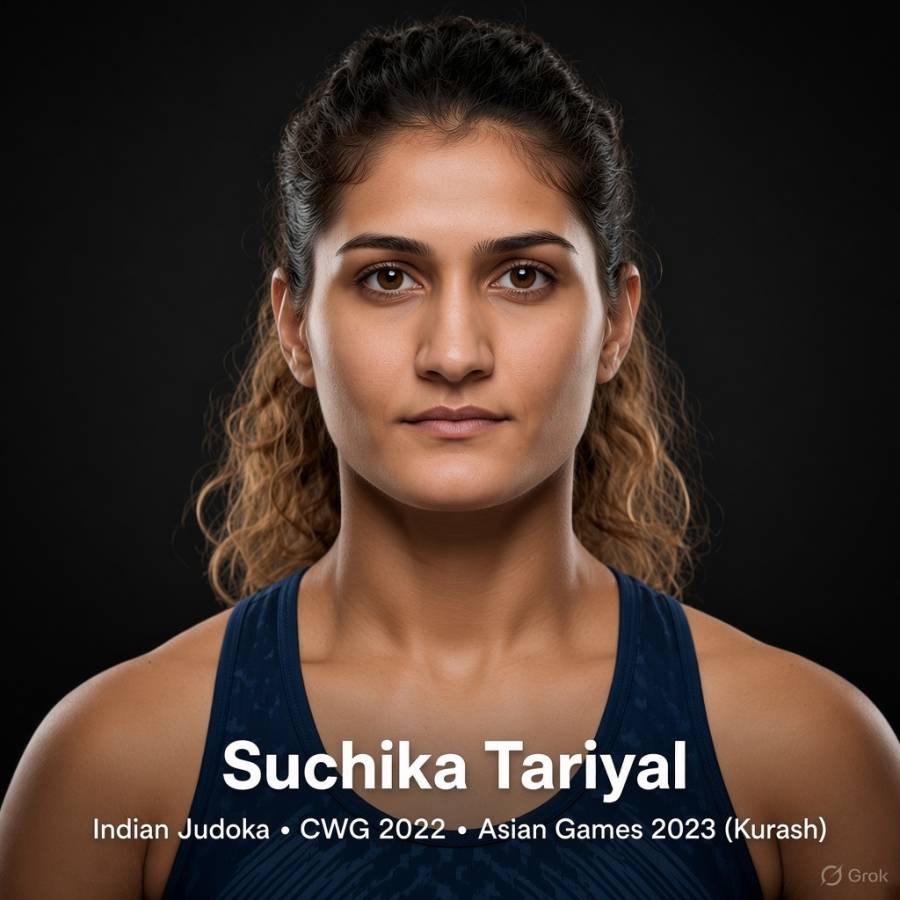
At 36, Suchika Tariyal is building a new career in mixed martial arts after injuries, financial pressures and a cancelled Asian Games opportunity forced her to reinvent herself.
Suchika Tariyal never planned to become a mixed martial arts fighter. At 36, an age when many athletes are already thinking about retirement, she is instead building a new career in one of the toughest combat sports in the world.
The switch was not part of a carefully planned career path. It followed a knee injury, professional setbacks and a support system that often left her to find her own way.
A knee injury had once derailed her judo career. At the time, it felt like the end of the road. For many athletes, an injury of that kind can mean walking away from the sport that has shaped their identity.
Tariyal did walk away, at least for a while. She found peace in that decision.
But two people from India's still-developing mixed martial arts community would eventually pull her back into competition. UFC fighter Pooja Tomar and former ONE Championship fighter Himanshu Kaushik encouraged her to return, not to recreate her old career but to build something new.
Tariyal was already familiar with elite competition across different combat sports. She represented India in judo at the 2022 Commonwealth Games, competed in kurash at the 2023 Asian Games and moved into jiu-jitsu at the 2024 Asian Games, where she won a bronze medal.
Each transition demanded a different approach. Tariyal kept adapting.
A Friendship That Led to a New Beginning
Her connection with Pooja Tomar goes back to their days at the Sports Authority of India hostel in Bhopal. The two lived and trained together between 2011 and 2014, before Tomar moved to Japan to pursue her MMA ambitions.
Tariyal has acknowledged that seeing Tomar leave made her feel that she had "left things unfinished."
Years later, their paths crossed again.
After Tomar became a world champion in 2024, she reached out to Tariyal and helped bring her into the MMA world. The two now train together at Soma Fight Club in Bali alongside Himanshu Kaushik.
For Tariyal, MMA became less about returning to the career she had lost and more about discovering what could come next.
Fighting the Battle Beyond the Cage
The challenges have not been limited to competition.
Tariyal has spoken openly about the financial pressures involved in pursuing MMA from India, where support structures for the sport are still developing. Training abroad brings its own costs, while unpaid leave, credit limits and travel expenses can make an already demanding career even harder to sustain.
Much of her journey has taken place without government funding.
Her husband, who works in marketing, has supported her throughout the process. He has also taken leave to be there during periods of training and competition.
Tariyal has also spoken candidly about the emotional strain of balancing family expectations with an unconventional sporting career. Pressure from her in-laws and periods of depression added another layer to a journey that was already difficult.
At 36, she was not simply changing sports. She was asking herself how much further she could push a career that had already taken several unexpected turns.
When One Door Closed, She Entered Another
Earlier this year, another setback arrived when India's jiu-jitsu team for the 2026 Asian Games was dropped altogether.
For Tariyal, that decision meant losing the competitive path she had been preparing for.
She could have stepped back. Instead, she entered the MMA trials.
The transition exposed gaps in her game, but Tariyal approached them as problems to be solved. She worked on those weaknesses one by one and continued moving forward.
That persistence eventually took her to the 2026 Asian Games in Aichi-Nagoya, where she competed in the women's 60kg MMA category.
She reached the quarterfinals, becoming the first Indian fighter to reach that stage in the sport at the Asian Games. Her run ended against Mongolia's defending champion Altanchimeg.
The result was a defeat, but the larger significance of her campaign lay in how she had arrived there.
A Career Built on Reinvention
Tariyal's journey has never followed a straight line.
It has moved from judo to kurash, from kurash to jiu-jitsu and finally to MMA. Along the way came injuries, financial difficulties, family pressures, career uncertainty and the loss of an expected opportunity at the Asian Games.
Yet each setback became the starting point for another chapter.
Her story stands out not because the road was smooth, but because it was repeatedly disrupted. She kept finding another way forward.
As Indian MMA continues to establish itself on the international stage, fighters such as Suchika Tariyal are helping shape its early history.
For her, the journey is no longer about recovering the career she once had.
It is about building the one she found later, one hard-fought round at a time.
Suchika Tariyal never planned to become a mixed martial arts fighter. At 36, an age when many athletes are already thinking about retirement, she is instead building a new career in one of the toughest combat sports in the world.
The switch was not part of a carefully planned career path. It followed a knee injury, professional setbacks and a support system that often left her to find her own way.
A knee injury had once derailed her judo career. At the time, it felt like the end of the road. For many athletes, an injury of that kind can mean walking away from the sport that has shaped their identity.
Tariyal did walk away, at least for a while. She found peace in that decision.
But two people from India's still-developing mixed martial arts community would eventually pull her back into competition. UFC fighter Pooja Tomar and former ONE Championship fighter Himanshu Kaushik encouraged her to return, not to recreate her old career but to build something new.
Tariyal was already familiar with elite competition across different combat sports. She represented India in judo at the 2022 Commonwealth Games, competed in kurash at the 2023 Asian Games and moved into jiu-jitsu at the 2024 Asian Games, where she won a bronze medal.
Each transition demanded a different approach. Tariyal kept adapting.
A Friendship That Led to a New Beginning
Her connection with Pooja Tomar goes back to their days at the Sports Authority of India hostel in Bhopal. The two lived and trained together between 2011 and 2014, before Tomar moved to Japan to pursue her MMA ambitions.
Tariyal has acknowledged that seeing Tomar leave made her feel that she had "left things unfinished."
Years later, their paths crossed again.
After Tomar became a world champion in 2024, she reached out to Tariyal and helped bring her into the MMA world. The two now train together at Soma Fight Club in Bali alongside Himanshu Kaushik.
For Tariyal, MMA became less about returning to the career she had lost and more about discovering what could come next.
Fighting the Battle Beyond the Cage
The challenges have not been limited to competition.
Tariyal has spoken openly about the financial pressures involved in pursuing MMA from India, where support structures for the sport are still developing. Training abroad brings its own costs, while unpaid leave, credit limits and travel expenses can make an already demanding career even harder to sustain.
Much of her journey has taken place without government funding.
Her husband, who works in marketing, has supported her throughout the process. He has also taken leave to be there during periods of training and competition.
Tariyal has also spoken candidly about the emotional strain of balancing family expectations with an unconventional sporting career. Pressure from her in-laws and periods of depression added another layer to a journey that was already difficult.
At 36, she was not simply changing sports. She was asking herself how much further she could push a career that had already taken several unexpected turns.
When One Door Closed, She Entered Another
Earlier this year, another setback arrived when India's jiu-jitsu team for the 2026 Asian Games was dropped altogether.
For Tariyal, that decision meant losing the competitive path she had been preparing for.
She could have stepped back. Instead, she entered the MMA trials.
The transition exposed gaps in her game, but Tariyal approached them as problems to be solved. She worked on those weaknesses one by one and continued moving forward.
That persistence eventually took her to the 2026 Asian Games in Aichi-Nagoya, where she competed in the women's 60kg MMA category.
She reached the quarterfinals, becoming the first Indian fighter to reach that stage in the sport at the Asian Games. Her run ended against Mongolia's defending champion Altanchimeg.
The result was a defeat, but the larger significance of her campaign lay in how she had arrived there.
A Career Built on Reinvention
Tariyal's journey has never followed a straight line.
It has moved from judo to kurash, from kurash to jiu-jitsu and finally to MMA. Along the way came injuries, financial difficulties, family pressures, career uncertainty and the loss of an expected opportunity at the Asian Games.
Yet each setback became the starting point for another chapter.
Her story stands out not because the road was smooth, but because it was repeatedly disrupted. She kept finding another way forward.
As Indian MMA continues to establish itself on the international stage, fighters such as Suchika Tariyal are helping shape its early history.
For her, the journey is no longer about recovering the career she once had.
It is about building the one she found later, one hard-fought round at a time.





















Leave a Comment