
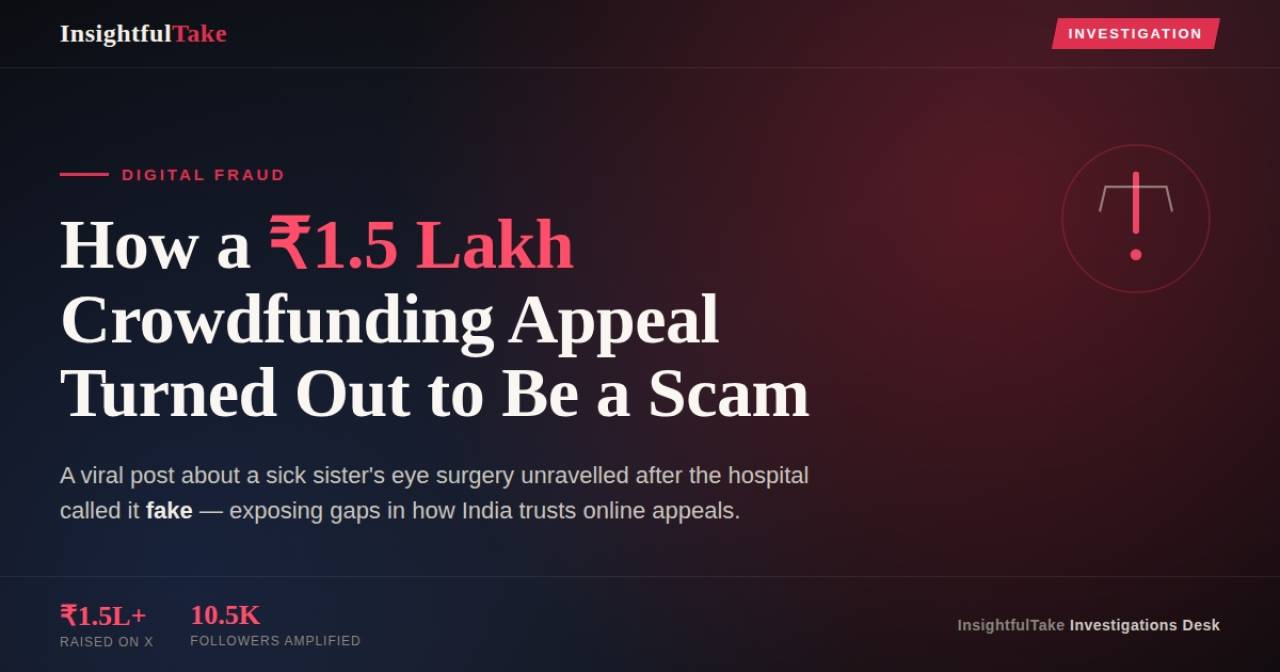
A medical fundraising appeal on X raised over ₹1.5 lakh before a hospital called the documents fake, triggering questions about trust, refunds and online crowdfunding.
A social media appeal that appeared to seek medical help for a 12-year-old girl has turned into a crowdfunding controversy, raising questions about document verification, online trust and the risks of donating to unverified appeals.
How It All Began
The controversy began when an X user, Jay Singh Rathore, posted an appeal seeking financial help for his 12-year-old sister. Rathore claimed that she was undergoing treatment for a serious eye condition at Shroff Eye Centre.
To support the appeal, he shared what appeared to be medical documents, including prescriptions, hospital letterheads and treatment cost estimates. The post attracted considerable attention, with users contributing money after responding to the emotional appeal.
Rathore later claimed that more than ₹1.5 lakh had been raised through the campaign.
Questions began emerging when users noticed apparent discrepancies in the documents. Some pointed to differences in formatting, spelling and hospital-related details, prompting users to question whether the documents were genuine.
The original thread was subsequently deleted, but screenshots had already circulated widely on X.
Shroff Eye Centre Responds
The controversy intensified when Shroff Eye Centre publicly addressed the matter.
In a statement shared on Instagram, the hospital said that the patient details, prescription and cost estimate being circulated in connection with the appeal were fake. The hospital also urged people not to fall victim to the alleged deception and asked users to share its clarification.
The statement added a significant new dimension to the controversy because it directly challenged the authenticity of the medical documents used to support the fundraising appeal.
The Controversy Moves to X Spaces
The dispute later spilled into an X Spaces discussion in which Rathore appeared and attempted to explain the situation.
The session became confrontational as donors and other users demanded answers about the money collected through the appeal.
During the discussion, Rathore reportedly acknowledged that the funds raised were not actually intended for his sister. He nevertheless denied that he had intended to scam people.
Facing questions from contributors, he also said that he would refund the money raised from the campaign.
Further Allegations Surface
The controversy widened when another X user, operating under the handle @Raniissaa and followed by more than 10,500 users, joined the discussion.
In a subsequent post, she alleged that Rathore's father had also been involved in similar fundraising activity in the past.
That claim remains an allegation. Rathore's father reportedly denied any connection with the matter. No independent evidence establishing the broader allegation has been presented in the material surrounding the controversy.
Did Donors Receive Their Money Back?
Rathore subsequently provided updates during X Spaces, claiming that some donors had already been refunded.
He also shared screenshots that he presented as evidence of UPI transactions.
However, several contributors publicly disputed the refund claims and said they had not received their money.
Rathore responded that some refunds had already been made and that the remaining payments would be processed after a temporary transaction limit on his bank account was lifted.
The conflicting claims have left questions about the total amount collected, the amount actually refunded and the number of donors still awaiting repayment.
What Happened to the "Sister" Story?
Rathore later offered another explanation for the use of his sister's name in the original appeal.
He claimed that her name had appeared because of a mistake and maintained that she had not been the intended beneficiary of the funds. He also said that his family was facing genuine financial difficulties and that his sister herself was unwell.
That explanation did little to settle the controversy online, particularly among people who believed that the medical story had been used to generate sympathy and donations.
Those claims, however, need to be distinguished from facts independently established by the hospital or documented through financial records.
Can Online Kindness Be Verified?
The episode highlights a broader problem with social-media crowdfunding.
People often donate within minutes after seeing an emotional appeal, particularly when it is accompanied by documents that appear official. But the appearance of authenticity is not the same as independent verification.
For donors, basic checks can make a significant difference. The identity of the beneficiary, the hospital or organisation involved, the authenticity of medical documents and the destination of the funds should be verified wherever possible before money is transferred.
Crowdfunding remains an important source of support for people facing genuine medical and financial emergencies. But as this controversy shows, the same trust that makes online fundraising possible can also become a vulnerability when claims are not properly verified.
A social media appeal that appeared to seek medical help for a 12-year-old girl has turned into a crowdfunding controversy, raising questions about document verification, online trust and the risks of donating to unverified appeals.
How It All Began
The controversy began when an X user, Jay Singh Rathore, posted an appeal seeking financial help for his 12-year-old sister. Rathore claimed that she was undergoing treatment for a serious eye condition at Shroff Eye Centre.
To support the appeal, he shared what appeared to be medical documents, including prescriptions, hospital letterheads and treatment cost estimates. The post attracted considerable attention, with users contributing money after responding to the emotional appeal.
Rathore later claimed that more than ₹1.5 lakh had been raised through the campaign.
Questions began emerging when users noticed apparent discrepancies in the documents. Some pointed to differences in formatting, spelling and hospital-related details, prompting users to question whether the documents were genuine.
The original thread was subsequently deleted, but screenshots had already circulated widely on X.
Shroff Eye Centre Responds
The controversy intensified when Shroff Eye Centre publicly addressed the matter.
In a statement shared on Instagram, the hospital said that the patient details, prescription and cost estimate being circulated in connection with the appeal were fake. The hospital also urged people not to fall victim to the alleged deception and asked users to share its clarification.
The statement added a significant new dimension to the controversy because it directly challenged the authenticity of the medical documents used to support the fundraising appeal.
The Controversy Moves to X Spaces
The dispute later spilled into an X Spaces discussion in which Rathore appeared and attempted to explain the situation.
The session became confrontational as donors and other users demanded answers about the money collected through the appeal.
During the discussion, Rathore reportedly acknowledged that the funds raised were not actually intended for his sister. He nevertheless denied that he had intended to scam people.
Facing questions from contributors, he also said that he would refund the money raised from the campaign.
Further Allegations Surface
The controversy widened when another X user, operating under the handle @Raniissaa and followed by more than 10,500 users, joined the discussion.
In a subsequent post, she alleged that Rathore's father had also been involved in similar fundraising activity in the past.
That claim remains an allegation. Rathore's father reportedly denied any connection with the matter. No independent evidence establishing the broader allegation has been presented in the material surrounding the controversy.
Did Donors Receive Their Money Back?
Rathore subsequently provided updates during X Spaces, claiming that some donors had already been refunded.
He also shared screenshots that he presented as evidence of UPI transactions.
However, several contributors publicly disputed the refund claims and said they had not received their money.
Rathore responded that some refunds had already been made and that the remaining payments would be processed after a temporary transaction limit on his bank account was lifted.
The conflicting claims have left questions about the total amount collected, the amount actually refunded and the number of donors still awaiting repayment.
What Happened to the "Sister" Story?
Rathore later offered another explanation for the use of his sister's name in the original appeal.
He claimed that her name had appeared because of a mistake and maintained that she had not been the intended beneficiary of the funds. He also said that his family was facing genuine financial difficulties and that his sister herself was unwell.
That explanation did little to settle the controversy online, particularly among people who believed that the medical story had been used to generate sympathy and donations.
Those claims, however, need to be distinguished from facts independently established by the hospital or documented through financial records.
Can Online Kindness Be Verified?
The episode highlights a broader problem with social-media crowdfunding.
People often donate within minutes after seeing an emotional appeal, particularly when it is accompanied by documents that appear official. But the appearance of authenticity is not the same as independent verification.
For donors, basic checks can make a significant difference. The identity of the beneficiary, the hospital or organisation involved, the authenticity of medical documents and the destination of the funds should be verified wherever possible before money is transferred.
Crowdfunding remains an important source of support for people facing genuine medical and financial emergencies. But as this controversy shows, the same trust that makes online fundraising possible can also become a vulnerability when claims are not properly verified.













Leave a Comment