
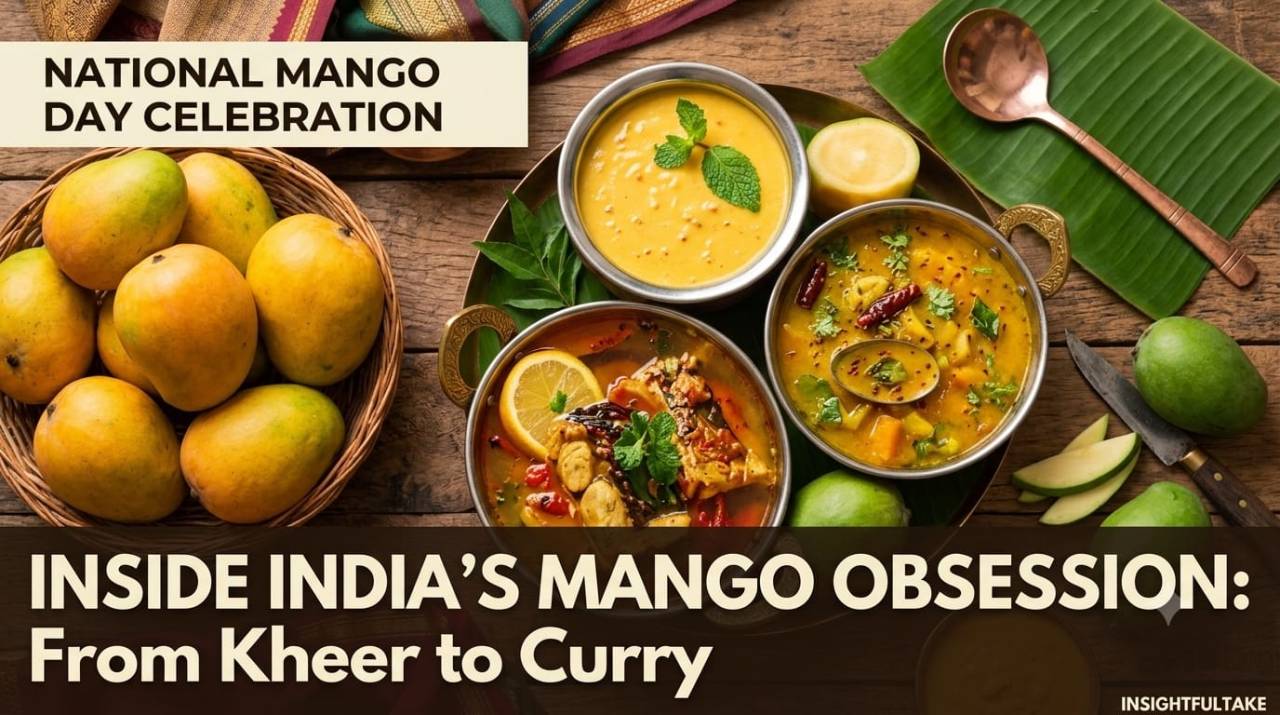
From creamy aamras to tangy raw mango curries, discover how the king of fruits has shaped India's kitchens, culture, and summer memories for generations.
There are few things that announce the arrival of an Indian summer as beautifully as the fragrance of ripe mangoes. Whether stacked in neighbourhood fruit markets, sliced on family dining tables, or blended into refreshing desserts, mangoes are more than a seasonal fruit. They are an emotion woven into childhood memories, family gatherings, and regional culinary traditions.
National Mango Day celebrates this timeless relationship between India and its favourite fruit. It is an opportunity to appreciate not only the irresistible taste of mangoes but also the remarkable diversity they bring to Indian kitchens. From sweet delicacies to tangy curries, mangoes effortlessly adapt to every course of a meal.
A Fruit Deeply Rooted in Indian Culture
India is the world's largest producer of mangoes and is home to more than a thousand known varieties. Famous cultivars such as Alphonso, Dasheri, Langra, Kesar, Banganapalli, Chausa, Himsagar, Totapuri, and Malda each carry distinct flavours, aromas, and regional identities.
The cultural significance of mangoes stretches back centuries. The 14th-century Sufi poet Amir Khusrow celebrated the fruit's sweetness in his writings, while generations of poets, artists, and storytellers have continued to praise its unmatched appeal.
Food historian Pushpesh Pant has often observed that although mangoes are cultivated in many countries, the diversity and richness of Indian varieties remain unmatched. Their versatility is equally remarkable. Raw mangoes add refreshing sourness to summer dishes, while ripe mangoes transform simple recipes into comforting treats.
Sweet Dishes That Define an Indian Summer
For many families, summer desserts begin and end with mangoes.
Aamras with Puri remains one of western India's most cherished seasonal meals. Fresh ripe mango pulp, lightly flavoured with cardamom, is served alongside hot, fluffy puris. Chef Amit Gothwal describes this timeless combination as nothing short of heavenly.
Another favourite is Mango Rabdi Kheer, where creamy rabdi meets the natural sweetness of ripe mangoes. Chef Sidharth Vasudev believes the dessert is best enjoyed after lunch with family, turning an ordinary meal into a cherished summer memory.
The Konkan region contributes another treasure in the form of Steamed Mango Sandana. Prepared with ripe mango pulp, rice rava, coconut, and cardamom, this gently steamed delicacy is traditionally served with warm ghee. Modern chefs also pair it with vanilla ice cream, giving the classic recipe a contemporary touch.
Mangoes Shine Beyond Desserts
The beauty of mangoes lies in their ability to complement savoury dishes just as effortlessly.
Chef Nishant Choubey recommends an unusual Ripe Mango Rasam, where sweet mangoes replace the traditional raw fruit. Combined with pepper, roasted spices, curry leaves, and mustard seeds, the dish delivers an unforgettable balance of sweetness, tanginess, and spice.
Chef Tarun Sibal offers another creative preparation through Kacche Aam Aur Kaddu Ki Sabzi. Sour raw mangoes are cooked with pumpkin, fennel seeds, fenugreek, asafoetida, fresh green chillies, and mustard oil, producing a vibrant dish that perfectly captures the bold flavours of Indian home cooking.
More Than Just a Fruit
The charm of mangoes extends far beyond recipes. They inspire festivals, family traditions, roadside conversations, and childhood nostalgia. Every region proudly celebrates its own variety, and every household has a favourite way of enjoying them.
Whether it is a bowl of chilled aamras on a scorching afternoon, a tangy raw mango pickle prepared by grandparents, or a comforting serving of mango kheer after dinner, the king of fruits continues to unite generations through taste and tradition.
On National Mango Day, the celebration is not simply about eating mangoes. It is about honouring a fruit that has shaped India's culinary identity for centuries and continues to make every summer a little sweeter.
There are few things that announce the arrival of an Indian summer as beautifully as the fragrance of ripe mangoes. Whether stacked in neighbourhood fruit markets, sliced on family dining tables, or blended into refreshing desserts, mangoes are more than a seasonal fruit. They are an emotion woven into childhood memories, family gatherings, and regional culinary traditions.
National Mango Day celebrates this timeless relationship between India and its favourite fruit. It is an opportunity to appreciate not only the irresistible taste of mangoes but also the remarkable diversity they bring to Indian kitchens. From sweet delicacies to tangy curries, mangoes effortlessly adapt to every course of a meal.
A Fruit Deeply Rooted in Indian Culture
India is the world's largest producer of mangoes and is home to more than a thousand known varieties. Famous cultivars such as Alphonso, Dasheri, Langra, Kesar, Banganapalli, Chausa, Himsagar, Totapuri, and Malda each carry distinct flavours, aromas, and regional identities.
The cultural significance of mangoes stretches back centuries. The 14th-century Sufi poet Amir Khusrow celebrated the fruit's sweetness in his writings, while generations of poets, artists, and storytellers have continued to praise its unmatched appeal.
Food historian Pushpesh Pant has often observed that although mangoes are cultivated in many countries, the diversity and richness of Indian varieties remain unmatched. Their versatility is equally remarkable. Raw mangoes add refreshing sourness to summer dishes, while ripe mangoes transform simple recipes into comforting treats.
Sweet Dishes That Define an Indian Summer
For many families, summer desserts begin and end with mangoes.
Aamras with Puri remains one of western India's most cherished seasonal meals. Fresh ripe mango pulp, lightly flavoured with cardamom, is served alongside hot, fluffy puris. Chef Amit Gothwal describes this timeless combination as nothing short of heavenly.
Another favourite is Mango Rabdi Kheer, where creamy rabdi meets the natural sweetness of ripe mangoes. Chef Sidharth Vasudev believes the dessert is best enjoyed after lunch with family, turning an ordinary meal into a cherished summer memory.
The Konkan region contributes another treasure in the form of Steamed Mango Sandana. Prepared with ripe mango pulp, rice rava, coconut, and cardamom, this gently steamed delicacy is traditionally served with warm ghee. Modern chefs also pair it with vanilla ice cream, giving the classic recipe a contemporary touch.
Mangoes Shine Beyond Desserts
The beauty of mangoes lies in their ability to complement savoury dishes just as effortlessly.
Chef Nishant Choubey recommends an unusual Ripe Mango Rasam, where sweet mangoes replace the traditional raw fruit. Combined with pepper, roasted spices, curry leaves, and mustard seeds, the dish delivers an unforgettable balance of sweetness, tanginess, and spice.
Chef Tarun Sibal offers another creative preparation through Kacche Aam Aur Kaddu Ki Sabzi. Sour raw mangoes are cooked with pumpkin, fennel seeds, fenugreek, asafoetida, fresh green chillies, and mustard oil, producing a vibrant dish that perfectly captures the bold flavours of Indian home cooking.
More Than Just a Fruit
The charm of mangoes extends far beyond recipes. They inspire festivals, family traditions, roadside conversations, and childhood nostalgia. Every region proudly celebrates its own variety, and every household has a favourite way of enjoying them.
Whether it is a bowl of chilled aamras on a scorching afternoon, a tangy raw mango pickle prepared by grandparents, or a comforting serving of mango kheer after dinner, the king of fruits continues to unite generations through taste and tradition.
On National Mango Day, the celebration is not simply about eating mangoes. It is about honouring a fruit that has shaped India's culinary identity for centuries and continues to make every summer a little sweeter.



























Leave a Comment