
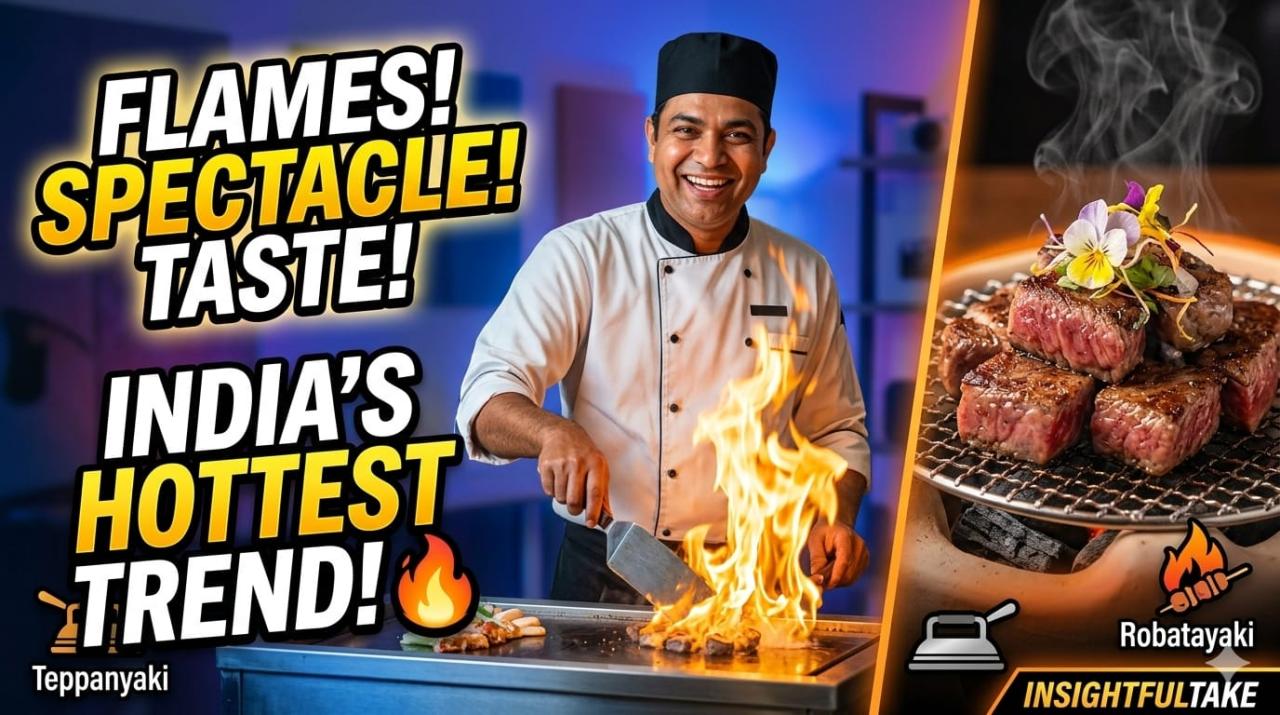
Experience the thrill of fire, flavor, and live cooking as interactive dining transforms how India eats out in 2026
Dining out used to be simple. You would walk into a restaurant and sit at a table. You would read a menu and place an order. Then, you would wait for your food to arrive from a hidden kitchen. Today, that experience is changing. People are tired of the same old routine. They want more than just a meal; they want a memory. Across the country, the spotlight has shifted back to the kitchen. Restaurants are turning the dining table into a stage.
The Rise of the Chef-Performer
In cities like Delhi, Bengaluru, and Gurugram, interactive dining is booming. The concept is simple: the guest gets a front-row seat to the action. You are no longer just a customer; you are an audience member. The chef becomes a performer who uses fire, knives, and fresh ingredients to tell a story.
This style of cooking is not entirely new, but it is reaching a new peak. TK’s Oriental Grill at the Hyatt Regency Delhi is a perfect example. It opened in 1995 as the city's first teppanyaki grill. Even after thirty years, it remains a favorite. At TK’s, guests sit around hot iron grills called "teppans." Skilled chefs flip razor-sharp knives like magicians. They turn premium wagyu beef and delicate scallops into sizzling masterpieces right before your eyes. It is flashy and fun, but the food is also seriously good.
Flames and Smoke: Teppanyaki vs. Robatayaki
Two Japanese styles are leading this interactive movement: Teppanyaki and Robatayaki.
- Teppanyaki uses a flat iron griddle. It is high-energy and fast. Chefs often toss pieces of food for guests to catch. It is about precision and speed.
- Robatayaki (or Robata) is more soulful. It is based on traditional Japanese charcoal grilling. Picture a master chef working in sync with glowing flames. They use long skewers to grill everything from miso-glazed eggplant to juicy pork belly. The smoky aroma fills the room, making the wait for food part of the enjoyment.
In Bengaluru, restaurants like Kuuraku at Nexus Shantiniketan bring this open-kitchen energy to the South. Guests can grab a seat at the bar and watch their tsukune (chicken meatballs) get a golden char. The dripping fat creates small bursts of fire, adding to the spectacle.
The Psychology of the Spectacle
Why do we love watching our food cook? Experts say it is about trust and intimacy. When you see the raw ingredients, you know the food is fresh. When you see the chef’s hard work, you appreciate the meal more. It creates a bond between the person making the food and the person eating it.
At Raifu in Gurugram, Chef Shoichi Sakashita brings his own dose of sizzle. He believes that the "hiss" of the grill and the smell of the charcoal are just as important as the taste. For many diners, this sensory overload is the perfect "Instagrammable" moment. However, beneath the flash, the techniques are ancient and difficult to master.
Beyond the Border
The trend is not limited to India. In Hong Kong, the dining scene is also embracing the flame. Restaurants like Harbor Grand Kowloon feature glowing grills and jewel-like sashimi. They pair the art of fire with the freshest seafood, like silken salmon and sweet shrimp. Whether it is a luxury hotel in Delhi or a trendy spot in Hong Kong, the goal is the same: to make the guest feel like they are part of something special.
A Future Full of Flavor
As we move through 2026, the demand for "eat-ertainment" will only grow. People want to be surprised. They want to learn about their food while they eat it. Whether it is a 10-course teppanyaki journey or a simple skewer from a robata grill, the message is clear. Diners are no longer happy staying in the dark. They want to see the flames, smell the smoke, and experience the spectacle.
The next time you book a table, look for a seat at the counter. You might find that the best part of the meal isn't just the flavor—it's the show.
Dining out used to be simple. You would walk into a restaurant and sit at a table. You would read a menu and place an order. Then, you would wait for your food to arrive from a hidden kitchen. Today, that experience is changing. People are tired of the same old routine. They want more than just a meal; they want a memory. Across the country, the spotlight has shifted back to the kitchen. Restaurants are turning the dining table into a stage.
The Rise of the Chef-Performer
In cities like Delhi, Bengaluru, and Gurugram, interactive dining is booming. The concept is simple: the guest gets a front-row seat to the action. You are no longer just a customer; you are an audience member. The chef becomes a performer who uses fire, knives, and fresh ingredients to tell a story.
This style of cooking is not entirely new, but it is reaching a new peak. TK’s Oriental Grill at the Hyatt Regency Delhi is a perfect example. It opened in 1995 as the city's first teppanyaki grill. Even after thirty years, it remains a favorite. At TK’s, guests sit around hot iron grills called "teppans." Skilled chefs flip razor-sharp knives like magicians. They turn premium wagyu beef and delicate scallops into sizzling masterpieces right before your eyes. It is flashy and fun, but the food is also seriously good.
Flames and Smoke: Teppanyaki vs. Robatayaki
Two Japanese styles are leading this interactive movement: Teppanyaki and Robatayaki.
- Teppanyaki uses a flat iron griddle. It is high-energy and fast. Chefs often toss pieces of food for guests to catch. It is about precision and speed.
- Robatayaki (or Robata) is more soulful. It is based on traditional Japanese charcoal grilling. Picture a master chef working in sync with glowing flames. They use long skewers to grill everything from miso-glazed eggplant to juicy pork belly. The smoky aroma fills the room, making the wait for food part of the enjoyment.
In Bengaluru, restaurants like Kuuraku at Nexus Shantiniketan bring this open-kitchen energy to the South. Guests can grab a seat at the bar and watch their tsukune (chicken meatballs) get a golden char. The dripping fat creates small bursts of fire, adding to the spectacle.
The Psychology of the Spectacle
Why do we love watching our food cook? Experts say it is about trust and intimacy. When you see the raw ingredients, you know the food is fresh. When you see the chef’s hard work, you appreciate the meal more. It creates a bond between the person making the food and the person eating it.
At Raifu in Gurugram, Chef Shoichi Sakashita brings his own dose of sizzle. He believes that the "hiss" of the grill and the smell of the charcoal are just as important as the taste. For many diners, this sensory overload is the perfect "Instagrammable" moment. However, beneath the flash, the techniques are ancient and difficult to master.
Beyond the Border
The trend is not limited to India. In Hong Kong, the dining scene is also embracing the flame. Restaurants like Harbor Grand Kowloon feature glowing grills and jewel-like sashimi. They pair the art of fire with the freshest seafood, like silken salmon and sweet shrimp. Whether it is a luxury hotel in Delhi or a trendy spot in Hong Kong, the goal is the same: to make the guest feel like they are part of something special.
A Future Full of Flavor
As we move through 2026, the demand for "eat-ertainment" will only grow. People want to be surprised. They want to learn about their food while they eat it. Whether it is a 10-course teppanyaki journey or a simple skewer from a robata grill, the message is clear. Diners are no longer happy staying in the dark. They want to see the flames, smell the smoke, and experience the spectacle.
The next time you book a table, look for a seat at the counter. You might find that the best part of the meal isn't just the flavor—it's the show.















Leave a Comment