
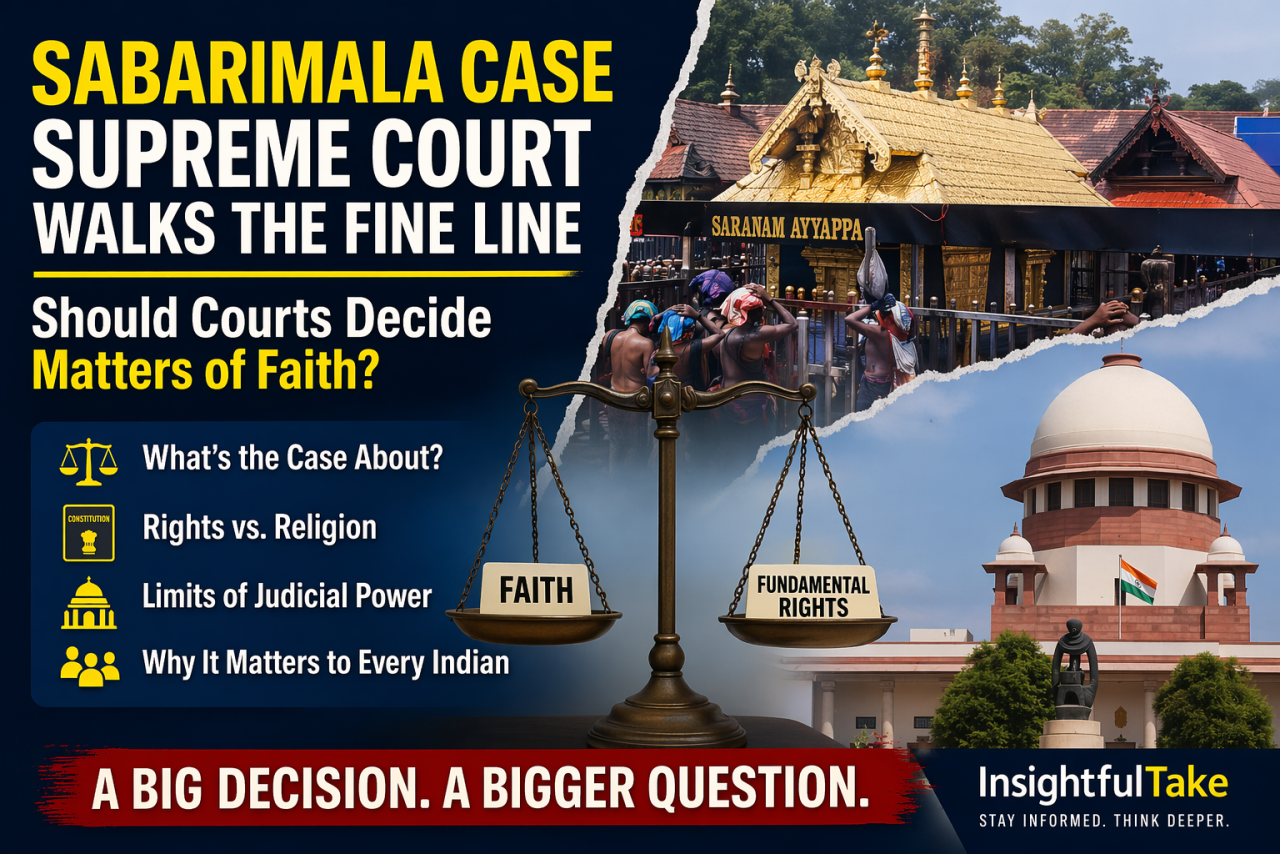
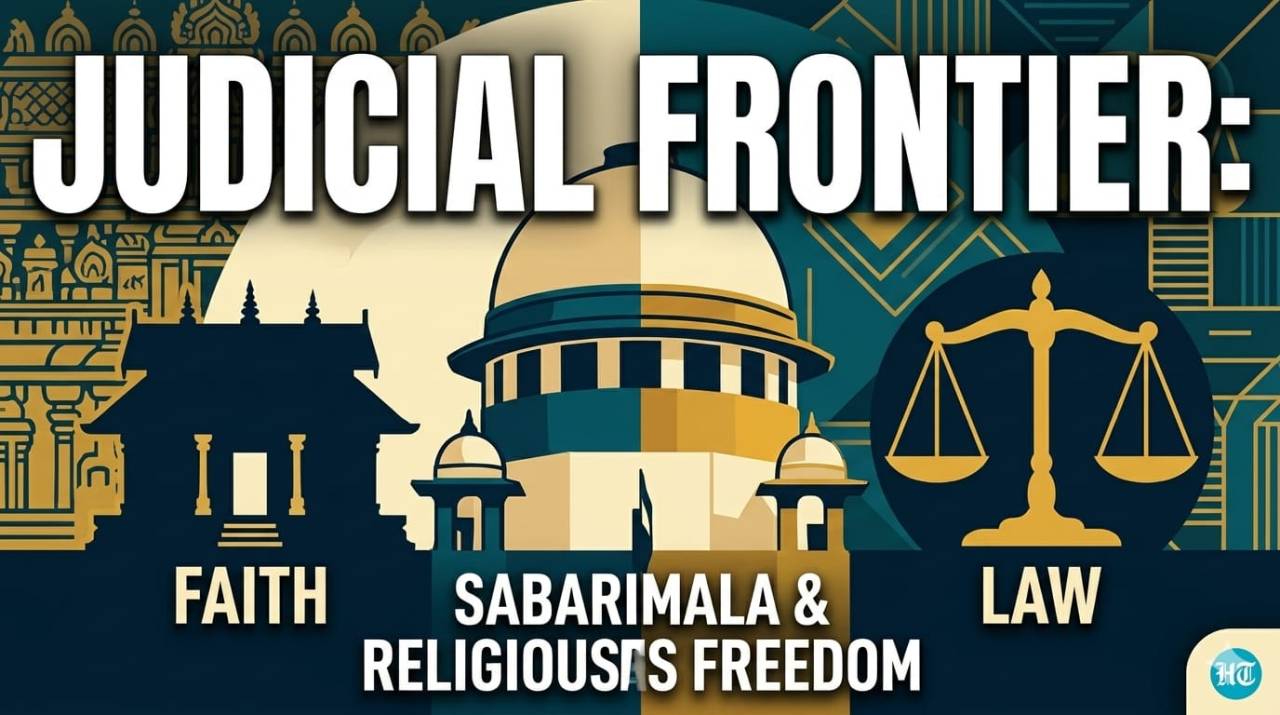
Can courts decide matters of faith? The Supreme Court’s Sabarimala hearing raises a question that affects every Indian.
The Supreme Court of India is again hearing the Sabarimala case. This case is about the entry of women into the Sabarimala temple in Kerala. It has raised big questions about religion, rights, and the role of courts. The recent hearing shows that the court is thinking carefully about its limits.
The bench, led by the Chief Justice, is examining how far courts should go in matters of faith. The judges are asking a simple but important question. Can courts decide what is essential to a religion? Or should they stay away from such issues?
In earlier judgments, courts used the idea of “essential religious practices.” This means that judges tried to decide which practices are central to a religion. But now, some judges feel this approach may not be correct. They believe that courts should not define religion.
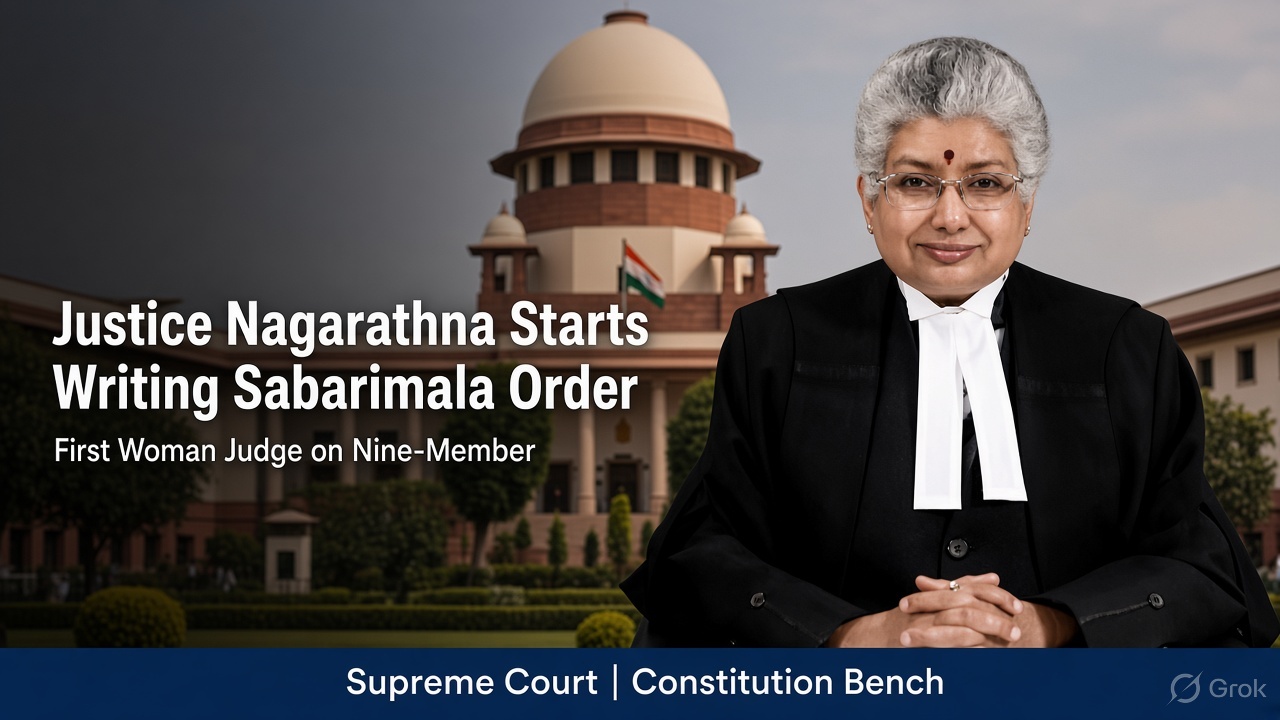
During the hearing, Justice B V Nagarathna raised concerns. She said that courts must avoid judging faith based on their own views. Religion is deeply personal. It is shaped by beliefs, traditions, and communities. So, courts may not have the right tools to decide such matters.
Another judge, Justice Sudhanshu Dhulia, also shared a similar view. He said that beliefs of individuals come from their faith. These beliefs cannot be easily separated from the religion itself. So, courts should be cautious while dealing with such issues.
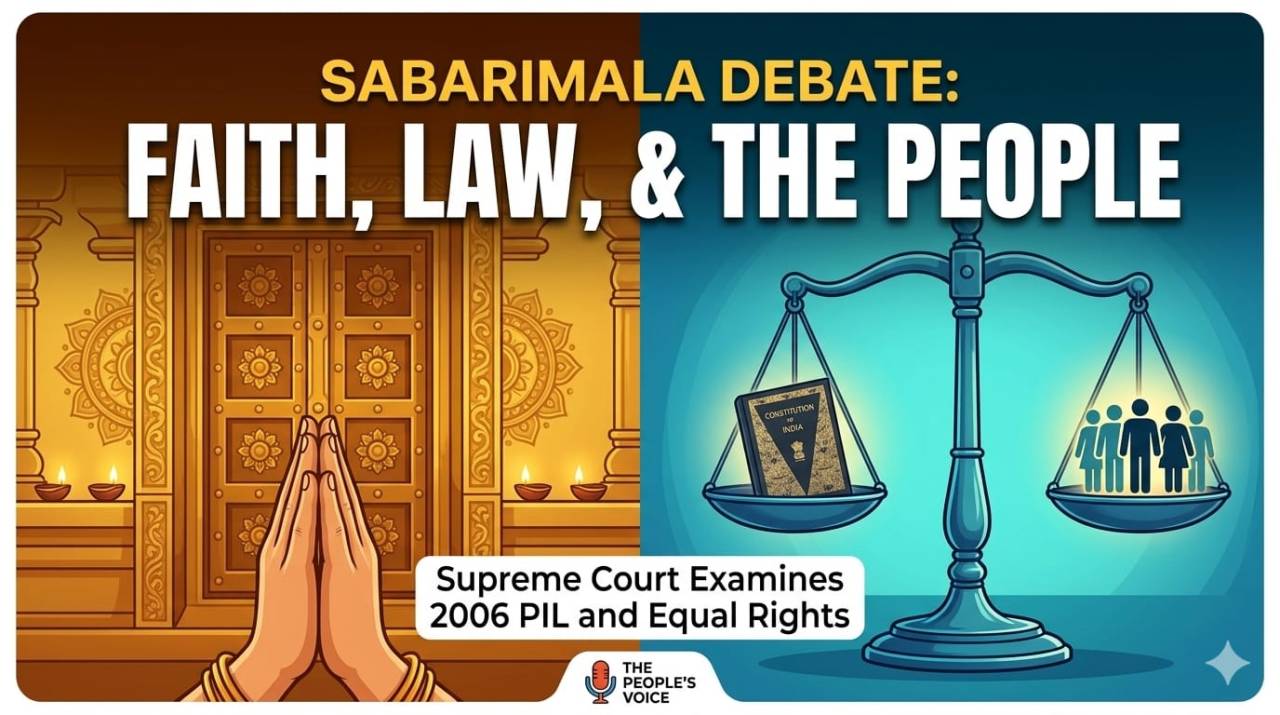
The debate is also about the Constitution. Articles 25 and 26 give people the right to practice their religion. At the same time, these rights are not absolute. The State can step in for public order, health, and morality. This creates a balance. But finding this balance is not easy.
One key issue is whether Sabarimala temple has the right to manage its own practices. Some argue that it is a religious denomination. If this is true, it may have special protection under the Constitution. Others say that it is a public temple. So, it must follow equality principles.
The earlier 2018 judgment allowed women of all ages to enter the temple. It said that banning women was against equality. But many people opposed this decision. They said that the tradition is part of the temple’s belief system. This led to protests across Kerala.
Now, the court is not just looking at Sabarimala. It is also examining a larger question. What is the role of courts in religious matters? Should they protect rights only? Or should they also reform traditions?
Some lawyers argued that courts should use an objective test. They said that judges should not rely on personal views. Instead, they should look at clear facts and constitutional values. This can help in fair decision making.
There is also a concern about overreach. If courts start deciding religious practices, it may lead to conflict. People may feel that their beliefs are being ignored. This can harm trust in institutions.
At the same time, the court cannot ignore fundamental rights. If a practice is clearly discriminatory, it must be questioned. The Constitution is the highest law. It aims to ensure equality and dignity for all citizens.
So, the challenge is to find a middle path. Courts must respect religious freedom. But they must also protect individual rights. This requires careful thinking and balanced judgment.
The hearing is still going on. The court has said that it will continue to examine the issue in detail. Its final decision will have a wide impact. It may shape how India deals with similar cases in the future.
For citizens, this case is important. It shows how law and religion interact in a democracy. It also reminds us of the need for mutual respect. Different people may have different beliefs. But all must follow the Constitution.
In the end, the Sabarimala case is not just about one temple. It is about the idea of India. It is about how we balance tradition and modern values. The Supreme Court’s decision will help define this balance for years to come.
The Supreme Court of India is again hearing the Sabarimala case. This case is about the entry of women into the Sabarimala temple in Kerala. It has raised big questions about religion, rights, and the role of courts. The recent hearing shows that the court is thinking carefully about its limits.
The bench, led by the Chief Justice, is examining how far courts should go in matters of faith. The judges are asking a simple but important question. Can courts decide what is essential to a religion? Or should they stay away from such issues?
In earlier judgments, courts used the idea of “essential religious practices.” This means that judges tried to decide which practices are central to a religion. But now, some judges feel this approach may not be correct. They believe that courts should not define religion.
During the hearing, Justice B V Nagarathna raised concerns. She said that courts must avoid judging faith based on their own views. Religion is deeply personal. It is shaped by beliefs, traditions, and communities. So, courts may not have the right tools to decide such matters.
Another judge, Justice Sudhanshu Dhulia, also shared a similar view. He said that beliefs of individuals come from their faith. These beliefs cannot be easily separated from the religion itself. So, courts should be cautious while dealing with such issues.
The debate is also about the Constitution. Articles 25 and 26 give people the right to practice their religion. At the same time, these rights are not absolute. The State can step in for public order, health, and morality. This creates a balance. But finding this balance is not easy.
One key issue is whether Sabarimala temple has the right to manage its own practices. Some argue that it is a religious denomination. If this is true, it may have special protection under the Constitution. Others say that it is a public temple. So, it must follow equality principles.
The earlier 2018 judgment allowed women of all ages to enter the temple. It said that banning women was against equality. But many people opposed this decision. They said that the tradition is part of the temple’s belief system. This led to protests across Kerala.
Now, the court is not just looking at Sabarimala. It is also examining a larger question. What is the role of courts in religious matters? Should they protect rights only? Or should they also reform traditions?
Some lawyers argued that courts should use an objective test. They said that judges should not rely on personal views. Instead, they should look at clear facts and constitutional values. This can help in fair decision making.
There is also a concern about overreach. If courts start deciding religious practices, it may lead to conflict. People may feel that their beliefs are being ignored. This can harm trust in institutions.
At the same time, the court cannot ignore fundamental rights. If a practice is clearly discriminatory, it must be questioned. The Constitution is the highest law. It aims to ensure equality and dignity for all citizens.
So, the challenge is to find a middle path. Courts must respect religious freedom. But they must also protect individual rights. This requires careful thinking and balanced judgment.
The hearing is still going on. The court has said that it will continue to examine the issue in detail. Its final decision will have a wide impact. It may shape how India deals with similar cases in the future.
For citizens, this case is important. It shows how law and religion interact in a democracy. It also reminds us of the need for mutual respect. Different people may have different beliefs. But all must follow the Constitution.
In the end, the Sabarimala case is not just about one temple. It is about the idea of India. It is about how we balance tradition and modern values. The Supreme Court’s decision will help define this balance for years to come.
















Leave a Comment