
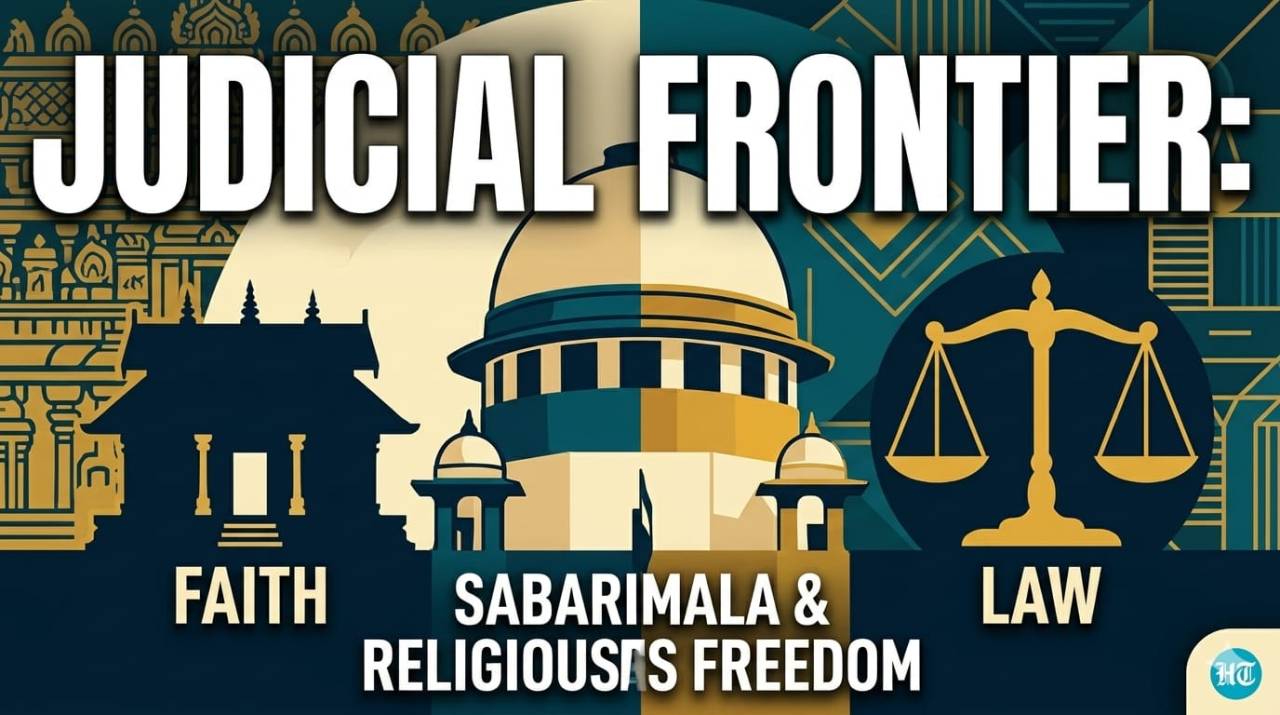
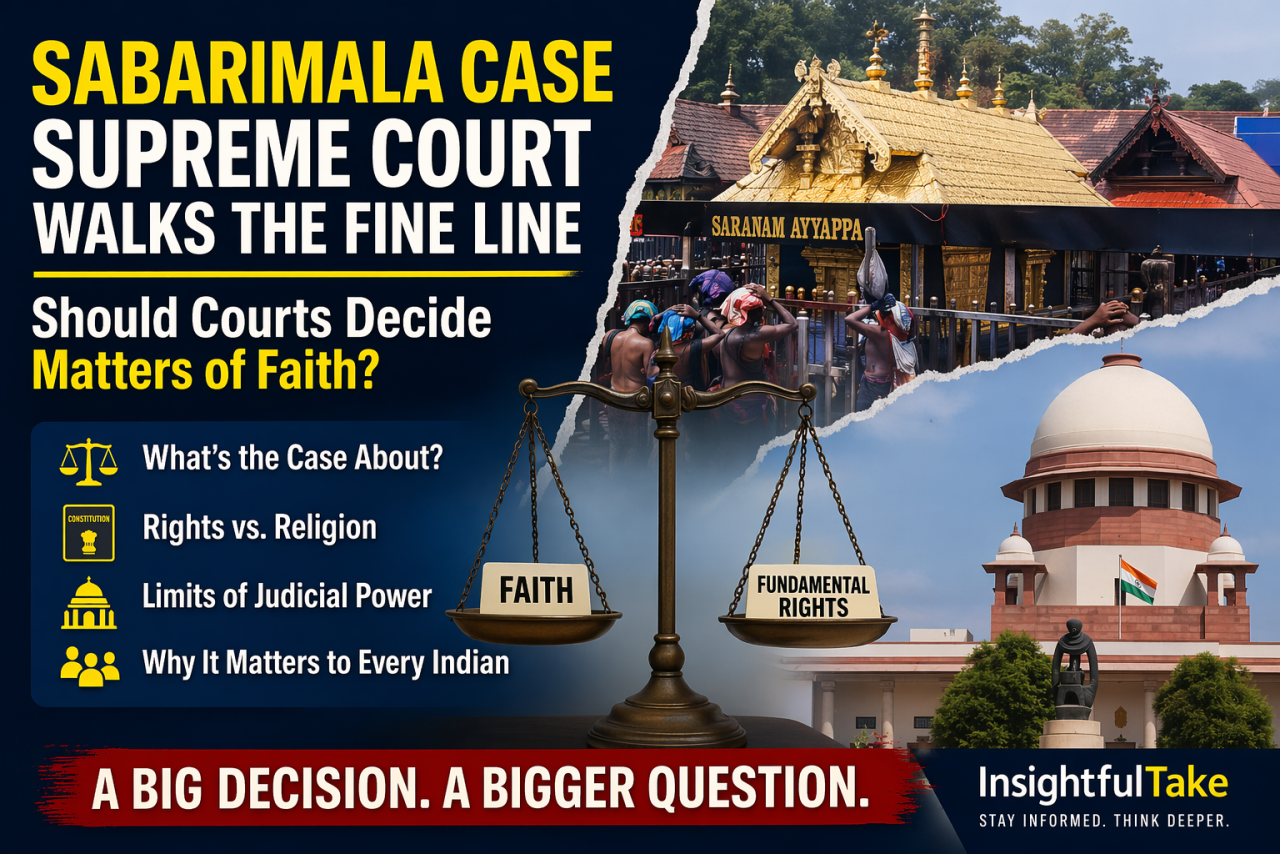
Can faith stand above the Constitution? The Supreme Court’s Sabarimala hearing could redefine the limits of religious freedom in India.
In a high-stakes constitutional face-off, the Supreme Court of India has begun navigating the delicate boundary between individual rights and the autonomy of religious institutions. The ongoing hearing before a nine-judge Constitution Bench, led by Chief Justice Surya Kant, has brought into sharp focus a fundamental question: To what extent can a secular court adjudicate on matters of faith?
The proceedings, centered on the Sabarimala Temple’s restriction on women of menstruating age, have evolved into a broader inquiry into the "Essential Religious Practices" doctrine. Over the course of hearings since April 7, 2026, the Union government and the Supreme Court bench presented starkly different visions of how the Constitution should interact with ancient traditions.
The Centre’s Argument: Faith Beyond Review
The Union government, represented by Solicitor General Tushar Mehta, has mounted a vigorous defense of denominational autonomy. The core of the Centre’s submission is that religious faith and the specific attributes of a deity are "non-justiciable." According to the government, the restriction at Sabarimala is not an act of gender discrimination but a practice intrinsically linked to the character of Lord Ayyappa in the form of a Naisthika Brahmachari (eternal celibate).
The Solicitor General argued that courts are "institutionally ill-equipped" to interpret theological questions or religious scriptures. He contended that an inquiry into whether a practice is "rational," "modern," or "scientifically defensible" would amount to judges substituting their own philosophical views for the internal faith of a community.
A significant portion of the Centre’s argument targeted the concept of "Constitutional Morality." The government urged the court to reject this doctrine, which was central to the 2018 Sabarimala verdict. The Solicitor General described it as a "judicially evolved, vague, and indeterminate concept" that lacks a clear textural basis in the Constitution. In a notable move, the Centre also questioned the 2018 Joseph Shine judgment, which decriminalized adultery, arguing that the court had relied too heavily on subjective notions of morality rather than established legal principles.
The Bench’s Response: No Immunity for Superstition
The nine-judge bench, however, has signaled a clear reluctance to grant religion a "hands-off" status. During the exchange on April 8, the bench asserted its authority to scrutinize practices that might be "egregiously violative" of constitutional guarantees.
Chief Justice Surya Kant remarked that while courts should exercise restraint, they cannot be "completely denuded" of jurisdiction. He emphasized that if a practice "shocks the conscience of the court" or is contrary to public order, morality, or health, the court must intervene.
The bench was particularly skeptical of the Centre’s claim that secular courts cannot determine what constitutes "superstition." Justice Ahsanuddin Amanullah noted that courts retain the authority to examine whether a practice bears the "colour of superstition," even if the eventual reform lies with the legislature. Adding weight to this, Justice Joymalya Bagchi raised a hypothetical scenario involving witchcraft; he questioned whether the court would remain powerless if such a practice were claimed as a religious tradition in the absence of legislative action.
Key Points of Contention
The dialogue between the bar and the bench has highlighted several critical areas of constitutional tension:
- Essential vs. Non-Essential: The Centre argues that the "essentiality" of a practice must be determined by the denomination itself based on its scriptures. The bench, conversely, maintains that it must have the power to define these boundaries to prevent rights violations.
- Societal vs. Constitutional Morality: The government contends that the "morality" mentioned in Articles 25 and 26 refers to "societal" or "public" morality. The court, however, is grappling with how to reconcile traditional beliefs with the "transformative" values of the Constitution.
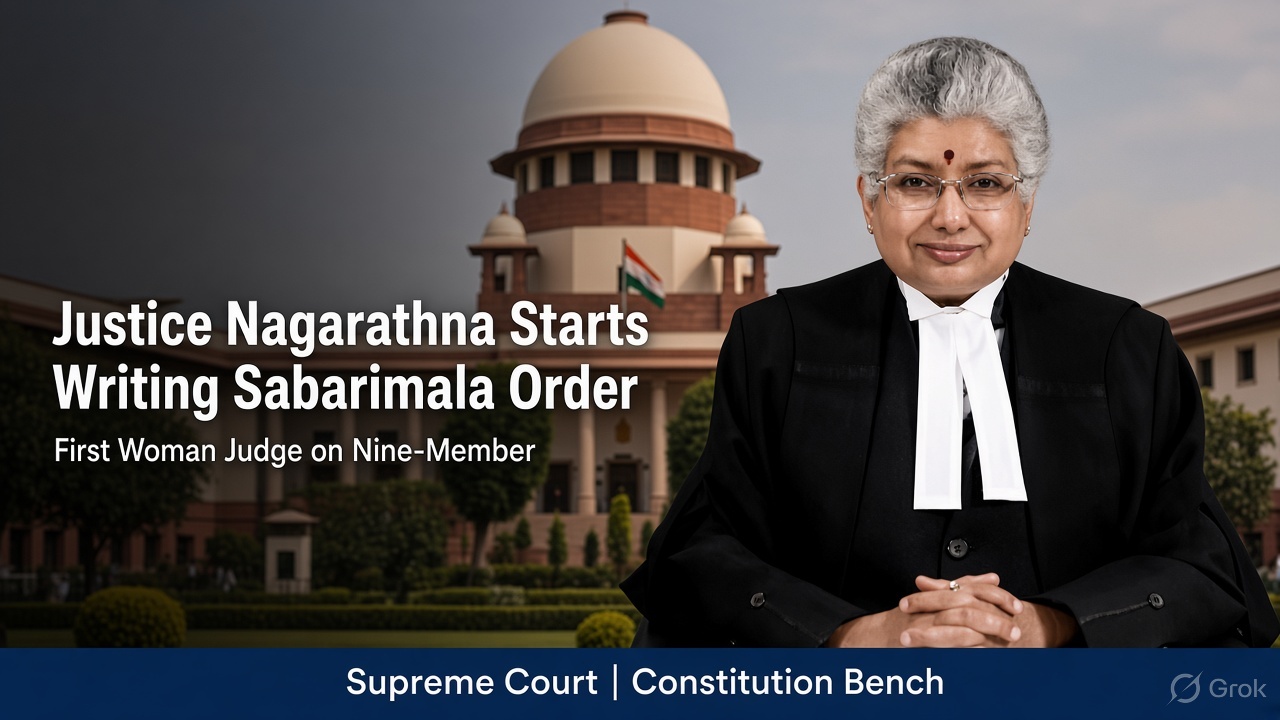
- The Role of the Devotee: Justice B.V. Nagarathna raised questions regarding the locus standi of the original petitioners, noting that a "stranger to a religious denomination" might not have the right to challenge its internal practices in a Public Interest Litigation (PIL).
The Evolving Legal Landscape
The outcome of this reference will have ramifications far beyond the Sabarimala temple. The bench is tasked with answering seven broad questions that will affect other pending disputes, including the entry of women into mosques and the rights of Parsi women married to non-Parsis.
|
Stakeholder |
Primary Position |
|
Union Government |
Religious practices are protected from judicial review unless they violate public order, health, or morality as understood by society. |
|
Supreme Court Bench |
Judicial review is a core constitutional power; faith cannot be used as a shield for practices that violate fundamental rights or "shock the conscience." |
|
Kerala Government |
The state government (LDF) has sought to be heard alongside the review petitioners, marking a shift toward supporting the 2018 verdict's intent for social reform. |
As the hearing continues, the Supreme Court faces the monumental task of balancing two competing constitutional values: the right of an individual to equality and the right of a religious group to manage its own affairs. The bench must now decide if the "internal morality" of a faith can ever be completely isolated from the "constitutional morality" of the state.
Also Read: Article 17 vs Sabarimala: Supreme Court Debates If Menstrual Ban Equals Untouchability
https://www.insightfultake.com/details/article-17-vs-sabarimala-supreme-court-debates-if-menstrual-ban-equals-untouchability
























Leave a Comment