
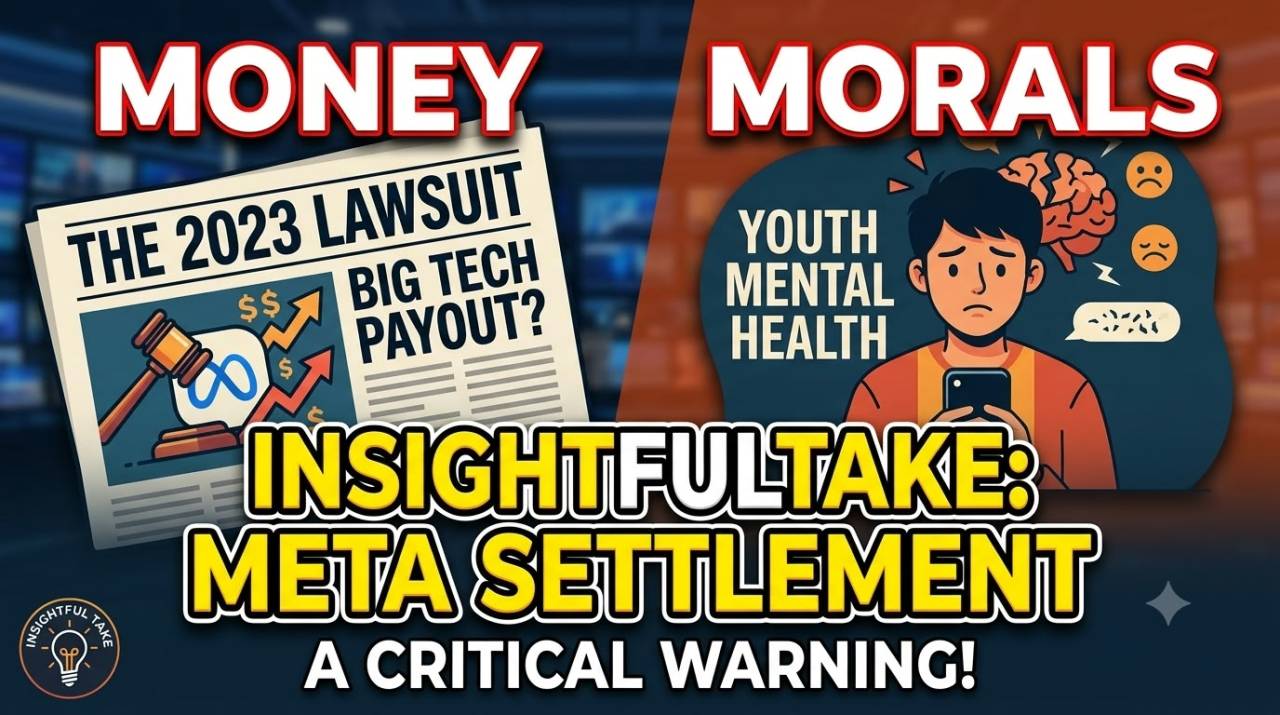
What happens when the platforms built to keep young people online are forced to rethink the very designs that keep them scrolling?
The resolution of a high-profile legal challenge against major technology companies marks an important turning point in the growing debate over youth mental health and digital media exposure.
At the heart of the 2023 lawsuit were allegations that social media platforms had contributed to addictive patterns of use among young people, misled the public about product-related risks and violated data privacy protections.
The settlement brings the legal battle closer to an end, but it also raises a larger question. Can financial penalties and corporate promises genuinely address the psychological and developmental risks associated with social media, or will deeper structural changes be required across the technology industry?
Financial Penalties vs. Tech Revenues
The monetary settlement represents a significant legal outcome, but its financial impact on technology giants such as Meta appears relatively modest when compared with their enormous revenues and profits.
Meta, for instance, reported a profit of $23 billion in the final quarter of 2025 alone. Against that backdrop, the settlement may have limited impact on the company's overall finances.
There is also uncertainty about why Meta agreed to the deal. It may have been intended to avoid the possibility of a larger penalty at trial. Another possibility is that the company sought to prevent potentially damaging internal documents from becoming public. The precise motivation, however, remains a matter of speculation.
Money also cannot fully measure the harm at the centre of the dispute.
Millions of children and adolescents have spent years growing up in an environment shaped by algorithmic recommendations, endless scrolling and highly personalised content. Putting a precise financial value on the psychological and developmental consequences of that exposure is extraordinarily difficult.
The impact of the settlement is further complicated by the fact that a significant portion of the overall compensation depends on similar agreements being reached with other major platforms, including TikTok and YouTube.
The Bigger Change May Be in Platform Design
The most consequential part of the agreement may not be the financial compensation but the operational and design changes expected from the platforms.
Under the settlement, companies are required to introduce safety controls and changes to aspects of their platforms with the aim of reducing potential risks to young users.
Several areas are particularly important.
Safety-First System Architecture
Social media platforms may need to rethink elements of their user experience and algorithmic feeds that can encourage compulsive scrolling and prolonged engagement among younger users.
That could mean changes to how content is recommended, how feeds are structured and how frequently young users are encouraged to remain on a platform.
Stronger Mental Health Safeguards
Platforms are also expected to strengthen measures designed to reduce potentially harmful exposure.
These safeguards could include targeted interventions, tighter controls around certain types of content and mechanisms designed to identify or interrupt patterns of excessive use.
The broader objective is to move beyond simply responding to harm after it occurs and instead build greater protection into the architecture of the platforms themselves.
Industry-Wide Alignment
There is another important challenge. Safety measures are unlikely to be fully effective if they exist on only one platform.
If one company introduces stricter protections while its competitors continue to maximise engagement through less restrictive systems, young users can simply move elsewhere.
That makes coordination across major platforms particularly important. Meaningful protection will depend on whether comparable standards are adopted throughout the industry rather than implemented selectively.
What the Settlement Means for Big Tech
The settlement sends a clear message to the technology industry. The design choices made by social media companies are increasingly being examined not simply as business decisions but as issues with potential consequences for public health and child welfare.
For years, the success of social media platforms has been closely associated with engagement. The longer users stay, the more opportunities platforms have to serve content and generate advertising revenue.
That business model becomes more complicated when the most engaged users are children and teenagers.
The legal challenge therefore goes beyond one lawsuit or a single group of companies. It raises fundamental questions about how digital platforms should be designed when their commercial incentives may not always align with the interests of their youngest users.
Regulation Will Matter More Than the Settlement
A financial settlement can resolve a legal dispute, but it cannot by itself solve the underlying problem.
The real test will be whether the promised changes become permanent features of platform design and whether companies remain accountable for their effectiveness.
That will require continued regulatory scrutiny, independent oversight and regular evaluation of how algorithmic systems affect young users.
Without that pressure, financial settlements risk becoming little more than another operating expense for enormously profitable technology companies.
The more significant outcome would be a shift in the industry's approach to design itself.
If social media platforms begin treating youth safety as a fundamental design requirement rather than an issue to address after litigation, the settlement could become a genuine turning point.
If not, the debate over children, social media and corporate accountability is unlikely to end with this lawsuit.
The resolution of a high-profile legal challenge against major technology companies marks an important turning point in the growing debate over youth mental health and digital media exposure.
At the heart of the 2023 lawsuit were allegations that social media platforms had contributed to addictive patterns of use among young people, misled the public about product-related risks and violated data privacy protections.
The settlement brings the legal battle closer to an end, but it also raises a larger question. Can financial penalties and corporate promises genuinely address the psychological and developmental risks associated with social media, or will deeper structural changes be required across the technology industry?
Financial Penalties vs. Tech Revenues
The monetary settlement represents a significant legal outcome, but its financial impact on technology giants such as Meta appears relatively modest when compared with their enormous revenues and profits.
Meta, for instance, reported a profit of $23 billion in the final quarter of 2025 alone. Against that backdrop, the settlement may have limited impact on the company's overall finances.
There is also uncertainty about why Meta agreed to the deal. It may have been intended to avoid the possibility of a larger penalty at trial. Another possibility is that the company sought to prevent potentially damaging internal documents from becoming public. The precise motivation, however, remains a matter of speculation.
Money also cannot fully measure the harm at the centre of the dispute.
Millions of children and adolescents have spent years growing up in an environment shaped by algorithmic recommendations, endless scrolling and highly personalised content. Putting a precise financial value on the psychological and developmental consequences of that exposure is extraordinarily difficult.
The impact of the settlement is further complicated by the fact that a significant portion of the overall compensation depends on similar agreements being reached with other major platforms, including TikTok and YouTube.
The Bigger Change May Be in Platform Design
The most consequential part of the agreement may not be the financial compensation but the operational and design changes expected from the platforms.
Under the settlement, companies are required to introduce safety controls and changes to aspects of their platforms with the aim of reducing potential risks to young users.
Several areas are particularly important.
Safety-First System Architecture
Social media platforms may need to rethink elements of their user experience and algorithmic feeds that can encourage compulsive scrolling and prolonged engagement among younger users.
That could mean changes to how content is recommended, how feeds are structured and how frequently young users are encouraged to remain on a platform.
Stronger Mental Health Safeguards
Platforms are also expected to strengthen measures designed to reduce potentially harmful exposure.
These safeguards could include targeted interventions, tighter controls around certain types of content and mechanisms designed to identify or interrupt patterns of excessive use.
The broader objective is to move beyond simply responding to harm after it occurs and instead build greater protection into the architecture of the platforms themselves.
Industry-Wide Alignment
There is another important challenge. Safety measures are unlikely to be fully effective if they exist on only one platform.
If one company introduces stricter protections while its competitors continue to maximise engagement through less restrictive systems, young users can simply move elsewhere.
That makes coordination across major platforms particularly important. Meaningful protection will depend on whether comparable standards are adopted throughout the industry rather than implemented selectively.
What the Settlement Means for Big Tech
The settlement sends a clear message to the technology industry. The design choices made by social media companies are increasingly being examined not simply as business decisions but as issues with potential consequences for public health and child welfare.
For years, the success of social media platforms has been closely associated with engagement. The longer users stay, the more opportunities platforms have to serve content and generate advertising revenue.
That business model becomes more complicated when the most engaged users are children and teenagers.
The legal challenge therefore goes beyond one lawsuit or a single group of companies. It raises fundamental questions about how digital platforms should be designed when their commercial incentives may not always align with the interests of their youngest users.
Regulation Will Matter More Than the Settlement
A financial settlement can resolve a legal dispute, but it cannot by itself solve the underlying problem.
The real test will be whether the promised changes become permanent features of platform design and whether companies remain accountable for their effectiveness.
That will require continued regulatory scrutiny, independent oversight and regular evaluation of how algorithmic systems affect young users.
Without that pressure, financial settlements risk becoming little more than another operating expense for enormously profitable technology companies.
The more significant outcome would be a shift in the industry's approach to design itself.
If social media platforms begin treating youth safety as a fundamental design requirement rather than an issue to address after litigation, the settlement could become a genuine turning point.
If not, the debate over children, social media and corporate accountability is unlikely to end with this lawsuit.

























Leave a Comment