
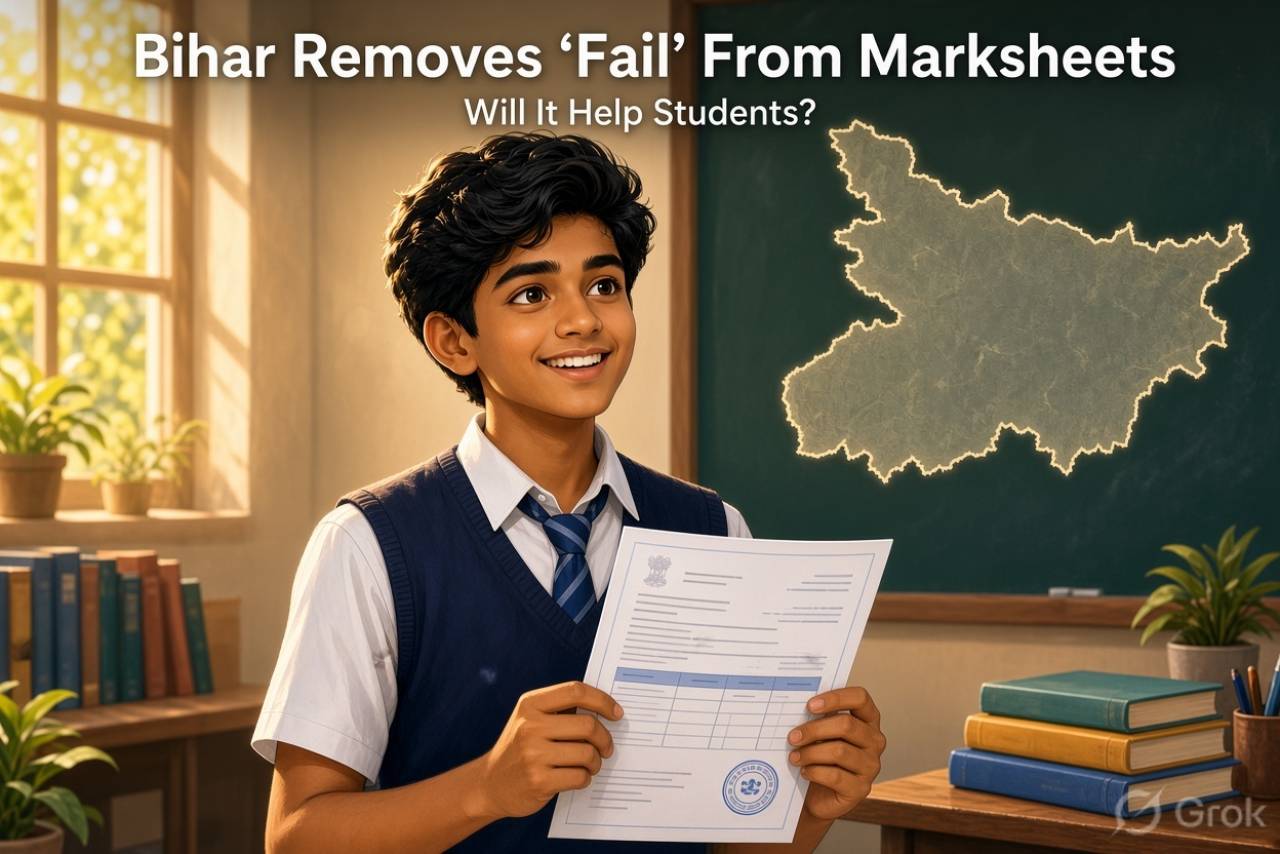
Bihar is replacing the word “Fail” on Class 10 and 12 marksheets with “Eligible for Skill Training”. The move may reduce stigma, but it cannot solve the deeper problems behind student failure.
The Bihar government has decided that students who do not clear the Class 10 and Class 12 board examinations will no longer see the word “Fail” printed on their marksheets.
Instead, their certificates will carry the phrase “Eligible for Skill Training”, directing them towards vocational courses offered by the Bihar Board of Open Schooling and Examination (BBOSE).
Education Minister Mithilesh Tiwari announced the decision on Friday, saying that failure in an examination does not necessarily reflect a student's talent or future potential. The government has approved the plan, and the Education Department is expected to issue formal directions soon.
The state is also planning month-long special classes for students appearing for the matriculation supplementary examination. The aim is to give students another opportunity to clear the exam rather than allowing one unsuccessful attempt to become a permanent setback.
A kinder word on paper
At first glance, the decision appears compassionate. And there is a real problem behind it.
Bihar's board examinations have had a difficult history. In some years, pass percentages have fallen below 50 per cent. Result announcements have sometimes been followed by student protests and, in extreme cases, reports of suicides linked to examination-related distress.
For a teenager who has spent months preparing for an examination, seeing “Fail” printed on an official certificate can feel like more than a description of an academic result. It can feel like a judgment on one's ability.
Removing the word may therefore help reduce some of that stigma.
A student who struggles in mathematics, science or another subject may still have talent in carpentry, electrical work, computers, design, healthcare, hospitality or dozens of other fields. An examination conducted on particular subjects and on particular days cannot measure every form of ability.
In that sense, replacing “Fail” with “Eligible for Skill Training” sends a more constructive message.
But does a new label solve an old problem?
This is where the government's decision deserves closer examination.
Changing the language on a marksheet does not change the reason a student failed.
Bihar's education system has long faced challenges involving classroom capacity, teacher availability, learning gaps and the quality of instruction. Many students reach secondary school without having developed strong foundations in reading, writing and mathematics.
There is also the continuing problem of an examination system that can place considerable importance on memorisation rather than understanding.
None of these problems disappear when the word “Fail” disappears from a certificate.
If students continue to struggle at the same rate, the state may simply have created a more polite way of describing the same outcome.
Will colleges and employers see the difference?
There is another question that cannot be ignored.
Marksheets are not merely documents given to students. They are official academic records used for college admissions, scholarships, competitive examinations and, in some cases, employment.
If a student has not cleared the required examination, institutions will still need to know that fact.
So what happens when “Eligible for Skill Training” becomes widely understood as the new term for an unsuccessful result?
Colleges and employers are likely to adapt. A new phrase can quickly acquire the same meaning as the old one.
The stigma may therefore not disappear. It may simply move from one word to another.
The success of the policy will depend on whether “Eligible for Skill Training” represents a genuine alternative pathway or merely a softer label for academic failure.
Skill training can be an opportunity
That distinction is important.
Vocational education should not be presented as something students are pushed into because they could not succeed academically. It should be treated as a legitimate educational and career pathway in its own right.
If a student receives meaningful training, recognised certification and a realistic route into employment, the new system could offer something valuable.
For many young people, practical skills may provide a better career path than repeatedly sitting for the same examination.
But that requires investment.
Skill training needs good instructors, proper equipment, recognised certification, industry connections and pathways into decent employment. Simply directing students towards a course is not enough.
A vocational certificate without employment opportunities could eventually become another piece of paper.
What matters more than the marksheet
The Bihar government's other education initiatives may ultimately matter far more than the removal of one word.
The “Vidya Saathi” app is intended to connect students with around 75,000 teachers for academic support, while the government is also working to fill teaching vacancies through the ongoing TRE-4 recruitment process.
If these measures improve classroom support, strengthen teaching and reduce learning gaps, they could make a real difference.
That is where the focus should remain.
A student should ideally receive help before reaching the examination hall, not simply a different message after failing to clear the exam.
Extra classes, remedial teaching, better teacher availability and early identification of learning gaps can prevent failure more effectively than changing the terminology on a certificate.
The real test begins in the classroom
There is nothing wrong with making education less humiliating.
A teenager's future should not be defined by one examination result, and a failure in Class 10 or Class 12 should never be treated as a failure in life.
But compassion in education cannot stop at changing language.
If Bihar wants to remove the stigma attached to failure, it must also reduce the conditions that produce repeated failure.
The most important question, therefore, is not what will be printed on a marksheet after the examination.
It is what happens in the classroom before the examination begins.
For students, the message is simple: one mark, one subject or even one failed examination does not define your ability.
For the government, however, the standard is higher.
A kinder marksheet is welcome. A better education system is essential.
The Bihar government has decided that students who do not clear the Class 10 and Class 12 board examinations will no longer see the word “Fail” printed on their marksheets.
Instead, their certificates will carry the phrase “Eligible for Skill Training”, directing them towards vocational courses offered by the Bihar Board of Open Schooling and Examination (BBOSE).
Education Minister Mithilesh Tiwari announced the decision on Friday, saying that failure in an examination does not necessarily reflect a student's talent or future potential. The government has approved the plan, and the Education Department is expected to issue formal directions soon.
The state is also planning month-long special classes for students appearing for the matriculation supplementary examination. The aim is to give students another opportunity to clear the exam rather than allowing one unsuccessful attempt to become a permanent setback.
A kinder word on paper
At first glance, the decision appears compassionate. And there is a real problem behind it.
Bihar's board examinations have had a difficult history. In some years, pass percentages have fallen below 50 per cent. Result announcements have sometimes been followed by student protests and, in extreme cases, reports of suicides linked to examination-related distress.
For a teenager who has spent months preparing for an examination, seeing “Fail” printed on an official certificate can feel like more than a description of an academic result. It can feel like a judgment on one's ability.
Removing the word may therefore help reduce some of that stigma.
A student who struggles in mathematics, science or another subject may still have talent in carpentry, electrical work, computers, design, healthcare, hospitality or dozens of other fields. An examination conducted on particular subjects and on particular days cannot measure every form of ability.
In that sense, replacing “Fail” with “Eligible for Skill Training” sends a more constructive message.
But does a new label solve an old problem?
This is where the government's decision deserves closer examination.
Changing the language on a marksheet does not change the reason a student failed.
Bihar's education system has long faced challenges involving classroom capacity, teacher availability, learning gaps and the quality of instruction. Many students reach secondary school without having developed strong foundations in reading, writing and mathematics.
There is also the continuing problem of an examination system that can place considerable importance on memorisation rather than understanding.
None of these problems disappear when the word “Fail” disappears from a certificate.
If students continue to struggle at the same rate, the state may simply have created a more polite way of describing the same outcome.
Will colleges and employers see the difference?
There is another question that cannot be ignored.
Marksheets are not merely documents given to students. They are official academic records used for college admissions, scholarships, competitive examinations and, in some cases, employment.
If a student has not cleared the required examination, institutions will still need to know that fact.
So what happens when “Eligible for Skill Training” becomes widely understood as the new term for an unsuccessful result?
Colleges and employers are likely to adapt. A new phrase can quickly acquire the same meaning as the old one.
The stigma may therefore not disappear. It may simply move from one word to another.
The success of the policy will depend on whether “Eligible for Skill Training” represents a genuine alternative pathway or merely a softer label for academic failure.
Skill training can be an opportunity
That distinction is important.
Vocational education should not be presented as something students are pushed into because they could not succeed academically. It should be treated as a legitimate educational and career pathway in its own right.
If a student receives meaningful training, recognised certification and a realistic route into employment, the new system could offer something valuable.
For many young people, practical skills may provide a better career path than repeatedly sitting for the same examination.
But that requires investment.
Skill training needs good instructors, proper equipment, recognised certification, industry connections and pathways into decent employment. Simply directing students towards a course is not enough.
A vocational certificate without employment opportunities could eventually become another piece of paper.
What matters more than the marksheet
The Bihar government's other education initiatives may ultimately matter far more than the removal of one word.
The “Vidya Saathi” app is intended to connect students with around 75,000 teachers for academic support, while the government is also working to fill teaching vacancies through the ongoing TRE-4 recruitment process.
If these measures improve classroom support, strengthen teaching and reduce learning gaps, they could make a real difference.
That is where the focus should remain.
A student should ideally receive help before reaching the examination hall, not simply a different message after failing to clear the exam.
Extra classes, remedial teaching, better teacher availability and early identification of learning gaps can prevent failure more effectively than changing the terminology on a certificate.
The real test begins in the classroom
There is nothing wrong with making education less humiliating.
A teenager's future should not be defined by one examination result, and a failure in Class 10 or Class 12 should never be treated as a failure in life.
But compassion in education cannot stop at changing language.
If Bihar wants to remove the stigma attached to failure, it must also reduce the conditions that produce repeated failure.
The most important question, therefore, is not what will be printed on a marksheet after the examination.
It is what happens in the classroom before the examination begins.
For students, the message is simple: one mark, one subject or even one failed examination does not define your ability.
For the government, however, the standard is higher.
A kinder marksheet is welcome. A better education system is essential.





















Leave a Comment