
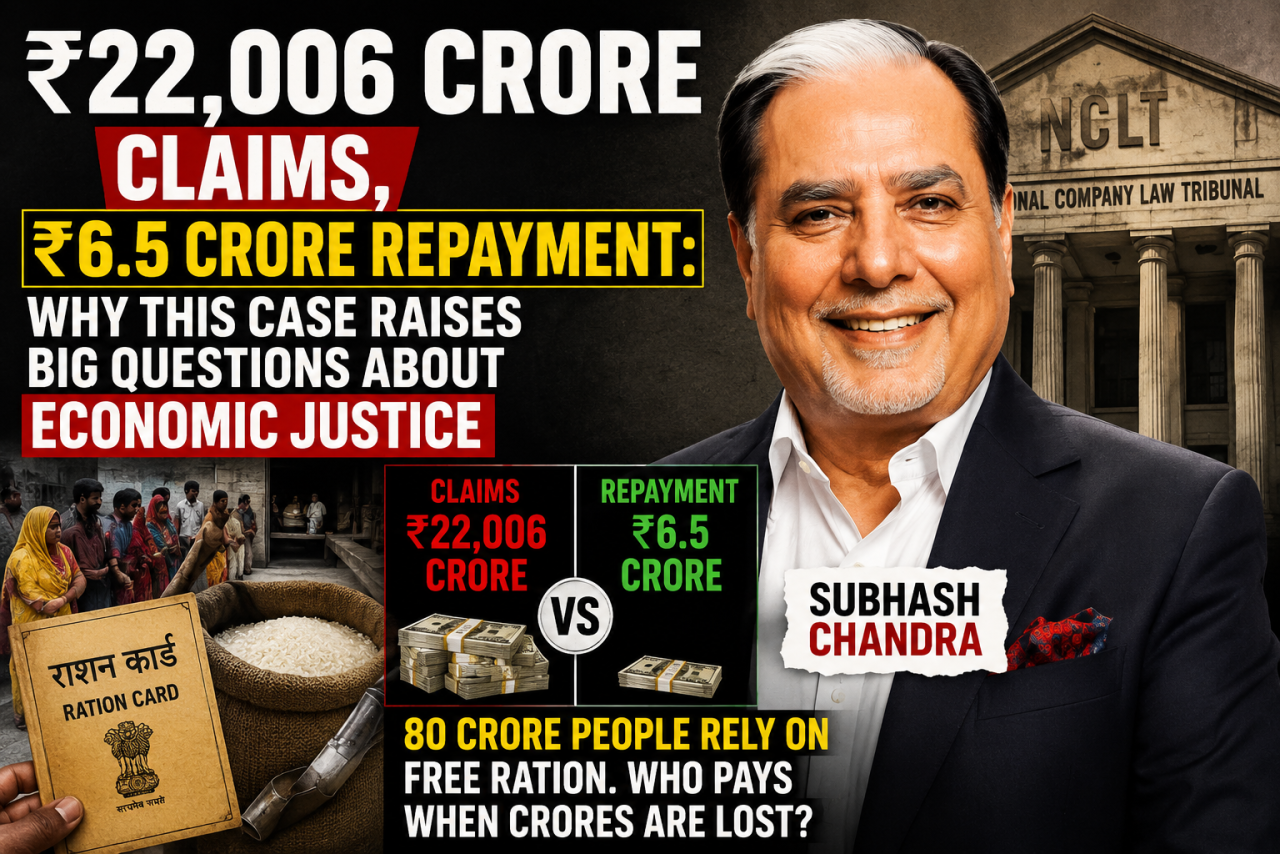
When ordinary Indians struggle to repay small loans, a ₹22,006 crore claim ending in a ₹6.5 crore repayment plan raises a much bigger question: who really pays when corporate debts go unpaid?
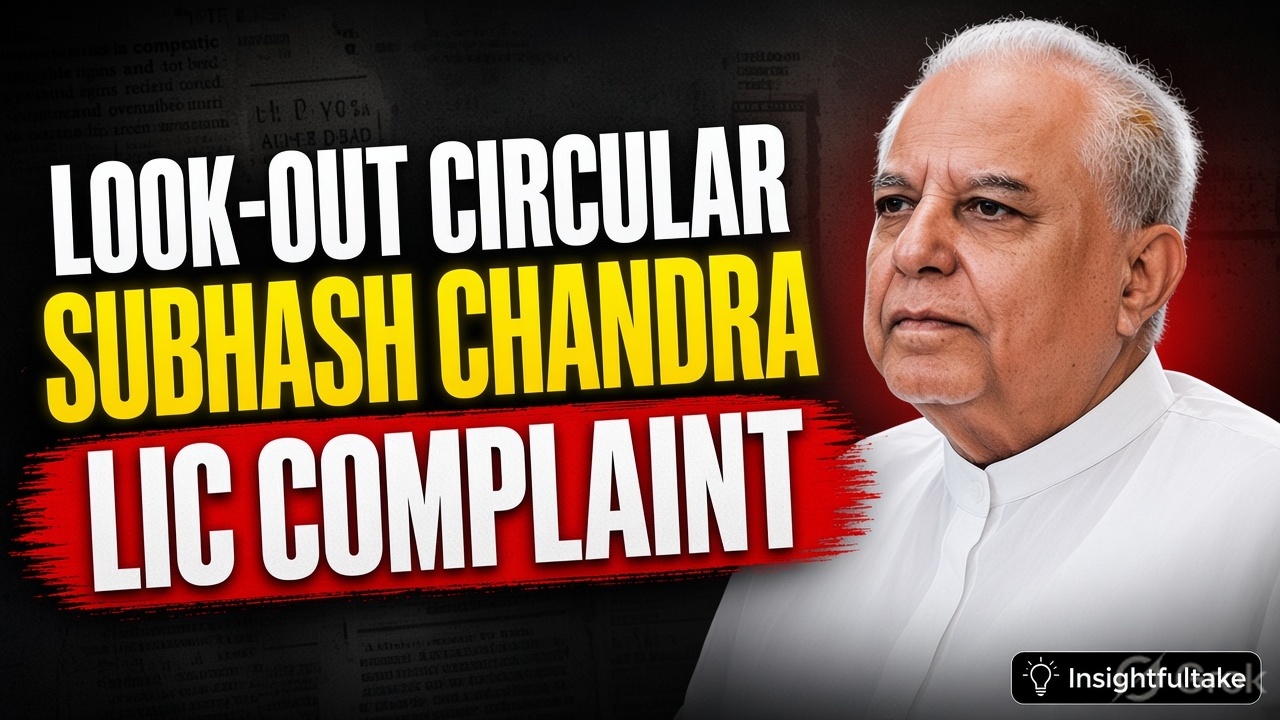
The National Company Law Tribunal’s decision in the insolvency case involving businessman Subhash Chandra has raised a serious question about how India treats financial failure at different levels of society.
The NCLT has approved a repayment plan under which Chandra will pay about ₹6.5 crore against admitted claims of nearly ₹22,006.57 crore. The claims relate to personal guarantees given by him for loans taken by companies linked to the Essel Group.
It is important to make one point clear. The ₹22,006 crore is not a personal loan taken by Chandra. He was a guarantor for corporate loans. The companies that borrowed the money continue to have their own liabilities.
Yet the huge difference between the amount claimed and the amount offered by Chandra raises a larger public question.
Does India's economic system treat the rich and the poor differently when they fail to repay money?
That question cannot simply be dismissed as a matter for the courts or financial institutions. It is also a question of public trust.
A Huge Difference in Numbers
The admitted claims in the case are around ₹22,006 crore, while Chandra's proposed personal contribution is around ₹6.5 crore.
The difference is extraordinary.
The repayment plan was supported by a large majority of creditors in the committee, while several creditors opposed it. The NCLT nevertheless approved the plan after considering the objections.
This is where the government must face difficult questions.
The government may not have directly decided the repayment amount. The NCLT is a legal body and its decisions are governed by the Insolvency and Bankruptcy Code.
But the government is responsible for creating and improving the financial system in which such cases are decided.
If the system is allowing creditors to recover only a very small amount from a case involving thousands of crores, the government should explain whether the existing rules are strong enough.
What About Ordinary Borrowers?
India's banking system deals with millions of ordinary borrowers.
A farmer struggling with a loan, a small shopkeeper facing losses or a salaried person unable to pay an instalment can face serious pressure from banks and recovery agencies.
For an ordinary family, even a loan of a few lakh rupees can become a major burden.
The consequences can include loss of property, legal proceedings and years of financial difficulty.
Now compare that experience with the world of large corporate borrowing.
Large companies can borrow thousands of crores. If the business fails, the debt can go through restructuring, insolvency proceedings and negotiated settlements.
There are valid economic reasons for this system. A failed company should not always be forced into immediate liquidation because that could destroy jobs and business assets.
But there must also be a limit.
A system designed to protect businesses should not become a system that protects powerful borrowers at the cost of ordinary citizens and public institutions.
The Government's Responsibility
The Centre has repeatedly spoken about improving recovery of bad loans and making the Insolvency and Bankruptcy Code more effective.
That makes cases such as this important.
The government should not simply say that the NCLT has taken the decision and therefore it has nothing more to say.
The bigger issue is whether the financial system is delivering the best possible recovery for creditors.
If the answer is yes, the government should explain why the personal contribution is so small.
If the answer is no, then the government should examine what went wrong.
This is particularly important when public financial institutions are among the creditors.
The newspaper report notes that institutions including LIC Housing Finance and several banks opposed the plan. LIC Housing Finance, for example, has an admitted claim running into hundreds of crores.
When public institutions lose money, the issue does not remain limited to businessmen and bankers.
The wider financial system ultimately carries the burden.
And Then There Are 80 Crore Indians
The contrast becomes even more serious when we look at India's social welfare system.
The Central government provides free foodgrains to around 80 crore people under its food security arrangements.
For many poor families, this ration is not a political slogan. It is an important part of their monthly food supply.
India therefore faces two very different financial realities.
On one side are millions of families who depend on government support to meet basic needs.
On the other side is a corporate system where liabilities worth thousands of crores can be settled through complex insolvency proceedings.
This does not mean that the government should take money from one person and give it directly to ration beneficiaries.
The comparison is about priorities.
If the government can demand financial discipline from ordinary citizens, it must demand equally strong accountability from India's most powerful business groups.
Is the Government Siding With Industrialists?
This is where political criticism becomes unavoidable.
There is no evidence in the material available here that the Union government ordered the NCLT to approve Chandra's repayment plan. Saying that would go beyond the facts.
But the government can still be criticised for a wider problem.
India has seen repeated debates over corporate debt, bank write-offs and loan recoveries. In such an environment, every large settlement creates a public perception that powerful industrialists receive more room to negotiate than ordinary borrowers.
The government has a responsibility to remove that perception.
It should ensure that every possible asset is examined, every legitimate claim is pursued and every public creditor gets a fair chance to recover its money.
The law should not become softer simply because the borrower is wealthy or politically influential.
The Real Question Is About Equality
The Subhash Chandra case is therefore bigger than one businessman.
It is about whether economic justice in India works equally for everyone.
A poor citizen cannot normally tell a bank that he will repay a tiny fraction of what he owes and expect the matter to end easily.
A large corporate borrower operates within a different system because corporate insolvency has different rules.
That difference may be legally necessary.
But it must not become an excuse for weak accountability.
India needs businessmen who take risks, create companies and generate employment. It also needs banks that are willing to lend.
But it needs something else just as much.
It needs a financial system in which success belongs to the entrepreneur, but failure does not quietly become the burden of the public.
The government should therefore treat this case as a warning, not merely as another tribunal order.
The question is simple.
If ₹22,006 crore can lead to a repayment plan of just ₹6.5 crore, who ultimately pays for the difference?
For India's poorest citizens, that question matters.
They may not understand the language of insolvency law.
But they understand one thing very clearly.
When they owe money, they are expected to pay. They want the same principle to apply at the top.
The National Company Law Tribunal’s decision in the insolvency case involving businessman Subhash Chandra has raised a serious question about how India treats financial failure at different levels of society.
The NCLT has approved a repayment plan under which Chandra will pay about ₹6.5 crore against admitted claims of nearly ₹22,006.57 crore. The claims relate to personal guarantees given by him for loans taken by companies linked to the Essel Group.
It is important to make one point clear. The ₹22,006 crore is not a personal loan taken by Chandra. He was a guarantor for corporate loans. The companies that borrowed the money continue to have their own liabilities.
Yet the huge difference between the amount claimed and the amount offered by Chandra raises a larger public question.
Does India's economic system treat the rich and the poor differently when they fail to repay money?
That question cannot simply be dismissed as a matter for the courts or financial institutions. It is also a question of public trust.
A Huge Difference in Numbers
The admitted claims in the case are around ₹22,006 crore, while Chandra's proposed personal contribution is around ₹6.5 crore.
The difference is extraordinary.
The repayment plan was supported by a large majority of creditors in the committee, while several creditors opposed it. The NCLT nevertheless approved the plan after considering the objections.
This is where the government must face difficult questions.
The government may not have directly decided the repayment amount. The NCLT is a legal body and its decisions are governed by the Insolvency and Bankruptcy Code.
But the government is responsible for creating and improving the financial system in which such cases are decided.
If the system is allowing creditors to recover only a very small amount from a case involving thousands of crores, the government should explain whether the existing rules are strong enough.
What About Ordinary Borrowers?
India's banking system deals with millions of ordinary borrowers.
A farmer struggling with a loan, a small shopkeeper facing losses or a salaried person unable to pay an instalment can face serious pressure from banks and recovery agencies.
For an ordinary family, even a loan of a few lakh rupees can become a major burden.
The consequences can include loss of property, legal proceedings and years of financial difficulty.
Now compare that experience with the world of large corporate borrowing.
Large companies can borrow thousands of crores. If the business fails, the debt can go through restructuring, insolvency proceedings and negotiated settlements.
There are valid economic reasons for this system. A failed company should not always be forced into immediate liquidation because that could destroy jobs and business assets.
But there must also be a limit.
A system designed to protect businesses should not become a system that protects powerful borrowers at the cost of ordinary citizens and public institutions.
The Government's Responsibility
The Centre has repeatedly spoken about improving recovery of bad loans and making the Insolvency and Bankruptcy Code more effective.
That makes cases such as this important.
The government should not simply say that the NCLT has taken the decision and therefore it has nothing more to say.
The bigger issue is whether the financial system is delivering the best possible recovery for creditors.
If the answer is yes, the government should explain why the personal contribution is so small.
If the answer is no, then the government should examine what went wrong.
This is particularly important when public financial institutions are among the creditors.
The newspaper report notes that institutions including LIC Housing Finance and several banks opposed the plan. LIC Housing Finance, for example, has an admitted claim running into hundreds of crores.
When public institutions lose money, the issue does not remain limited to businessmen and bankers.
The wider financial system ultimately carries the burden.
And Then There Are 80 Crore Indians
The contrast becomes even more serious when we look at India's social welfare system.
The Central government provides free foodgrains to around 80 crore people under its food security arrangements.
For many poor families, this ration is not a political slogan. It is an important part of their monthly food supply.
India therefore faces two very different financial realities.
On one side are millions of families who depend on government support to meet basic needs.
On the other side is a corporate system where liabilities worth thousands of crores can be settled through complex insolvency proceedings.
This does not mean that the government should take money from one person and give it directly to ration beneficiaries.
The comparison is about priorities.
If the government can demand financial discipline from ordinary citizens, it must demand equally strong accountability from India's most powerful business groups.
Is the Government Siding With Industrialists?
This is where political criticism becomes unavoidable.
There is no evidence in the material available here that the Union government ordered the NCLT to approve Chandra's repayment plan. Saying that would go beyond the facts.
But the government can still be criticised for a wider problem.
India has seen repeated debates over corporate debt, bank write-offs and loan recoveries. In such an environment, every large settlement creates a public perception that powerful industrialists receive more room to negotiate than ordinary borrowers.
The government has a responsibility to remove that perception.
It should ensure that every possible asset is examined, every legitimate claim is pursued and every public creditor gets a fair chance to recover its money.
The law should not become softer simply because the borrower is wealthy or politically influential.
The Real Question Is About Equality
The Subhash Chandra case is therefore bigger than one businessman.
It is about whether economic justice in India works equally for everyone.
A poor citizen cannot normally tell a bank that he will repay a tiny fraction of what he owes and expect the matter to end easily.
A large corporate borrower operates within a different system because corporate insolvency has different rules.
That difference may be legally necessary.
But it must not become an excuse for weak accountability.
India needs businessmen who take risks, create companies and generate employment. It also needs banks that are willing to lend.
But it needs something else just as much.
It needs a financial system in which success belongs to the entrepreneur, but failure does not quietly become the burden of the public.
The government should therefore treat this case as a warning, not merely as another tribunal order.
The question is simple.
If ₹22,006 crore can lead to a repayment plan of just ₹6.5 crore, who ultimately pays for the difference?
For India's poorest citizens, that question matters.
They may not understand the language of insolvency law.
But they understand one thing very clearly.
When they owe money, they are expected to pay. They want the same principle to apply at the top.




















Leave a Comment