
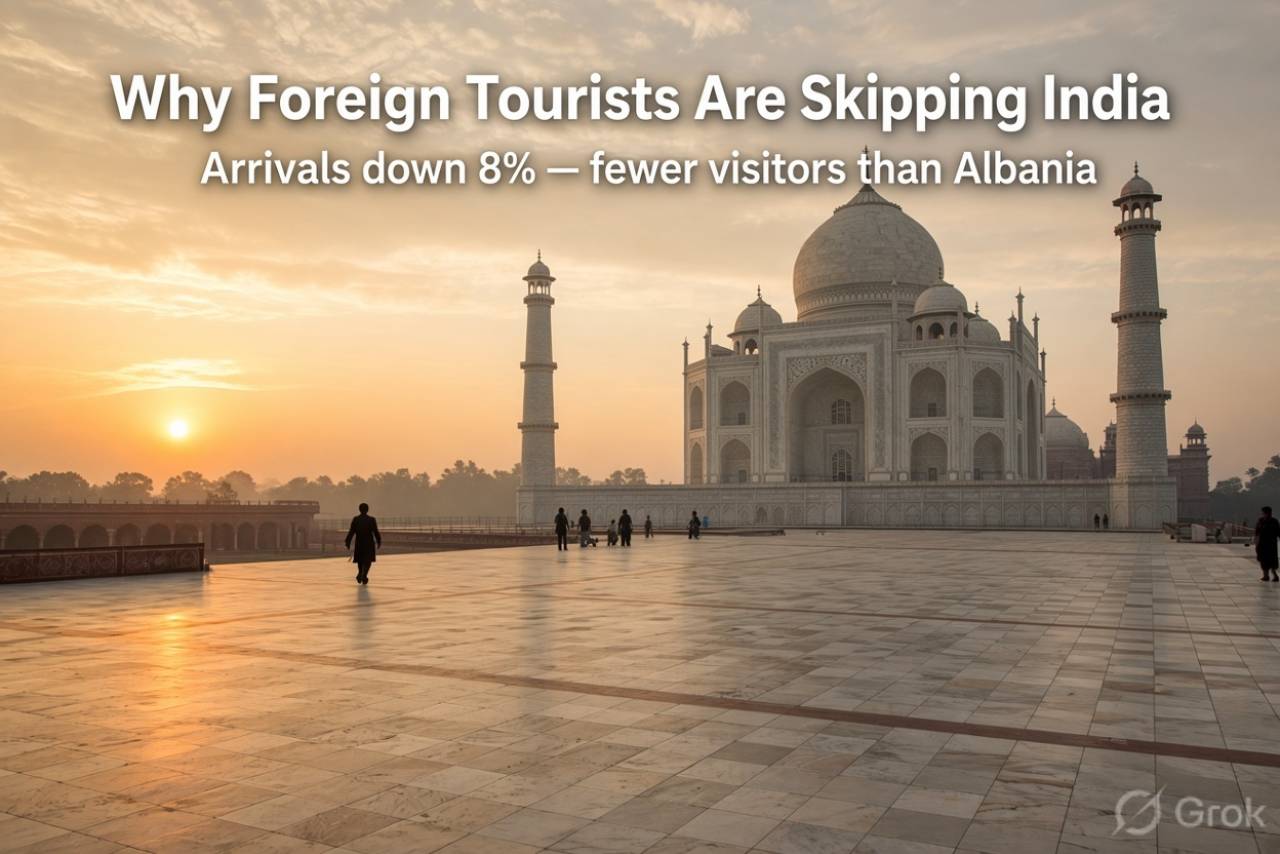
India has the Taj Mahal, the Himalayas, Kerala’s backwaters and centuries of culture. Yet foreign tourist arrivals fell 8.07% to 9.15 million in 2025. So what is keeping the world away?
India has some of the world's most famous tourist attractions. The Taj Mahal, the ghats of Varanasi, the Himalayas, Kerala's backwaters, Rajasthan's forts, its beaches and national parks attract visitors from across the country and the world.
India also offers a rich mix of history, culture, food, religions, festivals and traditions. Few countries have such a wide variety of places and experiences.
Yet India is not attracting as many foreign tourists as its tourism potential suggests.
According to the Ministry of Tourism, foreign tourist arrivals fell 8.07% last year to 9.15 million. The number was still about 16% below the 2019 level, before the COVID-19 pandemic.
One comparison is particularly striking. India received fewer foreign tourists than Albania, a country with a population of less than three million.
India's problem is not a lack of tourist attractions. Several practical problems make travel difficult for international visitors. These include scams, safety concerns, transport problems and visa procedures.
Scams Remain a Problem
Scams are among the complaints often made by foreign tourists visiting India.
Some visitors report being charged much more than expected by taxi drivers. Others encounter fake guides, aggressive touts or misleading offers near airports, railway stations and popular tourist sites.
Such incidents may involve only a small number of people, but they can affect India's image.
A tourist who feels cheated is likely to share the experience with friends or post about it online. Websites and social media platforms have made such experiences easy for other travellers to find.
A visitor planning a trip can read hundreds of reviews before booking a flight. Repeated complaints about scams can therefore influence the decision to visit India.
Safety Concerns Affect Tourist Choices
Safety is another concern, especially for women travelling alone.
Millions of tourists visit India every year without facing serious problems. However, reports of harassment and crime can affect how foreign visitors view the country.
For families and solo travellers, the perception of safety can be as important as actual crime levels.
Tourist areas need visible police presence, clear complaint systems and quick action when visitors report problems. These measures can help tourists feel more comfortable while travelling.
Transport Can Make Travel Difficult
India has improved its transport infrastructure in recent years. Metro systems have expanded in major cities, airports have improved and several highways now provide better connections.
But travelling between cities and reaching smaller tourist destinations can still be difficult.
Foreign visitors may find railway bookings confusing. Public transport is not equally reliable in all parts of the country. Last-mile connectivity is also a problem in many tourist locations.
Domestic flights provide another option, but prices can sometimes be high and delays can affect travel plans.
These problems encourage many foreign tourists to stay within popular circuits such as Delhi, Agra and Jaipur. They may avoid destinations that require several changes of transport or complicated planning.
Visa Procedures Need to Be Easier
India has expanded its e-visa system, which has made travel easier for many visitors.
However, the visa process can still involve documentation, waiting periods and technical problems.
Tourists have many countries to choose from. Some destinations offer visa-free entry or visa-on-arrival facilities. Others have very simple online visa systems.
When travellers compare destinations, even small difficulties can influence their decision.
Making the visa process faster and simpler could therefore help India attract more visitors.
India Faces Strong Competition
India is competing with countries across Southeast Asia, the Middle East and Europe for international tourists.
Many of these countries have invested in airports, public transport, tourist information, safety measures and digital services. They have also worked to make travel easier from the moment a visitor arrives.
India has invested in infrastructure as well, but the quality of the tourist experience is not consistent everywhere.
A famous monument may attract a visitor to India, but the experience of getting there, finding transport, booking tickets, dealing with local services and returning safely also matters.
Tourism Is Important for the Economy
Foreign tourists contribute to many parts of the economy.
Hotels, restaurants, airlines, taxis, tour operators, guides, handicraft sellers and local shops all depend on tourism. Tourism can also create jobs in smaller towns and rural areas.
More foreign visitors could therefore bring additional income to communities across India.
But increasing tourist numbers requires more than advertising.
India Needs Better Tourist Services
India does not need to convince the world that it has beautiful places.
The Taj Mahal, the Himalayas, Kerala, Rajasthan and India's wildlife already provide strong reasons to visit.
The bigger challenge is improving the experience of travelling through the country.
Authorities need to take stronger action against scams, improve safety in tourist areas, make public transport easier to use and improve last-mile connectivity. The visa system should also be as simple and reliable as possible.
Tourism workers can be trained to provide better and more consistent services. Clear prices and reliable information can reduce many common problems faced by visitors.
Marketing can bring attention to India, but a good tourist experience is what can bring visitors back and encourage them to recommend the country to others.
India Has What Tourists Want
India has the attractions needed to become one of the world's leading tourism destinations.
The challenge is turning that potential into actual visits.
The fall in foreign tourist arrivals to 9.15 million last year, and the continued gap from the 2019 level, shows that India still has work to do.
The country has history, culture, food, wildlife and landscapes in abundance.
What it needs now is a tourism system that makes it easier, safer and more convenient for foreigners to experience them.
India has some of the world's most famous tourist attractions. The Taj Mahal, the ghats of Varanasi, the Himalayas, Kerala's backwaters, Rajasthan's forts, its beaches and national parks attract visitors from across the country and the world.
India also offers a rich mix of history, culture, food, religions, festivals and traditions. Few countries have such a wide variety of places and experiences.
Yet India is not attracting as many foreign tourists as its tourism potential suggests.
According to the Ministry of Tourism, foreign tourist arrivals fell 8.07% last year to 9.15 million. The number was still about 16% below the 2019 level, before the COVID-19 pandemic.
One comparison is particularly striking. India received fewer foreign tourists than Albania, a country with a population of less than three million.
India's problem is not a lack of tourist attractions. Several practical problems make travel difficult for international visitors. These include scams, safety concerns, transport problems and visa procedures.
Scams Remain a Problem
Scams are among the complaints often made by foreign tourists visiting India.
Some visitors report being charged much more than expected by taxi drivers. Others encounter fake guides, aggressive touts or misleading offers near airports, railway stations and popular tourist sites.
Such incidents may involve only a small number of people, but they can affect India's image.
A tourist who feels cheated is likely to share the experience with friends or post about it online. Websites and social media platforms have made such experiences easy for other travellers to find.
A visitor planning a trip can read hundreds of reviews before booking a flight. Repeated complaints about scams can therefore influence the decision to visit India.
Safety Concerns Affect Tourist Choices
Safety is another concern, especially for women travelling alone.
Millions of tourists visit India every year without facing serious problems. However, reports of harassment and crime can affect how foreign visitors view the country.
For families and solo travellers, the perception of safety can be as important as actual crime levels.
Tourist areas need visible police presence, clear complaint systems and quick action when visitors report problems. These measures can help tourists feel more comfortable while travelling.
Transport Can Make Travel Difficult
India has improved its transport infrastructure in recent years. Metro systems have expanded in major cities, airports have improved and several highways now provide better connections.
But travelling between cities and reaching smaller tourist destinations can still be difficult.
Foreign visitors may find railway bookings confusing. Public transport is not equally reliable in all parts of the country. Last-mile connectivity is also a problem in many tourist locations.
Domestic flights provide another option, but prices can sometimes be high and delays can affect travel plans.
These problems encourage many foreign tourists to stay within popular circuits such as Delhi, Agra and Jaipur. They may avoid destinations that require several changes of transport or complicated planning.
Visa Procedures Need to Be Easier
India has expanded its e-visa system, which has made travel easier for many visitors.
However, the visa process can still involve documentation, waiting periods and technical problems.
Tourists have many countries to choose from. Some destinations offer visa-free entry or visa-on-arrival facilities. Others have very simple online visa systems.
When travellers compare destinations, even small difficulties can influence their decision.
Making the visa process faster and simpler could therefore help India attract more visitors.
India Faces Strong Competition
India is competing with countries across Southeast Asia, the Middle East and Europe for international tourists.
Many of these countries have invested in airports, public transport, tourist information, safety measures and digital services. They have also worked to make travel easier from the moment a visitor arrives.
India has invested in infrastructure as well, but the quality of the tourist experience is not consistent everywhere.
A famous monument may attract a visitor to India, but the experience of getting there, finding transport, booking tickets, dealing with local services and returning safely also matters.
Tourism Is Important for the Economy
Foreign tourists contribute to many parts of the economy.
Hotels, restaurants, airlines, taxis, tour operators, guides, handicraft sellers and local shops all depend on tourism. Tourism can also create jobs in smaller towns and rural areas.
More foreign visitors could therefore bring additional income to communities across India.
But increasing tourist numbers requires more than advertising.
India Needs Better Tourist Services
India does not need to convince the world that it has beautiful places.
The Taj Mahal, the Himalayas, Kerala, Rajasthan and India's wildlife already provide strong reasons to visit.
The bigger challenge is improving the experience of travelling through the country.
Authorities need to take stronger action against scams, improve safety in tourist areas, make public transport easier to use and improve last-mile connectivity. The visa system should also be as simple and reliable as possible.
Tourism workers can be trained to provide better and more consistent services. Clear prices and reliable information can reduce many common problems faced by visitors.
Marketing can bring attention to India, but a good tourist experience is what can bring visitors back and encourage them to recommend the country to others.
India Has What Tourists Want
India has the attractions needed to become one of the world's leading tourism destinations.
The challenge is turning that potential into actual visits.
The fall in foreign tourist arrivals to 9.15 million last year, and the continued gap from the 2019 level, shows that India still has work to do.
The country has history, culture, food, wildlife and landscapes in abundance.
What it needs now is a tourism system that makes it easier, safer and more convenient for foreigners to experience them.
















Leave a Comment