
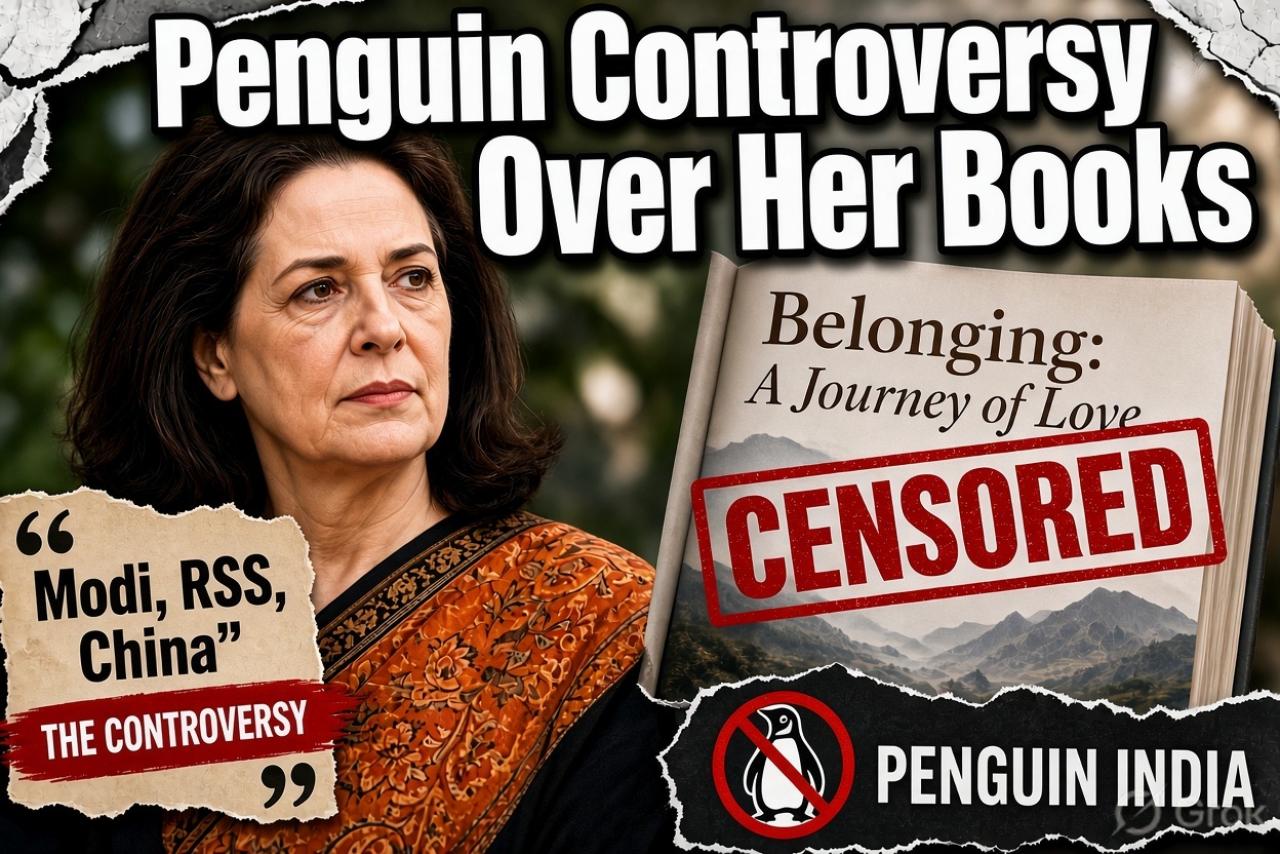
Sonia Gandhi’s memoir has run into trouble in India after Penguin Random House India reportedly objected to passages concerning Narendra Modi, the RSS and India-China border tensions.
Congress leader Sonia Gandhi’s plan to publish her memoir in India through Penguin Random House India (PRHI) has reportedly fallen apart after disagreements over sections dealing with Prime Minister Narendra Modi, the Rashtriya Swayamsevak Sangh (RSS) and India’s border tensions with China.
The dispute reportedly emerged during the editing process, with Gandhi unwilling to remove or substantially alter several passages. The development has turned the publication of one of India’s most closely watched political memoirs into a wider debate over editorial independence, political sensitivity and the limits of publishing in a politically polarised environment.
The memoir, titled Belonging: A Journey of Love, is scheduled for international release on November 10 through Alfred A. Knopf, an imprint of Penguin. The Indian edition was expected to be published by PRHI.
That arrangement has now reportedly collapsed. HarperCollins is said to be close to finalising an agreement to publish and distribute the book in India, although the publisher has not publicly confirmed the arrangement.
What Led to the Disagreement
According to an aide to Gandhi, the publisher raised concerns about several passages during the editing process. The negotiations eventually broke down over three or four sections that Gandhi was unwilling to change or remove.
Among the most contentious passages are reportedly Gandhi’s recollections of her interactions with Narendra Modi.
The aide said Gandhi has written about remarks attributed to Modi, including his reported reference to her as a “Jersey cow” during a public rally in Gujarat in 2004.
The memoir also reportedly contains sections dealing with India-China relations and alleged Chinese incursions into Indian territory. The exact nature of the passages concerning the RSS has not been made public.
The aide indicated that Gandhi’s treatment of the China border issue was also a point of disagreement with the publisher.
The negotiations were reportedly handled by independent literary agents rather than by the Congress party itself. Most Congress leaders are also said to be unaware of the memoir’s complete contents.
That distinction is important. The book is being presented as Gandhi’s personal account and not as an officially vetted Congress document.
Penguin and Congress Offer Different Versions
PRHI has disputed the suggestion that it simply withdrew from the project because Gandhi refused to make editorial changes.
The publisher has maintained that fact-checking and editorial recommendations are a normal part of the publishing process. It has also indicated that it remained willing to proceed with the book.
The Congress side, however, has questioned that explanation.
Gandhi’s aide has argued that Penguin’s international arm is proceeding with publication while the Indian edition faced objections over certain passages. From the Congress perspective, this raises questions about why similar concerns would prevent publication in India.
Congress MP Gaurav Gogoi has also criticised PRHI’s position.
The disagreement therefore goes beyond a routine editorial dispute. At its centre is a larger question about whether politically sensitive material should be treated differently for the Indian market.
A Different Cover for Indian Readers
The Indian edition is also expected to have a different cover from the international version.
The international edition features a close-up portrait of Sonia Gandhi. The Indian jacket is reportedly likely to show her wearing a saree in a photograph taken by her husband, former prime minister Rajiv Gandhi.
The change in cover may be largely a publishing decision, but given the political attention surrounding the memoir, even its presentation is likely to attract public interest.
The Naravane Memoir Controversy
The dispute also comes months after another controversy involving Penguin Random House India and a politically sensitive memoir.
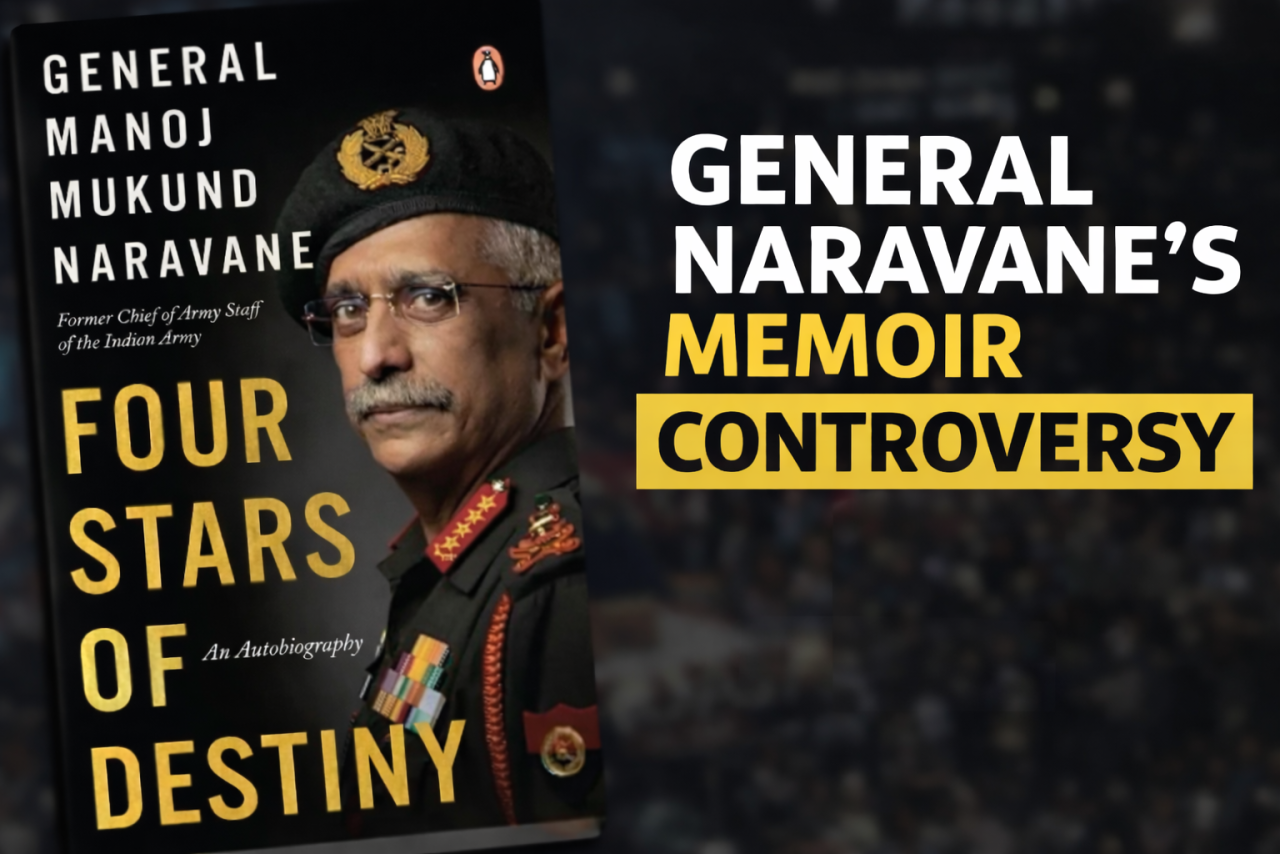
Earlier this year, PRHI had commissioned an unpublished memoir by former Army Chief General M M Naravane. The book was reportedly printed and made available for pre-order on e-commerce platforms before being withdrawn.
PRHI cited the absence of mandatory government clearance as the reason for the withdrawal.
The episode later spilled into Parliament.
During the Budget session in February, Rahul Gandhi, the Leader of the Opposition in the Lok Sabha, sought to refer to excerpts from the memoir. Speaker Om Birla did not permit the reference, citing parliamentary rules. Senior ministers also supported the decision.
Rahul Gandhi subsequently carried a physical copy of the book outside Parliament. He said he would present it to Prime Minister Narendra Modi if Modi attended the session.
Gandhi also alleged that the memoir described a situation in which the Army Chief was kept waiting during a period of Chinese incursion and that the political leadership ultimately told him to use his own judgement.
More Than a Publishing Dispute
The Sonia Gandhi memoir controversy comes at a time when publishers face increasingly difficult choices over manuscripts dealing with politics, the military and national security.
For authors, particularly politicians and senior military figures, memoirs are often personal records of events they experienced or witnessed. For publishers, however, such accounts can raise questions involving factual verification, legal exposure, national security and political sensitivity.
That creates a delicate balance.
In Gandhi’s case, the international edition is still expected to proceed with its November release. The immediate question is now whether HarperCollins will publish the Indian edition and, if so, whether the disputed passages will appear in their original form.
The controversy is therefore unlikely to end with the change of publisher.
If the memoir eventually reaches Indian readers with the contentious sections intact, those passages are likely to become a major part of the political conversation surrounding the book.
If they are changed or removed, the editorial dispute itself may become part of the story.
For a memoir about belonging, power and political history, the battle over what can be published may prove almost as revealing as the memories contained in the book.
Congress leader Sonia Gandhi’s plan to publish her memoir in India through Penguin Random House India (PRHI) has reportedly fallen apart after disagreements over sections dealing with Prime Minister Narendra Modi, the Rashtriya Swayamsevak Sangh (RSS) and India’s border tensions with China.
The dispute reportedly emerged during the editing process, with Gandhi unwilling to remove or substantially alter several passages. The development has turned the publication of one of India’s most closely watched political memoirs into a wider debate over editorial independence, political sensitivity and the limits of publishing in a politically polarised environment.
The memoir, titled Belonging: A Journey of Love, is scheduled for international release on November 10 through Alfred A. Knopf, an imprint of Penguin. The Indian edition was expected to be published by PRHI.
That arrangement has now reportedly collapsed. HarperCollins is said to be close to finalising an agreement to publish and distribute the book in India, although the publisher has not publicly confirmed the arrangement.
What Led to the Disagreement
According to an aide to Gandhi, the publisher raised concerns about several passages during the editing process. The negotiations eventually broke down over three or four sections that Gandhi was unwilling to change or remove.
Among the most contentious passages are reportedly Gandhi’s recollections of her interactions with Narendra Modi.
The aide said Gandhi has written about remarks attributed to Modi, including his reported reference to her as a “Jersey cow” during a public rally in Gujarat in 2004.
The memoir also reportedly contains sections dealing with India-China relations and alleged Chinese incursions into Indian territory. The exact nature of the passages concerning the RSS has not been made public.
The aide indicated that Gandhi’s treatment of the China border issue was also a point of disagreement with the publisher.
The negotiations were reportedly handled by independent literary agents rather than by the Congress party itself. Most Congress leaders are also said to be unaware of the memoir’s complete contents.
That distinction is important. The book is being presented as Gandhi’s personal account and not as an officially vetted Congress document.
Penguin and Congress Offer Different Versions
PRHI has disputed the suggestion that it simply withdrew from the project because Gandhi refused to make editorial changes.
The publisher has maintained that fact-checking and editorial recommendations are a normal part of the publishing process. It has also indicated that it remained willing to proceed with the book.
The Congress side, however, has questioned that explanation.
Gandhi’s aide has argued that Penguin’s international arm is proceeding with publication while the Indian edition faced objections over certain passages. From the Congress perspective, this raises questions about why similar concerns would prevent publication in India.
Congress MP Gaurav Gogoi has also criticised PRHI’s position.
The disagreement therefore goes beyond a routine editorial dispute. At its centre is a larger question about whether politically sensitive material should be treated differently for the Indian market.
A Different Cover for Indian Readers
The Indian edition is also expected to have a different cover from the international version.
The international edition features a close-up portrait of Sonia Gandhi. The Indian jacket is reportedly likely to show her wearing a saree in a photograph taken by her husband, former prime minister Rajiv Gandhi.
The change in cover may be largely a publishing decision, but given the political attention surrounding the memoir, even its presentation is likely to attract public interest.
The Naravane Memoir Controversy
The dispute also comes months after another controversy involving Penguin Random House India and a politically sensitive memoir.
Earlier this year, PRHI had commissioned an unpublished memoir by former Army Chief General M M Naravane. The book was reportedly printed and made available for pre-order on e-commerce platforms before being withdrawn.
PRHI cited the absence of mandatory government clearance as the reason for the withdrawal.
The episode later spilled into Parliament.
During the Budget session in February, Rahul Gandhi, the Leader of the Opposition in the Lok Sabha, sought to refer to excerpts from the memoir. Speaker Om Birla did not permit the reference, citing parliamentary rules. Senior ministers also supported the decision.
Rahul Gandhi subsequently carried a physical copy of the book outside Parliament. He said he would present it to Prime Minister Narendra Modi if Modi attended the session.
Gandhi also alleged that the memoir described a situation in which the Army Chief was kept waiting during a period of Chinese incursion and that the political leadership ultimately told him to use his own judgement.
More Than a Publishing Dispute
The Sonia Gandhi memoir controversy comes at a time when publishers face increasingly difficult choices over manuscripts dealing with politics, the military and national security.
For authors, particularly politicians and senior military figures, memoirs are often personal records of events they experienced or witnessed. For publishers, however, such accounts can raise questions involving factual verification, legal exposure, national security and political sensitivity.
That creates a delicate balance.
In Gandhi’s case, the international edition is still expected to proceed with its November release. The immediate question is now whether HarperCollins will publish the Indian edition and, if so, whether the disputed passages will appear in their original form.
The controversy is therefore unlikely to end with the change of publisher.
If the memoir eventually reaches Indian readers with the contentious sections intact, those passages are likely to become a major part of the political conversation surrounding the book.
If they are changed or removed, the editorial dispute itself may become part of the story.
For a memoir about belonging, power and political history, the battle over what can be published may prove almost as revealing as the memories contained in the book.
















Leave a Comment