
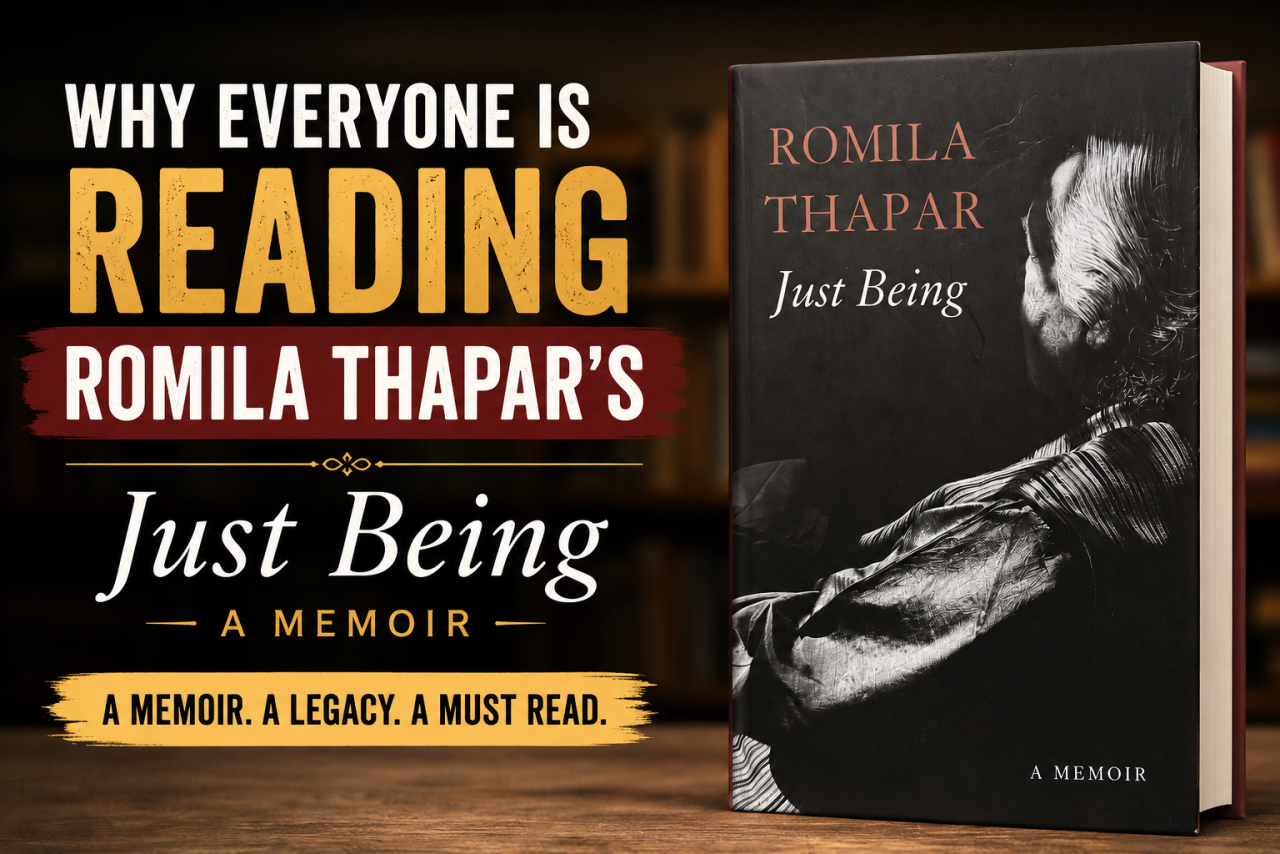
What happens when one of India's most influential historians turns the lens of history upon herself? Just Being: A Memoir offers a compelling answer.
In a literary landscape often dominated by political commentary and contemporary fiction, a memoir by one of India’s most influential historians has captured national attention. Just Being: A Memoir, the latest work by historian Romila Thapar, is generating widespread discussion among academics, students, writers, and general readers alike.
Known for reshaping the study of ancient Indian history through rigorous scholarship and evidence-based analysis, Thapar now turns her attention inward, offering a deeply personal account of a life devoted to learning, questioning, and intellectual independence.
A Life That Mirrors Modern India
Published by Seagull Books, Just Being is far more than a conventional autobiography. It traces Thapar’s journey from her childhood in British India to her years of higher education at the School of Oriental and African Studies (SOAS) in London, and later to her extensive travels across Asia as a scholar and researcher.
The memoir also revisits her pivotal role in establishing the Centre for Historical Studies at Jawaharlal Nehru University, helping transform it into one of India's most respected centers for historical research and academic inquiry.
Throughout the book, Thapar reflects on the challenges and freedoms of living as an independent, unmarried woman scholar in a society often shaped by convention and expectation. The title, Just Being, quietly yet powerfully captures that commitment to autonomy and self-determination.
History Through a Personal Lens
What distinguishes this memoir is Thapar’s ability to place her own experiences within the broader sweep of history. Rather than presenting herself as a detached observer, she explores how personal growth is shaped by political events, social change, and intellectual currents.
From memories of childhood to reflections on India's transformation over decades, the narrative reveals the intricate relationship between individual lives and national history. Her writing combines the precision of a historian with the sensitivity of a storyteller, creating a memoir that is both intellectually rich and emotionally resonant.
The book offers readers a rare glimpse into the making of a public intellectual while also illuminating the social and political developments that shaped modern India.
Why the Memoir Matters Today
The release of Just Being comes at a time when historical narratives are increasingly contested and public debates about the past have become deeply polarized.
Against this backdrop, Thapar’s memoir serves as more than a personal recollection. It becomes a reflection on the importance of critical inquiry, evidence-based scholarship, and intellectual integrity. Throughout her career, Thapar has championed historical methods grounded in research rather than ideology, and those values remain central to this memoir.
For readers navigating an era of competing narratives and rapid information cycles, the book offers a reminder of the enduring importance of asking questions, examining evidence, and engaging with history in all its complexity.
A Memoir for Our Times
Just Being: A Memoir is not simply the story of a distinguished historian. It is the story of curiosity, courage, and a lifelong commitment to understanding the world through reason and scholarship.
Whether one approaches the book as a student of history, a follower of contemporary debates, or simply a reader interested in extraordinary lives, the memoir offers valuable insights into both an individual journey and the evolution of modern India.
At its heart, Just Being is an invitation to think deeply, question fearlessly, and appreciate the role that intellectual honesty plays in shaping both personal and national identities.
In a literary landscape often dominated by political commentary and contemporary fiction, a memoir by one of India’s most influential historians has captured national attention. Just Being: A Memoir, the latest work by historian Romila Thapar, is generating widespread discussion among academics, students, writers, and general readers alike.
Known for reshaping the study of ancient Indian history through rigorous scholarship and evidence-based analysis, Thapar now turns her attention inward, offering a deeply personal account of a life devoted to learning, questioning, and intellectual independence.
A Life That Mirrors Modern India
Published by Seagull Books, Just Being is far more than a conventional autobiography. It traces Thapar’s journey from her childhood in British India to her years of higher education at the School of Oriental and African Studies (SOAS) in London, and later to her extensive travels across Asia as a scholar and researcher.
The memoir also revisits her pivotal role in establishing the Centre for Historical Studies at Jawaharlal Nehru University, helping transform it into one of India's most respected centers for historical research and academic inquiry.
Throughout the book, Thapar reflects on the challenges and freedoms of living as an independent, unmarried woman scholar in a society often shaped by convention and expectation. The title, Just Being, quietly yet powerfully captures that commitment to autonomy and self-determination.
History Through a Personal Lens
What distinguishes this memoir is Thapar’s ability to place her own experiences within the broader sweep of history. Rather than presenting herself as a detached observer, she explores how personal growth is shaped by political events, social change, and intellectual currents.
From memories of childhood to reflections on India's transformation over decades, the narrative reveals the intricate relationship between individual lives and national history. Her writing combines the precision of a historian with the sensitivity of a storyteller, creating a memoir that is both intellectually rich and emotionally resonant.
The book offers readers a rare glimpse into the making of a public intellectual while also illuminating the social and political developments that shaped modern India.
Why the Memoir Matters Today
The release of Just Being comes at a time when historical narratives are increasingly contested and public debates about the past have become deeply polarized.
Against this backdrop, Thapar’s memoir serves as more than a personal recollection. It becomes a reflection on the importance of critical inquiry, evidence-based scholarship, and intellectual integrity. Throughout her career, Thapar has championed historical methods grounded in research rather than ideology, and those values remain central to this memoir.
For readers navigating an era of competing narratives and rapid information cycles, the book offers a reminder of the enduring importance of asking questions, examining evidence, and engaging with history in all its complexity.
A Memoir for Our Times
Just Being: A Memoir is not simply the story of a distinguished historian. It is the story of curiosity, courage, and a lifelong commitment to understanding the world through reason and scholarship.
Whether one approaches the book as a student of history, a follower of contemporary debates, or simply a reader interested in extraordinary lives, the memoir offers valuable insights into both an individual journey and the evolution of modern India.
At its heart, Just Being is an invitation to think deeply, question fearlessly, and appreciate the role that intellectual honesty plays in shaping both personal and national identities.























Leave a Comment