
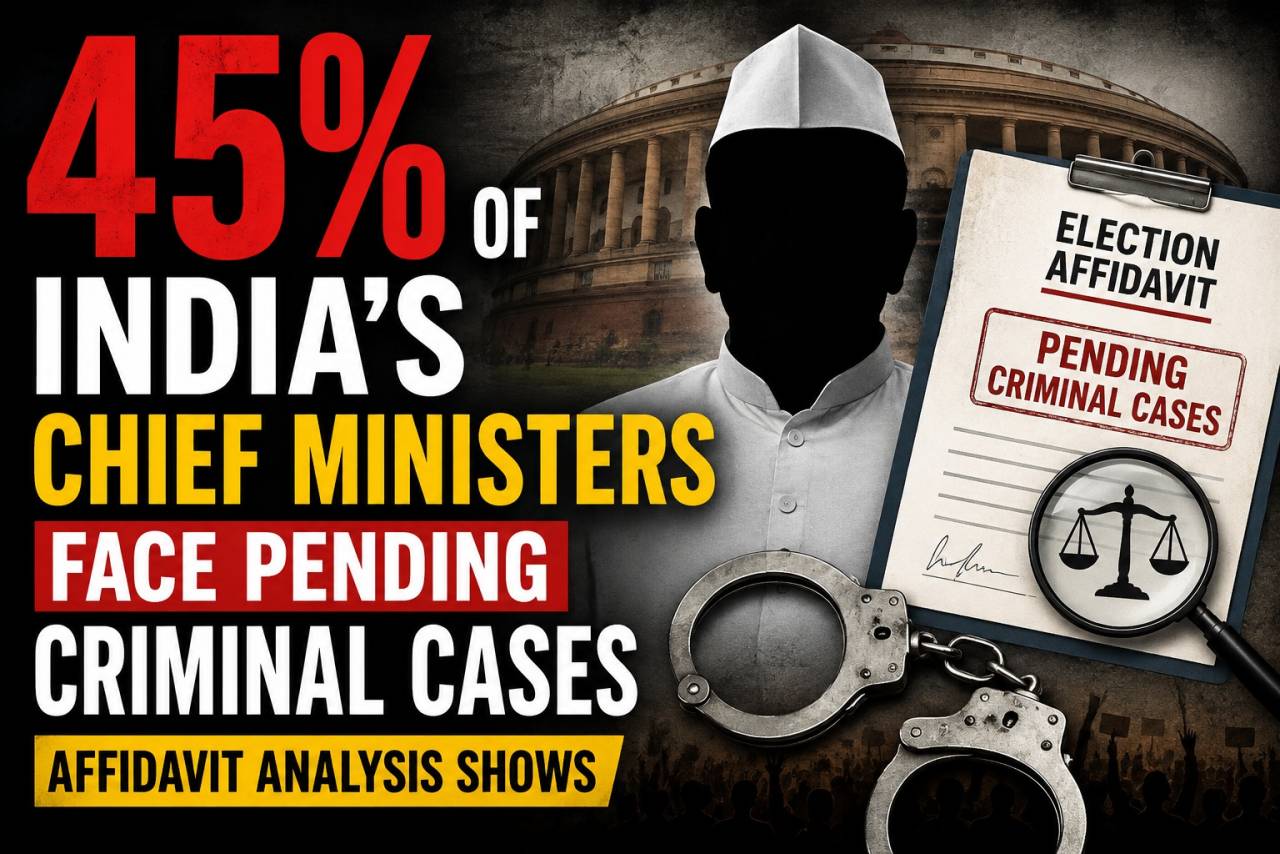
Election affidavits reveal that 45% of India's Chief Ministers face pending criminal cases, reigniting the debate over electoral reforms and political accountability.
Nearly half of India's Chief Ministers have declared pending criminal cases against themselves, according to a fresh analysis of self-sworn election affidavits. Fourteen of the country's 31 Chief Ministers, or about 45 percent, have disclosed pending criminal cases, reigniting a long-standing debate over whether individuals facing serious criminal charges should be eligible to contest elections and hold the highest executive office in a state.
The analysis is based entirely on affidavits that candidates are legally required to submit before contesting elections. These documents require candidates to disclose all pending criminal cases registered against them. The disclosures are self-reported, meaning the Chief Ministers themselves have listed the cases in their affidavits. None of the cases has resulted in a conviction, and under Indian law every accused person is presumed innocent unless proven guilty by a court of law.
The Numbers Behind the Findings
Telangana Chief Minister A. Revanth Reddy tops the list with 89 declared criminal cases, more than four times the national average and far ahead of any other Chief Minister.
West Bengal's Leader of Opposition Suvendu Adhikari, who is included in the comparative analysis, has declared 29 pending cases, while Karnataka Chief Minister D.K. Shivakumar has disclosed 19.
More significant than the number of cases is their nature. Of the 14 Chief Ministers with pending criminal cases, 11 face charges classified as serious. These include allegations related to attempt to murder, bribery, criminal intimidation, forgery, assault, cheating, promoting enmity between groups, and destruction or disappearance of evidence. Such offences generally carry a maximum punishment of five years or more and are treated as serious in election affidavit analyses.
Among the most notable findings is that both Suvendu Adhikari and Andhra Pradesh Chief Minister N. Chandrababu Naidu have declared cases that include allegations of attempt to murder. These remain allegations pending before courts and have not resulted in convictions.
Why the Issue Keeps Returning
The criminal background of elected representatives has remained a recurring concern in Indian politics. Similar affidavit-based analyses are released after every Lok Sabha and Assembly election, consistently showing a significant number of candidates with pending criminal cases.
This analysis stands out because it focuses on sitting Chief Ministers, who exercise executive authority over law and order, policing, and governance in their respective states.
Under the current legal framework, a person is disqualified from contesting elections only after conviction for specified offences. Merely facing criminal charges does not prevent an individual from contesting elections, winning public office, or serving as Chief Minister, even if the cases remain pending for years.
The Supreme Court and election reform advocates have repeatedly called for measures such as expediting criminal trials involving lawmakers and examining whether candidates should face restrictions after a court formally frames charges in serious cases. However, no such proposal has yet become law.
A Debate Without Easy Answers
The affidavit data does not establish guilt, nor does it indicate how or when these cases will be resolved. India's judicial process often takes years to conclude criminal trials involving public representatives.
Even so, the findings reinforce a broader pattern that criminal cases have become increasingly common among those occupying the country's highest political offices.
The issue continues to divide opinion. Supporters of stricter electoral reforms argue that individuals aspiring to lead states should be free from serious unresolved criminal allegations, particularly those involving violence or corruption.
Others contend that criminal cases are frequently filed as instruments of political rivalry, warning that disqualifying candidates before conviction could be misused by governments to sideline political opponents.
With 45 percent of India's Chief Ministers currently declaring pending criminal cases in their election affidavits, the question remains unresolved: Should electoral eligibility continue to depend solely on conviction, or should serious pending charges carry greater weight in determining who can seek and hold public office?
Note: The analysis is based on self-declared election affidavits. Pending criminal cases do not imply guilt, and all accused persons are entitled to the presumption of innocence until proven guilty by a competent court.
Nearly half of India's Chief Ministers have declared pending criminal cases against themselves, according to a fresh analysis of self-sworn election affidavits. Fourteen of the country's 31 Chief Ministers, or about 45 percent, have disclosed pending criminal cases, reigniting a long-standing debate over whether individuals facing serious criminal charges should be eligible to contest elections and hold the highest executive office in a state.
The analysis is based entirely on affidavits that candidates are legally required to submit before contesting elections. These documents require candidates to disclose all pending criminal cases registered against them. The disclosures are self-reported, meaning the Chief Ministers themselves have listed the cases in their affidavits. None of the cases has resulted in a conviction, and under Indian law every accused person is presumed innocent unless proven guilty by a court of law.
The Numbers Behind the Findings
Telangana Chief Minister A. Revanth Reddy tops the list with 89 declared criminal cases, more than four times the national average and far ahead of any other Chief Minister.
West Bengal's Leader of Opposition Suvendu Adhikari, who is included in the comparative analysis, has declared 29 pending cases, while Karnataka Chief Minister D.K. Shivakumar has disclosed 19.
More significant than the number of cases is their nature. Of the 14 Chief Ministers with pending criminal cases, 11 face charges classified as serious. These include allegations related to attempt to murder, bribery, criminal intimidation, forgery, assault, cheating, promoting enmity between groups, and destruction or disappearance of evidence. Such offences generally carry a maximum punishment of five years or more and are treated as serious in election affidavit analyses.
Among the most notable findings is that both Suvendu Adhikari and Andhra Pradesh Chief Minister N. Chandrababu Naidu have declared cases that include allegations of attempt to murder. These remain allegations pending before courts and have not resulted in convictions.
Why the Issue Keeps Returning
The criminal background of elected representatives has remained a recurring concern in Indian politics. Similar affidavit-based analyses are released after every Lok Sabha and Assembly election, consistently showing a significant number of candidates with pending criminal cases.
This analysis stands out because it focuses on sitting Chief Ministers, who exercise executive authority over law and order, policing, and governance in their respective states.
Under the current legal framework, a person is disqualified from contesting elections only after conviction for specified offences. Merely facing criminal charges does not prevent an individual from contesting elections, winning public office, or serving as Chief Minister, even if the cases remain pending for years.
The Supreme Court and election reform advocates have repeatedly called for measures such as expediting criminal trials involving lawmakers and examining whether candidates should face restrictions after a court formally frames charges in serious cases. However, no such proposal has yet become law.
A Debate Without Easy Answers
The affidavit data does not establish guilt, nor does it indicate how or when these cases will be resolved. India's judicial process often takes years to conclude criminal trials involving public representatives.
Even so, the findings reinforce a broader pattern that criminal cases have become increasingly common among those occupying the country's highest political offices.
The issue continues to divide opinion. Supporters of stricter electoral reforms argue that individuals aspiring to lead states should be free from serious unresolved criminal allegations, particularly those involving violence or corruption.
Others contend that criminal cases are frequently filed as instruments of political rivalry, warning that disqualifying candidates before conviction could be misused by governments to sideline political opponents.
With 45 percent of India's Chief Ministers currently declaring pending criminal cases in their election affidavits, the question remains unresolved: Should electoral eligibility continue to depend solely on conviction, or should serious pending charges carry greater weight in determining who can seek and hold public office?
Note: The analysis is based on self-declared election affidavits. Pending criminal cases do not imply guilt, and all accused persons are entitled to the presumption of innocence until proven guilty by a competent court.

.jpeg)
2.jpeg)





















Leave a Comment