
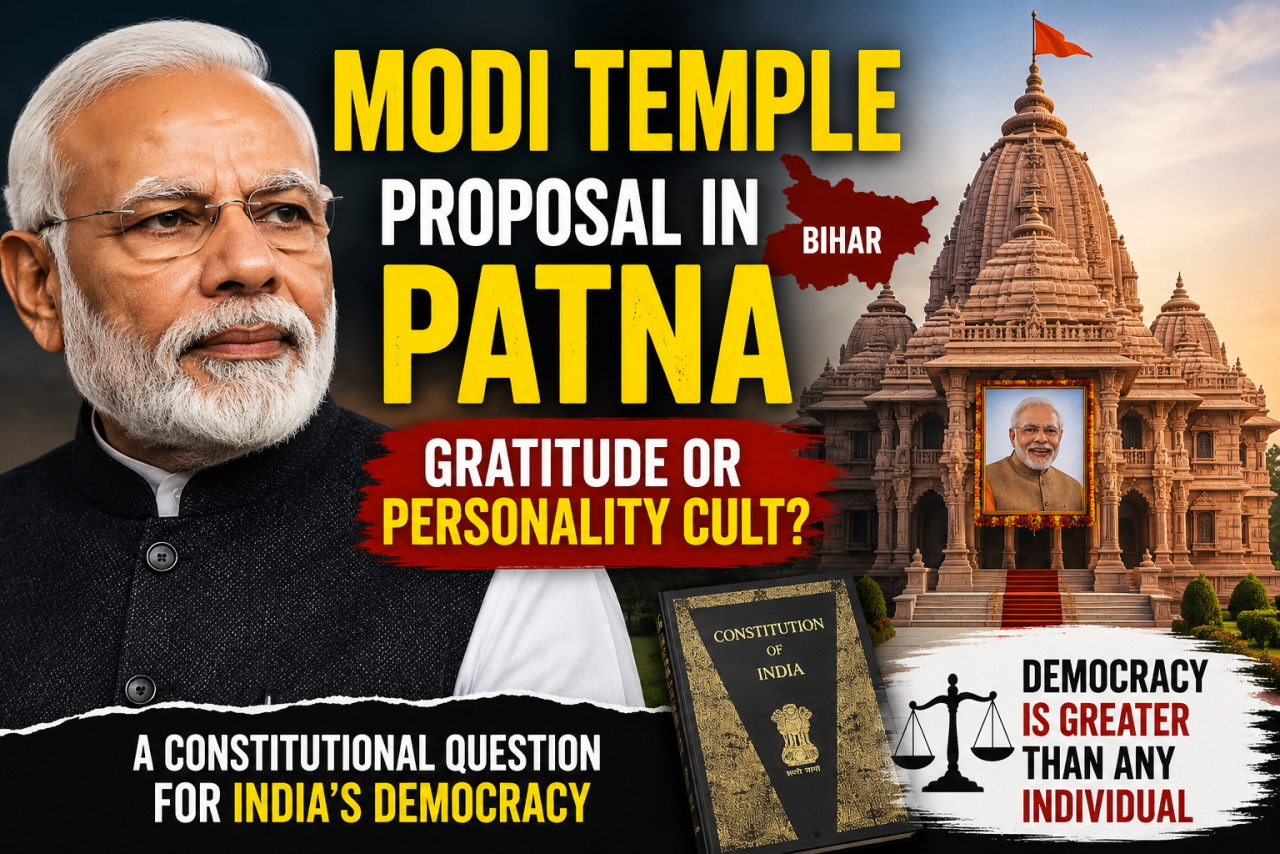
Can a constitutional democracy celebrate its elected leaders without turning them into objects of worship? Bihar's proposal to build a temple for Prime Minister Narendra Modi raises questions that go far beyond politics.
In a decision that has sparked both admiration and unease, Bihar's State Transgender Welfare Board has reportedly approved a proposal to build a temple dedicated to Prime Minister Narendra Modi. The proposal was passed during the board's first meeting on July 29, 2026, after member Rajan Singh argued that the Prime Minister's initiatives had significantly improved the rights, dignity, and welfare of the transgender community.
For many in the community, the proposal is an expression of gratitude. For others, it raises a larger and more enduring question: Should a constitutional democracy encourage the deification of elected political leaders, especially while they are still in office?
The issue deserves to be examined beyond partisan politics. Whether one supports or opposes Narendra Modi's policies is secondary. The real debate is about the character of India's democracy and the principles embedded in its Constitution.
Gratitude Is a Democratic Right
Every citizen and every community has the freedom to appreciate leaders whose policies have positively impacted their lives. If members of the transgender community believe that government initiatives have enhanced their social recognition, legal protection, or welfare, they are fully entitled to acknowledge that contribution.
Democracies thrive when citizens engage with governance, celebrate achievements, and hold leaders accountable for their promises. Public recognition, awards, memorials, scholarships, welfare centres, or institutions named after leaders are all legitimate expressions of appreciation.
But a temple belongs to an entirely different realm.
Where Respect Ends and Personality Cult Begins
A temple is not merely a monument. It is a place of worship, faith, and spiritual reverence. Building one for a living political leader transforms democratic admiration into something closer to unquestionable devotion.
This distinction matters.
The strength of a democracy lies in the ability of citizens to question those in power without fear or hesitation. Political leaders are expected to face criticism, parliamentary scrutiny, judicial oversight, media examination, and ultimately the verdict of the electorate.
When elected representatives begin to occupy the space traditionally reserved for divine figures, democratic accountability risks being overshadowed by personality cults.
India's Constitution does not prohibit citizens from expressing admiration for political leaders. However, its spirit places institutions above individuals. No Prime Minister, President, Chief Minister, or public official stands above constitutional accountability.
The Constitutional Perspective
India adopted a parliamentary democracy precisely to prevent the concentration of unquestioned authority in any individual. The Constitution establishes a system where power flows through institutions rather than personalities.
Every elected representative, regardless of popularity, remains a public servant entrusted with constitutional responsibilities. Their legitimacy comes from the people's mandate, not from religious sanctification.
The framers of the Constitution envisioned citizens who would evaluate governments based on policies, governance, and public welfare. Hero worship, particularly in politics, has often been viewed with caution because it can weaken democratic institutions and encourage blind loyalty over informed judgment.
This constitutional philosophy remains relevant regardless of which political party is in power.
A Precedent That Extends Beyond One Leader
Today's proposal concerns Narendra Modi. Tomorrow, similar demands could emerge for leaders across the political spectrum.
If building temples for serving political leaders becomes socially acceptable, India could witness competing personality cults replacing healthy democratic competition.
Politics would increasingly revolve around symbolic reverence instead of policy debates, governance outcomes, and institutional accountability. Such a shift would diminish the quality of public discourse and further polarise political society.
Democracies are strongest when citizens admire leaders without surrendering their critical judgment.
The Community's Sentiment Should Not Be Dismissed
At the same time, dismissing the emotions behind the proposal would be equally unfair.
The transgender community has historically endured social exclusion, discrimination, and limited access to opportunities. If sections of the community genuinely believe that government policies have improved their lives, their appreciation deserves respect.
The constitutional question is therefore not about whether gratitude should be expressed. It is about how that gratitude should be expressed.
A scholarship programme, healthcare initiative, community centre, skill development institute, or social welfare project named after a leader can honour contributions while remaining consistent with democratic traditions.
Such gestures create lasting public value without blurring the line between governance and religious devotion.
Democracy Requires Institutions, Not Idols
India's democracy has survived for over seven decades because it rests on constitutional institutions rather than individual personalities. Governments change. Leaders come and go. Institutions endure.
That is precisely why constitutional democracies discourage the elevation of elected representatives into objects of worship. Public office carries authority, but it also carries accountability.
The real tribute to any political leader is not the construction of a temple but the creation of policies and institutions that continue serving citizens long after political tenures end.
The proposal in Bihar is therefore more than a symbolic gesture. It presents India with an opportunity to reflect on an essential democratic principle: Should admiration for leadership strengthen constitutional values, or should it gradually evolve into personality worship?
For a mature democracy, the answer may determine not only how leaders are remembered, but also how democratic institutions are preserved for future generations.
In a decision that has sparked both admiration and unease, Bihar's State Transgender Welfare Board has reportedly approved a proposal to build a temple dedicated to Prime Minister Narendra Modi. The proposal was passed during the board's first meeting on July 29, 2026, after member Rajan Singh argued that the Prime Minister's initiatives had significantly improved the rights, dignity, and welfare of the transgender community.
For many in the community, the proposal is an expression of gratitude. For others, it raises a larger and more enduring question: Should a constitutional democracy encourage the deification of elected political leaders, especially while they are still in office?
The issue deserves to be examined beyond partisan politics. Whether one supports or opposes Narendra Modi's policies is secondary. The real debate is about the character of India's democracy and the principles embedded in its Constitution.
Gratitude Is a Democratic Right
Every citizen and every community has the freedom to appreciate leaders whose policies have positively impacted their lives. If members of the transgender community believe that government initiatives have enhanced their social recognition, legal protection, or welfare, they are fully entitled to acknowledge that contribution.
Democracies thrive when citizens engage with governance, celebrate achievements, and hold leaders accountable for their promises. Public recognition, awards, memorials, scholarships, welfare centres, or institutions named after leaders are all legitimate expressions of appreciation.
But a temple belongs to an entirely different realm.
Where Respect Ends and Personality Cult Begins
A temple is not merely a monument. It is a place of worship, faith, and spiritual reverence. Building one for a living political leader transforms democratic admiration into something closer to unquestionable devotion.
This distinction matters.
The strength of a democracy lies in the ability of citizens to question those in power without fear or hesitation. Political leaders are expected to face criticism, parliamentary scrutiny, judicial oversight, media examination, and ultimately the verdict of the electorate.
When elected representatives begin to occupy the space traditionally reserved for divine figures, democratic accountability risks being overshadowed by personality cults.
India's Constitution does not prohibit citizens from expressing admiration for political leaders. However, its spirit places institutions above individuals. No Prime Minister, President, Chief Minister, or public official stands above constitutional accountability.
The Constitutional Perspective
India adopted a parliamentary democracy precisely to prevent the concentration of unquestioned authority in any individual. The Constitution establishes a system where power flows through institutions rather than personalities.
Every elected representative, regardless of popularity, remains a public servant entrusted with constitutional responsibilities. Their legitimacy comes from the people's mandate, not from religious sanctification.
The framers of the Constitution envisioned citizens who would evaluate governments based on policies, governance, and public welfare. Hero worship, particularly in politics, has often been viewed with caution because it can weaken democratic institutions and encourage blind loyalty over informed judgment.
This constitutional philosophy remains relevant regardless of which political party is in power.
A Precedent That Extends Beyond One Leader
Today's proposal concerns Narendra Modi. Tomorrow, similar demands could emerge for leaders across the political spectrum.
If building temples for serving political leaders becomes socially acceptable, India could witness competing personality cults replacing healthy democratic competition.
Politics would increasingly revolve around symbolic reverence instead of policy debates, governance outcomes, and institutional accountability. Such a shift would diminish the quality of public discourse and further polarise political society.
Democracies are strongest when citizens admire leaders without surrendering their critical judgment.
The Community's Sentiment Should Not Be Dismissed
At the same time, dismissing the emotions behind the proposal would be equally unfair.
The transgender community has historically endured social exclusion, discrimination, and limited access to opportunities. If sections of the community genuinely believe that government policies have improved their lives, their appreciation deserves respect.
The constitutional question is therefore not about whether gratitude should be expressed. It is about how that gratitude should be expressed.
A scholarship programme, healthcare initiative, community centre, skill development institute, or social welfare project named after a leader can honour contributions while remaining consistent with democratic traditions.
Such gestures create lasting public value without blurring the line between governance and religious devotion.
Democracy Requires Institutions, Not Idols
India's democracy has survived for over seven decades because it rests on constitutional institutions rather than individual personalities. Governments change. Leaders come and go. Institutions endure.
That is precisely why constitutional democracies discourage the elevation of elected representatives into objects of worship. Public office carries authority, but it also carries accountability.
The real tribute to any political leader is not the construction of a temple but the creation of policies and institutions that continue serving citizens long after political tenures end.
The proposal in Bihar is therefore more than a symbolic gesture. It presents India with an opportunity to reflect on an essential democratic principle: Should admiration for leadership strengthen constitutional values, or should it gradually evolve into personality worship?
For a mature democracy, the answer may determine not only how leaders are remembered, but also how democratic institutions are preserved for future generations.






















Leave a Comment