
To understand Gandhi, perhaps we need to stop treating him as an icon and start treating him as an argument.
We have a habit of freezing historical giants in amber. We turn them into statues, print their faces on currency, and speak of them in reverent, static tones. But when history becomes a monolith, it loses its pulse.
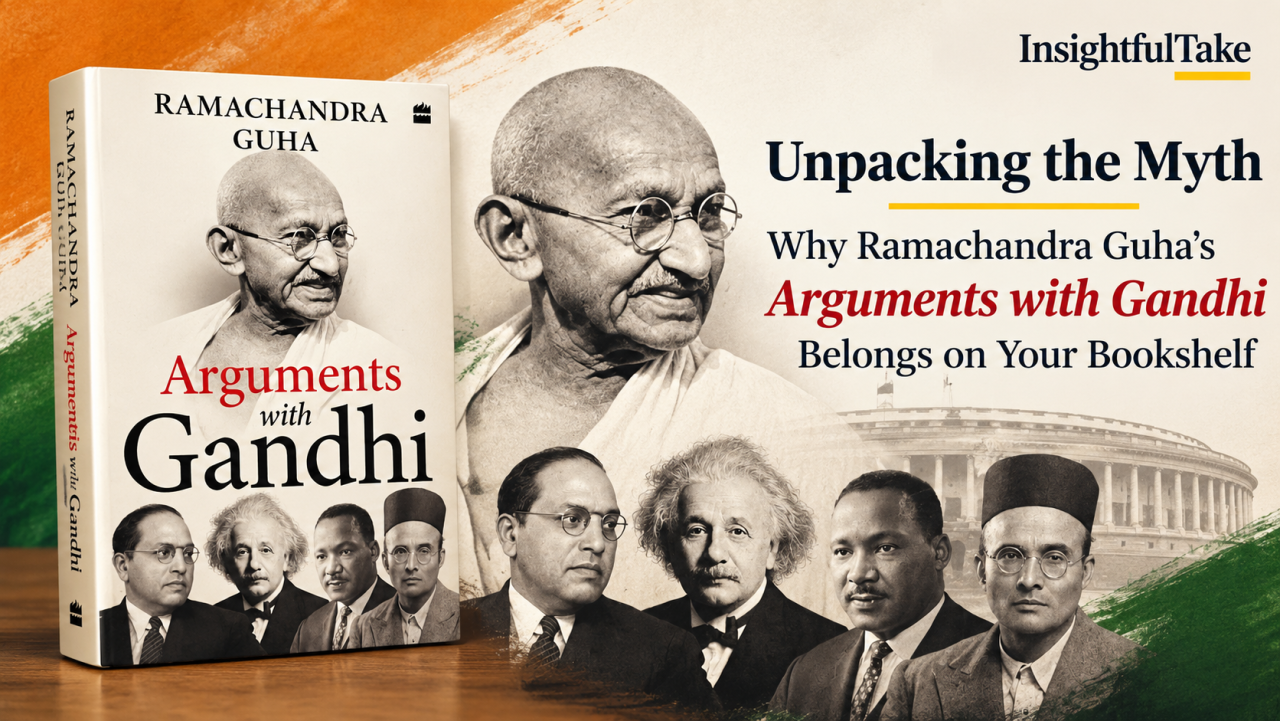
In Arguments with Gandhi, acclaimed historian Ramachandra Guha does something far more compelling than simply polishing a pedestal. He brings Gandhi back down to earth and places him directly inside the intellectual arena where his ideas were actually forged.
Instead of giving us another standard, linear biography, Guha frames Gandhi’s life through his clashes, debates, and dialogues with some of the most formidable figures of the twentieth century. The result is a vibrant and deeply human portrait of a man whose philosophy evolved not in isolation, but through intense friction with his fiercest critics and most insightful allies.
The Heavyweight Debates Inside
What sets the book apart is its structure. Guha organizes the narrative around Gandhi’s central ideological confrontations, showing how different thinkers challenged his positions on power, social structure, ethics, identity and liberation.
B. R. Ambedkar
Perhaps the most crucial clash in the book is Gandhi’s debate with B. R. Ambedkar over caste, political representation and the meaning of justice for India’s oppressed communities. Their disagreements reveal two very different approaches to social reform and the question of how deeply India needed to change.
V. D. Savarkar
The encounter with V. D. Savarkar brings another sharp ideological collision. Their differences over religious identity, nationalism and the character of the Indian nation remain relevant to debates about India's political and social identity.
Bhagat Singh and the Ethics of Resistance
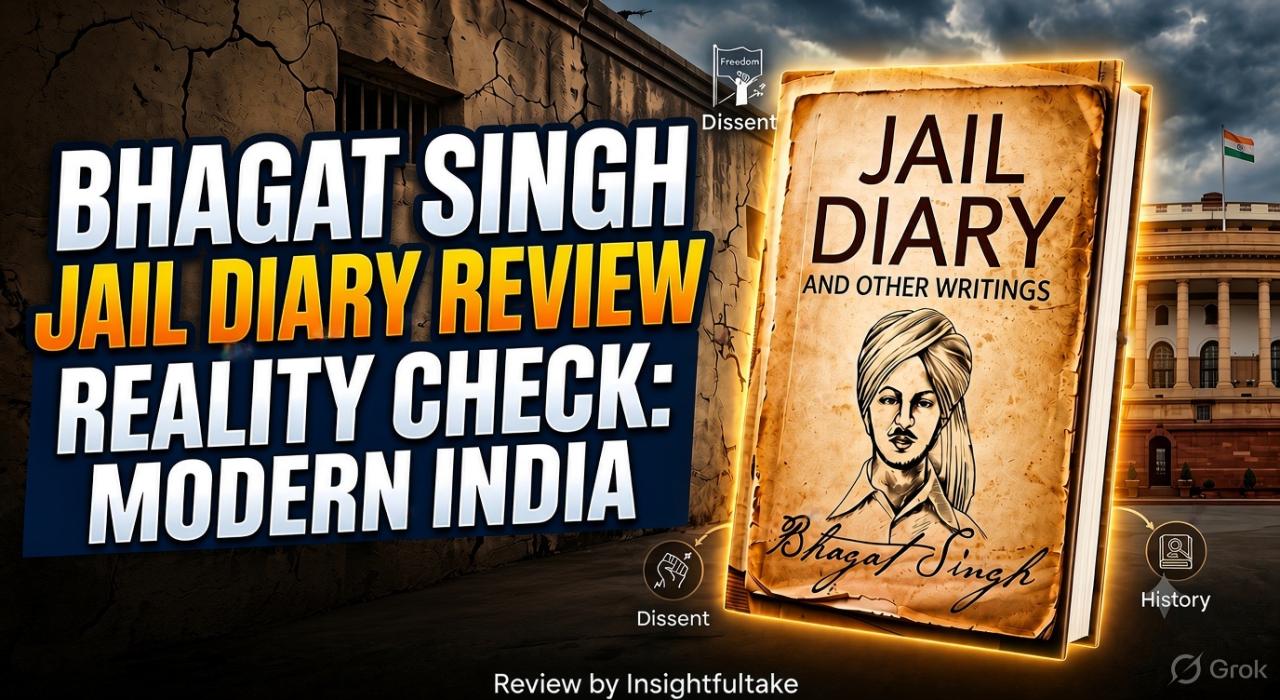
The contrast with Bhagat Singh raises one of the most difficult questions of the freedom struggle: could nonviolence alone confront colonial oppression, or could revolutionary violence ever be justified against an unjust regime?
Jawaharlal Nehru
Gandhi’s disagreements with Jawaharlal Nehru expose a different tension, this time over India's economic future. Gandhi imagined a more decentralized, self-sustaining village economy, while Nehru looked toward industrialization, science and large-scale modern development.
Albert Einstein and Global Thinkers
Gandhi's exchanges and influence among international thinkers opened larger questions about nonviolent resistance, civil liberties and moral responsibility in a world increasingly shaped by war and militarization.
Martin Luther King Jr., Nelson Mandela and Beyond
The book also helps trace how Gandhi's ideas traveled beyond India. His methods of nonviolent resistance influenced civil rights and anti-apartheid movements, becoming part of a wider global conversation about freedom and justice.
Why This Book Deserves a Place on Your Shelf
Guha’s prose is clear and engaging. He avoids unnecessary academic jargon without sacrificing historical depth, turning archival letters, public writings and personal exchanges into a compelling battle of ideas.
You do not need to be a history scholar to appreciate the tension when two brilliant and uncompromising minds confront each other over the future of a nation.
What makes Arguments with Gandhi particularly relevant to today's reader is the continuing nature of the questions it raises. How should societies resist authoritarian power? How can deep religious and social divisions be bridged? How should economic growth be balanced with environmental concerns? And what does genuine social equality require?
These are not merely questions of Gandhi's time. They remain part of India's unfinished political and social conversation.
By presenting a Gandhi who was frequently challenged, sometimes controversial and constantly engaged in revising his ideas, Guha makes an important point about intellectual progress. It does not emerge from blind consensus. It often grows through rigorous and principled disagreement.
Whether you see Gandhi as a visionary leader or a deeply flawed strategist, Arguments with Gandhi offers a different way of approaching him. It asks readers to move beyond both unquestioning admiration and easy dismissal.
That is perhaps the book's greatest strength.
It reminds us that history is not a museum piece. It is a continuing conversation between ideas, people and generations. And sometimes, the best way to understand a historical figure is not to agree with him, but to argue with him.
We have a habit of freezing historical giants in amber. We turn them into statues, print their faces on currency, and speak of them in reverent, static tones. But when history becomes a monolith, it loses its pulse.
In Arguments with Gandhi, acclaimed historian Ramachandra Guha does something far more compelling than simply polishing a pedestal. He brings Gandhi back down to earth and places him directly inside the intellectual arena where his ideas were actually forged.
Instead of giving us another standard, linear biography, Guha frames Gandhi’s life through his clashes, debates, and dialogues with some of the most formidable figures of the twentieth century. The result is a vibrant and deeply human portrait of a man whose philosophy evolved not in isolation, but through intense friction with his fiercest critics and most insightful allies.
The Heavyweight Debates Inside
What sets the book apart is its structure. Guha organizes the narrative around Gandhi’s central ideological confrontations, showing how different thinkers challenged his positions on power, social structure, ethics, identity and liberation.
B. R. Ambedkar
Perhaps the most crucial clash in the book is Gandhi’s debate with B. R. Ambedkar over caste, political representation and the meaning of justice for India’s oppressed communities. Their disagreements reveal two very different approaches to social reform and the question of how deeply India needed to change.
V. D. Savarkar
The encounter with V. D. Savarkar brings another sharp ideological collision. Their differences over religious identity, nationalism and the character of the Indian nation remain relevant to debates about India's political and social identity.
Bhagat Singh and the Ethics of Resistance
The contrast with Bhagat Singh raises one of the most difficult questions of the freedom struggle: could nonviolence alone confront colonial oppression, or could revolutionary violence ever be justified against an unjust regime?
Jawaharlal Nehru
Gandhi’s disagreements with Jawaharlal Nehru expose a different tension, this time over India's economic future. Gandhi imagined a more decentralized, self-sustaining village economy, while Nehru looked toward industrialization, science and large-scale modern development.
Albert Einstein and Global Thinkers
Gandhi's exchanges and influence among international thinkers opened larger questions about nonviolent resistance, civil liberties and moral responsibility in a world increasingly shaped by war and militarization.
Martin Luther King Jr., Nelson Mandela and Beyond
The book also helps trace how Gandhi's ideas traveled beyond India. His methods of nonviolent resistance influenced civil rights and anti-apartheid movements, becoming part of a wider global conversation about freedom and justice.
Why This Book Deserves a Place on Your Shelf
Guha’s prose is clear and engaging. He avoids unnecessary academic jargon without sacrificing historical depth, turning archival letters, public writings and personal exchanges into a compelling battle of ideas.
You do not need to be a history scholar to appreciate the tension when two brilliant and uncompromising minds confront each other over the future of a nation.
What makes Arguments with Gandhi particularly relevant to today's reader is the continuing nature of the questions it raises. How should societies resist authoritarian power? How can deep religious and social divisions be bridged? How should economic growth be balanced with environmental concerns? And what does genuine social equality require?
These are not merely questions of Gandhi's time. They remain part of India's unfinished political and social conversation.
By presenting a Gandhi who was frequently challenged, sometimes controversial and constantly engaged in revising his ideas, Guha makes an important point about intellectual progress. It does not emerge from blind consensus. It often grows through rigorous and principled disagreement.
Whether you see Gandhi as a visionary leader or a deeply flawed strategist, Arguments with Gandhi offers a different way of approaching him. It asks readers to move beyond both unquestioning admiration and easy dismissal.
That is perhaps the book's greatest strength.
It reminds us that history is not a museum piece. It is a continuing conversation between ideas, people and generations. And sometimes, the best way to understand a historical figure is not to agree with him, but to argue with him.






















Leave a Comment