
In our current culture, we celebrate "originality" as if it were a spark that appears out of a vacuum. We praise the "self-made" billionaire or the "singular" artist. However, if we look closer, this is a logical fallacy.
From a pragmatic standpoint, your very existence is a collaborative project. You did not choose your native language; it was gifted to you by your parents and your community. You did not invent the logic you use to solve problems; you were taught it by teachers and mentors. Even your most private thoughts are often framed in words and concepts that existed long before you were born. When we claim to be "original," we are often just forgetting our sources.
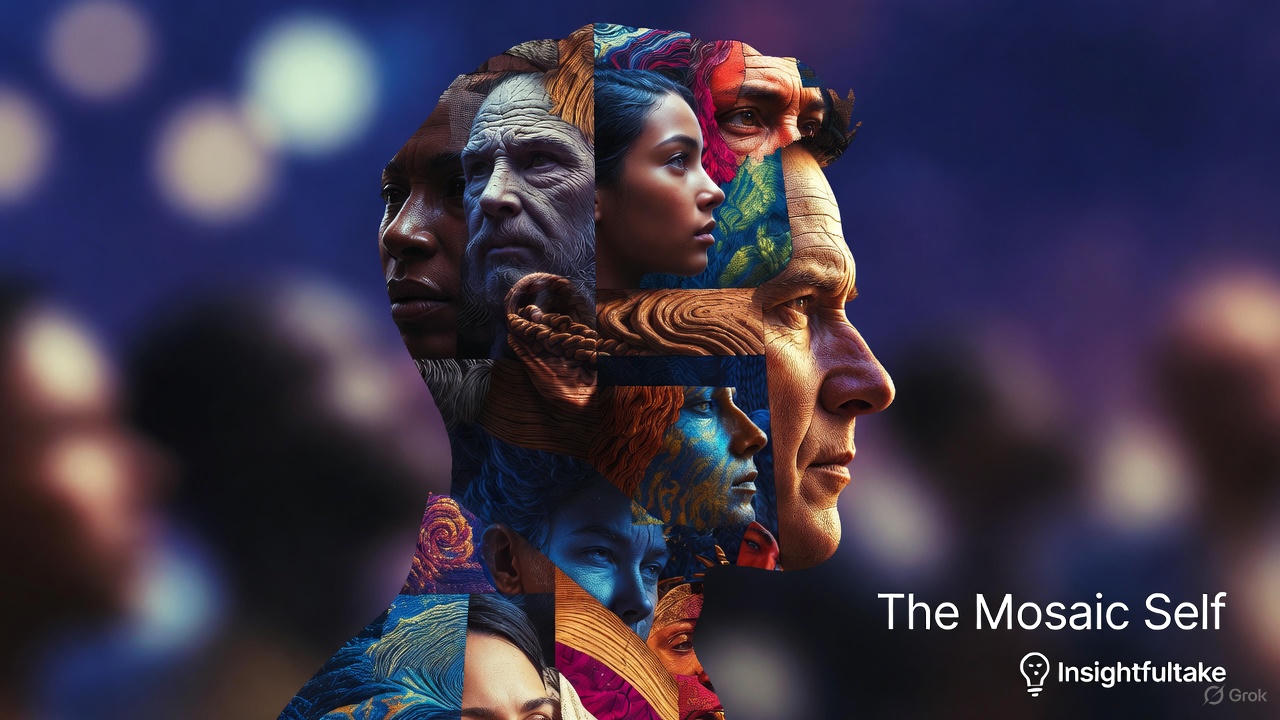
The Philosophical Perspective: The Mosaic Self
Philosophically, the “self” is not a solid and unchanging diamond, but a mirror—reflecting the people, ideas, and experiences it has absorbed.
Think about the way you laugh. Is it a bit like your best friend’s? Think about the way you handle stress. Do you see a shadow of your mother’s patience or your father’s urgency? Even your taste in music or your political leanings are often reactions to, or adoptions of, the people you’ve encountered.
If we strip away everything we learned from others, what is left? Some might argue there is a "soul" or a "core," but that core would be silent and inactive without the tools given to us by others. We are a living archive. Every person you have ever known has left a "deposit" in your character—a phrase you use, a recipe you cook, or a moral boundary you refuse to cross.
The Spiritual Essence: Oneness and Ego
Spiritually, the idea that nothing is original is an invitation to humility and a way to dissolve the ego. The ego loves to feel separate and superior. It wants to say, "I did this alone." However, many spiritual traditions suggest that we are all part of a single, vast web of consciousness. In this view, the "effort of everyone I’ve ever known" extends back through generations. You are the result of the survival, the love, and the struggles of ancestors you never met.
When you realize you are a "combined effort," you stop feeling like an isolated island. You begin to see yourself as a wave in a much larger ocean. This perspective shifts your focus from competition to contribution. If you are a product of others' efforts, your purpose is naturally to pay that forward—to become a positive influence in the "combined effort" of the next person you meet.
The Logic of Influence
Logically, we can break down our identity into three categories of influence:
- Direct Influence: These are the people who raised us and taught us. They provided the blueprint for how to survive.
- Passive Influence: These are the strangers we observed—the way a person on the bus showed kindness to a child, or the way a stranger handled a conflict. We "stole" these behaviors and integrated them into our own.
- Adversarial Influence: Even the people we disliked shaped us. We learned who we don't want to be by watching them. Their "effort" in our lives was a lesson in boundaries and ethics.
When you look at it this way, "originality" is actually just a unique recombination of existing influences. You aren't a new color; you are a unique shade created by mixing a thousand existing colors.
The Pragmatic Benefit of This Mindset
Accepting that you are not "original" is incredibly freeing. It removes the paralyzing pressure to be a "genius" or to create something from nothing.
- Gratitude over Pride: When you succeed, you don't just pat yourself on the back. You recognize the teacher who pushed you, the friend who supported you, and the author whose book changed your mind. This leads to a much happier, more connected life.
- Forgiveness: When you realize people are "combined efforts," you see their flaws more clearly. You realize that a "mean" person is often just reflecting the combined effort of the harsh people they knew. This makes it easier to navigate the world with empathy rather than anger.
- Active Curation: If you are the sum of the people you know, then you have a pragmatic responsibility to choose your company wisely. You are literally building your future self out of the people you spend time with today.
Final Take
To be a "combined effort" is not a sign of weakness; it is the ultimate human strength. It means you are never truly alone. You carry a piece of your primary school teacher, your first love, your bitterest rival, and your greatest hero within you at all times.
Your "originality" lies in the way you choose to weave these threads together. You are the curator of a vast library of human experience. While the books were written by others, you are the one who decides which ones to display on the front shelf.






















Leave a Comment