
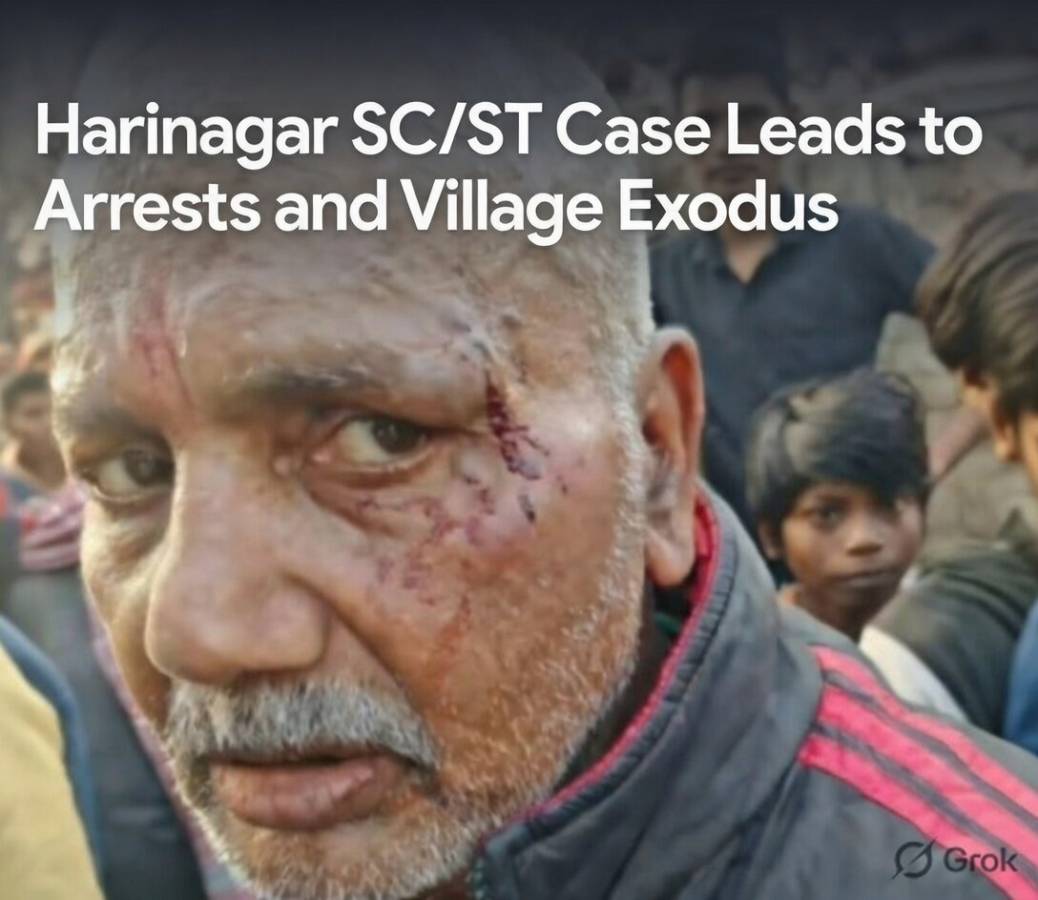
A village in Bihar’s Darbhanga district is grappling with rising social tensions after a dispute between two residents escalated into a major legal battle involving the SC/ST (Prevention of Atrocities) Act, leading to multiple arrests and the reported exodus of several families.
What began as a verbal altercation between two villagers has now evolved into a wider conflict affecting dozens of households in Harinagar village, raising concerns about caste relations, legal action, and the growing anxiety among residents.
Local villagers say the situation has disrupted the everyday life of the community, with police action, court proceedings, and mutual accusations deepening divisions within the village.
Dispute Begins on January 30
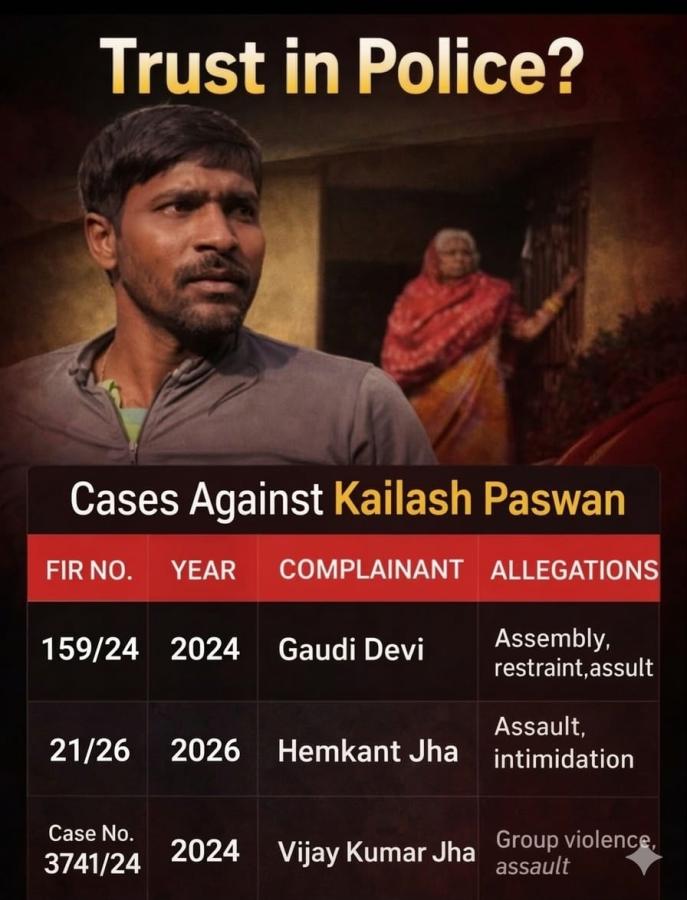
According to a complaint filed at Kusheshwar Asthan Police Station, the chain of events began on January 30, 2026, when Hemant Jha, a resident of Harinagar, was traveling to Darbhanga along with his sister and brother-in-law.
On the way, another villager, Kailash Paswan, allegedly confronted him and began verbally abusing him in public.
Witnesses say the argument took place during daytime hours and quickly attracted the attention of several villagers who gathered nearby in an attempt to calm the situation.
During the heated exchange, Paswan reportedly demanded ₹2.47 lakh from Hemant Jha and his relatives. According to villagers familiar with the matter, the demand was linked to a financial dispute dating back several years.
As the confrontation intensified, elders in the village advised both parties to bring the matter before the village Sarpanch in hopes of resolving it through local mediation.
However, residents claim the meeting failed to settle the dispute. During the discussion, Paswan allegedly continued threatening Hemant Jha and reportedly warned that his house could be burned if the money was not paid.
Mediation Attempt Sparks Further Tension
During the exchange before the Sarpanch, another villager, Shrinath Jha, attempted to intervene and calm the situation.
According to witnesses present at the gathering, Shrinath urged both sides to resolve the issue peacefully through dialogue rather than confrontation.
However, villagers claim the mediation attempt angered Paswan. He allegedly verbally abused Shrinath as well before leaving the meeting.
At that point, many villagers believed the dispute would eventually subside. Instead, events later that evening reportedly escalated the situation further.
Alleged Assault Later That Evening
Later the same evening, when Shrinath Jha was reportedly on his way to attend a dinner invitation at a relative’s house, the situation allegedly turned violent.
According to the FIR filed by Shrinath, Kailash Paswan and some members of his family attacked him, striking him on the head during the confrontation.
The complaint states that Shrinath sustained serious injuries, including bleeding from the head and injuries near the eyes.
Shrinath’s sister, who rushed to intervene and stop the assault, was also allegedly attacked. According to the complaint, she suffered a fractured leg during the incident.
Following the alleged assault, Shrinath approached the police and registered an FIR at around 8:15 PM on January 30 at Kusheshwar Asthan Police Station.
The incident quickly became the talk of the village, with residents expressing concern that a dispute between individuals had taken a violent turn.
Fresh Confrontation During Morning Walk
Despite the police complaint, tensions did not subside the next day.
According to villagers, another confrontation occurred the following morning during the village’s routine “Prabhat Pheri”, a morning walk that several residents participate in daily.
Witnesses claim Kailash Paswan again confronted Shrinath Jha and others, allegedly questioning why he had supported Hemant Jha during the earlier dispute.
Villagers say Paswan arrived along with some family members and continued issuing threats.
Concerned residents reportedly called emergency number 112 seeking police assistance.
However, before police could reach the spot, another clash reportedly broke out between members of both sides.
Accounts of the incident vary among villagers. Some claim Paswan and his associates initiated the confrontation, while others say the situation escalated after more residents gathered and tensions flared.
Counter-Complaint Under SC/ST Act
Soon after the clash, Kailash Paswan filed a counter-complaint, alleging that members of the village’s Brahmin community had attacked him and his family.
Based on this complaint, police registered a case under the Scheduled Castes and Scheduled Tribes (Prevention of Atrocities) Act, a law designed to protect members of Scheduled Castes and Scheduled Tribes from caste-based violence and discrimination.
The legislation contains strict provisions and mandates prompt action in cases involving alleged atrocities against members of marginalized communities.
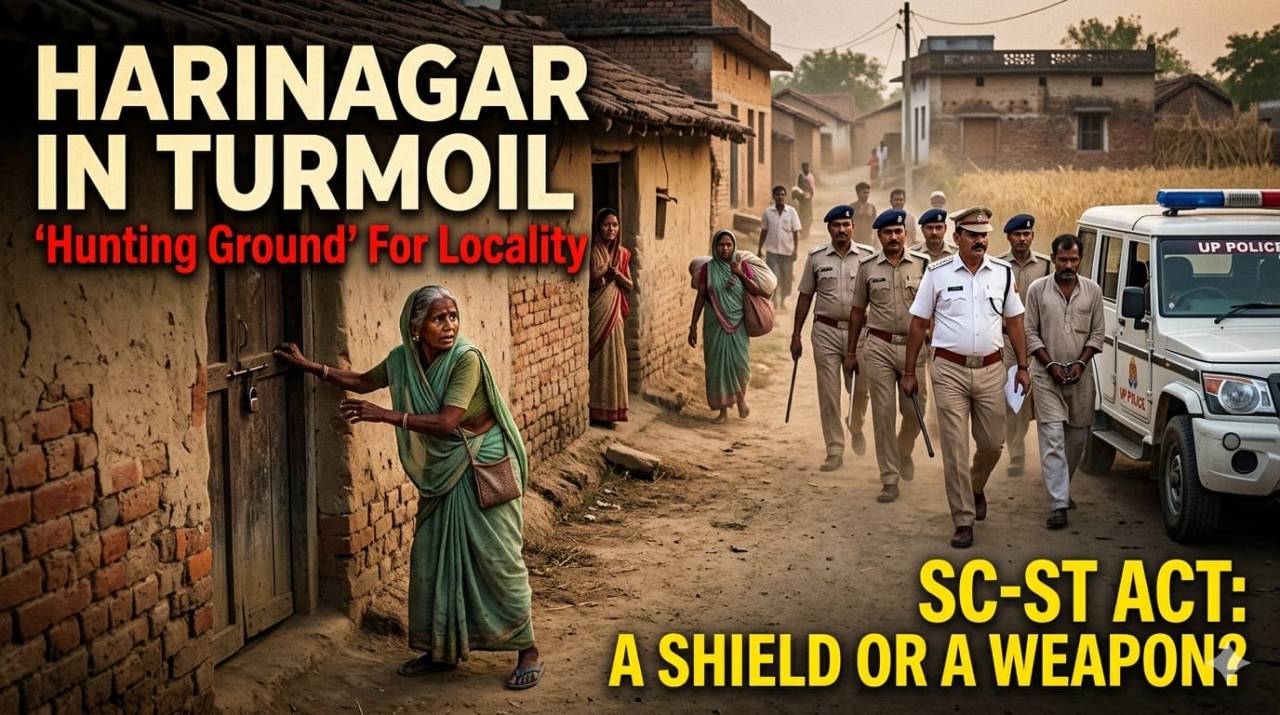
Following the registration of the case, police initiated an investigation and made arrests.
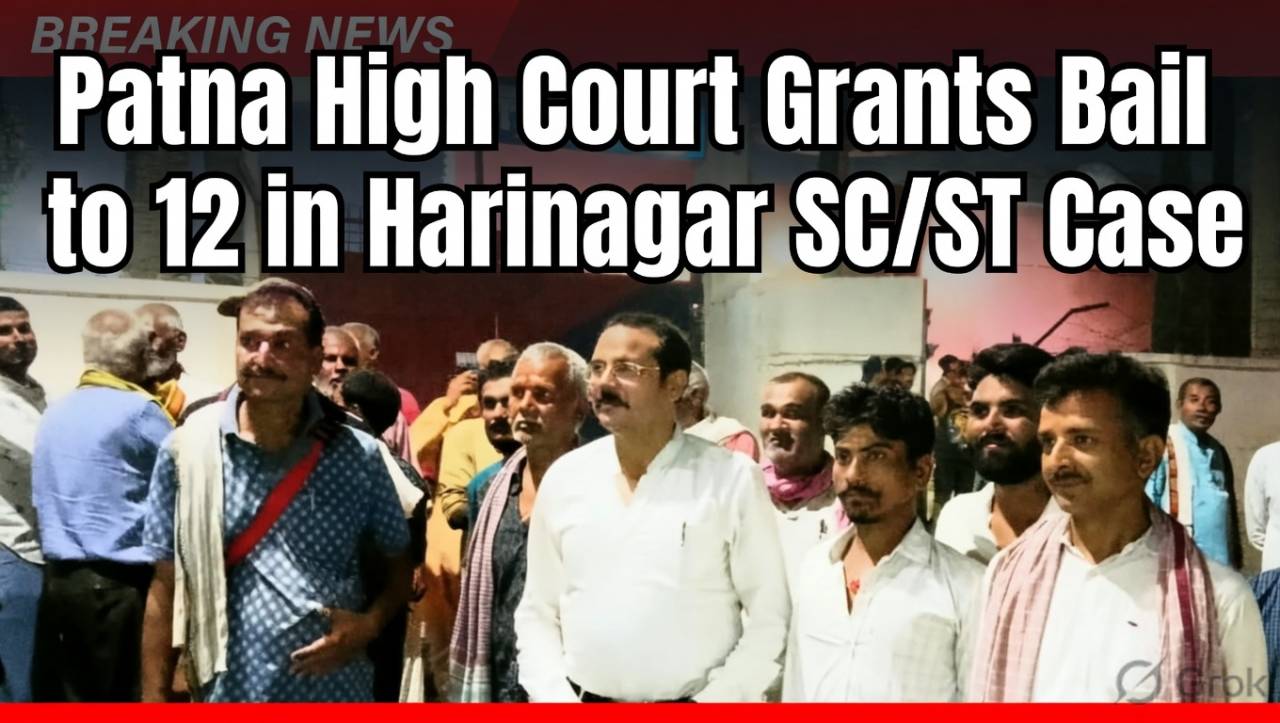
According to villagers, 12 people were arrested, while around 70 additional villagers were named in the FIR.
Old Wage Dispute Emerges
During the investigation, an older financial disagreement reportedly emerged as a possible trigger behind the confrontation.
According to Surya Kant Jha, a relative of Hemant Jha who had previously employed Kailash Paswan in Kerala, Paswan had worked there several years ago as a plastering labourer.
Surya Kant Jha claims Paswan was initially hired on a monthly salary of ₹15,000, which he received regularly for three months.
In the fourth month, the salary was reportedly increased to ₹16,000 at Paswan’s request.
Jha further alleges that Paswan later requested ₹50,000 as an advance for his sister’s marriage. According to him, ₹45,000 was provided, along with leave for Paswan to visit his village.
However, Jha claims Paswan did not return to work after leaving.
Years later, Paswan allegedly demanded additional payment, claiming he should have been paid under a contract-based system calculated per square foot of plastering work, which he estimated amounted to ₹2.47 lakh.
Villagers say this issue had previously been discussed before the Sarpanch, where it was reportedly concluded that no further payment was pending.
Arrests and Reported Village Exodus
After the SC/ST case was registered on January 31, police action intensified in the village.
Several villagers were taken into custody during the investigation.
Local residents claim that around 200 Brahmin residents temporarily left Harinagar, fearing arrest after their names allegedly appeared in the FIR.
Meanwhile, under provisions associated with SC/ST atrocity cases, the Paswan family reportedly received ₹8.5 lakh in government compensation, according to villagers familiar with the developments.
The compensation is part of a government scheme meant to support victims of caste-based violence.
Legal Proceedings Continue
So far, three hearings have taken place in the Darbhanga district court, according to residents tracking the developments.
Those arrested in the case have reportedly not yet been granted bail, which has further heightened anxiety among families of the accused.
Legal experts say the case could take time to move through the judicial system, as courts will examine evidence, witness testimonies, and police findings before reaching any conclusions.
A Village Under Strain
The incident has triggered strong reactions within Harinagar and surrounding areas.
Some residents belonging to the Brahmin community claim the SC/ST law is being misused in the dispute, while others argue that strict legal protections remain necessary to ensure justice for marginalized communities.
Observers say the case has now taken on broader social and political dimensions, with debates emerging over the application and alleged misuse of the SC/ST Act.
For now, Harinagar remains tense. Families on both sides are anxious about the outcome of the legal proceedings, while the village struggles to cope with a conflict that has disrupted its social fabric and forced many residents to temporarily leave their homes.



















Leave a Comment