
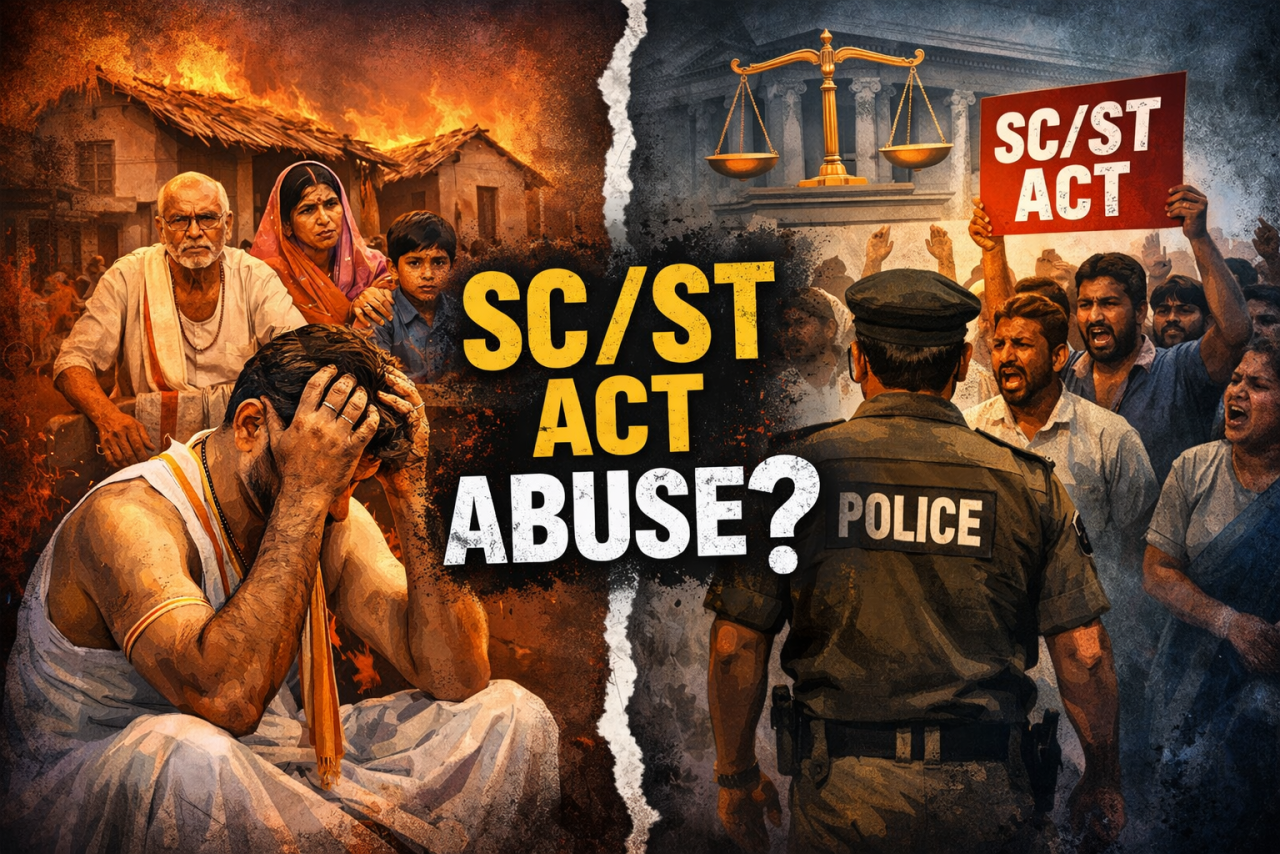
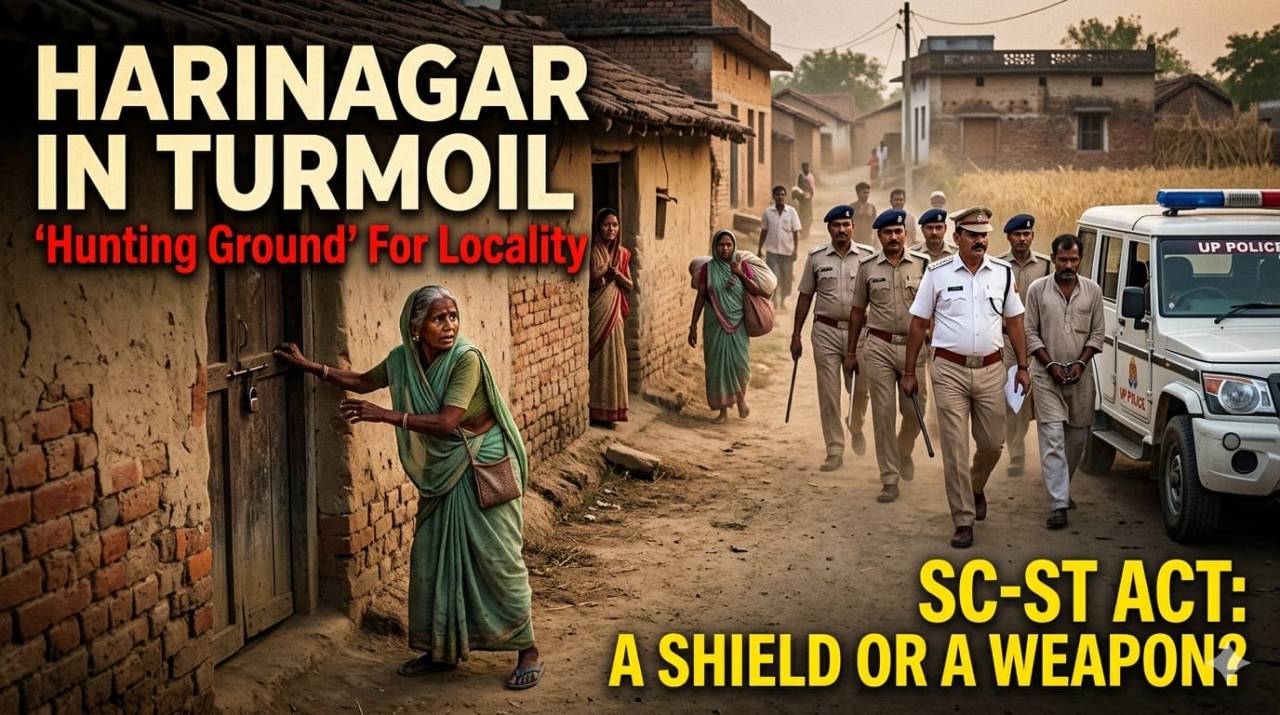
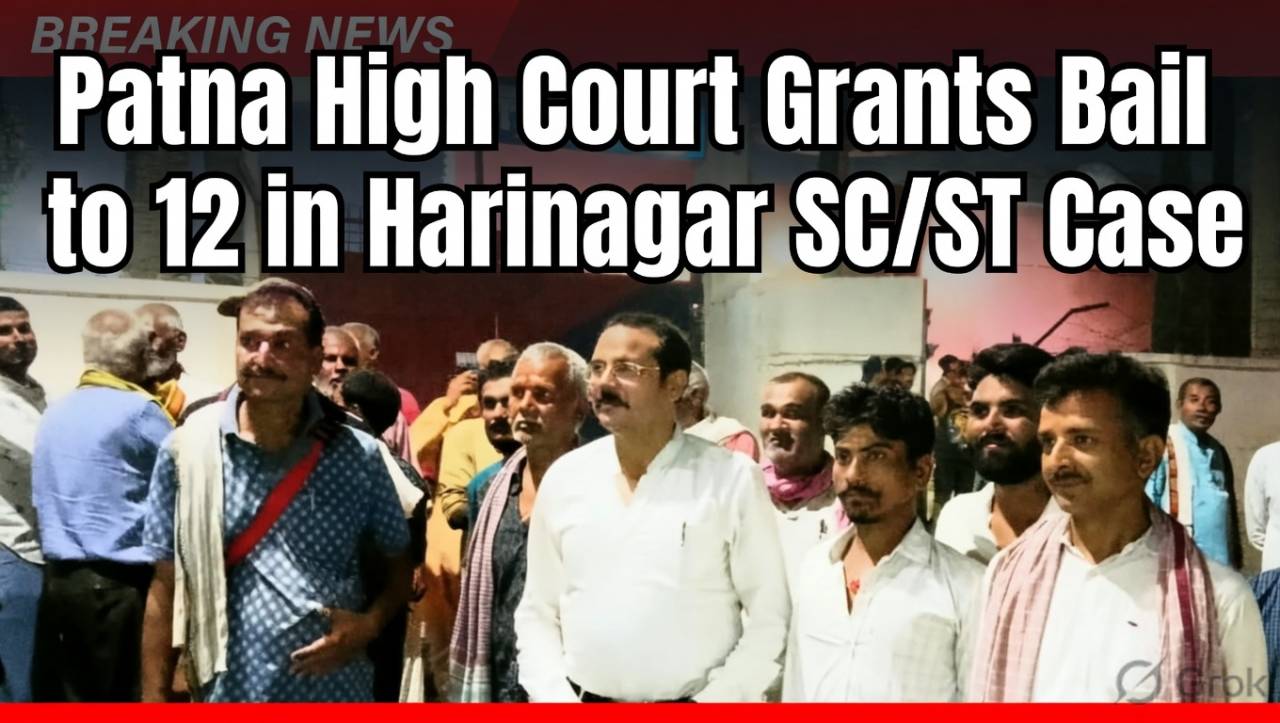
A mass FIR in Harinagar village of Darbhanga has placed dozens of Brahmin families under the Scheduled Castes and Scheduled Tribes (Prevention of Atrocities) Act, triggering debate over investigation fairness and the law’s implementation.
A sweeping criminal case filed under the Scheduled Castes and Scheduled Tribes (Prevention of Atrocities) Act in a small village of Darbhanga district has triggered a heated debate over the law’s implementation and its impact on local communities.
In Harinagar village, more than forty individuals—many belonging to Brahmin families—have been named in a single case that now stands at the centre of a growing controversy. The chargesheet and police directives linked to the case have led several residents to claim that the legal action has effectively placed an entire community under intense legal pressure.
Among those named are Sudhanshu Jha, Prahlad Kumar Jha, Shivam Jha and Manoj Mishra. For the families involved, the scale of the case itself has become the most alarming aspect.
Residents argue that when such a large number of people are implicated simultaneously, the legal consequences extend far beyond the individuals directly accused.
When Allegations Become Immediate Consequences
The SC/ST Act was enacted to provide strong protection to historically marginalized communities facing caste-based discrimination and violence. Over the years, the law has played an important role in enabling victims to seek justice.
However, the stringent nature of its provisions has also meant that once an FIR is registered, the accused can face serious legal consequences even before the courts evaluate the evidence.
In the Harinagar case, police directives referencing provisions of the Bharatiya Nagarik Suraksha Sanhita and sections of the SC/ST Act have instructed authorities to verify the identities and roles of a long list of individuals.
For families in the village, the implications are immediate and severe.
“If the main earning member of a family is arrested, the entire household suffers,” said a relative of one of the accused, requesting anonymity. “Even if someone is eventually cleared by the court, the social damage is already done.”
Under the legal framework governing SC/ST cases, the possibility of anticipatory bail is limited, making early legal defense particularly difficult for those named in such complaints.
Allegations of Mass Implication
One of the central concerns being raised by residents is the scale of the accusation itself.
Critics argue that naming entire community or multiple members of the same lineage in a single complaint can have the effect of paralyzing the social and economic functioning of a community.
In Harinagar, the list of accused extends to individuals from several households, including members of the families of Dheeraj Jha, Pawan Jha and Saurabh Mishra.
Some villagers claim that even individuals whose full identities were initially uncertain were later added to the complaint.
Legal observers say that such situations sometimes emerge in rural disputes where personal conflicts escalate into criminal cases involving larger groups.
“When a local altercation turns into a case under the SC/ST Act along with allegations such as robbery or assault, the legal stakes rise dramatically,” said a Patna-based lawyer familiar with similar cases.
The Criminal Record Verification Process
As part of the investigation, authorities have reportedly been instructed to examine the criminal records of the accused through databases such as police records and the Integrated Criminal Justice System.
While this procedure is standard in serious criminal cases, several residents say the process itself carries reputational consequences.
For families in Harinagar, the fear is not just legal punishment but the long-term stigma associated with being part of a criminal case.
Even if courts eventually acquit the accused, the process of defending dozens of individuals in one case can stretch for years and require significant financial resources.
The Wider Debate Around Implementation
The controversy in Harinagar is not the first time questions have been raised about the implementation of the SC/ST Act.
Legal experts often note that debates around the law operate in two parallel directions.
On one hand, activists stress that the Act remains a critical tool for protecting Dalit and tribal communities from discrimination and violence. On the other hand, some legal scholars argue that strong procedural safeguards are necessary to ensure that the law is not misused in local disputes.
The Supreme Court of India has addressed this balance in several rulings, emphasizing that the objective of the law is to ensure justice for victims of caste-based atrocities while maintaining the principles of due process.
A Village Waiting for the Courts
For now, the Harinagar case remains in the early stages of the judicial process. Courts will ultimately evaluate the evidence presented by investigators, including any digital or documentary material submitted during the trial.
Residents on both sides of the dispute are closely watching how the case unfolds.
For some villagers, the case represents a struggle for justice and dignity. For others, it has become a symbol of what they see as a growing vulnerability under stringent legal provisions.
What is clear is that the outcome of the Harinagar case will not only affect the families directly involved but may also influence the broader conversation about how India’s caste-related laws are implemented at the ground level.





















Leave a Comment