
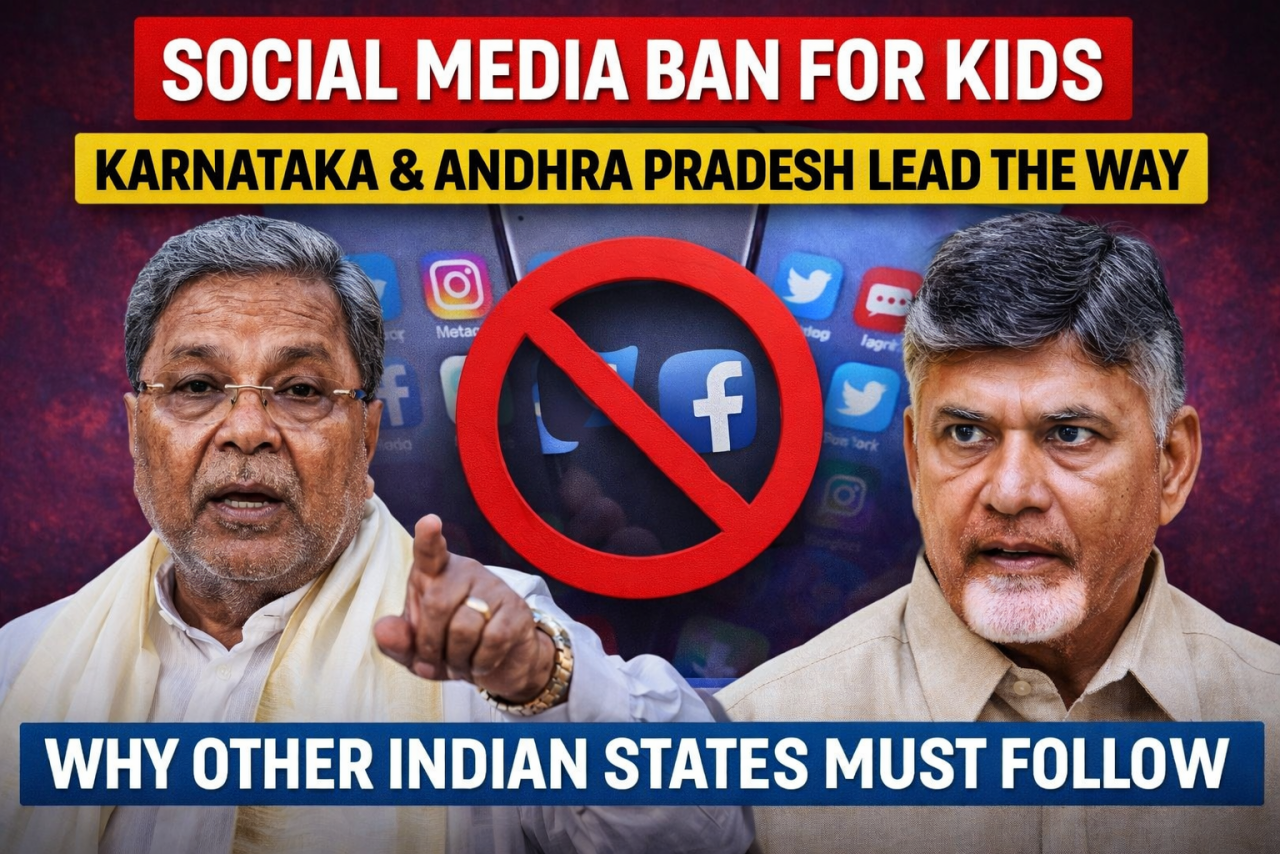
As children spend more time scrolling than studying, Karnataka and Andhra Pradesh have taken a bold step to restrict social media for minors—sparking a national debate on whether the rest of India should finally act to protect its youngest generation in the digital age.
In a significant move aimed at protecting the mental and emotional well-being of children, the governments of Karnataka and Andhra Pradesh have announced plans to restrict social media use among minors. The initiative reflects growing concerns about the impact of excessive smartphone and social media usage on young minds.
The proposal was highlighted during the state budget presentation by Siddaramaiah, the Chief Minister of Karnataka. He stated that children under the age of 16 would be barred from accessing social media platforms in the state. The decision is rooted in the objective of preventing the harmful effects of increasing mobile usage among children, particularly issues related to mental health, digital addiction, and online safety.
Meanwhile, N. Chandrababu Naidu, the Chief Minister of Andhra Pradesh, has gone even further. He announced that children under the age of 13 would be banned from using social media platforms within the next 90 days, while the state continues to debate possible restrictions for teenagers between the ages of 13 and 16.
Together, these steps mark one of the most serious policy attempts in India to address the growing challenge of children’s exposure to social media.
Why These Restrictions Matter
The rapid expansion of digital technology has made smartphones and social media an integral part of daily life. Platforms like Meta-owned services have connected millions of users, but they have also raised serious concerns about their effects on young people.
Research across the world shows that excessive social media use among children can lead to:
- Increased anxiety and depression
- Reduced attention span and academic focus
- Cyberbullying and online harassment
- Sleep disruption and digital addiction
Children and teenagers are particularly vulnerable because their cognitive and emotional development is still in progress. Early exposure to constant online validation, comparison culture, and digital distractions can affect their personality development and mental stability.
By restricting access at an early stage, the governments of Karnataka and Andhra Pradesh aim to ensure that children spend more time in real-world learning, physical activities, and social interactions.
Responsible Digital Parenting
The move by these two states also indirectly encourages responsible digital parenting. Parents often struggle to regulate their children's screen time, especially when social media platforms are designed to keep users engaged for long hours.
Government regulations can help create a broader framework where schools, parents, and policymakers work together to guide children toward healthier digital habits.
However, implementing such restrictions will not be easy. Authorities will need to develop clear mechanisms to verify users’ ages and ensure that children cannot bypass restrictions by creating fake accounts. This will require cooperation from technology companies and stronger digital regulations.
Why Other Indian States Must Act
While Karnataka and Andhra Pradesh have taken the lead, most other Indian states are yet to take similar steps. Across India, children are spending increasing hours online, often without adequate supervision.
States like Maharashtra, Uttar Pradesh, Bihar, Tamil Nadu, and West Bengal—with large youth populations—could greatly benefit from policy discussions around children’s digital safety.
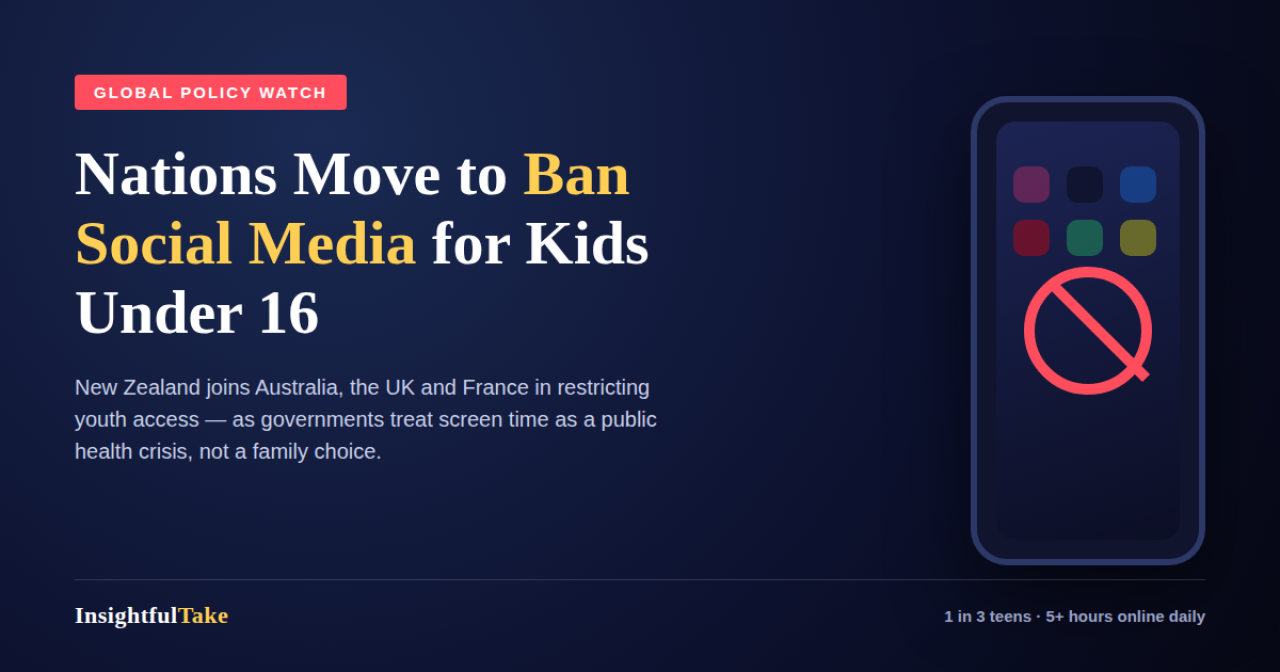
Many countries around the world are already considering strict rules on social media access for minors. India, with one of the world’s largest young populations, cannot afford to ignore the long-term effects of uncontrolled digital exposure.
If more states adopt similar measures, it could eventually lead to a national framework for regulating children’s social media access.
Final Take
The announcement by Karnataka and Andhra Pradesh may represent the beginning of a broader conversation about digital well-being in India. While the details of implementation are still being finalized, the message is clear that protecting children in the digital age requires proactive policies.
Instead of waiting for a crisis, these states have chosen prevention.
Their initiative sets an example for the rest of the country—one that prioritizes the healthy development of children over the unchecked expansion of digital consumption.
If other states follow this lead, India could move closer to building a safer digital environment for its youngest generation.


















Leave a Comment