
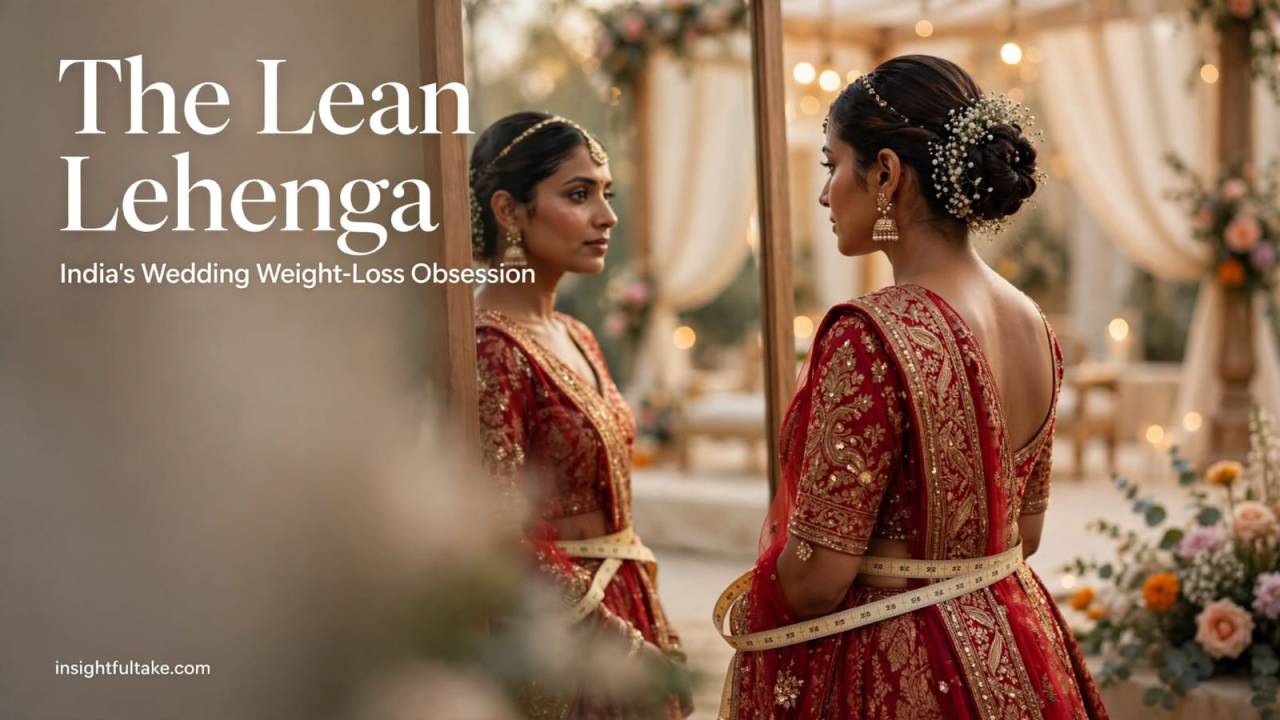
India’s wedding industry is fuelling a race to get thinner, from crash diets to weight-loss injections. But what does the pursuit of the perfect bridal look cost?
In India, the big fat wedding has long been a spectacle of excess, with lavish lehengas, multi-day feasts and photographs destined for Instagram permanence. Yet a parallel culture of deliberate thinness has taken firm root. Brides, and increasingly grooms, race against the wedding calendar to shed kilos, driven by the pressure to look a certain way on the big day.
What was once limited to crash diets and intense gym sessions has expanded into medical interventions, fitness packages and a booming wellness industry. The result is a wedding weight-loss culture that is intense, commercialised and increasingly medicalised.
The Pressure to Look Perfect
The pressure is cultural as well as visual. Bridal lehengas and sherwanis are designed to be photographed from every angle. Social media amplifies comparisons, while family expectations often equate a slim silhouette with desirability and success. For many people preparing to marry, the desire to look their best becomes a race against time.
Stories of dramatic transformations circulate widely. One bride publicly shared how she lost 25 kg over a year, reducing her weight from 84 kg to 58 kg. Her routine included daily running, gym sessions, 10,000 steps and cutting out fried foods, sugar and baked goods. Her stated motivation was to fit into her lehenga and achieve a look similar to actor Kareena Kapoor. Such accounts illustrate how wedding preparations can turn weight loss into a personal deadline.
From Crash Diets to Structured Fitness Plans
Traditional approaches remain common. These include calorie-controlled diets, high-protein vegetarian meals featuring paneer, dal and curd, resistance training several times a week, and daily walking.
Nutrition professionals generally recommend gradual weight loss rather than extreme dieting. A moderate calorie deficit, adequate protein and regular strength training can help reduce body fat while preserving muscle. A commonly cited sustainable pace is around 0.5 kg per week, although the appropriate rate varies according to a person's starting weight, health and nutritional needs.
Over three months, gradual changes may produce noticeable results without compromising overall well-being. Adequate nutrition also matters for maintaining muscle, hair and skin health, which are often central to bridal beauty routines.
Crash diets, on the other hand, can lead to nutritional deficiencies, muscle loss, fatigue and other health problems. Severely restricting calories in the hope of achieving a particular look can undermine the very appearance and energy that people want for their wedding day.
The Rise of Weight-Loss Injections
A newer, faster route has entered the wedding preparation market: GLP-1-based medicines, including tirzepatide, sold as Mounjaro, and semaglutide, sold under brands such as Ozempic and Wegovy in different markets.
Originally developed for the treatment of type 2 diabetes and, in certain formulations, obesity, these medicines have attracted attention among people seeking substantial weight loss before major events. Their ability to reduce appetite and support weight management has helped fuel demand beyond conventional diet and exercise programmes.
Media reports have described doctors in Delhi and other metropolitan cities receiving enquiries from brides seeking weight-loss injections before their weddings. Some clinics have begun offering programmes that combine medication with nutritional guidance and exercise.
For people struggling to find time for regular workouts amid elaborate wedding preparations, the prospect of losing several kilos over a few months can appear attractive. But the convenience of an injection does not eliminate the need for medical assessment, nutritional support or long-term planning.
The commercial interest is substantial. India's obesity-treatment market has attracted growing attention following the introduction of newer medicines, with projections pointing to significant expansion in the coming years. Weight-loss treatments are becoming part of a broader market that already includes bridal fitness packages, skincare services and personalised wellness programmes.
What Doctors Warn Against
The appeal of rapid weight loss comes with important medical concerns. Losing weight quickly can result in the loss of lean muscle alongside body fat. This deserves particular attention in people who already have low muscle mass or inadequate nutritional intake.
GLP-1 medicines can also cause side effects, including nausea, vomiting, diarrhoea and constipation. Their suitability depends on an individual's medical history and health needs. Unsupervised use, inappropriate dosing and products obtained from unreliable sources can create additional risks.
Another concern is what happens after the wedding. People who discontinue treatment may regain weight, particularly if they have not established sustainable eating and exercise habits. Weight regain is not inevitable for everyone, but it is a recognised possibility that needs to be discussed before treatment begins.
Endocrinologists and other qualified medical professionals therefore caution against treating these medicines as short-term cosmetic fixes. They are prescription treatments with specific indications, not substitutes for a long-term approach to health. Anyone considering them should consult a qualified doctor rather than follow social media recommendations or clinic advertisements.
The central problem is not the desire to look good on one's wedding day. It is the expectation that a medical or dietary shortcut can produce a lasting transformation within an arbitrary deadline.
The Business Behind the Big Fat Wedding
The weight-loss boom is part of India's enormous wedding economy. Industry estimates place annual wedding spending at around $130 billion, with millions of ceremonies taking place every year. Urban wedding budgets can run into tens of lakhs of rupees, while luxury and destination celebrations cost considerably more.
Fitness training, skincare, styling and now medical weight-loss packages have become part of the preparations. Couples are increasingly encouraged to treat their appearance as another element of wedding planning, alongside the venue, jewellery, clothing and photography.
The social pressure is reinforced by the scale of the celebrations themselves. Multiple functions, including engagements, sangeets and receptions, can turn a single wedding into weeks of preparation and public scrutiny.
For some urban Indians, attending numerous weddings and related events throughout the year also presents a separate challenge. Rich meals, sweets, alcohol and reduced physical activity can contribute to excess calorie intake. Without a balanced routine, repeated celebrations may gradually affect body weight.
The same wedding culture that encourages people to become thinner before marriage can therefore create circumstances that make weight management difficult afterwards.
Marriage, Shared Habits and Weight Gain
Research suggests that weight-related concerns do not necessarily end with the wedding. An analysis of more than 52,000 couples using data from India's National Family Health Survey-5, conducted in 2019–21, examined the prevalence of overweight and obesity among married partners.
The analysis reported that 27.4% of couples were both overweight or obese using an Asian body mass index threshold of 23. The proportion was higher in urban areas, at 38.4%, and among couples in the wealthiest group, where it approached 48%.
The findings also pointed to regional differences, with high levels of shared overweight and obesity in states and regions including Kerala, Delhi, Punjab and Tamil Nadu.
Shared eating habits, reduced physical activity, changing family routines and wider lifestyle patterns may help explain why partners often experience similar weight-related challenges. Marriage itself should not be treated as the cause; rather, couples can influence each other's routines and health behaviours over time.
This creates a striking contrast. Before the ceremony, couples may invest heavily in slimming programmes and appearance-focused treatments. After marriage, shared meals, work pressures and less time for exercise can make it difficult to maintain those changes.
Beyond the Wedding Photograph
Wedding weight-loss culture sits at the intersection of personal choice, social expectations and commercial interests. The pressure to look perfect in photographs can encourage people to pursue rapid results, even when those results come at the expense of their health.
A more sustainable approach involves realistic goals, balanced nutrition, sufficient protein, strength training, adequate sleep and a plan for managing high-calorie celebrations. Where medical treatment is appropriate, it should be guided by a qualified professional and supported by long-term care.
The goal need not be to abandon fitness or appearance-related ambitions. It should be to pursue them without turning the wedding date into a deadline for extreme dieting or unnecessary medical treatment.
As lehengas grow leaner and clinics advertise bridal weight-loss packages, the underlying question remains cultural as much as clinical. Photographs may last a lifetime, but so do the consequences of our health choices.
Looking one's best on the wedding day should not require putting long-term health at risk. A celebration may last a few days; the habits formed around it can shape a couple's well-being for years to come.



















Leave a Comment