
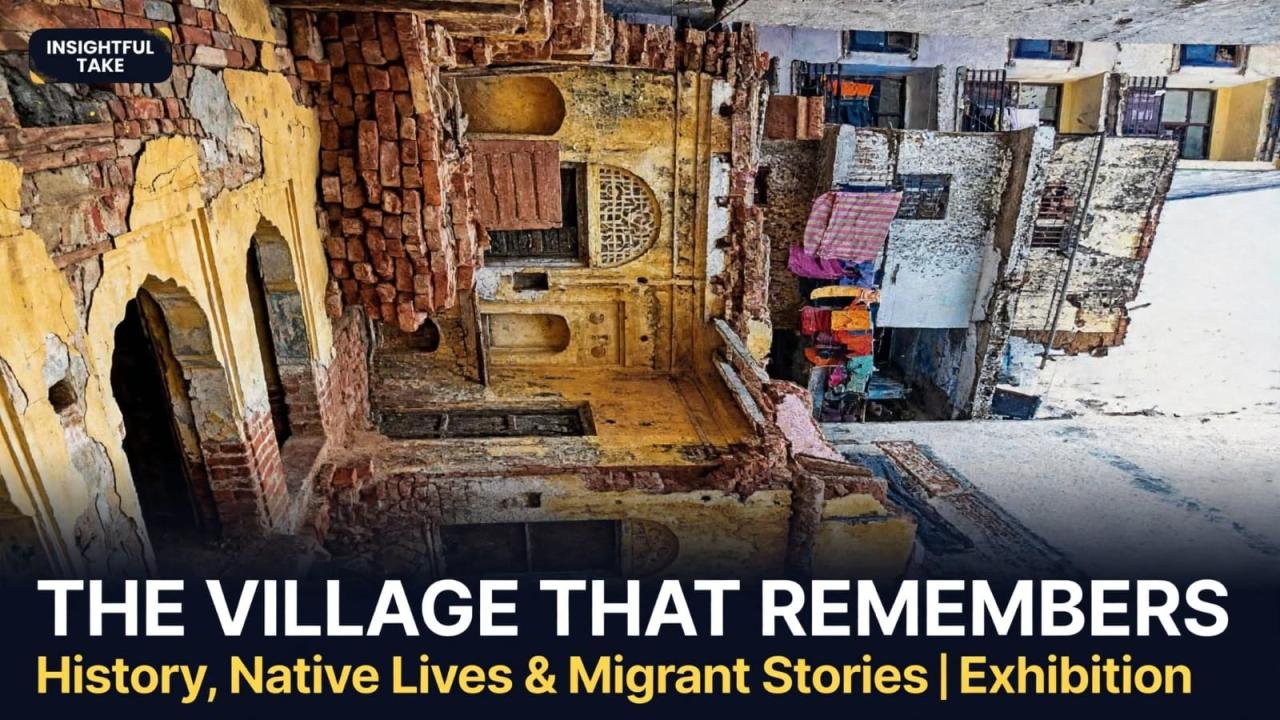
An exhibition by Ambedkar University Delhi students on November 27 and 28 will document the village's history, architectural transformation and the lives of its old residents and newer migrant communities.
A decades-old haveli, partly damaged by demolition and the passage of time is set to become an exhibition space in Saidulajab, south Delhi, on November 27 and 28. Students of Ambedkar University Delhi (AUD) will use the building to present Sanjha Saidulajab, a two-day exhibition documenting the history of the urban village and the lives of its original residents and migrant communities.
The haveli stands in a pale-yellow courtyard, surrounded by modern four- and five-storey buildings that have transformed the landscape of Delhi's urban villages. For the university's master's students in urban studies, the exhibition marks a departure from their earlier campus-based presentations. This time, their academic work will be displayed within the neighbourhood they have studied.
Taking the Classroom into the Field
The exhibition is part of the Urban Studies Studio, an initiative started by Professor Shekhar Tokas at Ambedkar University's Karampura campus. Tokas has led the programme since 2024, while Professor Nidhi Tewatia supervises its exhibitions.
The studio follows a field-based learning approach. Students study an urban village through direct engagement, research and documentation before presenting their findings through an exhibition.
The first edition, held in 2025, explored the histories of Munirka and Katwaria Sarai. The second edition, organised this year, focused on Basai Darapur in west Delhi. Student teams examined subjects including cultural heritage, gender, caste and the experiences of migrant residents. This year's work has also expanded to include disaster assessment and risk.
Both earlier exhibitions were organised within the university. The Saidulajab edition takes the initiative beyond the campus and into the community itself.
Why the Exhibition Is Being Held in a Haveli
The decision to move the exhibition to Saidulajab has a direct connection with the area's recent history. According to Professor Tokas, the idea gained importance after a building collapse in the locality in May this year claimed six lives.
The incident brought renewed attention to unsafe construction and the risks associated with the rapid transformation of Delhi's urban villages. The university team felt that research about a neighbourhood should be presented within that neighbourhood, allowing residents to engage directly with the findings.
The choice of venue also gives the exhibition an added significance. A partly demolished haveli, surrounded by newer buildings, becomes a setting for examining the very changes that have reshaped the village.
A Heritage Corridor Through the Lanes
Visitors will reach the haveli through a narrow lane lined with houses on both sides and a staircase leading towards the courtyard. The organisers plan to transform this approach into a 300-metre heritage corridor.
Murals near the staircase will depict the intricate designs of traditional doors and windows alongside the simpler architectural features of modern buildings. The visual presentation will trace the changes in the village's built environment and highlight the contrast between its older architectural character and contemporary construction.
A map of Saidulajab, created on a wall using red threads, will identify the Lal Dora area, where most of the village's original residents came from, according to the organisers.
The exhibition will also feature a collection of historical photographs contributed by families who have lived in Saidulajab for generations.
Atishay, a 26-year-old student involved in organising the exhibition, said the collection includes wedding portraits, photographs of farmland and funeral pictures. Together, these images capture different stages of family and community life. Displayed along the corridor, they will offer visitors a glimpse into the village's social history through the personal memories of its residents.
A Neighbourhood Shaped by Old and New Residents
Saidulajab's identity is not limited to families who have lived there for generations. Migration and urban expansion have brought new residents into the neighbourhood, making its social character increasingly diverse.
Anand Gulia, 48, moved to Saidulajab from Gurugram a few years ago. He said the two-storey haveli where the exhibition will take place, along with neighbouring houses, had been rented only a few months earlier.
His account reflects another dimension of the village's changing identity. Its buildings, streets and courtyards now accommodate people with different backgrounds and histories. The exhibition seeks to document this evolving relationship between the original residents and those who have made the neighbourhood their home more recently.
Preserving the Memory of Delhi's Urban Villages
Delhi's urban villages are frequently discussed in the context of rising rents, overcrowding, infrastructure pressure and unauthorised construction. Their cultural histories and the experiences of the families who shaped them receive considerably less attention in public discussions and urban planning.
Sanjha Saidulajab attempts to bring those overlooked stories into public view. Through photographs, architectural documentation, maps and field research, students are recording a neighbourhood undergoing rapid physical and social change.
The exhibition also offers an example of how university education can connect academic research with everyday community life. Rather than limiting their findings to classroom discussions or academic submissions, students are presenting their work in a space where residents can recognise, question and contribute to the stories being told.
The two-day exhibition may not change the challenges facing Delhi's urban villages, but it creates an opportunity to preserve memories that could otherwise disappear with the buildings and neighbourhoods that hold them.
For two days, a crumbling haveli in Saidulajab will serve a purpose beyond its physical structure. It will become a classroom, a gallery and a meeting point for the people whose lives form the history of the village.























Leave a Comment