
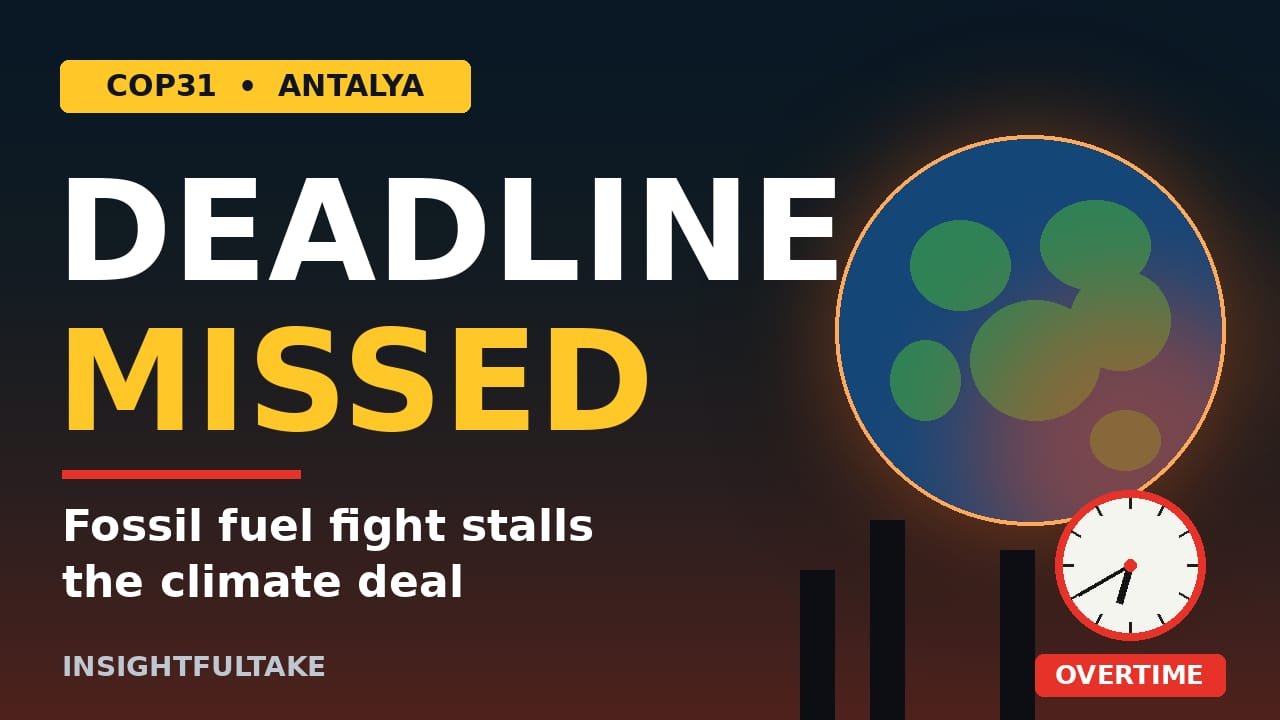
With a draft agreement dropping all references to fossil fuels, nearly 200 countries have extended the UN climate negotiations into Saturday amid disagreements over climate finance and energy transition.
The UN climate summit, COP31, in Antalya, Türkiye, missed its scheduled closing deadline on Friday as delegates from nearly 200 countries failed to reach a consensus on the final agreement. The talks, originally expected to conclude at 6 pm local time, will continue into Saturday.
A UN official, speaking on condition of anonymity, indicated that the final draft was more likely to emerge on Saturday than late Friday night. Disagreements over fossil fuels, climate finance and the responsibilities of developed and developing nations remain the biggest obstacles to a deal.
A Draft Agreement That Angered Many
The main dispute centres on the summit's cover decision, the document intended to capture the key outcomes and commitments of COP31.
The second draft, released on Thursday, removed all references to fossil fuels. It also excluded the adaptation finance target sought by developing countries, which involves annual funding worth hundreds of billions of dollars.
The omissions triggered strong objections from several ministers, environmental campaigners and country delegations on the final day of negotiations.
A coalition of countries from Europe, Africa, Latin America and the Pacific, led by France and Panama, has challenged the proposed agreement. The group is demanding explicit references to fossil fuels and stronger commitments on climate finance.
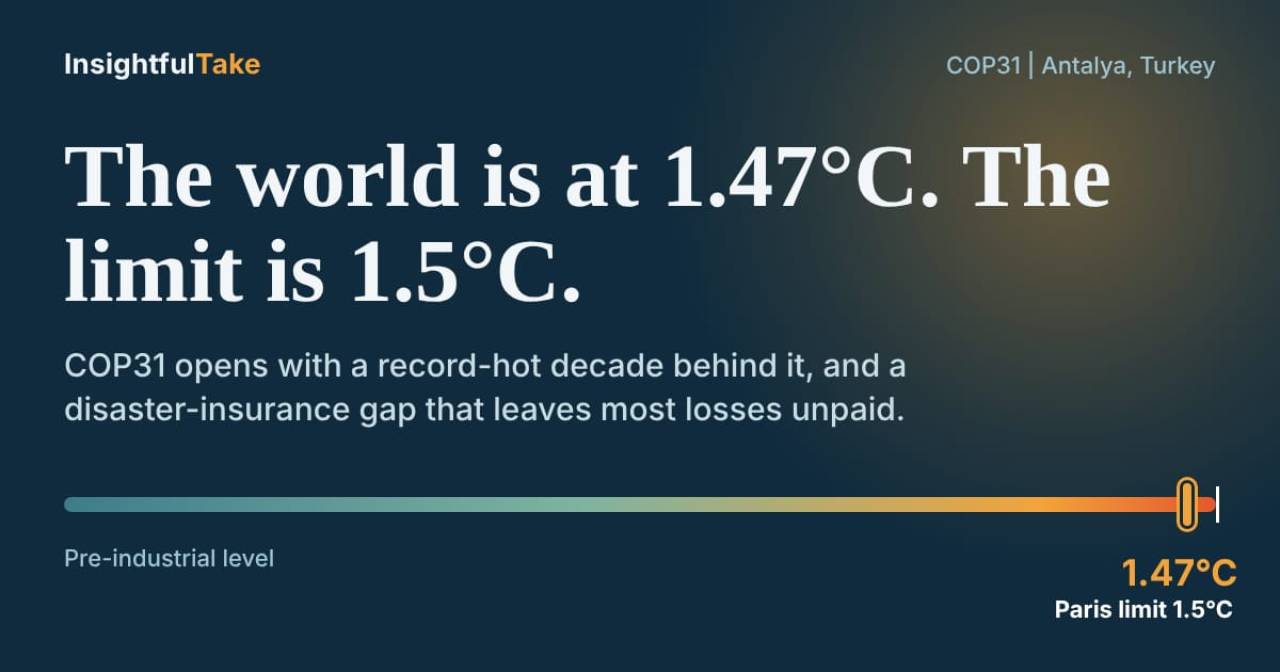
France's Ecological Transition Minister Monique Barbut linked the issue to the global commitment to limit temperature rise to 1.5 degrees Celsius. She argued that governments cannot continue claiming to support the 1.5-degree target while avoiding meaningful action on fossil fuels.
Panama's Environment Minister Juan Carlos Navarro took an equally firm position. He said a climate summit could not produce a credible agreement if its principal document did not even mention fossil fuels. His delegation, he added, would not accept such an outcome.
India's Position on Fossil Fuels
India's position on the energy transition was established before the summit began.
Union Environment Minister Bhupender Yadav had made it clear that India would not support a phase-out of fossil fuels or a roadmap designed to achieve one.
This places New Delhi at odds with the coalition led by France and Panama on one of the most contentious issues at COP31.
India's position reflects its continued emphasis on energy security, development requirements and the principle that developing economies should retain sufficient policy space to meet their growing energy needs.
The disagreement also highlights the wider divide between countries seeking a faster transition away from fossil fuels and those resisting commitments that could constrain their development priorities.
Climate Campaigners Accuse Rich Nations of Blocking Progress
Environmental organisations have directed much of their criticism towards developed countries, particularly the European Union and other wealthy nations.
Tasneem Essop, Executive Director of Climate Action Network (CAN) International, accused European Union member states and other rich nations of preventing meaningful discussions while presenting a different picture to the media.
She argued that the proposals under consideration offered little protection to vulnerable communities and failed to address the priorities of the Global South.
CAN also awarded its annual "Colossal Fossil" distinction to COP31 itself. The organisation uses the award at the end of each climate summit to highlight those it believes have undermined negotiations and obstructed progress.
CAN representatives subsequently held a separate press conference, where some participants displayed black signs carrying the word "shame".
Mohamed Adow, founder of the African climate think tank Power Shift Africa, delivered an even stronger assessment. He criticised the summit presidency for presenting COP31 as a successful gathering, describing it instead as the worst climate summit he had witnessed.
Adow pointed to the nine-page draft agreement, which softened language on trade and omitted the commitment made at COP28 in Dubai in 2023 to transition away from fossil fuels.
Avantika Goswami, Programme Manager at the Centre for Science and Environment (CSE), New Delhi, raised similar concerns. She said the draft moved away from meaningful fossil fuel commitments and failed to include references to the fossil fuel and deforestation roadmaps discussed at Belém last year.
COP31 Presidency Remains Hopeful
Despite mounting criticism and the missed deadline, COP31 President Chris Bowen maintained an optimistic position.
He said the presidency remained hopeful of securing a strong outcome and insisted that delegates had not given up on reaching an agreement.
Bowen told participants that nobody had suggested abandoning the negotiations and returning home. He expressed confidence that countries still had the willingness to make the talks successful.
The presidency now faces the difficult task of reconciling competing demands before the negotiations conclude.
What Comes Next for Global Climate Action?
The extended negotiations will determine whether COP31 can produce an agreement acceptable to countries with sharply different positions on fossil fuels and climate finance.
Countries demanding explicit fossil fuel commitments have indicated that they will not accept a document that ignores the issue. India and other countries, meanwhile, remain opposed to a phase-out roadmap.
The unresolved question of climate finance adds another layer of complexity. Developing nations continue to demand substantial financial support from wealthier countries to adapt to climate change, strengthen infrastructure and manage the transition towards cleaner energy.
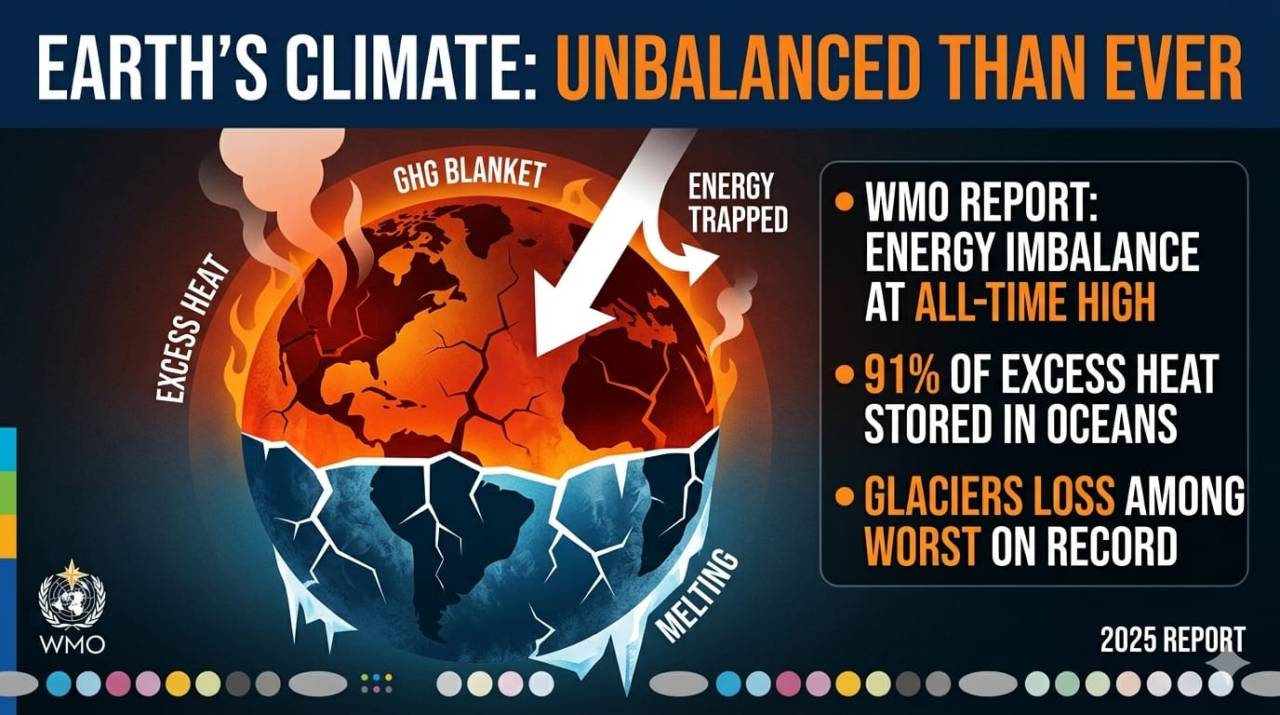
The summit's credibility is also at stake. The previous year's discussions in Belém produced roadmaps covering fossil fuels and deforestation. A final agreement that remains silent on both issues could be viewed by several delegations as a retreat from earlier commitments.
COP31's outcome will therefore be judged not simply by whether countries manage to sign a final document, but by whether that agreement delivers meaningful progress on emissions reduction, climate finance and the transition to a more sustainable global energy system.


















Leave a Comment