
Political unrest spreads across Bangladesh as petrol bomb attacks, mass arrests and paramilitary deployments expose the country's fragile security situation.
Bangladesh is witnessing another wave of political violence as arson attacks, petrol bombings and mass arrests intensify ahead of former Prime Minister Sheikh Hasina's promised return from India in December. The latest unrest has exposed growing tensions between the country's interim political establishment, the banned Awami League and supporters of the ousted leader.
On Friday, fresh attacks were reported across the country. Authorities also restored communications with Gopalganj, Hasina's hometown, following several days of unrest linked to her planned return.
The developments have placed the government under pressure to restore public order while preventing another escalation of the political crisis that followed the 2024 uprising.
Sheikh Hasina's Return Deepens Political Tensions
Hasina, 79, has announced her intention to return to Bangladesh in December from India, where she has lived since being ousted during the 2024 uprising.
Her proposed homecoming comes despite a death sentence handed down in absentia following her conviction for crimes against humanity over the deadly crackdown on protesters during the uprising. In an email interview with AFP, she said she was "fully aware" that she could face execution if she returned.
The announcement has energised her supporters while raising serious concerns among political opponents.
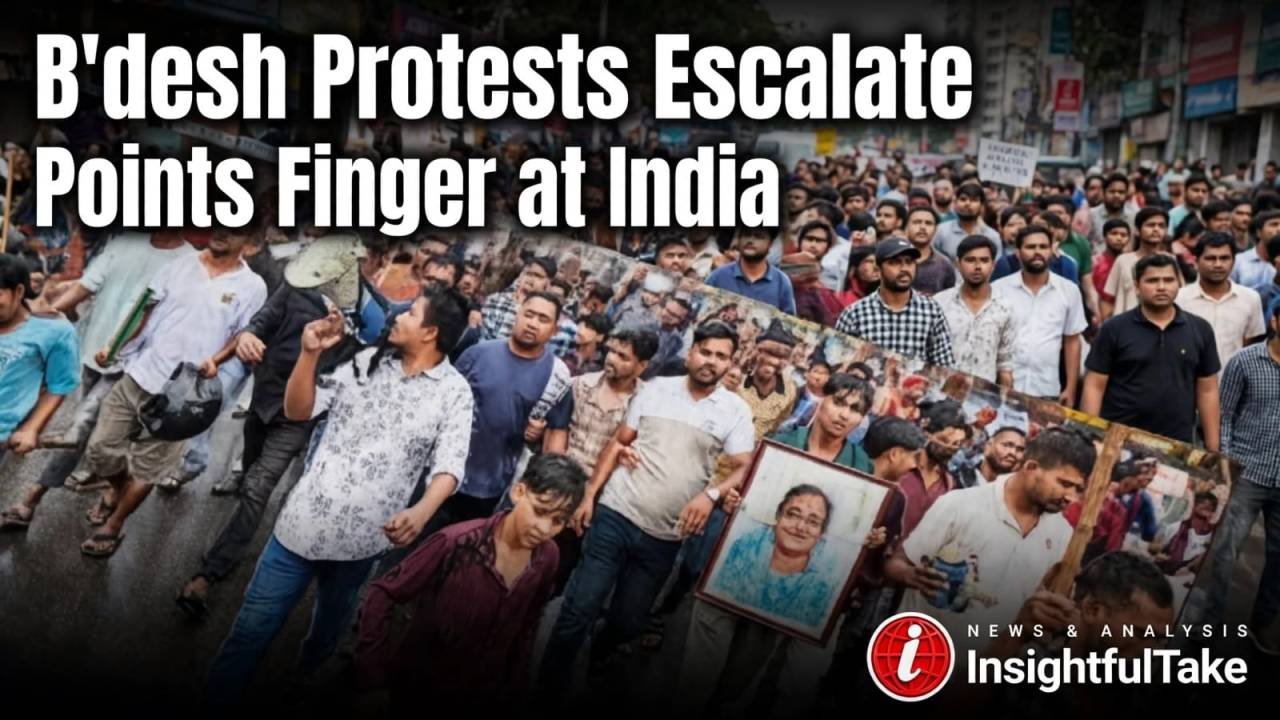
The Awami League, Hasina's former ruling party, currently faces a ban on its political activities. It called for nationwide protests and strikes this week to mark the anniversary of the verdict against its leader.
The party also announced a week-long programme of demonstrations and rallies to mobilise support for Hasina's return, culminating in a nationwide shutdown on November 19.
Arson Attacks and Petrol Bombings Spread Across the Country
The political mobilisation has coincided with a fresh cycle of violence. Hundreds of paramilitary personnel have been deployed to contain the unrest, which has reportedly claimed at least three lives.
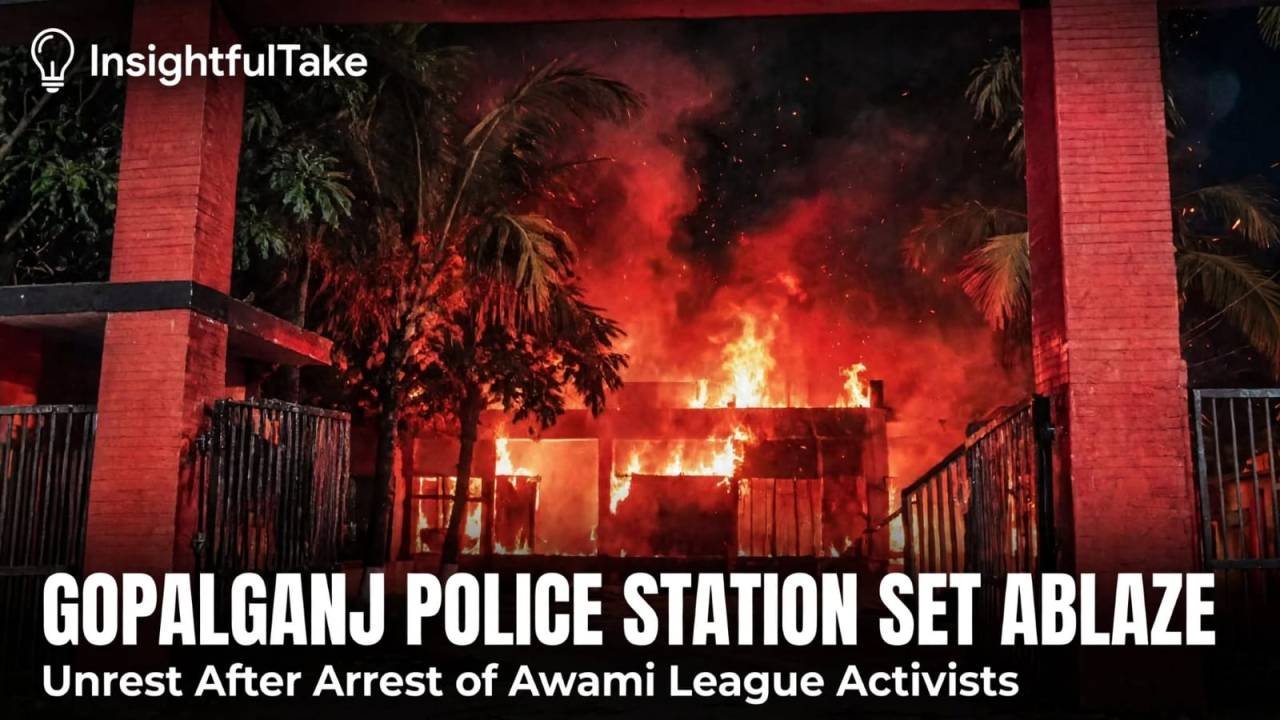
Gopalganj has emerged as one of the main centres of confrontation. A police station was set on fire following the arrest of Awami League activists, becoming a striking symbol of the deteriorating security situation.
Violence has also spread beyond Hasina's traditional political stronghold.
On Friday, a petrol bomb was thrown at the residence of junior foreign minister Humaiun Kobir in Sylhet, in northeastern Bangladesh, according to police. The family home of Nobel laureate and former interim leader Muhammad Yunus in the port city of Chittagong was also targeted in an arson attack on Wednesday.
Grameen Bank, the microfinance institution founded by Yunus, reported that more than 20 of its branches had been targeted in arson attacks during November.
Police have intensified their crackdown on suspected Awami League supporters. Authorities said 124 people linked to the party were detained in Dhaka alone within a 24-hour period, although further details about the arrests were not provided.
Government Warns of Firm Action Against Attackers
The Bangladesh Nationalist Party (BNP) government has adopted a tough public position in response to the violence.
Junior Foreign Minister Humaiun Kobir told reporters that the government would deal with the attacks "very firmly". He dismissed those responsible as small terrorist groups that could not sustain their activities in Bangladesh.
Kobir expressed confidence that such groups would eventually disappear, arguing that organisations without a sustainable political or social base could not survive.
He also sought to distinguish the BNP government from the administration led by Hasina.
"The BNP government is a tolerant government," he said, adding that it was not like previous autocratic administrations that suppressed people.
At the same time, Kobir accused Awami League activists of operating in fear and using petrol bomb attacks as a means of creating disruption before fleeing the scene. He alleged that some attackers shouted "Joy Bangla", the Awami League's traditional slogan, before escaping.
His remarks underline the government's determination to project control, although the continuing attacks suggest that the security situation remains volatile.
Bangladesh Faces Two Competing Political Narratives
The latest violence has exposed the deep divisions that continue to shape Bangladesh's political landscape.
The government maintains that the country is moving towards stability and that isolated groups are attempting to disrupt the recovery process. However, attacks on police infrastructure, a minister's residence, a prominent public figure's family home and dozens of bank branches indicate that the unrest has acquired a wider reach.
The Awami League presents its campaign as a political movement to secure the return of a leader it considers unfairly targeted. Its opponents, meanwhile, view Hasina's proposed return as an attempt to restore the influence of a political establishment associated with the violent suppression of the 2024 protests.
The immediate triggers of the latest clashes also remain significant. Witnesses told Justice Info that rumours about the arrest and transfer of several Awami League leaders and activists to a police station had contributed to the outbreak of violence.
The spread of rumours, combined with political mobilisation and heavy security deployments, highlights the fragile relationship between public order and political confrontation in the country.
December Could Become a Defining Moment for Bangladesh
Sheikh Hasina's proposed return in December is likely to become a major test for Bangladesh's political leadership.
She faces a death sentence in absentia, while the government has taken an increasingly hard line against her supporters. Any attempt to return could trigger further confrontations between political groups and security forces.
India is also likely to remain an important part of the unfolding situation, given that Hasina has been living there since her departure from Bangladesh in 2024.
For Bangladesh's leadership, restoring public order is only one part of the challenge. It must also demonstrate that the country is moving towards a political system based on accountability, institutional fairness and democratic participation.
Mass arrests and broad security labels may help project a strong response in the immediate aftermath of violence. However, without political dialogue and credible institutions, such measures could deepen existing divisions.
Bangladesh continues to carry the political and social scars of the 2024 uprising. With December approaching, Hasina's proposed return has added another layer of uncertainty to an already volatile situation.
The coming weeks will test whether the government can contain the violence and maintain political stability without allowing the country to slide into another prolonged cycle of confrontation.















Leave a Comment