
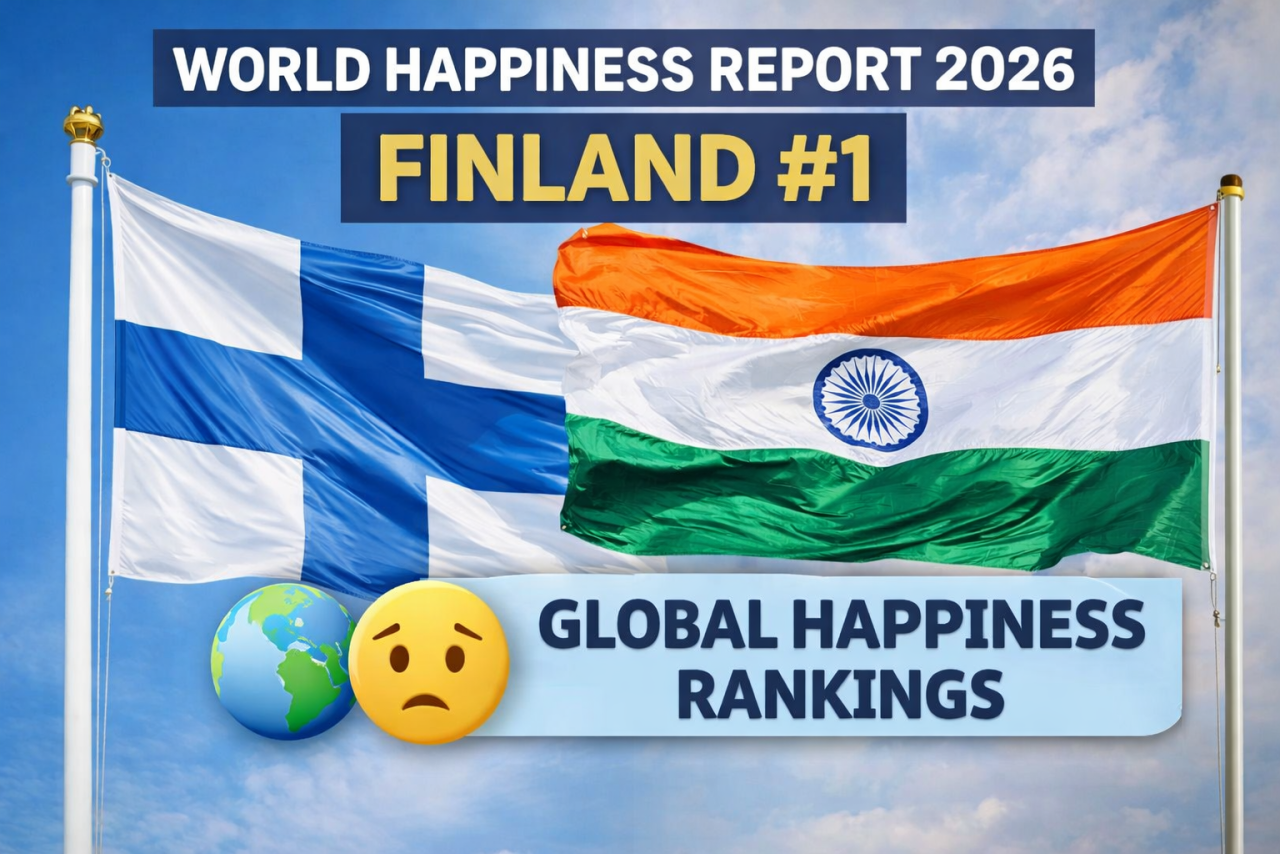
Finland holds the top spot again, but the real story lies deeper. Why are some of the world’s richest nations seeing declining happiness among youth, and what does India’s slow rise really mean?
The latest edition of the World Happiness Report 2026 has once again placed Finland at the top. This marks the ninth year in a row that Finland has been ranked as the happiest country in the world. The report studies the well-being of people across 147 countries. It looks at factors like income, health, social support, freedom, and trust in institutions.
Finland’s consistent performance shows the strength of its social systems. People in Finland enjoy a high level of trust in their government. They also benefit from strong public services. These include education, healthcare, and social security. Equal distribution of wealth also plays an important role. Citizens feel secure about their future. This creates a stable and positive environment for life satisfaction.
Other Nordic countries continue to perform well. Nations like Denmark, Iceland, and Sweden remain among the top-ranked countries. These countries share similar systems. They focus on welfare, equality, and strong community support. This shows that social trust and public welfare are key drivers of happiness.
India has been ranked 116th in this year’s report. This is a slight improvement from its 118th position last year. While the improvement is small, it still shows some progress. However, India remains in the lower half of the rankings. Many challenges affect the overall happiness level. These include income inequality, unemployment, and limited access to quality healthcare in some areas.
The report also highlights an important global trend. Happiness levels among young people are declining in many developed countries. Countries like United States, Canada, Australia, and New Zealand have seen a drop in life satisfaction among people under 25. One major reason behind this trend is the growing use of social media.
Experts say that heavy social media use affects mental health. It increases anxiety and reduces real-life social interaction. Teenagers, especially girls, are more affected. Long hours spent online can lead to stress and low self-esteem. This is why many countries are now discussing limits on social media use for minors.
The report also shows that countries facing conflict or instability rank at the bottom. Afghanistan remains the unhappiest country in the world. It is followed by countries like Sierra Leone and Malawi. These countries struggle with poverty, conflict, and weak institutions. People in these regions face daily challenges that affect their quality of life.
A notable change this year is the rise of Costa Rica. It has entered the top five for the first time. The country has improved its ranking steadily over the years. Experts believe that strong social ties and a relaxed lifestyle contribute to this success. People in Costa Rica report high levels of life satisfaction.
The report makes one message clear. Economic growth alone does not guarantee happiness. Social support, trust, and mental well-being are equally important. Governments need to focus on balanced development. Policies should improve both material conditions and emotional well-being.
For India, the path ahead is clear. Improving healthcare, education, and job opportunities can help raise happiness levels. Reducing inequality and strengthening community support will also make a difference. At the same time, awareness about mental health and responsible social media use is important.
In conclusion, the World Happiness Report 2026 provides valuable insights into how people feel about their lives. Finland’s success shows the importance of strong social systems. India’s improvement shows potential, but much work remains. Happiness is not just about wealth. It is about creating a society where people feel safe, supported, and hopeful about the future.





















Leave a Comment