
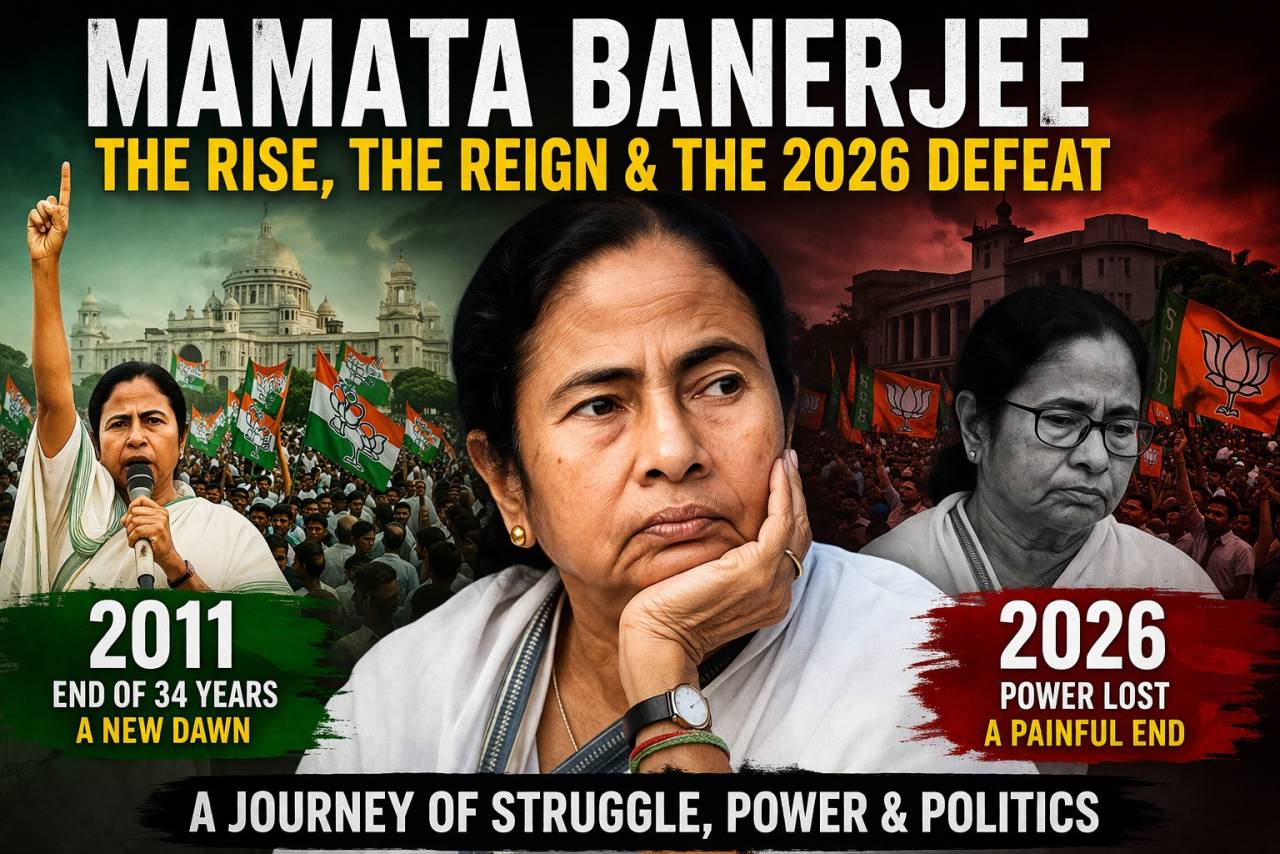
From ending 34 years of Left rule to facing a historic electoral setback in 2026—Mamata Banerjee’s political journey reveals how power, narrative control, and voter sentiment can reshape even the strongest political empires.
From a disruptive force in West Bengal politics to a decisive electoral setback in 2026, Mamata Banerjee’s political journey stands as one of the most consequential and polarising arcs in modern Indian politics. Her career was built on confrontation, street-level mobilisation, and an unusually strong command over political narrative. She rose from a grassroots challenger to a dominant regional leader who reshaped the state’s political order.
Yet her eventual defeat also reveals a harder truth: mass politics built on personality, symbolism, and centralised control eventually faces limits when voter expectations shift and institutions begin to strain.
The Rise: Politics of the Street, Language of Resistance
Mamata Banerjee did not enter politics as an insider of power. She built her identity as an outsider who constantly challenged it.
Emerging from student politics, she entered Parliament at a young age, but her real political identity took shape in confrontation. Her defining years came as the most visible and aggressive opponent of the Left Front’s long rule in West Bengal.
Unlike traditional political actors who worked through organisational layers, she chose visibility. Streets became her stage. Protests became her language. Authority became her target.
The turning point came with land acquisition conflicts in Singur and Nandigram. These were not just policy disputes—they were transformed into emotional symbols of displacement, injustice, and state overreach. Mamata Banerjee positioned herself directly in the centre of these struggles, building a political identity rooted in resistance.
The formation of the All India Trinamool Congress marked a structural shift. It was not just a party—it became a vehicle for anti-incumbency sentiment, fuelled by emotion more than ideology. Her messaging was simple, repetitive, and deeply personal: the state had failed its people, and she would stand with them.
By 2011, this narrative broke through. The Left Front, in power for 34 years, was voted out. Mamata Banerjee became Chief Minister. It was more than an electoral victory—it was a political rupture. It proved that entrenched ideological systems could be displaced by sustained mobilisation and narrative dominance.
Consolidation: Welfare Politics and Controlled Messaging
Once in power, Mamata Banerjee transitioned from protest to governance—but not from narrative politics.
Her administration focused heavily on welfare delivery. Schemes aimed at women, students, and marginalised communities became the backbone of her governance model. Programs like Kanyashree and Sabuj Sathi created a direct link between the state and citizens, strengthening her political base at the grassroots level.
But governance was never separated from communication. Her political style remained deeply personalised. She positioned herself as both leader and protector, often bypassing institutional layers to communicate directly with the public.
Over time, the party, government, and leadership narrative began to merge into a single political identity. Messaging was tightly controlled and reinforced through local networks, public appearances, and cultural symbolism.
This phase reshaped West Bengal’s political culture. Elections were no longer just contests over policy. They became contests over identity, loyalty, and emotional alignment. Supporters saw her as a defender of regional pride. Critics saw an increasingly centralised style of governance.
The Challenge: Opposition Expansion and Structural Pressure
The entry of the Bharatiya Janata Party as a serious contender changed the political equilibrium.
Unlike earlier fragmented opposition forces, the BJP brought organisational depth, national narrative framing, and aggressive communication strategy. Politics in West Bengal became part of a larger national contest.
The 2021 election tested Mamata Banerjee’s political strength. She retained power despite intense opposition pressure. The victory reinforced her image as a resilient political fighter.
But beneath the surface, signs of strain were visible. The opposition’s vote share expanded. Contestation became sharper. Political polarisation increased.
After 2021, multiple pressures began to converge. Governance challenges became more visible. Allegations of corruption within party structures intensified. Internal dissent surfaced more frequently. The gap between leadership and local organisational reality widened.
At the same time, the information ecosystem changed rapidly. Digital media disrupted traditional narrative control. Competing interpretations of governance reached voters faster, more directly, and with greater fragmentation than before.
The opposition adapted quickly. It focused on governance criticism, institutional credibility, and law-and-order concerns. These themes slowly gained traction beyond its traditional base.
The Fall: 2026 and the Collapse of Narrative Control
The 2026 election marked a decisive political shift.
Mamata Banerjee’s party lost its majority. But the defeat was not abrupt—it was the result of accumulated political pressure, organisational fatigue, and narrative fragmentation.
Her political model had long depended on centralised messaging and strong personal authority. This worked effectively when communication channels were controlled and narrative dominance remained intact.
But as alternative narratives expanded, that structure began to weaken.
Voters increasingly evaluated governance through performance rather than symbolism. Welfare delivery alone was no longer sufficient to sustain political legitimacy. Questions around transparency, institutional strength, and accountability gained importance.
The opposition successfully reframed the election. It was no longer just about continuity versus change—it became about governance credibility versus political exhaustion.
The result was a clear transfer of power. For the first time in over a decade, Mamata Banerjee was no longer at the centre of state authority.
Interpreting the Arc: Power, Consent, and Its Limits
Mamata Banerjee’s political journey reflects the mechanics of modern electoral power.
Her rise was built on disruption—challenging entrenched systems through mobilisation and emotional legitimacy. Her consolidation depended on welfare delivery and narrative centralisation.
But the same structure also created vulnerability. When political narratives diversify, highly centralised systems struggle to adapt. When public perception shifts, personality-driven governance models face structural stress.
Her trajectory highlights a key reality of democratic politics: legitimacy is not permanent. It must be continuously reinforced through both institutional performance and narrative credibility.
Legacy: Between Disruption and Centralisation
Mamata Banerjee’s legacy will remain deeply dual.
She will be remembered as the leader who ended one of India’s longest-running political regimes. She demonstrated how grassroots mobilisation and narrative politics can overturn entrenched ideological systems.
At the same time, she will also be seen as a leader whose governance model relied heavily on centralised authority and personal political capital. This gave her strength in moments of crisis but limited adaptability over time.
For supporters, she remains a symbol of resistance, regional pride, and political assertion. For critics, she represents the risks of concentrated political control and narrative dominance.
In the broader political memory of India, she will not fit into a single category. She will exist in a tension—between disruption and consolidation, empowerment and centralisation.
Final Take
Mamata Banerjee’s journey is not just the story of one leader. It is a reflection of how political authority is built, sustained, and eventually challenged in a democratic system.
Her rise was powered by voice, visibility, and mobilisation. Her fall was shaped by shifting perception, expanding narratives, and institutional fatigue.
In the end, her career offers a clear political lesson: electoral success is not only about winning power—it is about sustaining trust in an environment where information, expectations, and accountability are constantly evolving.
From a disruptive force in West Bengal politics to a decisive electoral setback in 2026, Mamata Banerjee’s political journey stands as one of the most consequential and polarising arcs in modern Indian politics. Her career was built on confrontation, street-level mobilisation, and an unusually strong command over political narrative. She rose from a grassroots challenger to a dominant regional leader who reshaped the state’s political order.
Yet her eventual defeat also reveals a harder truth: mass politics built on personality, symbolism, and centralised control eventually faces limits when voter expectations shift and institutions begin to strain.
The Rise: Politics of the Street, Language of Resistance
Mamata Banerjee did not enter politics as an insider of power. She built her identity as an outsider who constantly challenged it.
Emerging from student politics, she entered Parliament at a young age, but her real political identity took shape in confrontation. Her defining years came as the most visible and aggressive opponent of the Left Front’s long rule in West Bengal.
Unlike traditional political actors who worked through organisational layers, she chose visibility. Streets became her stage. Protests became her language. Authority became her target.
The turning point came with land acquisition conflicts in Singur and Nandigram. These were not just policy disputes—they were transformed into emotional symbols of displacement, injustice, and state overreach. Mamata Banerjee positioned herself directly in the centre of these struggles, building a political identity rooted in resistance.
The formation of the All India Trinamool Congress marked a structural shift. It was not just a party—it became a vehicle for anti-incumbency sentiment, fuelled by emotion more than ideology. Her messaging was simple, repetitive, and deeply personal: the state had failed its people, and she would stand with them.
By 2011, this narrative broke through. The Left Front, in power for 34 years, was voted out. Mamata Banerjee became Chief Minister. It was more than an electoral victory—it was a political rupture. It proved that entrenched ideological systems could be displaced by sustained mobilisation and narrative dominance.
Consolidation: Welfare Politics and Controlled Messaging
Once in power, Mamata Banerjee transitioned from protest to governance—but not from narrative politics.
Her administration focused heavily on welfare delivery. Schemes aimed at women, students, and marginalised communities became the backbone of her governance model. Programs like Kanyashree and Sabuj Sathi created a direct link between the state and citizens, strengthening her political base at the grassroots level.
But governance was never separated from communication. Her political style remained deeply personalised. She positioned herself as both leader and protector, often bypassing institutional layers to communicate directly with the public.
Over time, the party, government, and leadership narrative began to merge into a single political identity. Messaging was tightly controlled and reinforced through local networks, public appearances, and cultural symbolism.
This phase reshaped West Bengal’s political culture. Elections were no longer just contests over policy. They became contests over identity, loyalty, and emotional alignment. Supporters saw her as a defender of regional pride. Critics saw an increasingly centralised style of governance.
The Challenge: Opposition Expansion and Structural Pressure
The entry of the Bharatiya Janata Party as a serious contender changed the political equilibrium.
Unlike earlier fragmented opposition forces, the BJP brought organisational depth, national narrative framing, and aggressive communication strategy. Politics in West Bengal became part of a larger national contest.
The 2021 election tested Mamata Banerjee’s political strength. She retained power despite intense opposition pressure. The victory reinforced her image as a resilient political fighter.
But beneath the surface, signs of strain were visible. The opposition’s vote share expanded. Contestation became sharper. Political polarisation increased.
After 2021, multiple pressures began to converge. Governance challenges became more visible. Allegations of corruption within party structures intensified. Internal dissent surfaced more frequently. The gap between leadership and local organisational reality widened.
At the same time, the information ecosystem changed rapidly. Digital media disrupted traditional narrative control. Competing interpretations of governance reached voters faster, more directly, and with greater fragmentation than before.
The opposition adapted quickly. It focused on governance criticism, institutional credibility, and law-and-order concerns. These themes slowly gained traction beyond its traditional base.
The Fall: 2026 and the Collapse of Narrative Control
The 2026 election marked a decisive political shift.
Mamata Banerjee’s party lost its majority. But the defeat was not abrupt—it was the result of accumulated political pressure, organisational fatigue, and narrative fragmentation.
Her political model had long depended on centralised messaging and strong personal authority. This worked effectively when communication channels were controlled and narrative dominance remained intact.
But as alternative narratives expanded, that structure began to weaken.
Voters increasingly evaluated governance through performance rather than symbolism. Welfare delivery alone was no longer sufficient to sustain political legitimacy. Questions around transparency, institutional strength, and accountability gained importance.
The opposition successfully reframed the election. It was no longer just about continuity versus change—it became about governance credibility versus political exhaustion.
The result was a clear transfer of power. For the first time in over a decade, Mamata Banerjee was no longer at the centre of state authority.
Interpreting the Arc: Power, Consent, and Its Limits
Mamata Banerjee’s political journey reflects the mechanics of modern electoral power.
Her rise was built on disruption—challenging entrenched systems through mobilisation and emotional legitimacy. Her consolidation depended on welfare delivery and narrative centralisation.
But the same structure also created vulnerability. When political narratives diversify, highly centralised systems struggle to adapt. When public perception shifts, personality-driven governance models face structural stress.
Her trajectory highlights a key reality of democratic politics: legitimacy is not permanent. It must be continuously reinforced through both institutional performance and narrative credibility.
Legacy: Between Disruption and Centralisation
Mamata Banerjee’s legacy will remain deeply dual.
She will be remembered as the leader who ended one of India’s longest-running political regimes. She demonstrated how grassroots mobilisation and narrative politics can overturn entrenched ideological systems.
At the same time, she will also be seen as a leader whose governance model relied heavily on centralised authority and personal political capital. This gave her strength in moments of crisis but limited adaptability over time.
For supporters, she remains a symbol of resistance, regional pride, and political assertion. For critics, she represents the risks of concentrated political control and narrative dominance.
In the broader political memory of India, she will not fit into a single category. She will exist in a tension—between disruption and consolidation, empowerment and centralisation.
Final Take
Mamata Banerjee’s journey is not just the story of one leader. It is a reflection of how political authority is built, sustained, and eventually challenged in a democratic system.
Her rise was powered by voice, visibility, and mobilisation. Her fall was shaped by shifting perception, expanding narratives, and institutional fatigue.
In the end, her career offers a clear political lesson: electoral success is not only about winning power—it is about sustaining trust in an environment where information, expectations, and accountability are constantly evolving.





















Leave a Comment