
Asha Raman Foundation's Efforts Reflect the Growing Importance of Civil Society in Bihar
Democracy is often measured by elections, political institutions, and governance structures. However, experts argue that a healthy democracy also depends on an active civil society, informed citizens, and equal opportunities for all sections of society. This is where Non-Governmental Organizations (NGOs) play a crucial role, acting as a bridge between governments and communities while addressing social challenges that often remain beyond the immediate reach of public institutions.
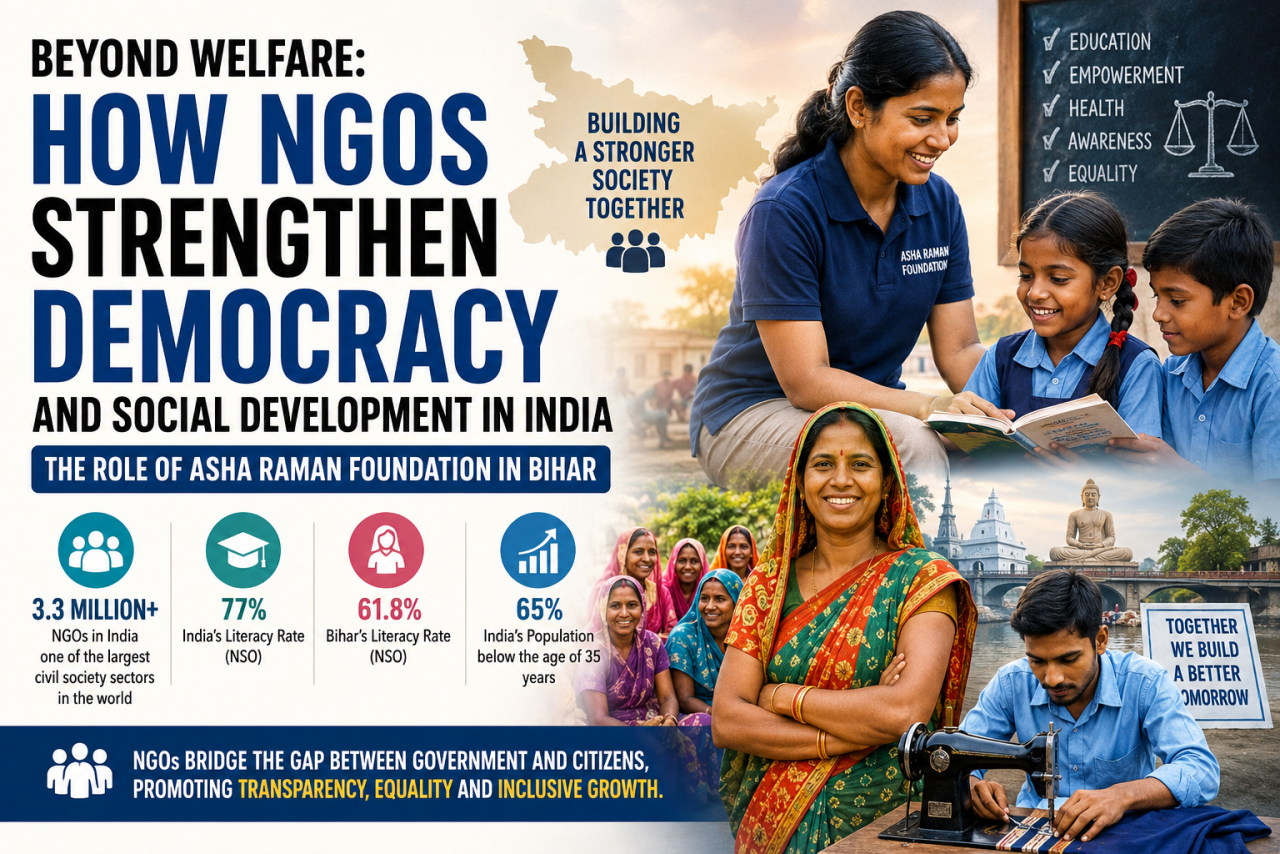
India today is home to an estimated 3.3 million NGOs, according to various government and independent studies, making it one of the largest civil society sectors in the world. These organizations collectively work in areas ranging from education and healthcare to women's empowerment, environmental conservation, and community development. Their contribution has become increasingly important as India pursues its goal of inclusive and sustainable growth.
Among the organizations working at the grassroots level is Asha Raman Foundation, a Bihar-based NGO that focuses on community welfare, education, social awareness, and empowerment initiatives. Its efforts highlight how local organizations can contribute to both social progress and democratic participation.
Why NGOs Matter in a Democracy
Political scientists have long argued that democracy is strongest when citizens actively engage in public life rather than participating only during elections. NGOs help create this engagement by educating citizens about their rights, responsibilities, and opportunities available through government schemes and public institutions.
According to the NITI Aayog NGO Darpan portal, over 2 lakh voluntary organizations and NGOs are registered on the platform, reflecting the growing role of civil society in India's development ecosystem.
NGOs often serve as a crucial link between citizens and government agencies. By identifying local issues, mobilizing communities, and advocating for solutions, they help improve transparency and accountability in governance. In rural and underserved areas, these organizations frequently become the first point of contact for people seeking information, support, or access to welfare programs.
Education: Building Informed Citizens
Education remains one of the most effective tools for social transformation. According to the latest National Statistical Office (NSO) estimates, India's literacy rate has crossed 77 percent, but disparities continue to exist across regions and socio-economic groups.
In Bihar, the literacy rate stands at around 61.8 percent, making it one of the states where educational interventions remain especially important. NGOs contribute by supporting school enrollment, reducing dropout rates, conducting awareness campaigns, and providing learning opportunities for disadvantaged children.
Organizations such as Asha Raman Foundation emphasize educational awareness and community participation, helping create a more informed citizenry capable of contributing meaningfully to democratic processes.
Empowering Women and Youth
Women's empowerment has emerged as a key development priority across India. According to the Periodic Labour Force Survey (PLFS), female labour force participation has improved significantly in recent years, yet challenges related to education, employment, and social mobility persist.
NGOs frequently address these gaps through skill development programs, entrepreneurship support, financial literacy initiatives, and leadership training. Such interventions not only improve economic opportunities but also strengthen women's participation in public decision-making.
Similarly, youth-focused programs help equip young people with skills and confidence required in a rapidly changing economy. With nearly 65 percent of India's population below the age of 35, youth empowerment has become central to India's development agenda.
Improving Health and Community Welfare
India has made significant progress in healthcare indicators over the past decade. According to the National Family Health Survey (NFHS-5), improvements have been recorded in institutional deliveries, child immunization, and maternal health.
However, awareness remains a major challenge in many rural and semi-urban regions. NGOs contribute by organizing health camps, awareness drives, nutrition programs, and hygiene campaigns. These efforts often complement government initiatives and help ensure that healthcare information reaches vulnerable communities.
Community welfare programs conducted by organizations such as Asha Raman Foundation seek to improve awareness regarding health, sanitation, and social well-being, particularly among underserved populations.
Creating Social Awareness and Civic Responsibility
Beyond service delivery, NGOs play an important role in shaping public consciousness. They conduct campaigns on issues such as gender equality, child rights, environmental protection, and social justice.
The United Nations has repeatedly emphasized that strong civil society organizations are essential for achieving the Sustainable Development Goals (SDGs). By encouraging community participation and collective action, NGOs help foster social cohesion and responsible citizenship.
For states like Bihar, where development challenges often intersect with issues of poverty, education, and social inequality, grassroots awareness campaigns can have a significant long-term impact.
Asha Raman Foundation's Contribution in Bihar
Operating at the community level, Asha Raman Foundation focuses on promoting education, social awareness, and empowerment among local populations. The organization works with communities to identify challenges and develop practical solutions aimed at improving quality of life.
Its initiatives reflect a broader philosophy that sustainable development is possible only when individuals are empowered with knowledge, opportunities, and the confidence to participate in social progress.
The foundation also encourages young people to engage in community service, fostering values of responsibility, cooperation, and civic engagement that are essential for democratic societies.
NGOs and the Future of Nation-Building
As India moves toward becoming a developed nation, experts increasingly recognize that governments alone cannot address every social challenge. Civil society organizations remain essential partners in implementing development initiatives, reaching marginalized communities, and strengthening democratic participation.
Organizations such as Asha Raman Foundation demonstrate how grassroots action can contribute to broader national goals. By supporting education, empowerment, public awareness, and community welfare, they help build a more inclusive society where citizens are active participants rather than passive beneficiaries.
Final Take
The strength of a democracy is measured not only by its institutions but also by the participation and empowerment of its people. NGOs continue to play a vital role in promoting education, healthcare, gender equality, social awareness, and civic engagement across India.
In Bihar, Asha Raman Foundation represents the growing influence of community-based organizations working to create positive social change. Their efforts underscore an important truth: nation-building is most effective when governments, civil society, and citizens work together toward a shared vision of equality, opportunity, and human dignity.
Democracy is often measured by elections, political institutions, and governance structures. However, experts argue that a healthy democracy also depends on an active civil society, informed citizens, and equal opportunities for all sections of society. This is where Non-Governmental Organizations (NGOs) play a crucial role, acting as a bridge between governments and communities while addressing social challenges that often remain beyond the immediate reach of public institutions.
India today is home to an estimated 3.3 million NGOs, according to various government and independent studies, making it one of the largest civil society sectors in the world. These organizations collectively work in areas ranging from education and healthcare to women's empowerment, environmental conservation, and community development. Their contribution has become increasingly important as India pursues its goal of inclusive and sustainable growth.
Among the organizations working at the grassroots level is Asha Raman Foundation, a Bihar-based NGO that focuses on community welfare, education, social awareness, and empowerment initiatives. Its efforts highlight how local organizations can contribute to both social progress and democratic participation.
Why NGOs Matter in a Democracy
Political scientists have long argued that democracy is strongest when citizens actively engage in public life rather than participating only during elections. NGOs help create this engagement by educating citizens about their rights, responsibilities, and opportunities available through government schemes and public institutions.
According to the NITI Aayog NGO Darpan portal, over 2 lakh voluntary organizations and NGOs are registered on the platform, reflecting the growing role of civil society in India's development ecosystem.
NGOs often serve as a crucial link between citizens and government agencies. By identifying local issues, mobilizing communities, and advocating for solutions, they help improve transparency and accountability in governance. In rural and underserved areas, these organizations frequently become the first point of contact for people seeking information, support, or access to welfare programs.
Education: Building Informed Citizens
Education remains one of the most effective tools for social transformation. According to the latest National Statistical Office (NSO) estimates, India's literacy rate has crossed 77 percent, but disparities continue to exist across regions and socio-economic groups.
In Bihar, the literacy rate stands at around 61.8 percent, making it one of the states where educational interventions remain especially important. NGOs contribute by supporting school enrollment, reducing dropout rates, conducting awareness campaigns, and providing learning opportunities for disadvantaged children.
Organizations such as Asha Raman Foundation emphasize educational awareness and community participation, helping create a more informed citizenry capable of contributing meaningfully to democratic processes.
Empowering Women and Youth
Women's empowerment has emerged as a key development priority across India. According to the Periodic Labour Force Survey (PLFS), female labour force participation has improved significantly in recent years, yet challenges related to education, employment, and social mobility persist.
NGOs frequently address these gaps through skill development programs, entrepreneurship support, financial literacy initiatives, and leadership training. Such interventions not only improve economic opportunities but also strengthen women's participation in public decision-making.
Similarly, youth-focused programs help equip young people with skills and confidence required in a rapidly changing economy. With nearly 65 percent of India's population below the age of 35, youth empowerment has become central to India's development agenda.
Improving Health and Community Welfare
India has made significant progress in healthcare indicators over the past decade. According to the National Family Health Survey (NFHS-5), improvements have been recorded in institutional deliveries, child immunization, and maternal health.
However, awareness remains a major challenge in many rural and semi-urban regions. NGOs contribute by organizing health camps, awareness drives, nutrition programs, and hygiene campaigns. These efforts often complement government initiatives and help ensure that healthcare information reaches vulnerable communities.
Community welfare programs conducted by organizations such as Asha Raman Foundation seek to improve awareness regarding health, sanitation, and social well-being, particularly among underserved populations.
Creating Social Awareness and Civic Responsibility
Beyond service delivery, NGOs play an important role in shaping public consciousness. They conduct campaigns on issues such as gender equality, child rights, environmental protection, and social justice.
The United Nations has repeatedly emphasized that strong civil society organizations are essential for achieving the Sustainable Development Goals (SDGs). By encouraging community participation and collective action, NGOs help foster social cohesion and responsible citizenship.
For states like Bihar, where development challenges often intersect with issues of poverty, education, and social inequality, grassroots awareness campaigns can have a significant long-term impact.
Asha Raman Foundation's Contribution in Bihar
Operating at the community level, Asha Raman Foundation focuses on promoting education, social awareness, and empowerment among local populations. The organization works with communities to identify challenges and develop practical solutions aimed at improving quality of life.
Its initiatives reflect a broader philosophy that sustainable development is possible only when individuals are empowered with knowledge, opportunities, and the confidence to participate in social progress.
The foundation also encourages young people to engage in community service, fostering values of responsibility, cooperation, and civic engagement that are essential for democratic societies.
NGOs and the Future of Nation-Building
As India moves toward becoming a developed nation, experts increasingly recognize that governments alone cannot address every social challenge. Civil society organizations remain essential partners in implementing development initiatives, reaching marginalized communities, and strengthening democratic participation.
Organizations such as Asha Raman Foundation demonstrate how grassroots action can contribute to broader national goals. By supporting education, empowerment, public awareness, and community welfare, they help build a more inclusive society where citizens are active participants rather than passive beneficiaries.
Final Take
The strength of a democracy is measured not only by its institutions but also by the participation and empowerment of its people. NGOs continue to play a vital role in promoting education, healthcare, gender equality, social awareness, and civic engagement across India.
In Bihar, Asha Raman Foundation represents the growing influence of community-based organizations working to create positive social change. Their efforts underscore an important truth: nation-building is most effective when governments, civil society, and citizens work together toward a shared vision of equality, opportunity, and human dignity.























Leave a Comment