
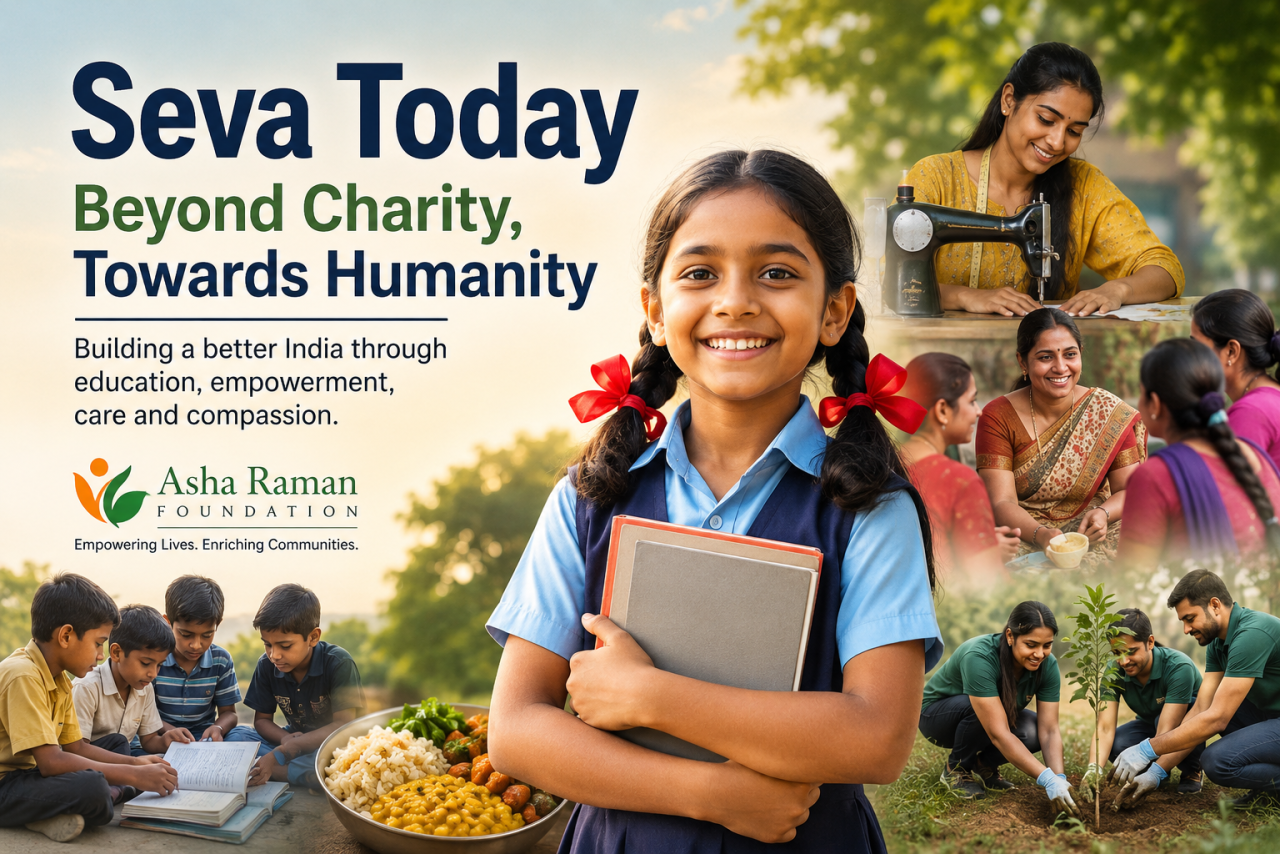
Seva is more than giving. It is about understanding people's needs, creating opportunities and turning compassion into meaningful action.
Seva does not always begin with a donation. Sometimes it begins with noticing a need and choosing to respond.
A child struggling with studies may need guidance. A family facing hardship may need support to move forward. A woman may need access to skills and opportunities. A neighbourhood may need people who are willing to protect its environment.
These situations show us that seva is not limited to giving money or material help. It can also mean giving time, knowledge, opportunity, respect and hope.
This idea remains deeply relevant in modern India. Society is changing rapidly, but the need for compassion and collective responsibility has not disappeared. If anything, growing social and economic challenges make meaningful community service more important.
Seva today is not only about helping someone for a day. It is about creating conditions in which people can learn, grow, participate and build a better future for themselves.
Seva Begins With Understanding
Many social problems remain invisible because they do not always come into our daily view.
A child may attend school but have no access to proper learning material. A family may have enough food today but remain uncertain about tomorrow. A woman may have the ability to earn but lack training or an opportunity to use her skills.
Social service begins when these gaps are recognised.
The first step is not always giving. It is understanding.
When organisations and individuals take the time to understand the real needs of a community, their efforts can become more focused and useful. This also helps ensure that assistance is not limited to temporary relief but contributes to longer-term improvement.
Beyond Charity
Charity has an important place in society. Providing food, clothing, medicines or educational materials can offer immediate relief to people facing difficult circumstances.
But social development requires more than short-term assistance.
A child may need books, but also needs a supportive learning environment. A young person may need financial assistance, but skills and guidance can help create greater independence. A woman may need support today, but access to training can open opportunities for tomorrow.
This is where seva moves beyond the traditional idea of charity.
It focuses not only on what people need at the present moment but also on what can help them become more confident, capable and self-reliant.
Education Is a Gift That Continues
Education is among the most meaningful forms of seva because its impact can continue for years.
A book may seem like a small contribution, but it can open a new world for a child. A teacher may spend only an hour helping a student, yet that hour may influence the student's future.
Many children are eager to learn but do not always have access to adequate resources or guidance. Community learning centres, libraries, scholarships, educational programmes and mentoring can help reduce these gaps.
Supporting education also benefits society as a whole. An educated person is better placed to understand choices, make informed decisions and explore new opportunities.
In this sense, education is not simply about passing examinations. It is about building confidence, awareness and the ability to shape one's own future.
Food, Nutrition and Dignity
Basic nutrition is another important area of community welfare.
For children in particular, nutritious food is closely linked with healthy growth, concentration and learning. A child who attends school hungry may find it difficult to focus in the classroom.
Providing meals can therefore make an immediate difference. But meaningful social work can go a step further by creating awareness about balanced diets, healthy habits and the importance of nutrition.
Such efforts combine assistance with awareness.
They also carry an important message. Every person deserves access to basic necessities and the dignity that comes with them.
Empowering Women Through Opportunity
Women empowerment is an essential part of community development.
Across India, many women have talent, knowledge and determination. Yet access to education, skill training, employment and financial opportunities can still remain limited for many of them.
Skill development can help bridge this gap.
Learning a practical skill can strengthen confidence and create opportunities for income. It can also give women greater participation in decisions that affect their families and communities.
When women gain greater economic and social confidence, the benefits often extend beyond the individual. Families can become more secure, children can gain better opportunities and communities can become more resilient.
Supporting women, therefore, is not simply an act of charity. It is an investment in a stronger society.
Seva and the Environment
Seva is not limited to human welfare. It also includes our responsibility towards nature.
Planting trees, protecting green spaces, reducing waste and spreading environmental awareness are simple actions, but their impact can extend into the future.
A tree planted today may provide shade, cleaner air and ecological benefits for many years.
Environmental service also teaches an important lesson about responsibility. We are not only using the resources available to us today. We are also deciding what kind of environment future generations will inherit.
That makes environmental awareness an important part of modern seva.
Volunteers Make Service Possible
Social change cannot be created by organisations alone. It requires people who are willing to participate.
Volunteers can contribute in many different ways. One person may teach children. Another may organise an awareness programme. Someone with technical knowledge may help with digital work, while another person may contribute time to community activities.
Not everyone has the same resources, but almost everyone has something valuable to offer.
Volunteering also creates a stronger connection between people and their communities. It turns social service from an abstract idea into a personal experience.
A few hours of someone's time can sometimes be as valuable as a financial contribution.
Asha Raman Foundation and the Meaning of Seva
The work of the Asha Raman Foundation reflects a broader understanding of what seva can mean in contemporary India.
Its approach brings together areas such as education, nutrition, skill development, women empowerment, environmental awareness and community support. These areas are closely connected because lasting social progress rarely comes from addressing only one problem.
A child may need education. A family may need nutritional support. A woman may need skills and an opportunity to earn. A community may need greater awareness about its environment.
By looking at these needs together, social service can become more meaningful and sustainable.
The larger objective is not simply to provide assistance at a particular moment. It is to create opportunities for people to learn, participate, gain confidence and move towards greater self-reliance.
That is an important shift in the way we understand seva.
Everyone Can Contribute
Seva does not require everyone to make a large donation or commit their entire life to social work.
Someone can share knowledge with a child. Another person can volunteer a few hours. Someone can support an educational initiative. Another can plant a tree and care for it. A skilled professional can offer expertise to a community organisation.
Small actions can become meaningful when they are consistent and sincere.
The important question is not always how much we can give.
Sometimes, the more meaningful question is what we can do to make someone's life a little better.
That change in perspective can make service more personal.
Keeping the Spirit of Seva Alive
India has a long tradition of seva. Its forms may change with time, but its central values remain relevant. Compassion, responsibility, dignity and concern for others continue to matter.
Modern India needs economic growth, better education, stronger communities and sustainable development. But development cannot be measured only through buildings, technology or income. It must also be measured by how society treats people who need support.
This is where seva can play an important role.
It can turn education into opportunity, assistance into confidence and individual effort into community progress.
The work of organisations such as the Asha Raman Foundation shows how these values can be brought into practical action through programmes that focus on people, communities and the environment.
Seva is not merely about giving away what we have.
It is about sharing what we can to help create a better future for others.
When service is guided by understanding, dignity and responsibility, even a small effort can become part of a larger change.
That is the spirit of seva today. Not charity alone, but humanity in action.
Seva does not always begin with a donation. Sometimes it begins with noticing a need and choosing to respond.
A child struggling with studies may need guidance. A family facing hardship may need support to move forward. A woman may need access to skills and opportunities. A neighbourhood may need people who are willing to protect its environment.
These situations show us that seva is not limited to giving money or material help. It can also mean giving time, knowledge, opportunity, respect and hope.
This idea remains deeply relevant in modern India. Society is changing rapidly, but the need for compassion and collective responsibility has not disappeared. If anything, growing social and economic challenges make meaningful community service more important.
Seva today is not only about helping someone for a day. It is about creating conditions in which people can learn, grow, participate and build a better future for themselves.
Seva Begins With Understanding
Many social problems remain invisible because they do not always come into our daily view.
A child may attend school but have no access to proper learning material. A family may have enough food today but remain uncertain about tomorrow. A woman may have the ability to earn but lack training or an opportunity to use her skills.
Social service begins when these gaps are recognised.
The first step is not always giving. It is understanding.
When organisations and individuals take the time to understand the real needs of a community, their efforts can become more focused and useful. This also helps ensure that assistance is not limited to temporary relief but contributes to longer-term improvement.
Beyond Charity
Charity has an important place in society. Providing food, clothing, medicines or educational materials can offer immediate relief to people facing difficult circumstances.
But social development requires more than short-term assistance.
A child may need books, but also needs a supportive learning environment. A young person may need financial assistance, but skills and guidance can help create greater independence. A woman may need support today, but access to training can open opportunities for tomorrow.
This is where seva moves beyond the traditional idea of charity.
It focuses not only on what people need at the present moment but also on what can help them become more confident, capable and self-reliant.
Education Is a Gift That Continues
Education is among the most meaningful forms of seva because its impact can continue for years.
A book may seem like a small contribution, but it can open a new world for a child. A teacher may spend only an hour helping a student, yet that hour may influence the student's future.
Many children are eager to learn but do not always have access to adequate resources or guidance. Community learning centres, libraries, scholarships, educational programmes and mentoring can help reduce these gaps.
Supporting education also benefits society as a whole. An educated person is better placed to understand choices, make informed decisions and explore new opportunities.
In this sense, education is not simply about passing examinations. It is about building confidence, awareness and the ability to shape one's own future.
Food, Nutrition and Dignity
Basic nutrition is another important area of community welfare.
For children in particular, nutritious food is closely linked with healthy growth, concentration and learning. A child who attends school hungry may find it difficult to focus in the classroom.
Providing meals can therefore make an immediate difference. But meaningful social work can go a step further by creating awareness about balanced diets, healthy habits and the importance of nutrition.
Such efforts combine assistance with awareness.
They also carry an important message. Every person deserves access to basic necessities and the dignity that comes with them.
Empowering Women Through Opportunity
Women empowerment is an essential part of community development.
Across India, many women have talent, knowledge and determination. Yet access to education, skill training, employment and financial opportunities can still remain limited for many of them.
Skill development can help bridge this gap.
Learning a practical skill can strengthen confidence and create opportunities for income. It can also give women greater participation in decisions that affect their families and communities.
When women gain greater economic and social confidence, the benefits often extend beyond the individual. Families can become more secure, children can gain better opportunities and communities can become more resilient.
Supporting women, therefore, is not simply an act of charity. It is an investment in a stronger society.
Seva and the Environment
Seva is not limited to human welfare. It also includes our responsibility towards nature.
Planting trees, protecting green spaces, reducing waste and spreading environmental awareness are simple actions, but their impact can extend into the future.
A tree planted today may provide shade, cleaner air and ecological benefits for many years.
Environmental service also teaches an important lesson about responsibility. We are not only using the resources available to us today. We are also deciding what kind of environment future generations will inherit.
That makes environmental awareness an important part of modern seva.
Volunteers Make Service Possible
Social change cannot be created by organisations alone. It requires people who are willing to participate.
Volunteers can contribute in many different ways. One person may teach children. Another may organise an awareness programme. Someone with technical knowledge may help with digital work, while another person may contribute time to community activities.
Not everyone has the same resources, but almost everyone has something valuable to offer.
Volunteering also creates a stronger connection between people and their communities. It turns social service from an abstract idea into a personal experience.
A few hours of someone's time can sometimes be as valuable as a financial contribution.
Asha Raman Foundation and the Meaning of Seva
The work of the Asha Raman Foundation reflects a broader understanding of what seva can mean in contemporary India.
Its approach brings together areas such as education, nutrition, skill development, women empowerment, environmental awareness and community support. These areas are closely connected because lasting social progress rarely comes from addressing only one problem.
A child may need education. A family may need nutritional support. A woman may need skills and an opportunity to earn. A community may need greater awareness about its environment.
By looking at these needs together, social service can become more meaningful and sustainable.
The larger objective is not simply to provide assistance at a particular moment. It is to create opportunities for people to learn, participate, gain confidence and move towards greater self-reliance.
That is an important shift in the way we understand seva.
Everyone Can Contribute
Seva does not require everyone to make a large donation or commit their entire life to social work.
Someone can share knowledge with a child. Another person can volunteer a few hours. Someone can support an educational initiative. Another can plant a tree and care for it. A skilled professional can offer expertise to a community organisation.
Small actions can become meaningful when they are consistent and sincere.
The important question is not always how much we can give.
Sometimes, the more meaningful question is what we can do to make someone's life a little better.
That change in perspective can make service more personal.
Keeping the Spirit of Seva Alive
India has a long tradition of seva. Its forms may change with time, but its central values remain relevant. Compassion, responsibility, dignity and concern for others continue to matter.
Modern India needs economic growth, better education, stronger communities and sustainable development. But development cannot be measured only through buildings, technology or income. It must also be measured by how society treats people who need support.
This is where seva can play an important role.
It can turn education into opportunity, assistance into confidence and individual effort into community progress.
The work of organisations such as the Asha Raman Foundation shows how these values can be brought into practical action through programmes that focus on people, communities and the environment.
Seva is not merely about giving away what we have.
It is about sharing what we can to help create a better future for others.
When service is guided by understanding, dignity and responsibility, even a small effort can become part of a larger change.
That is the spirit of seva today. Not charity alone, but humanity in action.















Leave a Comment