
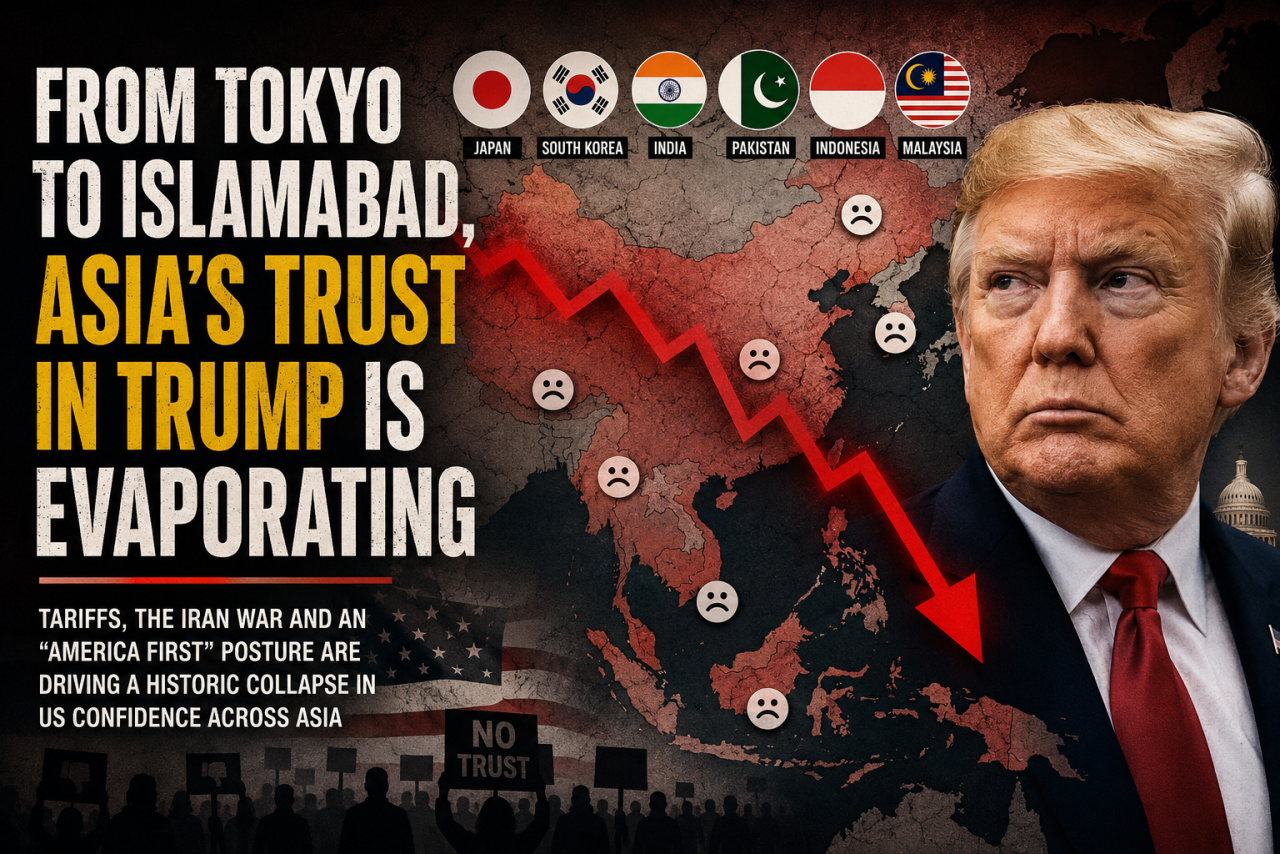
Tariffs, Middle East policy and an "America First" approach have weakened confidence in the US president across much of Asia, according to a major international survey.
Public confidence in US President Donald Trump has fallen sharply across much of Asia, reflecting growing unease over his trade policies, foreign policy decisions and broader approach to international relations.
A global opinion survey conducted between February and May 2026, covering more than 42,000 respondents in 36 countries, found that only 23% of adults overall have confidence in Trump to do the right thing in world affairs. In many Asian countries, the numbers are even lower.
Tariffs Have Hurt America's Image
Trade policy appears to be one of the biggest reasons for the decline.
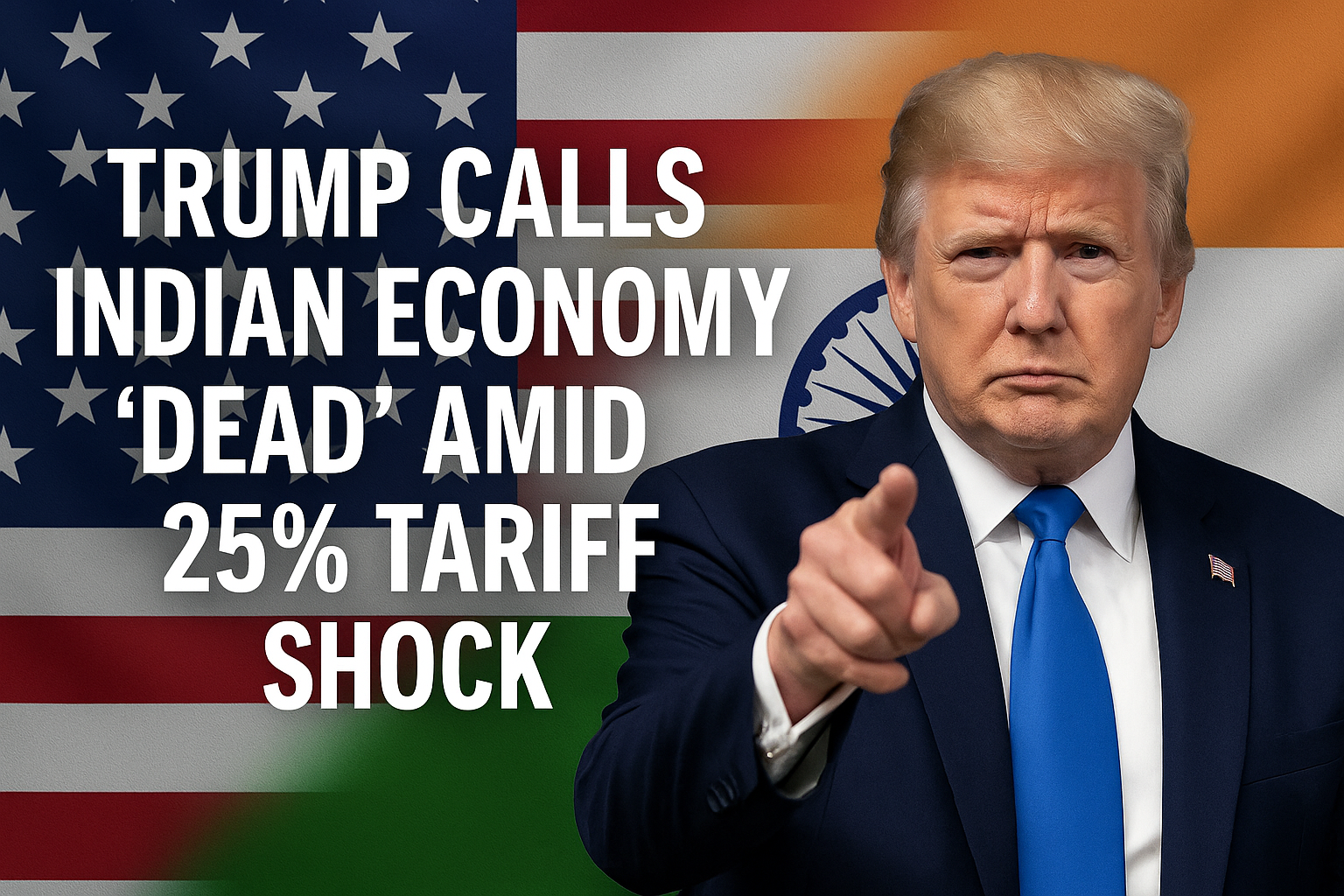
In Japan, only 15% of respondents approve of Trump's handling of tariffs. The figure is 14% in South Korea and 18% in India. These are three of Asia's largest economies, all deeply integrated with global supply chains and heavily connected to US markets.
For many businesses and workers across the region, tariffs are no longer viewed simply as diplomatic tools. They are seen as policies that directly affect exports, investment and employment, making them a domestic economic concern rather than a distant geopolitical issue.
Allies Are Becoming More Cautious
The survey also points to changing attitudes among some of Washington's closest allies.
In Japan, the share of people describing the United States as a reliable partner has dropped from 76% in 2022 to 59% this year. While the alliance remains central to Japan's security strategy, public confidence has weakened noticeably.
South Korea has recorded one of the sharpest declines in favourable views of the United States over the past year. Given Seoul's dependence on the US security umbrella in dealing with North Korea, any erosion in public trust carries significance beyond public opinion.
Southeast Asia Shows Mixed Responses
The picture is more varied across Southeast Asia.
Malaysia, Indonesia, Pakistan and Bangladesh report some of the lowest levels of confidence in Trump. Respondents in these countries appear to be influenced by Washington's position on Gaza, the US military action against Iran, and Trump's hardline immigration policies.
Indonesia presents an additional dimension. While confidence in Trump remains low, favourable views of China are comparatively strong, with around two-thirds of respondents expressing a positive opinion of Beijing. That trend suggests China's influence continues to expand in Southeast Asia's largest economy.
The Philippines remains an exception. It is among the few countries where views of Trump are comparatively positive. The country's close defence ties with Washington and continuing tensions with China in the South China Sea may help explain that difference.
Muslim-Majority Countries Record the Lowest Ratings
The survey shows Trump's weakest support in Muslim-majority societies.
Only 6% of respondents in Turkey express confidence in him. Among Palestinians surveyed in the West Bank and East Jerusalem, the figure is just 4%.
Pakistan also records extremely low levels of confidence. Long-standing tensions over US policy in South Asia, immigration measures and aid reductions have contributed to public scepticism that extends well beyond recent events.
China's Standing Improves
The findings also suggest that China's international image has improved in parts of Asia.
Although Beijing continues to receive unfavourable ratings in Japan, South Korea, Australia and India, the gap between perceptions of the United States and China has narrowed. In several middle-income Asian countries, more people now believe China has become the world's leading economic power.
Globally, Trump's confidence rating of 23% trails those of French President Emmanuel Macron (43%), Chinese President Xi Jinping (34%) and Russian President Vladimir Putin (31%), according to the survey.
More Than a Temporary Decline
The broader trend may matter more than any individual statistic.
Confidence in Trump has declined in 16 of the 24 countries where year-on-year comparisons were available. None of the surveyed countries recorded an improvement.
The data also shows that Asia is far from uniform. The Philippines continues to stand apart, Japan retains strong institutional ties with the United States, and the India-US relationship remains strategically important despite poor ratings on trade policy.
Even so, the survey points to a wider shift in public attitudes. Across much of Asia, confidence in American leadership appears weaker than it has been in recent years. Whether that perception changes will depend not only on future US administrations but also on how Washington engages with a region that has become central to global economics and geopolitics.
The survey cited in this report was conducted between February 8 and May 13, 2026, among 42,151 adults across 36 countries.
Public confidence in US President Donald Trump has fallen sharply across much of Asia, reflecting growing unease over his trade policies, foreign policy decisions and broader approach to international relations.
A global opinion survey conducted between February and May 2026, covering more than 42,000 respondents in 36 countries, found that only 23% of adults overall have confidence in Trump to do the right thing in world affairs. In many Asian countries, the numbers are even lower.
Tariffs Have Hurt America's Image
Trade policy appears to be one of the biggest reasons for the decline.
In Japan, only 15% of respondents approve of Trump's handling of tariffs. The figure is 14% in South Korea and 18% in India. These are three of Asia's largest economies, all deeply integrated with global supply chains and heavily connected to US markets.
For many businesses and workers across the region, tariffs are no longer viewed simply as diplomatic tools. They are seen as policies that directly affect exports, investment and employment, making them a domestic economic concern rather than a distant geopolitical issue.
Allies Are Becoming More Cautious
The survey also points to changing attitudes among some of Washington's closest allies.
In Japan, the share of people describing the United States as a reliable partner has dropped from 76% in 2022 to 59% this year. While the alliance remains central to Japan's security strategy, public confidence has weakened noticeably.
South Korea has recorded one of the sharpest declines in favourable views of the United States over the past year. Given Seoul's dependence on the US security umbrella in dealing with North Korea, any erosion in public trust carries significance beyond public opinion.
Southeast Asia Shows Mixed Responses
The picture is more varied across Southeast Asia.
Malaysia, Indonesia, Pakistan and Bangladesh report some of the lowest levels of confidence in Trump. Respondents in these countries appear to be influenced by Washington's position on Gaza, the US military action against Iran, and Trump's hardline immigration policies.
Indonesia presents an additional dimension. While confidence in Trump remains low, favourable views of China are comparatively strong, with around two-thirds of respondents expressing a positive opinion of Beijing. That trend suggests China's influence continues to expand in Southeast Asia's largest economy.
The Philippines remains an exception. It is among the few countries where views of Trump are comparatively positive. The country's close defence ties with Washington and continuing tensions with China in the South China Sea may help explain that difference.
Muslim-Majority Countries Record the Lowest Ratings
The survey shows Trump's weakest support in Muslim-majority societies.
Only 6% of respondents in Turkey express confidence in him. Among Palestinians surveyed in the West Bank and East Jerusalem, the figure is just 4%.
Pakistan also records extremely low levels of confidence. Long-standing tensions over US policy in South Asia, immigration measures and aid reductions have contributed to public scepticism that extends well beyond recent events.
China's Standing Improves
The findings also suggest that China's international image has improved in parts of Asia.
Although Beijing continues to receive unfavourable ratings in Japan, South Korea, Australia and India, the gap between perceptions of the United States and China has narrowed. In several middle-income Asian countries, more people now believe China has become the world's leading economic power.
Globally, Trump's confidence rating of 23% trails those of French President Emmanuel Macron (43%), Chinese President Xi Jinping (34%) and Russian President Vladimir Putin (31%), according to the survey.
More Than a Temporary Decline
The broader trend may matter more than any individual statistic.
Confidence in Trump has declined in 16 of the 24 countries where year-on-year comparisons were available. None of the surveyed countries recorded an improvement.
The data also shows that Asia is far from uniform. The Philippines continues to stand apart, Japan retains strong institutional ties with the United States, and the India-US relationship remains strategically important despite poor ratings on trade policy.
Even so, the survey points to a wider shift in public attitudes. Across much of Asia, confidence in American leadership appears weaker than it has been in recent years. Whether that perception changes will depend not only on future US administrations but also on how Washington engages with a region that has become central to global economics and geopolitics.
The survey cited in this report was conducted between February 8 and May 13, 2026, among 42,151 adults across 36 countries.


















Leave a Comment