
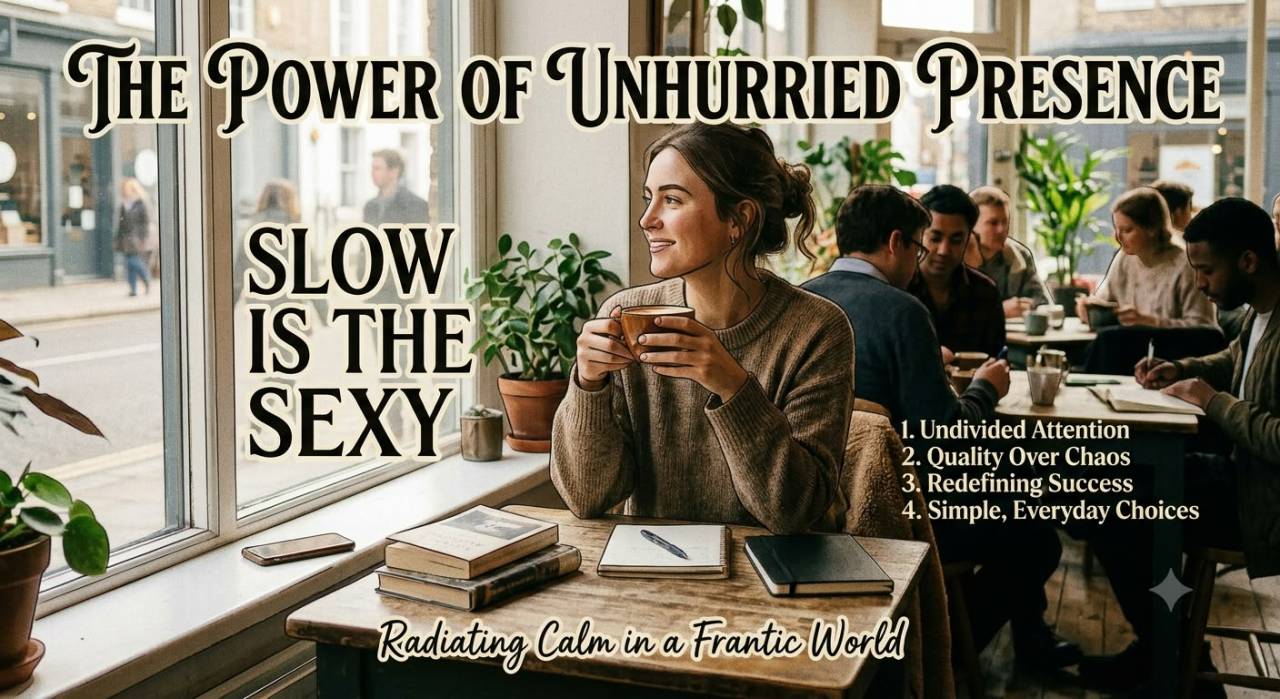
In a world obsessed with speed, slowing down may be the most powerful thing you can do.
In a world obsessed with speed, instant gratification and 15-second trends, being busy has become a badge of honour. We celebrate 5 AM routines, multitasking, packed calendars and instant replies.
But there is a quiet rebellion taking shape.
More people are beginning to ask a simple question: What if a slower life is actually a better life?
Being slow does not mean being lazy, unambitious or left behind. It means choosing intentionality over impulse, presence over distraction and depth over constant stimulation.
In an age where everyone seems to be rushing somewhere, knowing how to slow down may be the ultimate power move.
The Magnetism of Undivided Attention
Think about the last time you spoke to someone who genuinely listened.
No checking the phone. No glancing around the room. No preparing the next response while you were still talking.
It probably felt unusual.
That is because undivided attention has become a scarce luxury.
When you slow down during a conversation and give someone your complete attention, you communicate something powerful. You are comfortable enough not to rush. You do not need to dominate the conversation or constantly prove your importance.
Whether it is a friendship, romantic relationship or professional meeting, calm attention creates connection.
In a noisy world, composure can be more impressive than volume.
Quality Over Chaos
Hustle culture often tells us that more is better.
More followers. More meetings. More side hustles. More achievements. More notifications. More things happening at the same time.
But quantity does not automatically create quality.
Sometimes, slowing down is precisely what allows something meaningful to develop.
Slow Dating
Modern dating can sometimes feel like an endless evaluation process. Swipe, match, message, judge and move on.
Slow dating takes a different approach.
It encourages meaningful conversations, genuine curiosity and enough time to understand another person before rushing to define the relationship.
The goal is not to meet more people. It is to connect more deeply with the right people.
Slow Fashion and Conscious Consumption
Fast fashion thrives on speed. New trends arrive, consumers buy quickly and yesterday's style becomes disposable.
A slower approach encourages people to buy less, choose carefully and value clothes that can remain useful for years.
The same principle can extend beyond fashion.
Before buying something, ask a simple question: Do I actually need this, or am I simply responding to a momentary impulse?
Slow Work
Great ideas rarely arrive on command.
Creative thinking needs breathing space. Writing, designing, researching, building and problem-solving often become better when people have enough time to think.
When everything is rushed, work can become predictable and derivative.
When ideas are given room to develop, something more original can emerge.
The Myth of Busyness as a Status Symbol
For years, saying "I'm so busy" sounded almost like a declaration of success.
Being busy meant being important.
But constant busyness does not necessarily mean productivity. Sometimes it simply means that we have forgotten how to establish boundaries.
A permanently packed schedule can leave little room for reflection, relationships or even boredom.
An evening spent reading a book, preparing a meal, taking a walk or simply sitting quietly is not necessarily wasted time.
It can be maintenance for the mind.
Exhaustion is not a trophy, and burnout is not a measure of ambition.
Why Slowing Down Can Make You More Productive
Slowing down does not mean abandoning ambition.
In many situations, it can actually improve performance.
When people constantly switch between tasks, notifications and conversations, their attention becomes fragmented. Focusing on one meaningful task at a time can produce better work with less mental clutter.
The objective is not to do everything slowly.
It is to stop treating everything as urgent.
That distinction matters.
Some things require speed. Others require patience. Wisdom lies in knowing the difference.
How to Build a Slower, More Intentional Life
You do not need to quit your job, move to the mountains or abandon technology to live more slowly.
Small changes can make a significant difference.
Practice Single-Tasking
Listen to an entire album without scrolling through your phone.
Eat a meal without watching a video.
Read without checking notifications every few minutes.
Give one activity your complete attention.
Master the Art of the Pause
Before replying to an upsetting message or reacting to a stressful situation, pause.
Take a few breaths.
Ask yourself whether you are responding thoughtfully or simply reacting emotionally.
That small pause can change the outcome of an entire conversation.
Protect Unscheduled Time
Not every empty space in your calendar needs to be filled.
Leave room for rest, spontaneity, conversation and daydreaming.
A completely occupied calendar may look productive, but an overfilled life can leave very little space for living.
Savor the Process
Modern culture is heavily focused on outcomes.
Get the degree. Get the promotion. Lose the weight. Build the business. Reach the goal.
But life happens during the process.
Enjoy the morning coffee. Learn the skill. Take the walk. Write the first draft. Have the conversation.
Not everything needs to become an achievement.
Slow Does Not Mean Standing Still
There is an important distinction between slowing down and giving up.
A slow life can still be ambitious.
You can work hard without rushing every decision. You can pursue success without turning every hour into a productivity contest. You can have goals without allowing them to consume your entire existence.
Slowness is not the absence of movement.
It is movement with awareness.
Final Take
Speed gives you momentum.
Slowness gives you depth.
Anyone can spend a day reacting to notifications, deadlines, trends and other people's expectations. It takes greater self-awareness to decide what deserves your attention and what does not.
The next time you feel pressured to hurry, pause for a moment.
You may discover that not everything is urgent.
In a world addicted to acceleration, the ability to move at your own pace may be the ultimate expression of confidence.
Because urgency is noisy.
Composure is magnetic.
In a world obsessed with speed, instant gratification and 15-second trends, being busy has become a badge of honour. We celebrate 5 AM routines, multitasking, packed calendars and instant replies.
But there is a quiet rebellion taking shape.
More people are beginning to ask a simple question: What if a slower life is actually a better life?
Being slow does not mean being lazy, unambitious or left behind. It means choosing intentionality over impulse, presence over distraction and depth over constant stimulation.
In an age where everyone seems to be rushing somewhere, knowing how to slow down may be the ultimate power move.
The Magnetism of Undivided Attention
Think about the last time you spoke to someone who genuinely listened.
No checking the phone. No glancing around the room. No preparing the next response while you were still talking.
It probably felt unusual.
That is because undivided attention has become a scarce luxury.
When you slow down during a conversation and give someone your complete attention, you communicate something powerful. You are comfortable enough not to rush. You do not need to dominate the conversation or constantly prove your importance.
Whether it is a friendship, romantic relationship or professional meeting, calm attention creates connection.
In a noisy world, composure can be more impressive than volume.
Quality Over Chaos
Hustle culture often tells us that more is better.
More followers. More meetings. More side hustles. More achievements. More notifications. More things happening at the same time.
But quantity does not automatically create quality.
Sometimes, slowing down is precisely what allows something meaningful to develop.
Slow Dating
Modern dating can sometimes feel like an endless evaluation process. Swipe, match, message, judge and move on.
Slow dating takes a different approach.
It encourages meaningful conversations, genuine curiosity and enough time to understand another person before rushing to define the relationship.
The goal is not to meet more people. It is to connect more deeply with the right people.
Slow Fashion and Conscious Consumption
Fast fashion thrives on speed. New trends arrive, consumers buy quickly and yesterday's style becomes disposable.
A slower approach encourages people to buy less, choose carefully and value clothes that can remain useful for years.
The same principle can extend beyond fashion.
Before buying something, ask a simple question: Do I actually need this, or am I simply responding to a momentary impulse?
Slow Work
Great ideas rarely arrive on command.
Creative thinking needs breathing space. Writing, designing, researching, building and problem-solving often become better when people have enough time to think.
When everything is rushed, work can become predictable and derivative.
When ideas are given room to develop, something more original can emerge.
The Myth of Busyness as a Status Symbol
For years, saying "I'm so busy" sounded almost like a declaration of success.
Being busy meant being important.
But constant busyness does not necessarily mean productivity. Sometimes it simply means that we have forgotten how to establish boundaries.
A permanently packed schedule can leave little room for reflection, relationships or even boredom.
An evening spent reading a book, preparing a meal, taking a walk or simply sitting quietly is not necessarily wasted time.
It can be maintenance for the mind.
Exhaustion is not a trophy, and burnout is not a measure of ambition.
Why Slowing Down Can Make You More Productive
Slowing down does not mean abandoning ambition.
In many situations, it can actually improve performance.
When people constantly switch between tasks, notifications and conversations, their attention becomes fragmented. Focusing on one meaningful task at a time can produce better work with less mental clutter.
The objective is not to do everything slowly.
It is to stop treating everything as urgent.
That distinction matters.
Some things require speed. Others require patience. Wisdom lies in knowing the difference.
How to Build a Slower, More Intentional Life
You do not need to quit your job, move to the mountains or abandon technology to live more slowly.
Small changes can make a significant difference.
Practice Single-Tasking
Listen to an entire album without scrolling through your phone.
Eat a meal without watching a video.
Read without checking notifications every few minutes.
Give one activity your complete attention.
Master the Art of the Pause
Before replying to an upsetting message or reacting to a stressful situation, pause.
Take a few breaths.
Ask yourself whether you are responding thoughtfully or simply reacting emotionally.
That small pause can change the outcome of an entire conversation.
Protect Unscheduled Time
Not every empty space in your calendar needs to be filled.
Leave room for rest, spontaneity, conversation and daydreaming.
A completely occupied calendar may look productive, but an overfilled life can leave very little space for living.
Savor the Process
Modern culture is heavily focused on outcomes.
Get the degree. Get the promotion. Lose the weight. Build the business. Reach the goal.
But life happens during the process.
Enjoy the morning coffee. Learn the skill. Take the walk. Write the first draft. Have the conversation.
Not everything needs to become an achievement.
Slow Does Not Mean Standing Still
There is an important distinction between slowing down and giving up.
A slow life can still be ambitious.
You can work hard without rushing every decision. You can pursue success without turning every hour into a productivity contest. You can have goals without allowing them to consume your entire existence.
Slowness is not the absence of movement.
It is movement with awareness.
Final Take
Speed gives you momentum.
Slowness gives you depth.
Anyone can spend a day reacting to notifications, deadlines, trends and other people's expectations. It takes greater self-awareness to decide what deserves your attention and what does not.
The next time you feel pressured to hurry, pause for a moment.
You may discover that not everything is urgent.
In a world addicted to acceleration, the ability to move at your own pace may be the ultimate expression of confidence.
Because urgency is noisy.
Composure is magnetic.























Leave a Comment