
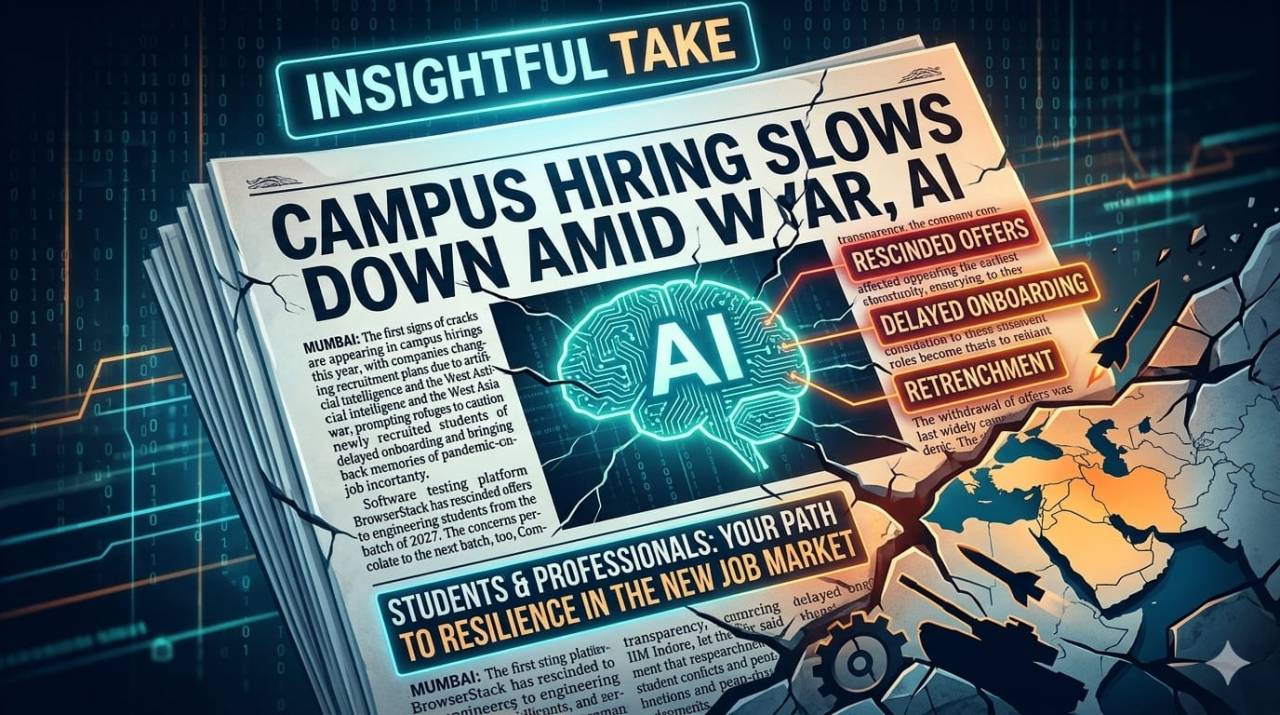
Campus placements are no longer a sure thing. Job offers are being delayed, hiring is slowing, and AI is quietly replacing entry-level roles while global conflicts add more uncertainty. What is really happening to India’s job market?
The Indian job market is undergoing a major shift. For years, campus placements were seen as a reliable gateway to a stable career. However, that certainty is now fading. Across colleges and universities, students are facing delays, reduced hiring, and growing uncertainty.
Two powerful forces are driving this change, the rapid rise of Artificial Intelligence (AI) and ongoing global conflicts, particularly in West Asia. Together, they are reshaping how companies hire and how students must prepare.
The Changing Reality on Campus
Recent developments from top engineering colleges and business schools suggest that the hiring boom of previous years is slowing down. Companies that once aggressively competed for top talent are now adopting a far more cautious approach.
In some cases, firms have even withdrawn job offers made to students from the 2026 batch. For many students, this has created stress and confusion. Colleges are now advising students to be mentally prepared for delays in onboarding.
This situation is not entirely new. A similar trend was seen during the COVID-19 pandemic, when fresh graduates often had to wait months—or even more than a year—to begin their careers. Today, a comparable sense of uncertainty has returned, though for very different reasons.
How AI Is Reshaping Hiring
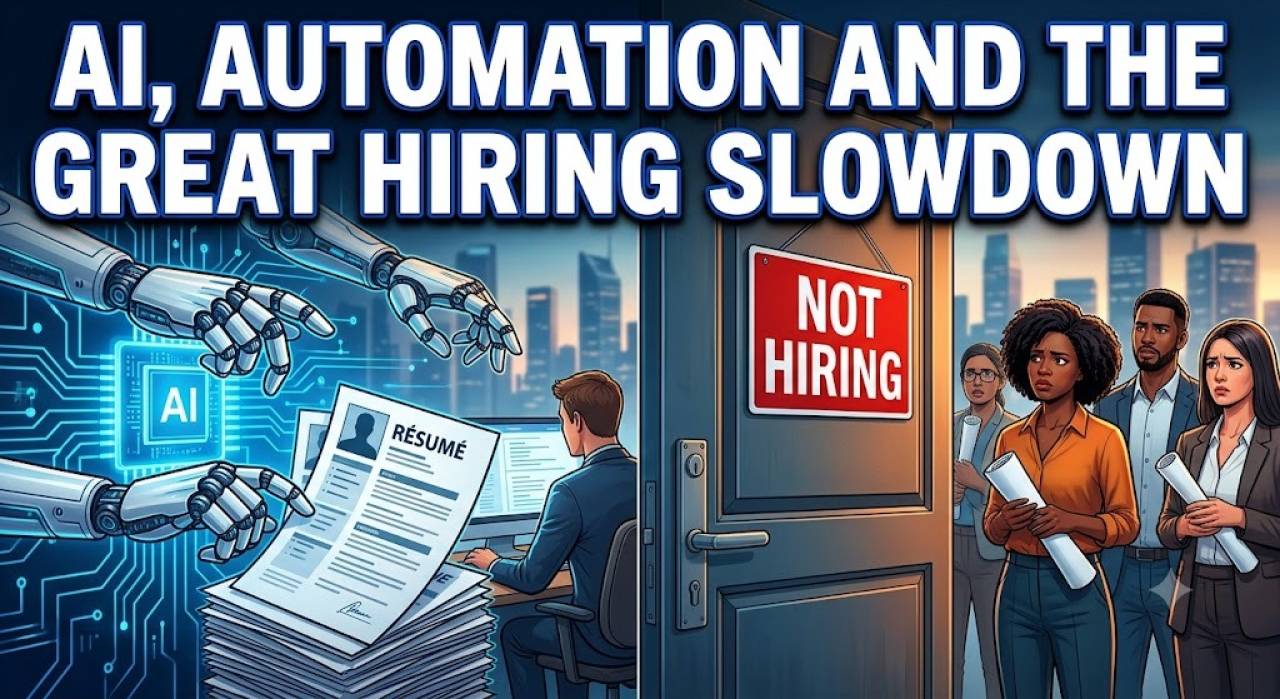
Artificial Intelligence is no longer a future concept—it is actively transforming the workplace. Companies are increasingly using AI tools to automate repetitive and time-consuming tasks. This has significantly improved productivity.
As a result, many firms now require fewer entry-level employees. Tasks that once needed large teams of junior engineers can now be handled by smaller teams equipped with AI systems.
For instance, companies like BrowserStack have acknowledged that AI has enhanced efficiency in their engineering and product functions. When businesses can achieve more with fewer people, hiring naturally slows down. This trend is spreading across industries.
The Impact of Global Instability
The second major factor affecting campus placements is global uncertainty. Conflicts in regions like West Asia have created instability in international markets.
In an interconnected global economy, such disruptions have a direct impact on business decisions. Companies tend to delay new projects and investments when the future looks uncertain.
Academic leaders, including Himanshu Rai of IIM Indore, have highlighted that firms are currently taking a cautious approach. This hesitation is directly affecting hiring cycles, internships, and final placements for students in the 2025–2027 batches.
What This Means for Students
For students, the key takeaway is simple: placements are no longer guaranteed. Adapting to this new reality is essential.
- Focus on advanced skills: With AI handling routine tasks, students must develop higher-level problem-solving abilities and specialized technical skills.
- Learn to work with AI: Instead of fearing AI, understanding and using it effectively can become a major advantage.
- Stay flexible: Be open to different industries, roles, or smaller companies that may still be hiring.
- Prepare a backup plan: Delays in onboarding are possible, so having alternative options like internships, freelance work, or further studies is important.
Advice for Working Professionals
The impact is not limited to students. Working professionals are also facing challenges as AI-driven restructuring and layoffs become more common.
To stay relevant, professionals must continuously upgrade their skills. The goal is to become someone who can use AI tools effectively, rather than someone whose role can be replaced by them.
A Time to Adapt
India’s job market is entering a phase of adjustment. While the slowdown in campus placements is concerning, it also signals a deeper transformation in how work is done.
The combination of technological disruption and global instability is forcing both companies and individuals to rethink their strategies. For students and professionals alike, the path forward lies in adaptability, continuous learning, and awareness of changing trends.
Campus dreams may be on hold—but with the right approach, they are far from over.
The Indian job market is undergoing a major shift. For years, campus placements were seen as a reliable gateway to a stable career. However, that certainty is now fading. Across colleges and universities, students are facing delays, reduced hiring, and growing uncertainty.
Two powerful forces are driving this change, the rapid rise of Artificial Intelligence (AI) and ongoing global conflicts, particularly in West Asia. Together, they are reshaping how companies hire and how students must prepare.
The Changing Reality on Campus
Recent developments from top engineering colleges and business schools suggest that the hiring boom of previous years is slowing down. Companies that once aggressively competed for top talent are now adopting a far more cautious approach.
In some cases, firms have even withdrawn job offers made to students from the 2026 batch. For many students, this has created stress and confusion. Colleges are now advising students to be mentally prepared for delays in onboarding.
This situation is not entirely new. A similar trend was seen during the COVID-19 pandemic, when fresh graduates often had to wait months—or even more than a year—to begin their careers. Today, a comparable sense of uncertainty has returned, though for very different reasons.
How AI Is Reshaping Hiring
Artificial Intelligence is no longer a future concept—it is actively transforming the workplace. Companies are increasingly using AI tools to automate repetitive and time-consuming tasks. This has significantly improved productivity.
As a result, many firms now require fewer entry-level employees. Tasks that once needed large teams of junior engineers can now be handled by smaller teams equipped with AI systems.
For instance, companies like BrowserStack have acknowledged that AI has enhanced efficiency in their engineering and product functions. When businesses can achieve more with fewer people, hiring naturally slows down. This trend is spreading across industries.
The Impact of Global Instability
The second major factor affecting campus placements is global uncertainty. Conflicts in regions like West Asia have created instability in international markets.
In an interconnected global economy, such disruptions have a direct impact on business decisions. Companies tend to delay new projects and investments when the future looks uncertain.
Academic leaders, including Himanshu Rai of IIM Indore, have highlighted that firms are currently taking a cautious approach. This hesitation is directly affecting hiring cycles, internships, and final placements for students in the 2025–2027 batches.
What This Means for Students
For students, the key takeaway is simple: placements are no longer guaranteed. Adapting to this new reality is essential.
- Focus on advanced skills: With AI handling routine tasks, students must develop higher-level problem-solving abilities and specialized technical skills.
- Learn to work with AI: Instead of fearing AI, understanding and using it effectively can become a major advantage.
- Stay flexible: Be open to different industries, roles, or smaller companies that may still be hiring.
- Prepare a backup plan: Delays in onboarding are possible, so having alternative options like internships, freelance work, or further studies is important.
Advice for Working Professionals
The impact is not limited to students. Working professionals are also facing challenges as AI-driven restructuring and layoffs become more common.
To stay relevant, professionals must continuously upgrade their skills. The goal is to become someone who can use AI tools effectively, rather than someone whose role can be replaced by them.
A Time to Adapt
India’s job market is entering a phase of adjustment. While the slowdown in campus placements is concerning, it also signals a deeper transformation in how work is done.
The combination of technological disruption and global instability is forcing both companies and individuals to rethink their strategies. For students and professionals alike, the path forward lies in adaptability, continuous learning, and awareness of changing trends.
Campus dreams may be on hold—but with the right approach, they are far from over.

















Leave a Comment