
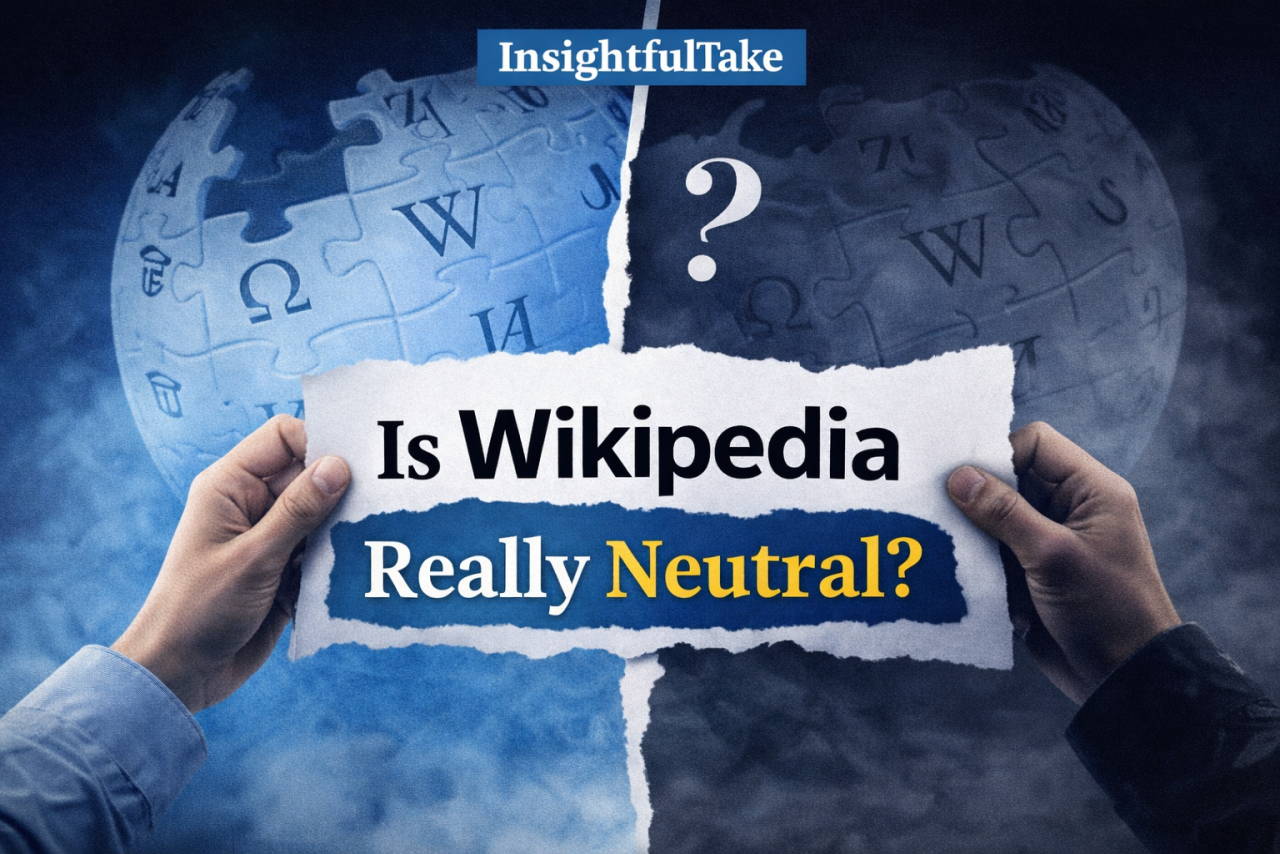
Wikipedia doesn’t lie—but it doesn’t tell the whole story either.
For millions, Wikipedia feels like a solved problem. Need quick information? It’s there. Free, fast, and (mostly) reliable. In an internet flooded with noise, it stands out as one of the last places that appears calm, structured, and factual.
But that sense of neutrality deserves a second look.
Wikipedia didn’t eliminate gatekeeping—it redesigned it.
Instead of editors in newsrooms or academics behind journal paywalls, control now sits with a smaller, less visible layer: highly active contributors who understand how the platform works. They don’t just write content—they interpret rules, close debates, and decide what qualifies as “acceptable knowledge.”
And that distinction matters.
Because on Wikipedia, truth isn’t just about facts—it’s about which facts are allowed to stay.
The Quiet Power of Process
Wikipedia runs on policies like “neutral point of view” and “reliable sources.” On paper, these are safeguards. In practice, they are tools—and like any tool, they can be used differently depending on who’s holding them.
An experienced editor doesn’t need to break rules to influence an article. They just need to:
- Prioritize certain sources over others
- Frame disagreements as “lack of consensus”
- Or outlast newer contributors in long discussions
The result is rarely dramatic or obvious. Instead, it’s incremental. A sentence softened here, a source excluded there—until an article subtly leans in one direction.
Not misinformation. But not entirely neutral either.
Anonymity: Shield and Blind Spot
One of Wikipedia’s greatest strengths is that anyone can contribute without revealing who they are. This lowers barriers and protects voices.
But it also removes context.
Readers don’t know if an editor has expertise—or an agenda. And when disputes arise, it’s difficult to separate good-faith disagreement from coordinated bias. Accountability becomes blurred, not because of bad intent necessarily, but because identity itself is invisible.
Why This Matters More Than Ever
A decade ago, a biased Wikipedia page was just a bad reference.
Today, it’s something bigger.
Wikipedia feeds into:
- Search engine summaries
- Voice assistants
- And increasingly, AI systems trained on open web data
That means small editorial choices can echo far beyond the platform. What starts as a wording decision can influence how millions understand a topic—or how machines learn to describe it.
The Illusion of “Self-Correction”
Wikipedia is often defended with one key argument: it fixes itself.
And often, it does.
But self-correction depends on participation—and participation isn’t evenly distributed. Most users read; very few edit. Even fewer stay long enough to understand the system.
So correction isn’t automatic. It’s conditional.
If the right people don’t show up, the version that exists simply… remains.
A Platform Worth Trusting—Carefully
None of this makes Wikipedia unreliable. In fact, it remains one of the most useful knowledge resources ever created.
But usefulness shouldn’t be confused with neutrality.
The platform works remarkably well for straightforward topics. It becomes more complicated when issues are political, cultural, or contested. That’s where process, persistence, and interpretation begin to shape outcomes.
The Real Question
The goal isn’t to distrust Wikipedia. It’s to understand how it works beneath the surface.
Because the future of knowledge isn’t just about access anymore. It’s about who frames what we access—and how subtly they do it.
And in that sense, Wikipedia isn’t failing.
It’s simply more human than it appears.
















Leave a Comment