
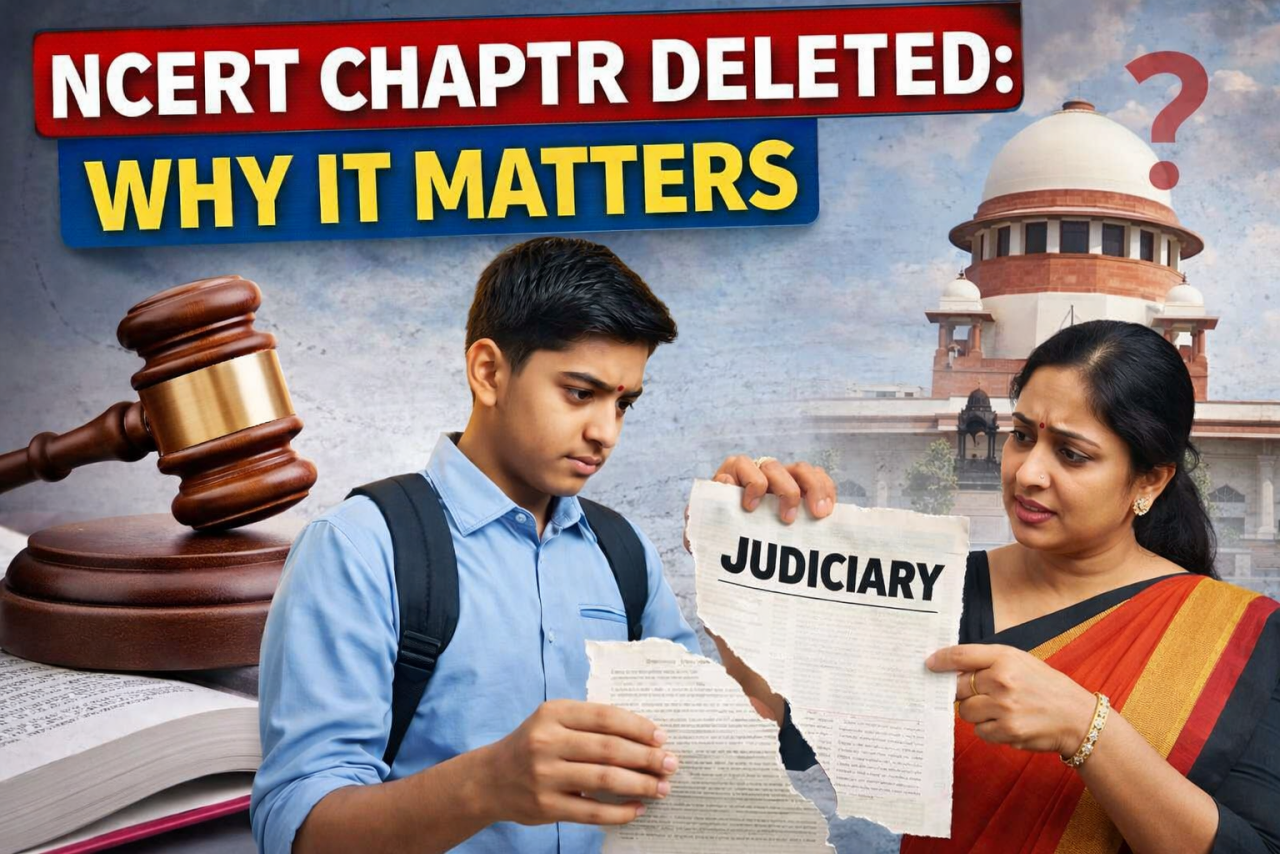
When a chapter disappears from your textbook, it’s not just content that’s removed—it’s a piece of understanding about how your country works.
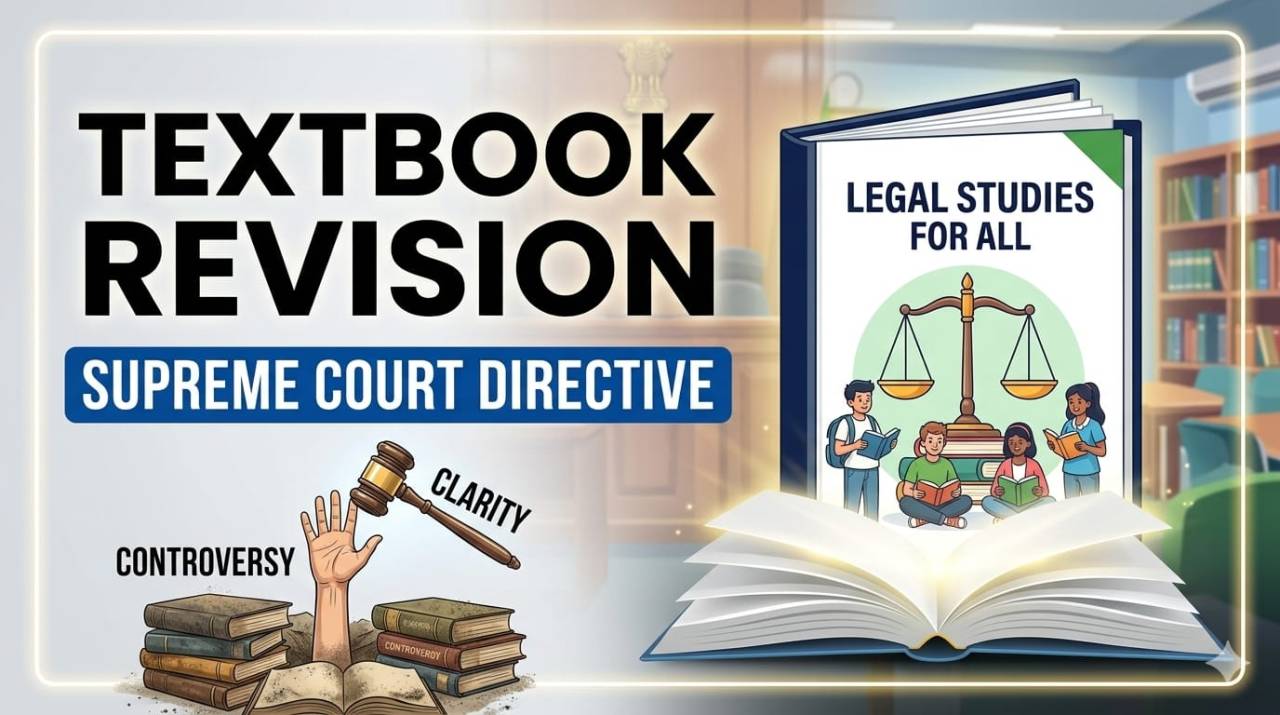
In a democracy as diverse and dynamic as India, school textbooks are more than just academic tools—they shape how young citizens understand institutions, history, and their role in society. A recent development involving the removal of a Class 8 social science chapter on the judiciary by National Council of Educational Research and Training has sparked an important debate. This issue, now being examined by the Supreme Court of India, raises critical questions about transparency, academic responsibility, and the role of education in building informed citizens.
What Happened?
According to reports, the deleted chapter was part of a collaborative effort involving multiple contributors under a structured textbook development process. The authors have clarified in affidavits that the content was created collectively, aligning with the principles of the National Education Policy (NEP) 2020 and the National Curriculum Framework (NCF) 2023. They also stated that there was no intention to misrepresent or malign the judiciary.
However, concerns were raised by officials within NCERT, leading to the withdrawal of the chapter. The matter escalated to the Supreme Court, which questioned the credibility and expertise behind the content. While the court allowed room for revision, it also emphasized accountability in curriculum design.
Why This Matters for Students
For students, especially those in middle school, textbooks are often their first introduction to complex systems like the judiciary. Removing or altering such content without clear communication can lead to confusion and misinformation.
Understanding the judiciary is not just about exams—it is about knowing your rights, the rule of law, and how justice functions in society. When such topics are removed or debated, students must be encouraged to ask questions, seek multiple sources, and develop critical thinking skills.
The Role of Teachers
Teachers act as the bridge between curriculum and comprehension. In situations like this, their role becomes even more important. Instead of relying solely on textbooks, educators should:
- Encourage open discussions in classrooms
- Provide balanced perspectives using credible sources
- Help students understand the difference between fact, opinion, and interpretation
This approach not only builds knowledge but also strengthens democratic values such as dialogue and critical inquiry.
The Importance of Transparency in Education
One of the key concerns highlighted by this issue is transparency. When chapters are removed or modified, stakeholders—including students, parents, and teachers—deserve clear explanations.
Educational institutions like NCERT hold a position of trust. Maintaining that trust requires:
- Clear communication about changes
- Inclusion of subject experts in decision-making
- Public access to revised content and reasoning
Transparency ensures that education remains unbiased and credible.
Balancing Sensitivity and Knowledge
India’s education system often faces the challenge of balancing sensitive topics with the need for factual knowledge. While it is important to present age-appropriate content, avoiding important subjects entirely can do more harm than good.
Instead of deletion, a better approach could be:
- Simplifying complex topics
- Including multiple viewpoints
- Encouraging analytical thinking rather than rote learning
This helps students engage with real-world issues in a responsible and informed manner.
What Youth Can Do
Today’s students are not passive learners—they are active participants in the information age. Here’s how they can respond:
- Stay informed: Read beyond textbooks using trusted sources
- Think critically: Question information rather than accepting it blindly
- Engage in discussions: Share views respectfully with peers and teachers
- Understand rights: Learn about constitutional values and institutions
Such habits prepare students not just for exams, but for life as responsible citizens.
Final Take
The debate around the deleted NCERT chapter is not just about one piece of content—it reflects larger issues within India’s education system. It highlights the need for accountability, transparency, and a commitment to quality education.
For teachers, it is a reminder to go beyond textbooks. For students, it is an opportunity to become curious and informed learners. And for institutions, it is a call to uphold trust and integrity.
Education must empower, not restrict. Only then can India’s youth truly understand their country—and shape its future with confidence and clarity.


















Leave a Comment