
From Eggs Kejriwal to Scotch Eggs, discover how exclusive club kitchens quietly transformed everyday dining across the world.
For generations, the kitchens of India’s social clubs operated as culinary worlds of their own. Behind membership-only gates and traditions that often stretched back decades, club chefs developed dishes that reflected the tastes, habits, and quirks of a loyal clientele. Some of these creations remained closely guarded secrets, while others gradually escaped the confines of club dining rooms and found a place on restaurant menus across the country and beyond.
The history of club food offers a fascinating glimpse into how private dining cultures have quietly influenced mainstream cuisine.
The Rebellion Behind Eggs Kejriwal
Few dishes illustrate this journey better than Eggs Kejriwal, one of Mumbai’s most beloved club-born creations.
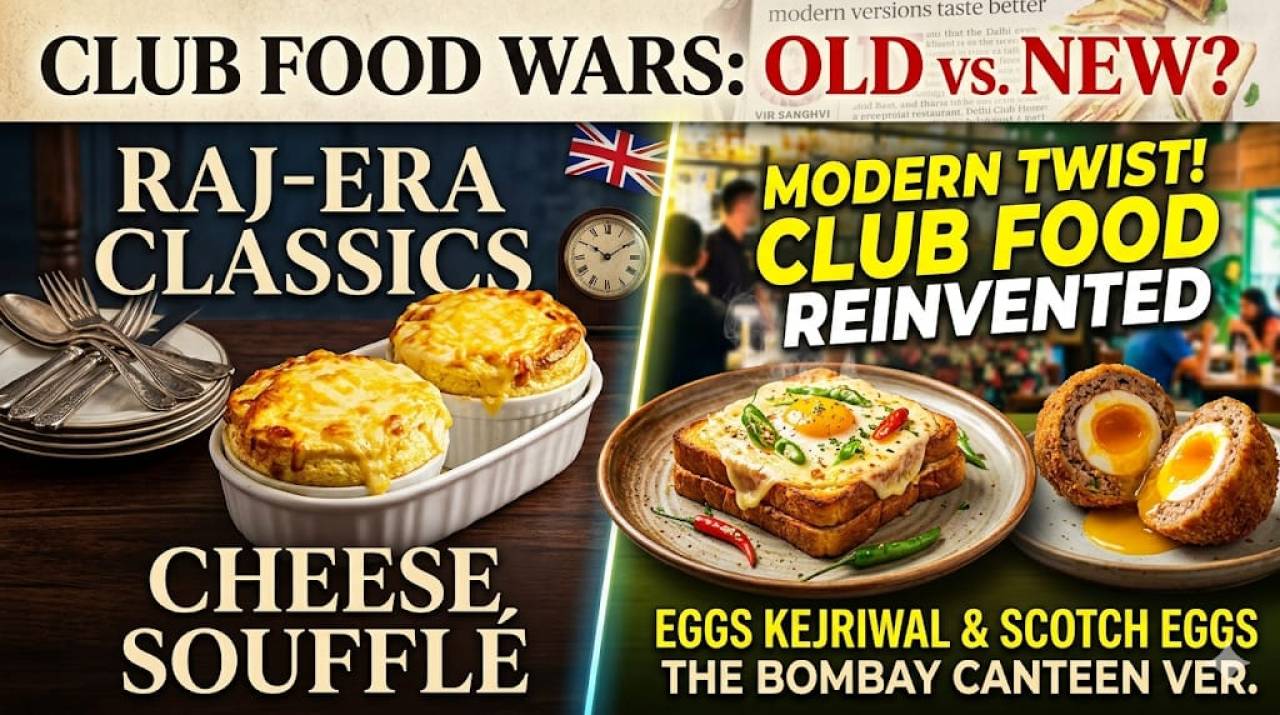
The dish traces its origins to Mumbai’s Willingdon Club and to a member named D.P. Kejriwal. Living in a strictly vegetarian household where eggs were forbidden, Kejriwal found a discreet way to satisfy his cravings while at the club. He began ordering a simple but indulgent combination: a fried egg placed on toast, generously covered with grated cheese and topped with chopped green chillies.
For years, the dish remained an insider secret, known primarily to regular club members. Its fortunes changed when restaurateurs and chefs discovered its appeal. Recognising the power of its rich, spicy flavours, they reimagined it for a wider audience. Brioche replaced ordinary bread, house-made chilli chutneys added complexity, and Eggs Kejriwal soon became a staple on brunch menus across India.
What began as a private culinary workaround evolved into one of the country's most recognisable comfort foods.
The Curious Histories of the Club Sandwich and Scotch Egg
Not every dish associated with club culture was actually born inside a clubhouse.
The Club Sandwich, for instance, is widely assumed to have originated in an elite social club. Historical accounts suggest otherwise. The layered sandwich was reportedly developed as a practical yet luxurious meal for wealthy passengers travelling on American railway services. Nevertheless, its portability, reliability, and satisfying combination of ingredients made it a natural fit for club dining rooms around the world.
The Scotch Egg tells an even more intriguing story. Its structure closely resembles the Indian Nargisi Kofta, a dish in which a boiled egg is wrapped in seasoned minced meat before being cooked. While the Scotch Egg became a familiar feature of British club and pub menus, its reputation declined during the twentieth century as mass production transformed it into a dry and uninspiring convenience food.
Its revival came through the efforts of modern chefs who returned to quality ingredients and careful preparation. Using premium sausage meat and perfectly cooked soft-centred eggs, they restored the dish's reputation and reintroduced it to high-end dining establishments.
The Decline of Raj-Era Club Dining
As tastes change, many of the elaborate dishes that once defined club culture are gradually disappearing.
Among the casualties is the classic Cheese Soufflé, a dish that once showcased the technical expertise of a club kitchen. Delicate and time-sensitive, soufflés demanded precision and coordination. A few minutes of delay could cause them to collapse before reaching the table.
Such labour-intensive preparations are increasingly rare today. Modern diners tend to favour familiarity, speed, and comfort over formal continental cuisine. As a result, many clubs have shifted away from elaborate European-inspired menus.
In their place, Indian-Chinese favourites such as Chicken Manchurian have become dominant. These dishes are easier to standardise, require less specialised training, and align more closely with contemporary dining preferences. The transition reflects broader changes in India's food culture, where casual comfort often outweighs culinary ceremony.
Why Club Food Endures
The lasting appeal of club food reveals an interesting truth about how people experience taste.
From a purely gastronomic perspective, many club kitchens are not necessarily exceptional. In numerous cases, food services are outsourced, and menus prioritise affordability and consistency over culinary innovation.
Yet members remain fiercely loyal to their club's signature dishes.
The explanation lies less in the food itself and more in the memories attached to it. Club dining is intertwined with family gatherings, weekend routines, celebrations, sporting victories, and friendships built over decades. A plate served in a familiar clubhouse carries emotional weight that cannot easily be replicated elsewhere.
Much like the meals remembered from childhood or school days, club food derives its power from nostalgia. The flavours may be simple, but they are inseparable from the stories, traditions, and shared experiences that accompany them.
That is why dishes such as Eggs Kejriwal, the Club Sandwich, and the Scotch Egg continue to endure. They are more than recipes; they are edible pieces of history, connecting generations of diners to a culinary culture that still survives, even as the clubs themselves evolve.
For generations, the kitchens of India’s social clubs operated as culinary worlds of their own. Behind membership-only gates and traditions that often stretched back decades, club chefs developed dishes that reflected the tastes, habits, and quirks of a loyal clientele. Some of these creations remained closely guarded secrets, while others gradually escaped the confines of club dining rooms and found a place on restaurant menus across the country and beyond.
The history of club food offers a fascinating glimpse into how private dining cultures have quietly influenced mainstream cuisine.
The Rebellion Behind Eggs Kejriwal
Few dishes illustrate this journey better than Eggs Kejriwal, one of Mumbai’s most beloved club-born creations.
The dish traces its origins to Mumbai’s Willingdon Club and to a member named D.P. Kejriwal. Living in a strictly vegetarian household where eggs were forbidden, Kejriwal found a discreet way to satisfy his cravings while at the club. He began ordering a simple but indulgent combination: a fried egg placed on toast, generously covered with grated cheese and topped with chopped green chillies.
For years, the dish remained an insider secret, known primarily to regular club members. Its fortunes changed when restaurateurs and chefs discovered its appeal. Recognising the power of its rich, spicy flavours, they reimagined it for a wider audience. Brioche replaced ordinary bread, house-made chilli chutneys added complexity, and Eggs Kejriwal soon became a staple on brunch menus across India.
What began as a private culinary workaround evolved into one of the country's most recognisable comfort foods.
The Curious Histories of the Club Sandwich and Scotch Egg
Not every dish associated with club culture was actually born inside a clubhouse.
The Club Sandwich, for instance, is widely assumed to have originated in an elite social club. Historical accounts suggest otherwise. The layered sandwich was reportedly developed as a practical yet luxurious meal for wealthy passengers travelling on American railway services. Nevertheless, its portability, reliability, and satisfying combination of ingredients made it a natural fit for club dining rooms around the world.
The Scotch Egg tells an even more intriguing story. Its structure closely resembles the Indian Nargisi Kofta, a dish in which a boiled egg is wrapped in seasoned minced meat before being cooked. While the Scotch Egg became a familiar feature of British club and pub menus, its reputation declined during the twentieth century as mass production transformed it into a dry and uninspiring convenience food.
Its revival came through the efforts of modern chefs who returned to quality ingredients and careful preparation. Using premium sausage meat and perfectly cooked soft-centred eggs, they restored the dish's reputation and reintroduced it to high-end dining establishments.
The Decline of Raj-Era Club Dining
As tastes change, many of the elaborate dishes that once defined club culture are gradually disappearing.
Among the casualties is the classic Cheese Soufflé, a dish that once showcased the technical expertise of a club kitchen. Delicate and time-sensitive, soufflés demanded precision and coordination. A few minutes of delay could cause them to collapse before reaching the table.
Such labour-intensive preparations are increasingly rare today. Modern diners tend to favour familiarity, speed, and comfort over formal continental cuisine. As a result, many clubs have shifted away from elaborate European-inspired menus.
In their place, Indian-Chinese favourites such as Chicken Manchurian have become dominant. These dishes are easier to standardise, require less specialised training, and align more closely with contemporary dining preferences. The transition reflects broader changes in India's food culture, where casual comfort often outweighs culinary ceremony.
Why Club Food Endures
The lasting appeal of club food reveals an interesting truth about how people experience taste.
From a purely gastronomic perspective, many club kitchens are not necessarily exceptional. In numerous cases, food services are outsourced, and menus prioritise affordability and consistency over culinary innovation.
Yet members remain fiercely loyal to their club's signature dishes.
The explanation lies less in the food itself and more in the memories attached to it. Club dining is intertwined with family gatherings, weekend routines, celebrations, sporting victories, and friendships built over decades. A plate served in a familiar clubhouse carries emotional weight that cannot easily be replicated elsewhere.
Much like the meals remembered from childhood or school days, club food derives its power from nostalgia. The flavours may be simple, but they are inseparable from the stories, traditions, and shared experiences that accompany them.
That is why dishes such as Eggs Kejriwal, the Club Sandwich, and the Scotch Egg continue to endure. They are more than recipes; they are edible pieces of history, connecting generations of diners to a culinary culture that still survives, even as the clubs themselves evolve.


























Leave a Comment