
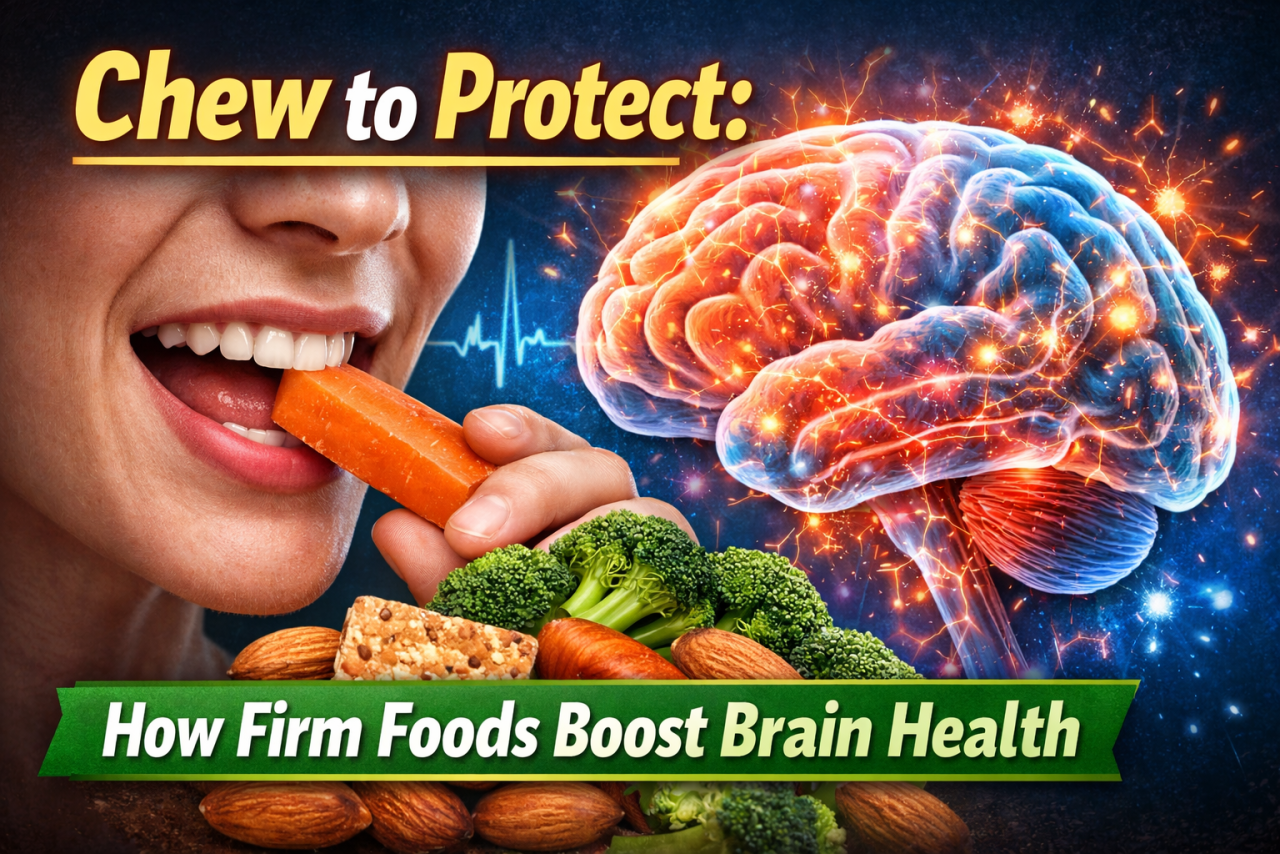
What if protecting your brain does not begin with a supplement or a complex routine, but with something as simple as chewing your food properly? New research suggests that every firm bite you take may quietly activate your brain, increase blood flow, and strengthen its natural defense system within minutes.
Recent research is drawing attention to something very simple yet powerful in our daily life. It is the act of chewing. A study listed in PubMed suggests that chewing firm foods does more than just break down what we eat. It may also stimulate the brain, increase neural activity, and strengthen its antioxidant defenses within a few minutes.
Scientists have known for many years that chewing, also called mastication, involves many muscles, nerves, and parts of the brain. However, this recent research explains more clearly how chewing firm foods sends strong sensory signals to the brain. These signals bring measurable biological changes.
A Direct Connection Between the Jaw and the Brain
When we chew firm foods such as raw vegetables, nuts, or whole grains, our jaw muscles work harder. This effort activates sensory receptors present in the gums and oral tissues. These receptors immediately send signals to the brain through the trigeminal nerve. This nerve plays an important role in facial sensation and in actions like biting and chewing.
Researchers explain that these signals increase overall brain activity. In simple words, the brain becomes more alert and active when we chew firm foods. This increased activity seems to support the brain’s natural protective systems.
Increase in Brain Antioxidants
One important finding of the study is the quick rise in brain antioxidants after active chewing. Antioxidants are substances that protect our cells from oxidative stress. Oxidative stress happens when harmful molecules called free radicals build up in the body and damage cells, including brain cells.
Oxidative stress is often linked with aging and certain brain disorders. The study shows that mechanical stimulation from chewing may increase certain antioxidant compounds in the brain within minutes. This means chewing may act as a natural and fast protective response.
When brain activity increases, the brain uses more energy. This higher activity can produce more reactive oxygen species, which may damage cells if they collect in excess. To manage this, the brain strengthens its antioxidant response. Chewing appears to trigger both increased activity and protective action at the same time.
Better Blood Flow and Oxygen Supply
The study also found that active chewing improves cerebral blood flow. As the jaw muscles move repeatedly, blood circulation increases not only in the mouth area but also in the brain.
Better blood flow means more oxygen and nutrients reach brain cells. Oxygen is necessary for energy production in neurons. Nutrients help in making neurotransmitters and repairing cells. Improved circulation also helps remove waste products from the brain more effectively.
Good oxygen supply supports the brain’s antioxidant systems. When cells receive enough oxygen, their energy-producing units, called mitochondria, function more efficiently. This may reduce the buildup of harmful byproducts inside cells.
Quick and Noticeable Changes
One of the most striking parts of the study is how quickly these changes take place. The rise in antioxidants and brain activity was observed soon after chewing started. This shows a clear and direct link between oral activity and brain chemistry.
Chewing is therefore not only a step in digestion. It is also an activity that directly affects brain function.
The Importance of Food Texture
Today, many people eat soft and highly processed foods that require very little chewing. Although such foods are convenient, they may reduce the natural stimulation that firm foods provide.
In the past, people commonly ate fibrous vegetables, nuts, seeds, and tougher grains. These foods required longer and stronger chewing. From a biological point of view, regular stimulation of jaw muscles and oral nerves may have supported brain health more than we realize today.
This does not mean that everyone should constantly eat very hard foods. However, it suggests that food texture plays an important role. Including foods that require proper chewing may provide meaningful benefits for brain health.
A Simple Habit with Wide Benefits
The study highlights an important message. Small physical actions can have significant effects on the body. Chewing firm foods activates muscles, stimulates sensory nerves, increases brain activity, improves blood flow, and strengthens antioxidant defenses within minutes.
Chewing alone cannot replace healthy habits such as exercise, good sleep, and balanced nutrition. Still, it may be an important part of the brain’s natural protection system.
Sometimes, better brain health may begin with something as simple as the way we chew our food.



.jpeg)























Leave a Comment