
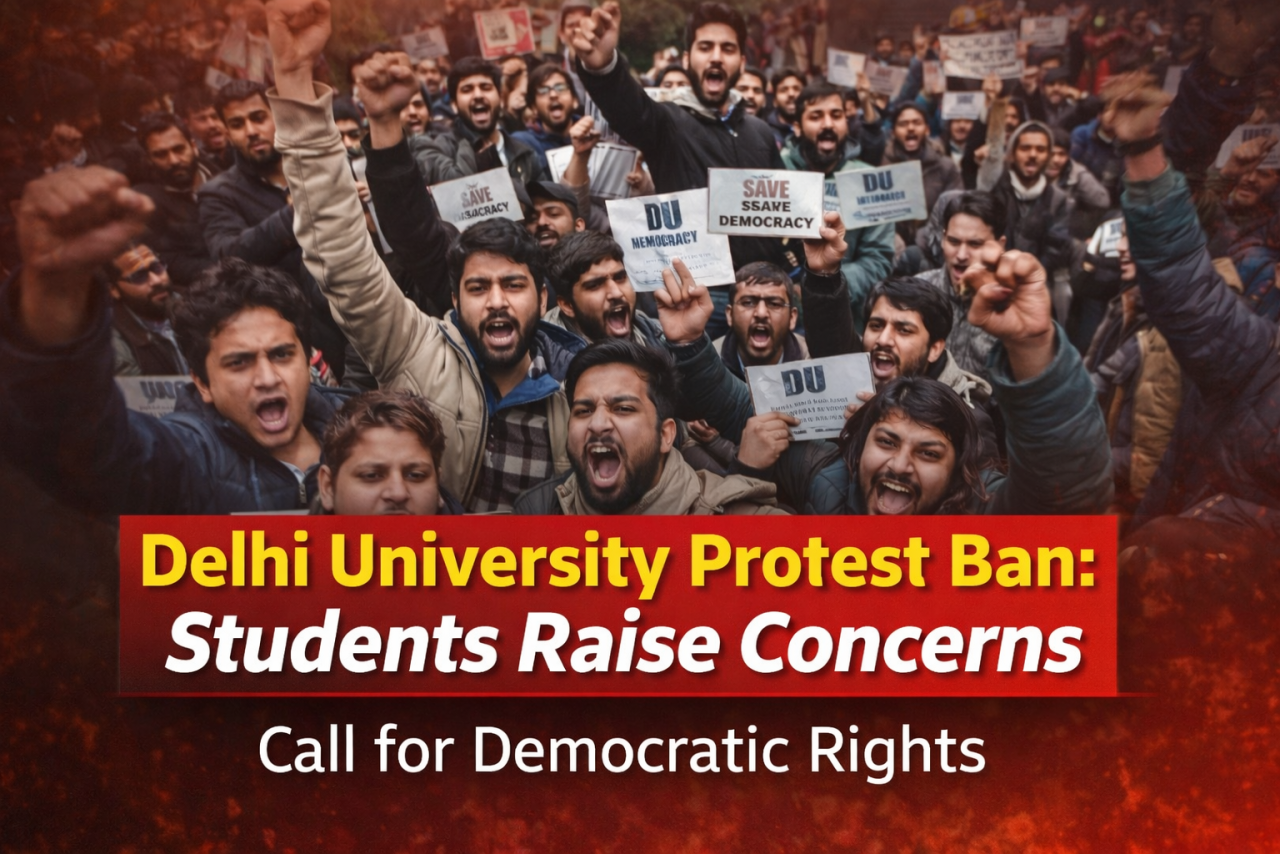
A campus meant for debate now faces silence—students ask, at what cost?
On February 17, University of Delhi announced a complete ban on demonstrations, rallies, public meetings and protests on campus for one month. The decision came through an order issued by the Proctor’s Office, citing concerns about “threats to human life” and disturbance of public peace. The move follows recent clashes on the North Campus during protests linked to the University Grants Commission (UGC) Equity Regulations 2026, which are currently under consideration after a stay by the Supreme Court of India.
For students, this decision has created a mix of concern, confusion and reflection. While the administration has emphasized safety and order, many students feel that the ban raises important questions about democratic rights within educational institutions.
Why the Ban Was Imposed
According to the university administration, the ban aims to prevent further unrest after incidents on February 13 reportedly turned violent. The Proctor stated that the decision was taken to ensure peace and to avoid repetition of such incidents. The order suggests that public gatherings and demonstrations could lead to traffic obstruction, threats to safety and disturbance of the academic environment.
From the administration’s point of view, maintaining law and order on campus is essential. Universities are spaces meant for learning, research and discussion. If protests escalate into violence, they can disrupt classes, create fear among students and affect the overall academic atmosphere.
Students’ Concerns
However, many students believe that a complete ban on protests, even if temporary, affects the democratic character of the university. Student organisations like the National Students' Union of India (NSUI) and the Students' Federation of India (SFI) have expressed concerns that the order may restrict the right to peaceful protest.
For students, a university is not just a place to attend lectures and write exams. It is also a space to question, debate and express opinions on policies that affect their education and future. Protests, when peaceful, are often seen as a way to draw attention to issues such as fee hikes, discrimination, hostel conditions and policy changes.
Many students argue that instead of banning all protests, the administration could have framed guidelines to ensure peaceful demonstrations. They believe that isolating violent elements and ensuring strict monitoring may have been a better solution than a blanket ban.
Balancing Safety and Freedom
The core issue here is the balance between safety and freedom. On one hand, no student wants to see their campus turn unsafe. Incidents of violence create fear and divide the student community. On the other hand, suppressing all forms of protest may send a message that dissent is unwelcome.
The Indian Constitution guarantees citizens the right to freedom of speech and peaceful assembly. Students feel that these rights should also apply within university campuses, provided they are exercised responsibly. A democratic society grows stronger when institutions encourage dialogue rather than silence disagreement.
From a student’s perspective, the recent incidents should not define the entire campus culture. Most protests at Delhi University in the past have been peaceful and issue-based. Students believe that one violent episode should not lead to restrictions on everyone’s voice.
Pragmatic Solution
This situation offers an opportunity for constructive dialogue between students and the administration. Instead of seeing each other as opposing sides, both can work together to create a safe and democratic campus environment.
Some possible steps could include:
- Setting clear rules for organizing protests, including prior permission and designated areas.
- Ensuring security presence to prevent violence without interfering in peaceful gatherings.
- Creating open forums where students can directly interact with university authorities.
- Establishing conflict resolution committees involving students and faculty members.
Such measures can help build trust and reduce misunderstandings.
A Campus Is More Than Classrooms
For students, Delhi University represents more than academic degrees. It represents freedom of thought, diversity of ideas and the courage to speak up. The one-month ban may be temporary, but its impact on student morale and campus culture will depend on how the administration engages with students during this period.
If the ban leads to meaningful dialogue and reforms in how protests are managed, it may strengthen the institution in the long run. But if it creates distance between students and authorities, it could weaken trust.
In conclusion, safety and democracy are not opposites. A university must protect both. Students of Delhi University hope that peace on campus will be maintained, but not at the cost of their constitutional rights. The true strength of an educational institution lies not in silence, but in its ability to handle disagreement with maturity, fairness and respect.

























Leave a Comment