
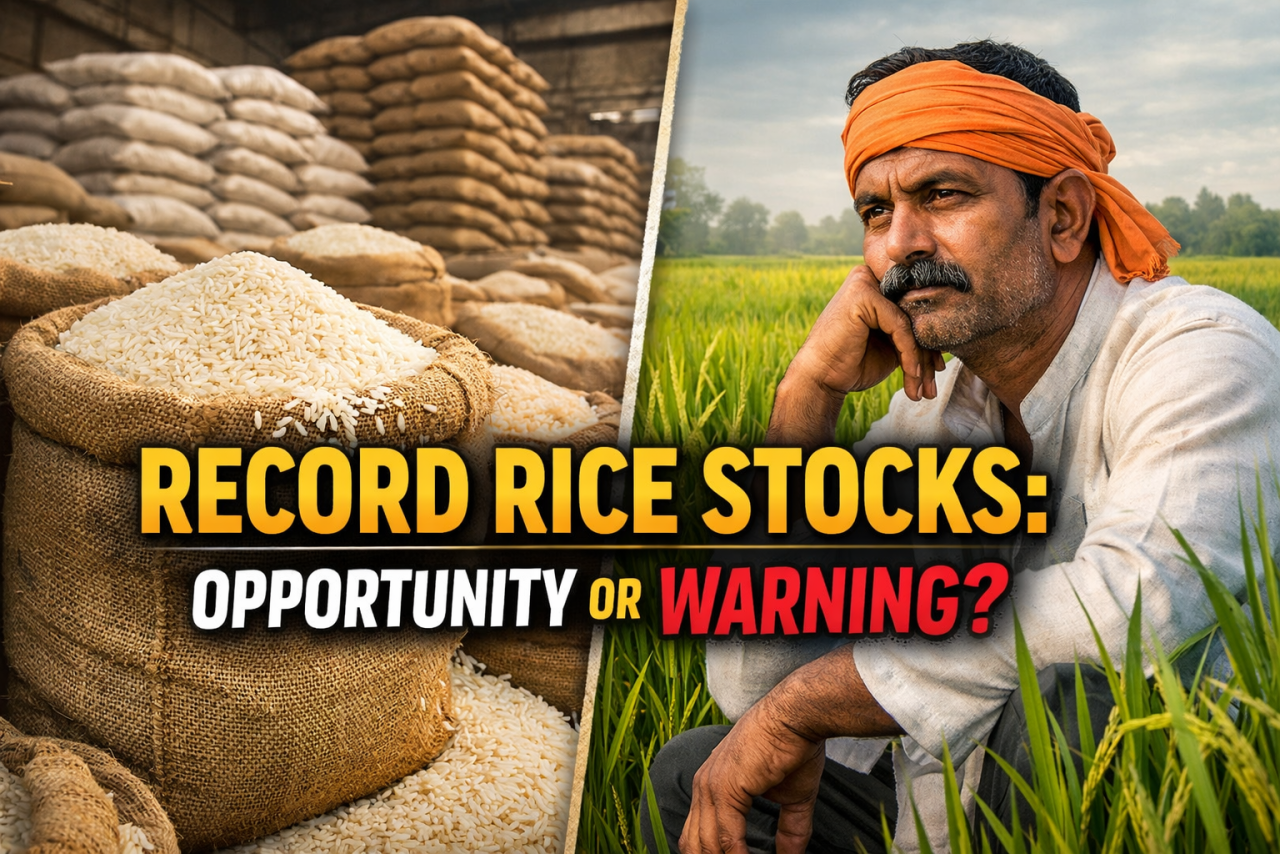
India’s granaries are overflowing this Farmers’ Day—but for the country’s farmers, record rice stocks raise a pressing question: is this a moment of security, or a signal to rethink what—and how—they grow next?
Today, on Farmers’ Day (December 23), it is important to look at developments that directly affect the lives and livelihoods of India’s farmers. One such major development is the sharp rise in India’s rice stocks, which have touched a record high this year. According to recent data, rice inventories in government warehouses have increased by nearly 12% compared to last year, reaching about 57.5 million metric tonnes as of early December. This is far above the government’s buffer target and reflects strong procurement of paddy from farmers across the country.
For farmers, this news carries both reassurance and questions. What does this record stock mean for prices? Will procurement continue at the Minimum Support Price (MSP)? And how should farmers plan their next crop cycle in this situation?
Why rice stocks are so high
The main reason behind the surge in rice stocks is aggressive government procurement. Since the start of the marketing year on October 1, government agencies have bought more than 42 million tonnes of paddy directly from farmers. Open market prices in many regions remained below the MSP, forcing state agencies to step in and buy large quantities to protect farmers from distress sales.
Another reason is stable production. Despite weather challenges in some areas, overall rice output has remained strong. At the same time, export demand has been relatively weak, though a softer rupee has helped Indian rice remain competitive in global markets.
India accounts for about 40% of global rice exports, making it the world’s largest exporter. With ample stocks, the country is in a strong position to meet both domestic food security needs and future export demand.
What this means for farmers
- MSP support remains crucial
High government stocks indicate that MSP procurement is working as a safety net. Farmers who sell paddy to government agencies can be confident that MSP-backed procurement is likely to continue, especially in states where procurement systems are strong. This is particularly important for small and marginal farmers who depend on assured prices. - Price movements may remain limited
When stocks are very high, market prices usually do not rise sharply. Farmers should not expect sudden price spikes in the short term. However, stable prices also mean reduced risk of a crash, which is equally important for income security. - Export policy can influence future demand
In recent months, India has eased some export restrictions on rice. If global demand improves, exports could increase, helping reduce excess stocks. This may support better prices in the coming seasons. Farmers should keep an eye on government announcements related to exports and trade.
Planning the next season wisely
With record rice stocks, farmers may want to think carefully before expanding paddy acreage indiscriminately.
- Crop diversification is key: In water-stressed regions, shifting part of the land to crops like pulses, oilseeds, or millets can reduce risk and input costs. These crops are increasingly supported by government schemes and have growing market demand.
- Focus on productivity, not just area: Instead of increasing acreage, farmers can benefit more by adopting better seed varieties, balanced fertilizer use, and efficient irrigation methods to improve yields and profits.
- Reduce post-harvest losses: Proper drying, storage, and handling of paddy can improve quality and help farmers get better prices, whether selling to government agencies or private buyers.
The role of wheat and food security
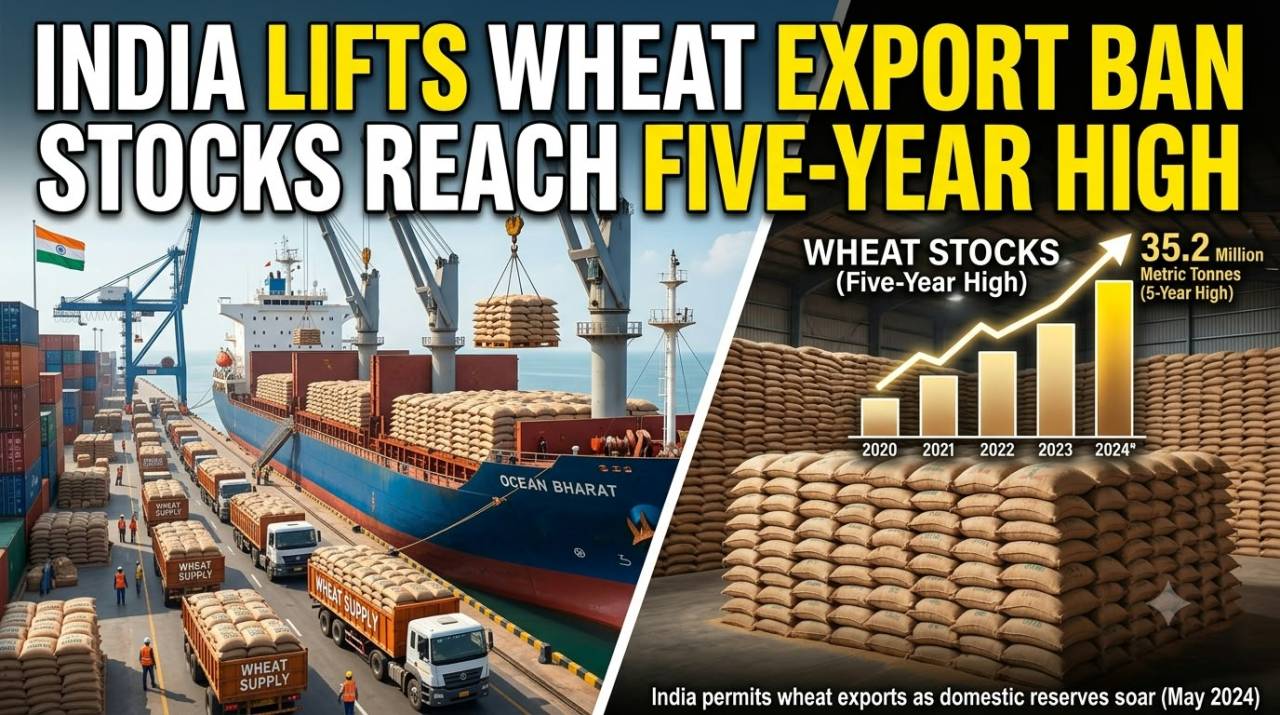
It is also worth noting that wheat stocks have risen sharply, crossing 29 million tonnes, well above last year’s levels. Together, high rice and wheat reserves strengthen India’s food security system. For farmers, this means the Public Distribution System (PDS) remains well supplied, reducing the pressure on governments to make sudden policy changes that could hurt farm incomes.
Challenges that still remain
Despite record stocks, farmers continue to face challenges:
- Rising input costs for fertilizers, diesel, and labor
- Uneven procurement across states
- Limited access to storage and local markets for small farmers
Addressing these issues requires stronger farmer-producer organizations (FPOs), better rural infrastructure, and timely policy support.
A message on Farmers’ Day
On Farmers’ Day, the record rice stocks should be seen as a sign of the farmer’s hard work and resilience. Indian farmers have ensured food for the nation and stability for global markets. At the same time, this moment calls for thoughtful planning—by farmers and policymakers alike—to balance production, prices, and sustainability.
For farmers, the message is loud and clear—rely on MSP wherever available, avoid overdependence on a single crop, and think long term. With informed decisions and supportive policies, India’s farmers can transform today’s surplus into tomorrow’s security and prosperity.
























Leave a Comment