
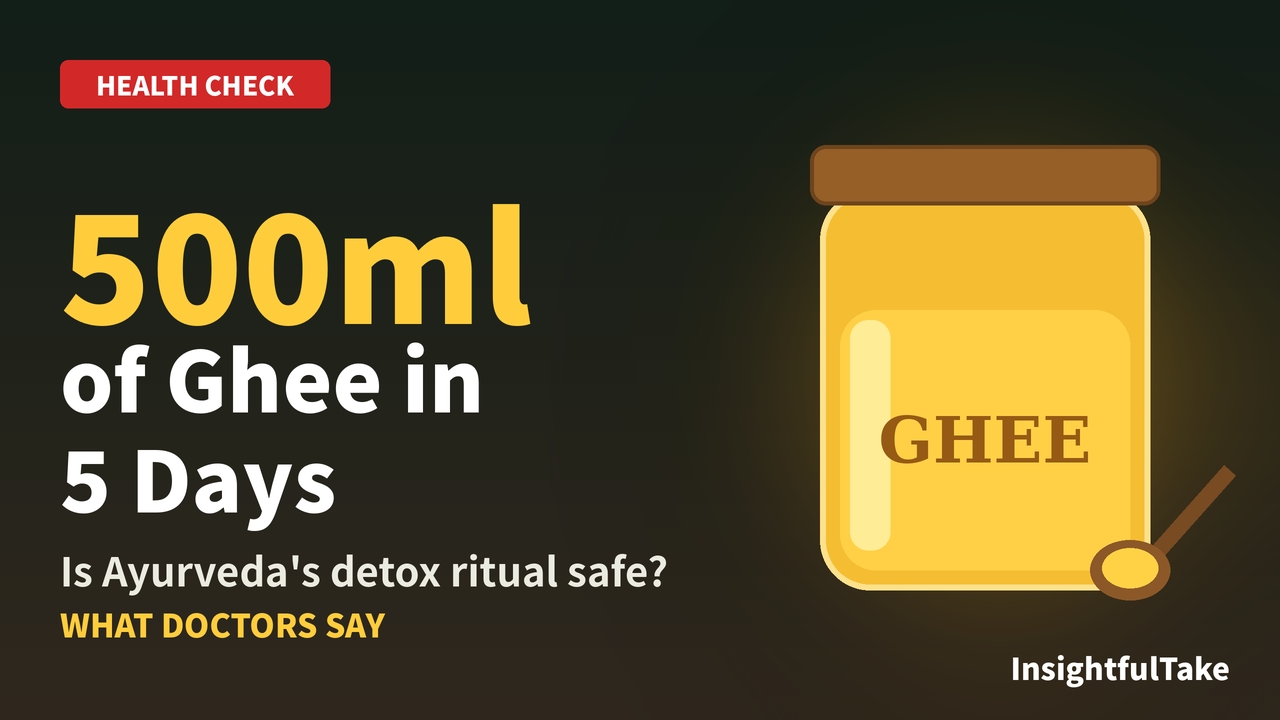
A viral panchakarma journey involving nearly 500ml of ghee in five days is raising questions about safety, evidence and the limits of traditional detox claims.
When conventional medicine does not provide quick answers, many patients explore other systems of healing. For people living with chronic conditions such as endometriosis, where diagnosis and relief can take years, traditional and complementary therapies can become part of that search.
One such journey is now attracting attention on social media.
Gabriela, a European content creator, has been documenting her stay at an Ayurvedic clinic in India through Instagram Reels. She says she has lived with endometriosis for years and has undergone hormonal treatment and surgery. She also says that, despite having a child, her health problems have continued. According to her account, she now also has adenomyosis, severe migraines, pelvic varicose veins and widespread adhesions.
She travelled to India for her first panchakarma, a multi-stage Ayurvedic programme traditionally described as a process of cleansing and preparation.
Her videos focus on one of the early stages: drinking warm, medicated ghee each morning in increasing quantities. The doses shown rise from 20 ml to 50 ml, 80 ml, 120 ml and finally 200 ml. She describes the total as roughly 500 ml over five days and calls it one of the hardest parts of her treatment.
Gabriela says she is following the process step by step under medical supervision.
A Traditional Ayurvedic Practice
The practice has a name: snehapana, or internal oleation. In Ayurvedic practice, it is used as a preparatory stage before certain panchakarma procedures.
Dr Aayrin Memon, a clinical nutritionist at Bhailal Amin General Hospital, acknowledges that ghee in controlled quantities is a recognised part of the traditional practice. Her concern, however, is the amount being consumed.
There is no established scientific evidence that drinking large quantities of ghee removes toxins or cures chronic illnesses, she says.
Ghee is highly calorie-dense and contains a substantial amount of saturated fat. Consuming large quantities may cause nausea, bloating, loose stools, abdominal discomfort or vomiting. Repeated high intake may also affect blood lipid levels, including LDL cholesterol.
The distinction between a traditional therapeutic practice and a scientifically established treatment is important, particularly when social media turns an individual experience into a health recommendation for a much wider audience.
What Does the Evidence Say About Endometriosis?
The bigger question is whether high-dose ghee or panchakarma can treat complex gynaecological conditions such as endometriosis and adenomyosis.
Dr Priya Bansal, senior consultant in gynaecology and gynae-oncology at Medanta Noida, says current clinical evidence is insufficient to establish that high-dose ghee removes toxins or treats endometriosis or adenomyosis.
At the same time, patients may choose to explore complementary approaches as part of their broader healthcare, provided they make informed decisions and remain in contact with qualified medical professionals.
That distinction matters.
Endometriosis can cause chronic pelvic pain, painful periods, fertility difficulties and a long delay between the onset of symptoms and diagnosis. For patients who have spent years trying different treatments, the appeal of holistic or traditional approaches is understandable.
Social media, however, can blur the line between a personal experience and medical evidence.
One person's improvement, deterioration or treatment journey cannot establish whether the same intervention will work for thousands of other patients.
What Patients Should Keep in Mind
Gabriela's videos document her personal experience. They do not establish that high-dose ghee is safe or effective for people with endometriosis or other chronic conditions.
Doctors advise several basic precautions:
- Do not copy a treatment from social media. Traditional therapies involving large quantities of food, oils or medicines should be undertaken only under appropriate professional supervision.
- Consider existing health conditions. People with conditions such as high cholesterol, diabetes, fatty liver disease, heart disease or digestive problems should discuss high-fat regimens with their doctor.
- Do not replace established treatment without medical advice. Complementary therapies should not automatically be treated as substitutes for evidence-based diagnosis and treatment.
- Tell your doctors about complementary treatments. This allows healthcare professionals to consider possible interactions, risks and changes in symptoms.
Tradition Needs Evidence, Too
Ayurveda has a long history in India, and many people continue to use it as part of their approach to health and wellbeing. The question is not whether traditional medicine should be accepted or rejected as a whole.
The more useful question is what evidence exists for a particular treatment, what risks it carries and for whom it may or may not be appropriate.
Gabriela's panchakarma journey offers a striking example of why that distinction matters. A treatment that appears dramatic on Instagram may have a very different meaning when viewed through the lens of clinical evidence.
For patients dealing with chronic illnesses, hope matters. So does caution.
Traditional practices can be explored, but extreme regimens should not be copied from videos. The safest approach is to ask questions, examine the evidence and seek qualified medical guidance before making major changes to treatment.
When conventional medicine does not provide quick answers, many patients explore other systems of healing. For people living with chronic conditions such as endometriosis, where diagnosis and relief can take years, traditional and complementary therapies can become part of that search.
One such journey is now attracting attention on social media.
Gabriela, a European content creator, has been documenting her stay at an Ayurvedic clinic in India through Instagram Reels. She says she has lived with endometriosis for years and has undergone hormonal treatment and surgery. She also says that, despite having a child, her health problems have continued. According to her account, she now also has adenomyosis, severe migraines, pelvic varicose veins and widespread adhesions.
She travelled to India for her first panchakarma, a multi-stage Ayurvedic programme traditionally described as a process of cleansing and preparation.
Her videos focus on one of the early stages: drinking warm, medicated ghee each morning in increasing quantities. The doses shown rise from 20 ml to 50 ml, 80 ml, 120 ml and finally 200 ml. She describes the total as roughly 500 ml over five days and calls it one of the hardest parts of her treatment.
Gabriela says she is following the process step by step under medical supervision.
A Traditional Ayurvedic Practice
The practice has a name: snehapana, or internal oleation. In Ayurvedic practice, it is used as a preparatory stage before certain panchakarma procedures.
Dr Aayrin Memon, a clinical nutritionist at Bhailal Amin General Hospital, acknowledges that ghee in controlled quantities is a recognised part of the traditional practice. Her concern, however, is the amount being consumed.
There is no established scientific evidence that drinking large quantities of ghee removes toxins or cures chronic illnesses, she says.
Ghee is highly calorie-dense and contains a substantial amount of saturated fat. Consuming large quantities may cause nausea, bloating, loose stools, abdominal discomfort or vomiting. Repeated high intake may also affect blood lipid levels, including LDL cholesterol.
The distinction between a traditional therapeutic practice and a scientifically established treatment is important, particularly when social media turns an individual experience into a health recommendation for a much wider audience.
What Does the Evidence Say About Endometriosis?
The bigger question is whether high-dose ghee or panchakarma can treat complex gynaecological conditions such as endometriosis and adenomyosis.
Dr Priya Bansal, senior consultant in gynaecology and gynae-oncology at Medanta Noida, says current clinical evidence is insufficient to establish that high-dose ghee removes toxins or treats endometriosis or adenomyosis.
At the same time, patients may choose to explore complementary approaches as part of their broader healthcare, provided they make informed decisions and remain in contact with qualified medical professionals.
That distinction matters.
Endometriosis can cause chronic pelvic pain, painful periods, fertility difficulties and a long delay between the onset of symptoms and diagnosis. For patients who have spent years trying different treatments, the appeal of holistic or traditional approaches is understandable.
Social media, however, can blur the line between a personal experience and medical evidence.
One person's improvement, deterioration or treatment journey cannot establish whether the same intervention will work for thousands of other patients.
What Patients Should Keep in Mind
Gabriela's videos document her personal experience. They do not establish that high-dose ghee is safe or effective for people with endometriosis or other chronic conditions.
Doctors advise several basic precautions:
- Do not copy a treatment from social media. Traditional therapies involving large quantities of food, oils or medicines should be undertaken only under appropriate professional supervision.
- Consider existing health conditions. People with conditions such as high cholesterol, diabetes, fatty liver disease, heart disease or digestive problems should discuss high-fat regimens with their doctor.
- Do not replace established treatment without medical advice. Complementary therapies should not automatically be treated as substitutes for evidence-based diagnosis and treatment.
- Tell your doctors about complementary treatments. This allows healthcare professionals to consider possible interactions, risks and changes in symptoms.
Tradition Needs Evidence, Too
Ayurveda has a long history in India, and many people continue to use it as part of their approach to health and wellbeing. The question is not whether traditional medicine should be accepted or rejected as a whole.
The more useful question is what evidence exists for a particular treatment, what risks it carries and for whom it may or may not be appropriate.
Gabriela's panchakarma journey offers a striking example of why that distinction matters. A treatment that appears dramatic on Instagram may have a very different meaning when viewed through the lens of clinical evidence.
For patients dealing with chronic illnesses, hope matters. So does caution.
Traditional practices can be explored, but extreme regimens should not be copied from videos. The safest approach is to ask questions, examine the evidence and seek qualified medical guidance before making major changes to treatment.















Leave a Comment