
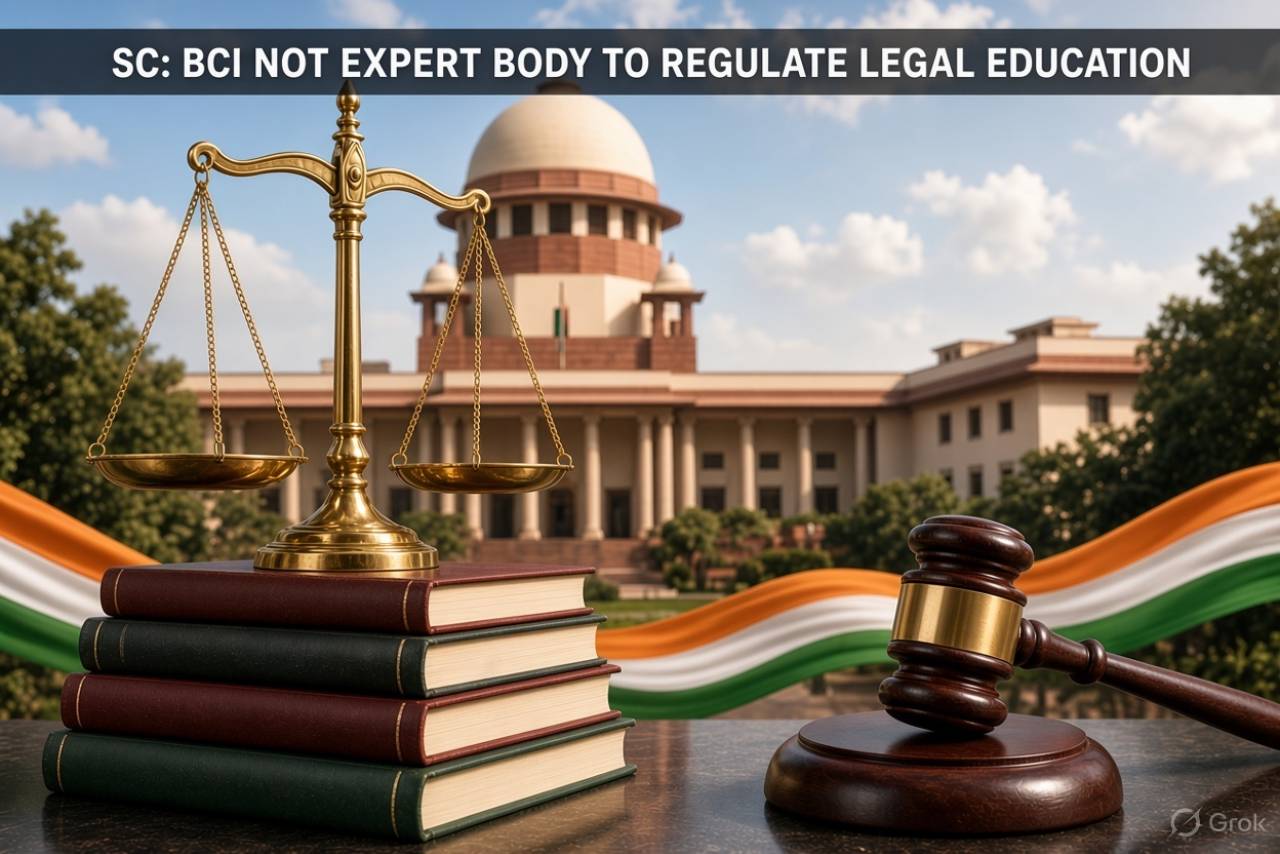
Who should decide the standards of legal education in India? The Supreme Court’s questions about the BCI have opened a wider debate over regulation, expertise and academic autonomy.
The Supreme Court has questioned whether the Bar Council of India (BCI) should be treated as an expert body for setting standards and regulating legal education in India, opening a wider debate over who should oversee the country’s law colleges and universities.
A bench headed by Chief Justice of India Surya Kant, along with Justices Joymalya Bagchi and V. Mohana, raised the issue while hearing petitions concerning the functioning of the BCI, its decision-making process and its role in legal education.
The court observed that the BCI may lay down general guidelines for the functioning of law colleges, but questioned whether it should exercise wider control over legal education. The bench pointed to the role of academics and scholars in dealing with questions relating to educational standards.
The Larger Question About BCI's Role
The central issue before the court is not simply whether the BCI can issue regulations for law colleges. It is whether the statutory framework gives the BCI such a broad role in controlling legal education and academic institutions.
The question assumes importance because the BCI was created under the Advocates Act, 1961, primarily as the statutory body governing the legal profession. The Supreme Court has now asked the BCI and the Centre to respond to the larger question of its authority over legal education.
The court's concern also comes against the background of a separate dispute involving students of NALSAR University of Law, Hyderabad.
NALSAR Controversy Brought BCI's Powers Into Focus
In August, the BCI issued communications concerning the 2026 graduating batch of NALSAR after a controversy surrounding students' opposition to the invitation of the Chief Justice of India to their convocation. The communications were withdrawn within hours.
The issue subsequently reached the Supreme Court. On September 3, a three-judge bench held that the Advocates Act did not give the BCI or State Bar Councils express or implied power to take disciplinary action against law students before they were enrolled as advocates.
The court said disciplinary action against students fell within the authority of their educational institution or the authority prescribed under its regulations. It declared the BCI communications concerning the NALSAR students to be without authority of law.
That ruling is significant because it drew a distinction between regulating the legal profession and exercising disciplinary control over students who have not yet entered that profession.
BCI Trust Raises Another Question
During the September 23 hearing on legal education, advocate Prashant Bhushan raised another issue concerning the BCI's role.
He told the court that a trust associated with the BCI, PEARL FIRST, had established the India International University of Legal Education and Research in Goa. The petitioners questioned the relationship between the BCI's regulatory role and its involvement in institutions providing legal education.
The Supreme Court sought responses from the BCI and the Union government on these issues. Reports of the hearing said the court also raised concerns about allegations relating to BCI assets and the trust, which it said would require examination.
The matter therefore goes beyond one controversy. It raises questions about the structure of legal education regulation itself.
Representation and Transparency Also Under Scrutiny
The Supreme Court is also examining questions surrounding the composition and functioning of the BCI and State Bar Councils.
During proceedings concerning the BCI, the court had directed measures aimed at increasing women's representation in State Bar Councils. The broader proceedings have also involved questions about the continuation of Manan Kumar Mishra as BCI chairperson and the transparency of decision-making within the organisation.
These issues are developing alongside the court's examination of the BCI's authority over legal education.
The Debate Is Bigger Than the BCI
Legal education is not simply about regulating law colleges. It determines the quality of legal training received by future advocates, judges, academics and other professionals working in the justice system.
That makes the question of expertise particularly important. A professional regulatory body may have an important role in ensuring that law graduates meet standards required for entry into the profession. But questions about curriculum, teaching methods, academic research and institutional standards can also require specialised educational expertise.
The Supreme Court itself has separately asked the Union government to consider setting up an expert body to examine broader issues concerning legal education. During a September 8 hearing, CJI Surya Kant said there should be an expert body on legal education.
Final Take
The court has not finally decided that the BCI has no role in legal education. Rather, it has questioned the extent of that role and sought responses from the BCI and the Centre.
That distinction matters.
The present proceedings could eventually lead to a closer examination of the statutory powers of the BCI, the institutional structure governing law colleges and the relationship between professional regulation and academic autonomy.
The Supreme Court's latest observations have placed that question firmly before the BCI, the government and the wider legal education community.
The Supreme Court has questioned whether the Bar Council of India (BCI) should be treated as an expert body for setting standards and regulating legal education in India, opening a wider debate over who should oversee the country’s law colleges and universities.
A bench headed by Chief Justice of India Surya Kant, along with Justices Joymalya Bagchi and V. Mohana, raised the issue while hearing petitions concerning the functioning of the BCI, its decision-making process and its role in legal education.
The court observed that the BCI may lay down general guidelines for the functioning of law colleges, but questioned whether it should exercise wider control over legal education. The bench pointed to the role of academics and scholars in dealing with questions relating to educational standards.
The Larger Question About BCI's Role
The central issue before the court is not simply whether the BCI can issue regulations for law colleges. It is whether the statutory framework gives the BCI such a broad role in controlling legal education and academic institutions.
The question assumes importance because the BCI was created under the Advocates Act, 1961, primarily as the statutory body governing the legal profession. The Supreme Court has now asked the BCI and the Centre to respond to the larger question of its authority over legal education.
The court's concern also comes against the background of a separate dispute involving students of NALSAR University of Law, Hyderabad.
NALSAR Controversy Brought BCI's Powers Into Focus
In August, the BCI issued communications concerning the 2026 graduating batch of NALSAR after a controversy surrounding students' opposition to the invitation of the Chief Justice of India to their convocation. The communications were withdrawn within hours.
The issue subsequently reached the Supreme Court. On September 3, a three-judge bench held that the Advocates Act did not give the BCI or State Bar Councils express or implied power to take disciplinary action against law students before they were enrolled as advocates.
The court said disciplinary action against students fell within the authority of their educational institution or the authority prescribed under its regulations. It declared the BCI communications concerning the NALSAR students to be without authority of law.
That ruling is significant because it drew a distinction between regulating the legal profession and exercising disciplinary control over students who have not yet entered that profession.
BCI Trust Raises Another Question
During the September 23 hearing on legal education, advocate Prashant Bhushan raised another issue concerning the BCI's role.
He told the court that a trust associated with the BCI, PEARL FIRST, had established the India International University of Legal Education and Research in Goa. The petitioners questioned the relationship between the BCI's regulatory role and its involvement in institutions providing legal education.
The Supreme Court sought responses from the BCI and the Union government on these issues. Reports of the hearing said the court also raised concerns about allegations relating to BCI assets and the trust, which it said would require examination.
The matter therefore goes beyond one controversy. It raises questions about the structure of legal education regulation itself.
Representation and Transparency Also Under Scrutiny
The Supreme Court is also examining questions surrounding the composition and functioning of the BCI and State Bar Councils.
During proceedings concerning the BCI, the court had directed measures aimed at increasing women's representation in State Bar Councils. The broader proceedings have also involved questions about the continuation of Manan Kumar Mishra as BCI chairperson and the transparency of decision-making within the organisation.
These issues are developing alongside the court's examination of the BCI's authority over legal education.
The Debate Is Bigger Than the BCI
Legal education is not simply about regulating law colleges. It determines the quality of legal training received by future advocates, judges, academics and other professionals working in the justice system.
That makes the question of expertise particularly important. A professional regulatory body may have an important role in ensuring that law graduates meet standards required for entry into the profession. But questions about curriculum, teaching methods, academic research and institutional standards can also require specialised educational expertise.
The Supreme Court itself has separately asked the Union government to consider setting up an expert body to examine broader issues concerning legal education. During a September 8 hearing, CJI Surya Kant said there should be an expert body on legal education.
Final Take
The court has not finally decided that the BCI has no role in legal education. Rather, it has questioned the extent of that role and sought responses from the BCI and the Centre.
That distinction matters.
The present proceedings could eventually lead to a closer examination of the statutory powers of the BCI, the institutional structure governing law colleges and the relationship between professional regulation and academic autonomy.
The Supreme Court's latest observations have placed that question firmly before the BCI, the government and the wider legal education community.


















Leave a Comment