
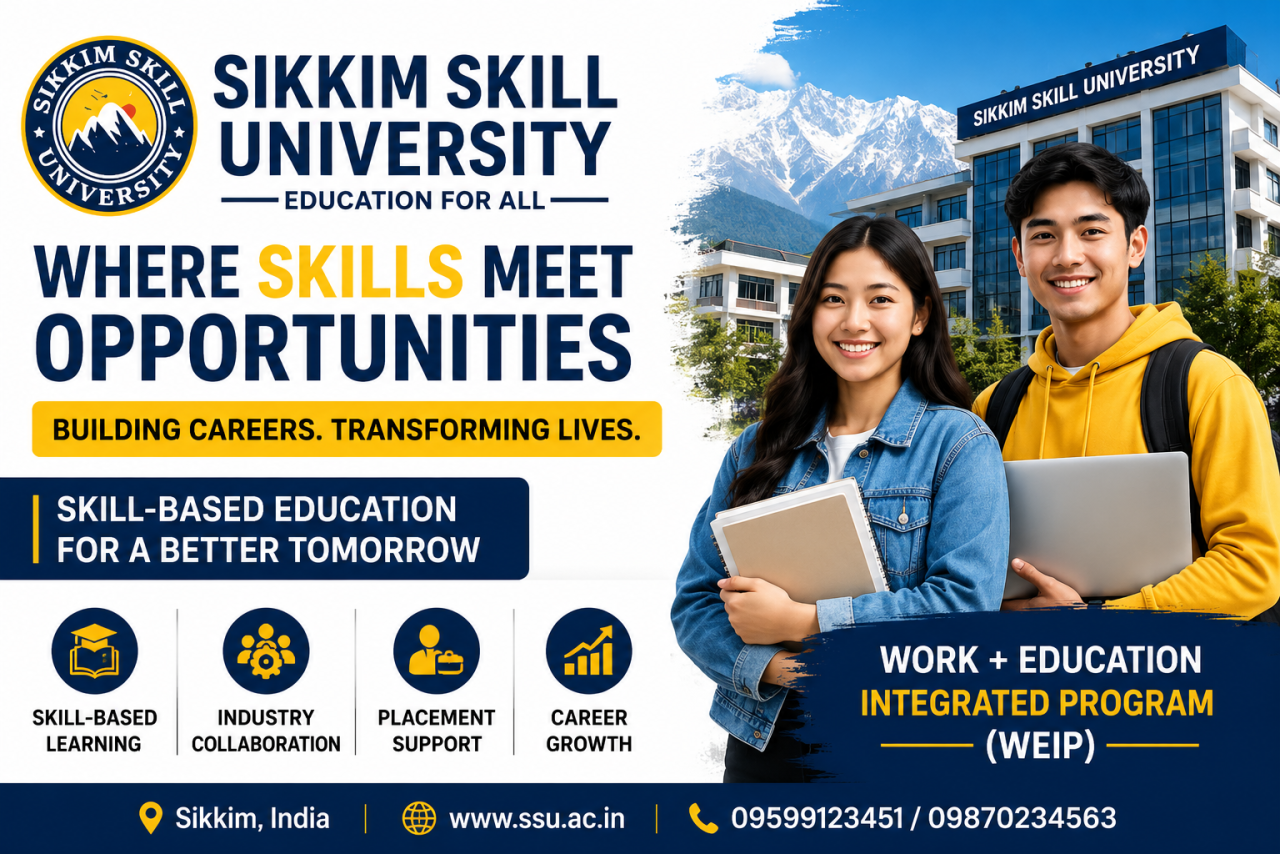
Can a university degree do more than deliver classroom knowledge? Sikkim Skill University is betting on skill-based education, industry exposure, and career-focused learning to prepare students for tomorrow's workforce.
In an era where employers increasingly seek practical skills alongside academic qualifications, the gap between education and employability remains one of India's biggest challenges. While millions of students graduate every year, many struggle to find opportunities that match their aspirations and training.
Against this backdrop, Sikkim Skill University is positioning itself as an institution focused on a simple but significant goal: making education more relevant to the needs of industry and the modern workforce.
Located in Sikkim and serving learners across India, the university has adopted a skill-oriented approach that combines academic learning with practical exposure. Its emphasis on employability, industry collaboration, and flexible learning pathways reflects the changing expectations of both students and employers.
The Rise of Skill-Based Education
India is one of the youngest countries in the world, with millions entering the workforce every year. Yet employers across sectors often report a shortage of job-ready talent. This has sparked growing interest in skill-based education models that prepare students not only with theoretical knowledge but also with practical competencies.
Sikkim Skill University is part of this broader movement. By focusing on industry-relevant programmes and experiential learning, the institution aims to equip students with the tools required in today's competitive job market.
The university's academic philosophy recognizes that modern careers require more than degrees. Students increasingly need communication skills, technical expertise, digital literacy, and real-world exposure to succeed.
Integrating Learning with Work Experience
One of the university's notable initiatives is its Work-Education Integrated Program (WEIP), which seeks to connect classroom education with practical workplace learning.
Traditional education often separates academic study from professional experience. Students spend years in classrooms and only encounter the realities of the workplace after graduation. Integrated learning models attempt to change this by exposing students to industry environments during their educational journey.
Through such initiatives, learners gain opportunities to understand workplace expectations, develop practical skills, and build confidence before entering the job market.
This approach reflects a growing global trend where universities are increasingly collaborating with industries to create employment-oriented educational pathways.
Industry Collaboration as a Key Focus
As technology and business practices evolve rapidly, universities face the challenge of keeping curricula aligned with industry needs. Sikkim Skill University highlights industry collaboration as one of its core pillars.
Such partnerships can help ensure that academic programmes remain relevant to emerging sectors and evolving workforce demands. Industry engagement also provides students with exposure to real-world projects, professional networks, and potential career opportunities.
For students, this connection between academia and industry can make learning more meaningful and career-focused.
Supporting Career Growth
Career development has become a major consideration for students and parents when selecting a university. Beyond academics, learners increasingly seek institutions that can support their long-term professional goals.
Sikkim Skill University emphasizes career-oriented education and student support systems aimed at enhancing employability. The university's focus on skill development, workplace readiness, and professional growth aligns with the expectations of a generation preparing for a dynamic and rapidly changing economy.
As sectors such as technology, healthcare, business services, digital marketing, and entrepreneurship continue to expand, students require adaptable skills that remain relevant throughout their careers.
Expanding Access to Education
Another important aspect of modern higher education is accessibility. Many students seek flexible pathways that allow them to balance learning with work, family responsibilities, or other commitments.
Universities that adopt innovative delivery models and student-centric approaches can help make higher education more accessible to diverse groups of learners. Sikkim Skill University aims to contribute to this objective by offering programmes designed to meet contemporary educational and professional needs.
Final Take
The future of higher education is increasingly being shaped by employability, skills, and industry relevance. As students evaluate educational opportunities, institutions that successfully connect learning with career outcomes are likely to play a growing role in India's development journey.
Sikkim Skill University represents one such effort to align education with the demands of the modern economy. Through its focus on skill-based learning, industry engagement, workplace integration, and career readiness, the university seeks to prepare students not only for examinations but for meaningful professional success.
For aspiring learners looking to combine academic qualifications with practical experience, the evolving model of skill-oriented education offers an alternative pathway worth exploring.
As India's workforce continues to transform, institutions that bridge the gap between education and employability may well become some of the most important contributors to the country's future growth.
In an era where employers increasingly seek practical skills alongside academic qualifications, the gap between education and employability remains one of India's biggest challenges. While millions of students graduate every year, many struggle to find opportunities that match their aspirations and training.
Against this backdrop, Sikkim Skill University is positioning itself as an institution focused on a simple but significant goal: making education more relevant to the needs of industry and the modern workforce.
Located in Sikkim and serving learners across India, the university has adopted a skill-oriented approach that combines academic learning with practical exposure. Its emphasis on employability, industry collaboration, and flexible learning pathways reflects the changing expectations of both students and employers.
The Rise of Skill-Based Education
India is one of the youngest countries in the world, with millions entering the workforce every year. Yet employers across sectors often report a shortage of job-ready talent. This has sparked growing interest in skill-based education models that prepare students not only with theoretical knowledge but also with practical competencies.
Sikkim Skill University is part of this broader movement. By focusing on industry-relevant programmes and experiential learning, the institution aims to equip students with the tools required in today's competitive job market.
The university's academic philosophy recognizes that modern careers require more than degrees. Students increasingly need communication skills, technical expertise, digital literacy, and real-world exposure to succeed.
Integrating Learning with Work Experience
One of the university's notable initiatives is its Work-Education Integrated Program (WEIP), which seeks to connect classroom education with practical workplace learning.
Traditional education often separates academic study from professional experience. Students spend years in classrooms and only encounter the realities of the workplace after graduation. Integrated learning models attempt to change this by exposing students to industry environments during their educational journey.
Through such initiatives, learners gain opportunities to understand workplace expectations, develop practical skills, and build confidence before entering the job market.
This approach reflects a growing global trend where universities are increasingly collaborating with industries to create employment-oriented educational pathways.
Industry Collaboration as a Key Focus
As technology and business practices evolve rapidly, universities face the challenge of keeping curricula aligned with industry needs. Sikkim Skill University highlights industry collaboration as one of its core pillars.
Such partnerships can help ensure that academic programmes remain relevant to emerging sectors and evolving workforce demands. Industry engagement also provides students with exposure to real-world projects, professional networks, and potential career opportunities.
For students, this connection between academia and industry can make learning more meaningful and career-focused.
Supporting Career Growth
Career development has become a major consideration for students and parents when selecting a university. Beyond academics, learners increasingly seek institutions that can support their long-term professional goals.
Sikkim Skill University emphasizes career-oriented education and student support systems aimed at enhancing employability. The university's focus on skill development, workplace readiness, and professional growth aligns with the expectations of a generation preparing for a dynamic and rapidly changing economy.
As sectors such as technology, healthcare, business services, digital marketing, and entrepreneurship continue to expand, students require adaptable skills that remain relevant throughout their careers.
Expanding Access to Education
Another important aspect of modern higher education is accessibility. Many students seek flexible pathways that allow them to balance learning with work, family responsibilities, or other commitments.
Universities that adopt innovative delivery models and student-centric approaches can help make higher education more accessible to diverse groups of learners. Sikkim Skill University aims to contribute to this objective by offering programmes designed to meet contemporary educational and professional needs.
Final Take
The future of higher education is increasingly being shaped by employability, skills, and industry relevance. As students evaluate educational opportunities, institutions that successfully connect learning with career outcomes are likely to play a growing role in India's development journey.
Sikkim Skill University represents one such effort to align education with the demands of the modern economy. Through its focus on skill-based learning, industry engagement, workplace integration, and career readiness, the university seeks to prepare students not only for examinations but for meaningful professional success.
For aspiring learners looking to combine academic qualifications with practical experience, the evolving model of skill-oriented education offers an alternative pathway worth exploring.
As India's workforce continues to transform, institutions that bridge the gap between education and employability may well become some of the most important contributors to the country's future growth.















Leave a Comment