
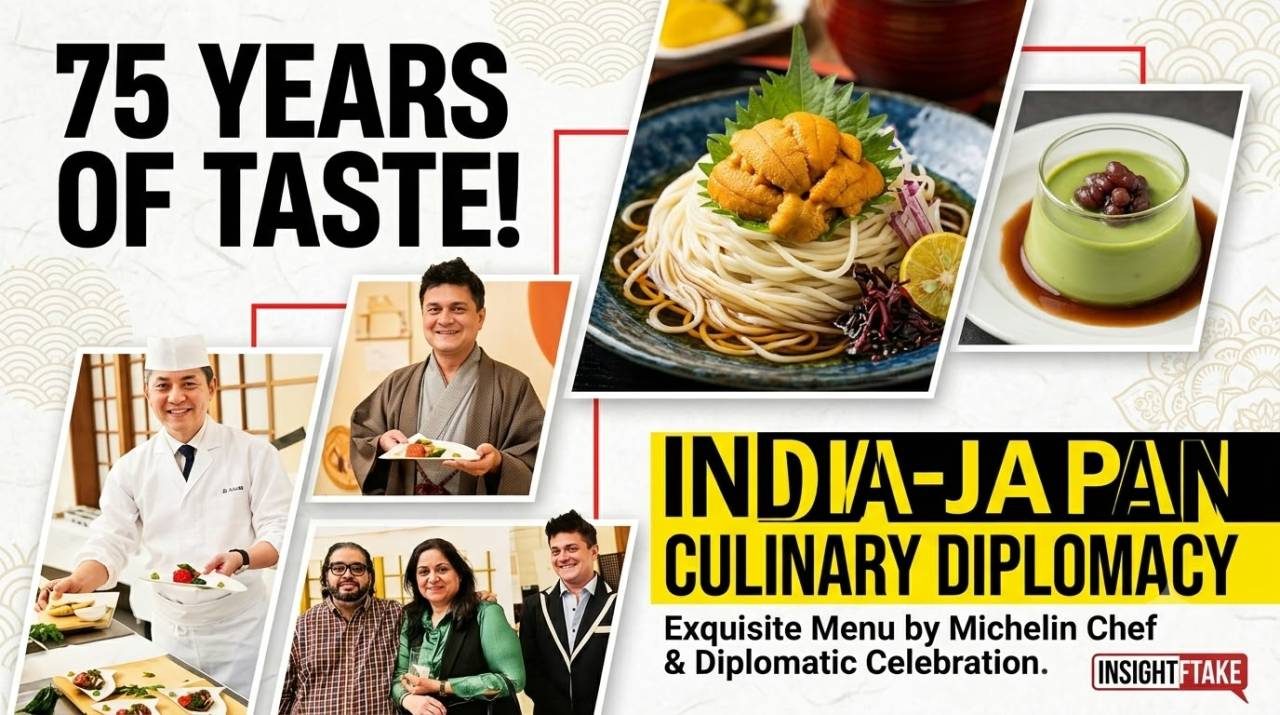
A Japanese culinary reception in Delhi marked 75 years of India-Japan ties through food, culture and a shared taste for deeper people-to-people connections.
Diplomacy is often associated with conference rooms, official meetings and carefully worded statements. But sometimes, cultural understanding begins somewhere much simpler around a dinner table.
The Embassy of Japan in New Delhi recently hosted an exclusive culinary reception to mark the 75th year of diplomatic relations between India and Japan. The evening brought together food, culture and conversation, offering guests an opportunity to experience Japanese culinary traditions while celebrating the long-standing relationship between the two countries.
The event highlighted how food can become a powerful form of cultural exchange, creating connections that extend beyond formal diplomatic engagements.
Diplomacy Through Taste and Tradition
The evening, described in the local press as “Capital tastes the flavours of Japan,” was designed as more than a conventional diplomatic reception.
Japan's Ambassador to India, H.E. ONO Keiichi, spoke about the growing interest in Japanese culture in India, particularly Japanese food. He noted that this increasing curiosity and appreciation could provide opportunities for deeper connections between the people of the two countries.
India and Japan have developed close relations over the decades, with cooperation spanning areas such as trade, infrastructure, technology, investment and strategic affairs. Alongside these formal ties, cultural and people-to-people exchanges have played an important role in bringing the two societies closer.
Food offers a particularly accessible way to build such connections. It introduces people to unfamiliar ingredients, traditions and ways of life while creating a shared experience that requires little formal explanation.
A Michelin-Starred Chef's Personal Tribute
One of the highlights of the reception was the participation of Japanese Michelin-starred chef Takahashi Takuji, who curated the special menu for the evening.
The chef also has a personal connection with India, having visited the country several times. Speaking about his return, Takahashi said that his third visit had deepened his appreciation for the country.
“Every visit brings something special,” he said, adding that this time he had been exploring local cuisine more closely.
That interaction between Japanese culinary traditions and Indian food culture added another dimension to the evening. Rather than presenting Japanese cuisine as something fixed or distant, the experience reflected how culinary traditions can evolve through exposure to new ingredients, tastes and cultures.
A Menu of Japanese Culinary Discoveries
The specially curated menu moved beyond the Japanese dishes most familiar to Indian diners. It offered guests an opportunity to explore the country's emphasis on seasonal ingredients, texture, presentation and carefully developed flavours.
Among the preparations served were:
- Braised Duck: A slow-cooked preparation highlighting rich flavours and tender texture.
- Chilled Noodles with Uni: Delicate noodles paired with sea urchin, bringing together contrasting textures and distinctive marine flavours.
- Abalone with Eel and Lotus Root: A layered preparation combining different textures with traditional Japanese ingredients.
- Matcha Pudding with Red Bean Paste: A refined dessert balancing the earthy bitterness of matcha with the sweetness of red bean.
The reception also featured a dedicated sake counter, allowing guests to explore Japan's traditional beverage and learn more about its production and cultural significance.
Together, the dishes offered a glimpse into the diversity of Japanese cuisine, where presentation, seasonality and the natural character of ingredients are central to the dining experience.
Food as a Bridge Between Cultures
The significance of the evening went beyond its menu.
India and Japan's relationship has developed across several generations, with both countries engaging in extensive economic, strategic and cultural cooperation. As that relationship continues to evolve, cultural exchanges provide an important way for ordinary people to discover each other's traditions.
A meal cannot replace diplomacy, policy or economic cooperation. But it can make international relationships more tangible. It allows people to experience another culture not through official documents or formal speeches, but through taste, hospitality and conversation.
That was perhaps the most enduring message of the Embassy's culinary reception.
Seventy-five years of diplomatic relations represent a significant chapter in India-Japan ties. Celebrating that journey through food offered a reminder that strong international relationships are built not only through governments and institutions, but also through curiosity, cultural exchange and shared human experiences.
For India and Japan, the table offered another place to celebrate a friendship that has continued to evolve over the decades.
Diplomacy is often associated with conference rooms, official meetings and carefully worded statements. But sometimes, cultural understanding begins somewhere much simpler around a dinner table.
The Embassy of Japan in New Delhi recently hosted an exclusive culinary reception to mark the 75th year of diplomatic relations between India and Japan. The evening brought together food, culture and conversation, offering guests an opportunity to experience Japanese culinary traditions while celebrating the long-standing relationship between the two countries.
The event highlighted how food can become a powerful form of cultural exchange, creating connections that extend beyond formal diplomatic engagements.
Diplomacy Through Taste and Tradition
The evening, described in the local press as “Capital tastes the flavours of Japan,” was designed as more than a conventional diplomatic reception.
Japan's Ambassador to India, H.E. ONO Keiichi, spoke about the growing interest in Japanese culture in India, particularly Japanese food. He noted that this increasing curiosity and appreciation could provide opportunities for deeper connections between the people of the two countries.
India and Japan have developed close relations over the decades, with cooperation spanning areas such as trade, infrastructure, technology, investment and strategic affairs. Alongside these formal ties, cultural and people-to-people exchanges have played an important role in bringing the two societies closer.
Food offers a particularly accessible way to build such connections. It introduces people to unfamiliar ingredients, traditions and ways of life while creating a shared experience that requires little formal explanation.
A Michelin-Starred Chef's Personal Tribute
One of the highlights of the reception was the participation of Japanese Michelin-starred chef Takahashi Takuji, who curated the special menu for the evening.
The chef also has a personal connection with India, having visited the country several times. Speaking about his return, Takahashi said that his third visit had deepened his appreciation for the country.
“Every visit brings something special,” he said, adding that this time he had been exploring local cuisine more closely.
That interaction between Japanese culinary traditions and Indian food culture added another dimension to the evening. Rather than presenting Japanese cuisine as something fixed or distant, the experience reflected how culinary traditions can evolve through exposure to new ingredients, tastes and cultures.
A Menu of Japanese Culinary Discoveries
The specially curated menu moved beyond the Japanese dishes most familiar to Indian diners. It offered guests an opportunity to explore the country's emphasis on seasonal ingredients, texture, presentation and carefully developed flavours.
Among the preparations served were:
- Braised Duck: A slow-cooked preparation highlighting rich flavours and tender texture.
- Chilled Noodles with Uni: Delicate noodles paired with sea urchin, bringing together contrasting textures and distinctive marine flavours.
- Abalone with Eel and Lotus Root: A layered preparation combining different textures with traditional Japanese ingredients.
- Matcha Pudding with Red Bean Paste: A refined dessert balancing the earthy bitterness of matcha with the sweetness of red bean.
The reception also featured a dedicated sake counter, allowing guests to explore Japan's traditional beverage and learn more about its production and cultural significance.
Together, the dishes offered a glimpse into the diversity of Japanese cuisine, where presentation, seasonality and the natural character of ingredients are central to the dining experience.
Food as a Bridge Between Cultures
The significance of the evening went beyond its menu.
India and Japan's relationship has developed across several generations, with both countries engaging in extensive economic, strategic and cultural cooperation. As that relationship continues to evolve, cultural exchanges provide an important way for ordinary people to discover each other's traditions.
A meal cannot replace diplomacy, policy or economic cooperation. But it can make international relationships more tangible. It allows people to experience another culture not through official documents or formal speeches, but through taste, hospitality and conversation.
That was perhaps the most enduring message of the Embassy's culinary reception.
Seventy-five years of diplomatic relations represent a significant chapter in India-Japan ties. Celebrating that journey through food offered a reminder that strong international relationships are built not only through governments and institutions, but also through curiosity, cultural exchange and shared human experiences.
For India and Japan, the table offered another place to celebrate a friendship that has continued to evolve over the decades.























Leave a Comment