
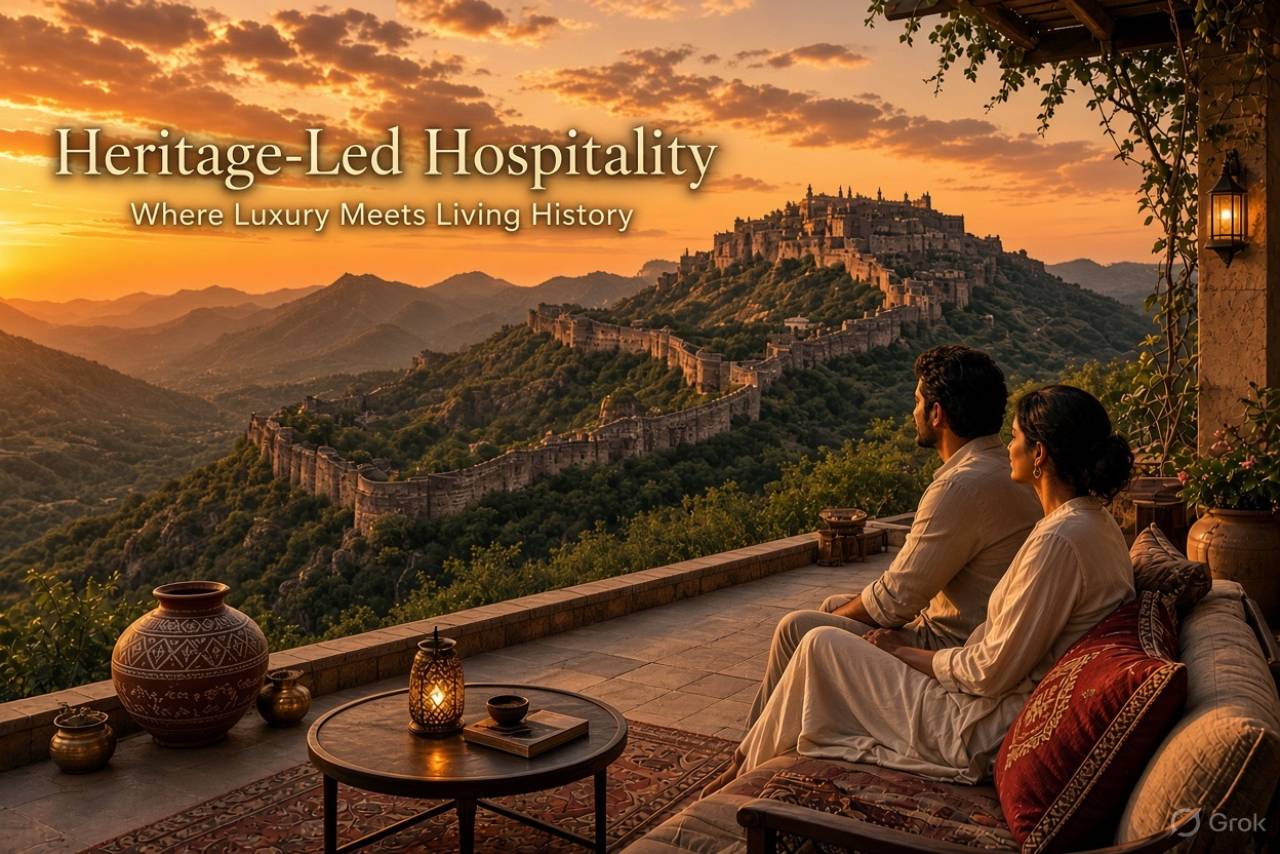
India’s heritage destinations are changing the idea of luxury travel, bringing forts, temples, crafts, cuisine and local traditions closer to the hotel stay.
Luxury travel in India is changing. For many travellers, a good hotel is no longer defined only by its rooms, restaurants or swimming pools. The experience also depends on what lies beyond the property.
Travellers are increasingly looking for places where they can experience local food, architecture, crafts, traditions and history. Hotels in heritage destinations are responding by connecting their guests with the culture and communities around them.
Radisson Hotel Group is among the hotel chains developing such experiences across several Indian destinations.
Kumbhalgarh Brings Mewar Culture Closer
In the hills of Rajasthan, Radisson Blu Resort, Kumbhalgarh is located near the UNESCO-listed Kumbhalgarh Fort. Known for its massive walls, temples and hilltop views, the fort is one of Rajasthan’s major heritage sites.
But the region has more to offer than the fort itself.
Guests can experience elements of Mewar’s living culture through Rajasthani puppetry, pottery demonstrations and regional food. At the resort’s Tribal Kitchen, local flavours form an important part of the dining experience.
These activities give visitors a chance to engage with the culture rather than simply photograph its monuments. The stay becomes a combination of modern hospitality and exposure to Rajasthan’s traditional crafts, food and performing arts.
Nathdwara Connects Faith and Art
A short distance away, Nathdwara offers a different cultural experience.
Radisson Hotel Nathdwara provides access to the town’s religious and artistic traditions. The Shrinathji Temple is central to Nathdwara’s identity, while the town is also known for Pichwai painting, a traditional art form closely associated with the temple and Krishna devotion.
Visitors can also explore nearby places such as Eklingji and other heritage sites.
For travellers, the location offers an opportunity to combine a comfortable hotel stay with visits to places shaped by centuries of faith, art and tradition.
Haldighati and the Stories of the Land
In western India, Radisson Resort Haldighati Saputara places visitors close to the landscape associated with Haldighati and the region’s history.
Haldighati is widely remembered for the 1576 battle involving Maharana Pratap and the Mughal forces led by Man Singh I. The surrounding region also has strong links with tribal communities and local traditions.
The resort uses elements of the local landscape and culture as part of the guest experience. For visitors, this adds historical context to what might otherwise be simply a stay in a scenic hill destination.
The idea is straightforward. The place itself becomes part of the journey.
Prayagraj and Living Heritage
The same approach can be seen in Prayagraj, a city with a long religious and cultural history.
Radisson Hotel Prayagraj gives visitors access to the Triveni Sangam, the confluence of the Ganga, Yamuna and the traditionally believed Saraswati. The city’s temples, historic sites and religious traditions add further depth to a visit.
For travellers, staying close to such places can make it easier to experience the city beyond its hotel rooms and tourist attractions. Religious practices, local food and everyday life remain part of the experience.
When Hotels Become Part of the Destination
The common thread across these properties is the attempt to connect hospitality with the character of the destination.
Regional food, craft demonstrations, performances and visits to historic sites can make a hotel stay more closely linked to its surroundings. Architecture and interiors may also draw from local styles, but the stronger connection comes when guests have opportunities to experience the culture beyond the hotel.
This reflects a broader change in travel. Many tourists still want comfort, good service and modern facilities. At the same time, they are looking for experiences that tell them something about where they have travelled.
A fort, temple or painting becomes more meaningful when visitors understand the history and people behind it.
A Different Idea of Luxury
Heritage-focused hospitality does not mean giving up modern comforts. Instead, it combines those comforts with a stronger connection to the destination.
For international hotel groups, this also creates a challenge. The experience has to feel local without turning culture into a staged attraction. The involvement of local artists, craftspeople, cooks and communities can help maintain that connection.
For destinations, hotels can bring visitors and economic activity. The long-term value, however, depends on whether tourism supports local culture rather than simply using it as decoration.
Kumbhalgarh, Nathdwara, Haldighati and Prayagraj show how India’s heritage destinations can become part of the hotel experience itself.
The idea is simple. Luxury does not have to mean staying away from the world. It can also mean having the comfort to experience a place more closely, understand its history and return home with memories that go beyond a hotel room.
Luxury travel in India is changing. For many travellers, a good hotel is no longer defined only by its rooms, restaurants or swimming pools. The experience also depends on what lies beyond the property.
Travellers are increasingly looking for places where they can experience local food, architecture, crafts, traditions and history. Hotels in heritage destinations are responding by connecting their guests with the culture and communities around them.
Radisson Hotel Group is among the hotel chains developing such experiences across several Indian destinations.
Kumbhalgarh Brings Mewar Culture Closer
In the hills of Rajasthan, Radisson Blu Resort, Kumbhalgarh is located near the UNESCO-listed Kumbhalgarh Fort. Known for its massive walls, temples and hilltop views, the fort is one of Rajasthan’s major heritage sites.
But the region has more to offer than the fort itself.
Guests can experience elements of Mewar’s living culture through Rajasthani puppetry, pottery demonstrations and regional food. At the resort’s Tribal Kitchen, local flavours form an important part of the dining experience.
These activities give visitors a chance to engage with the culture rather than simply photograph its monuments. The stay becomes a combination of modern hospitality and exposure to Rajasthan’s traditional crafts, food and performing arts.
Nathdwara Connects Faith and Art
A short distance away, Nathdwara offers a different cultural experience.
Radisson Hotel Nathdwara provides access to the town’s religious and artistic traditions. The Shrinathji Temple is central to Nathdwara’s identity, while the town is also known for Pichwai painting, a traditional art form closely associated with the temple and Krishna devotion.
Visitors can also explore nearby places such as Eklingji and other heritage sites.
For travellers, the location offers an opportunity to combine a comfortable hotel stay with visits to places shaped by centuries of faith, art and tradition.
Haldighati and the Stories of the Land
In western India, Radisson Resort Haldighati Saputara places visitors close to the landscape associated with Haldighati and the region’s history.
Haldighati is widely remembered for the 1576 battle involving Maharana Pratap and the Mughal forces led by Man Singh I. The surrounding region also has strong links with tribal communities and local traditions.
The resort uses elements of the local landscape and culture as part of the guest experience. For visitors, this adds historical context to what might otherwise be simply a stay in a scenic hill destination.
The idea is straightforward. The place itself becomes part of the journey.
Prayagraj and Living Heritage
The same approach can be seen in Prayagraj, a city with a long religious and cultural history.
Radisson Hotel Prayagraj gives visitors access to the Triveni Sangam, the confluence of the Ganga, Yamuna and the traditionally believed Saraswati. The city’s temples, historic sites and religious traditions add further depth to a visit.
For travellers, staying close to such places can make it easier to experience the city beyond its hotel rooms and tourist attractions. Religious practices, local food and everyday life remain part of the experience.
When Hotels Become Part of the Destination
The common thread across these properties is the attempt to connect hospitality with the character of the destination.
Regional food, craft demonstrations, performances and visits to historic sites can make a hotel stay more closely linked to its surroundings. Architecture and interiors may also draw from local styles, but the stronger connection comes when guests have opportunities to experience the culture beyond the hotel.
This reflects a broader change in travel. Many tourists still want comfort, good service and modern facilities. At the same time, they are looking for experiences that tell them something about where they have travelled.
A fort, temple or painting becomes more meaningful when visitors understand the history and people behind it.
A Different Idea of Luxury
Heritage-focused hospitality does not mean giving up modern comforts. Instead, it combines those comforts with a stronger connection to the destination.
For international hotel groups, this also creates a challenge. The experience has to feel local without turning culture into a staged attraction. The involvement of local artists, craftspeople, cooks and communities can help maintain that connection.
For destinations, hotels can bring visitors and economic activity. The long-term value, however, depends on whether tourism supports local culture rather than simply using it as decoration.
Kumbhalgarh, Nathdwara, Haldighati and Prayagraj show how India’s heritage destinations can become part of the hotel experience itself.
The idea is simple. Luxury does not have to mean staying away from the world. It can also mean having the comfort to experience a place more closely, understand its history and return home with memories that go beyond a hotel room.























Leave a Comment