
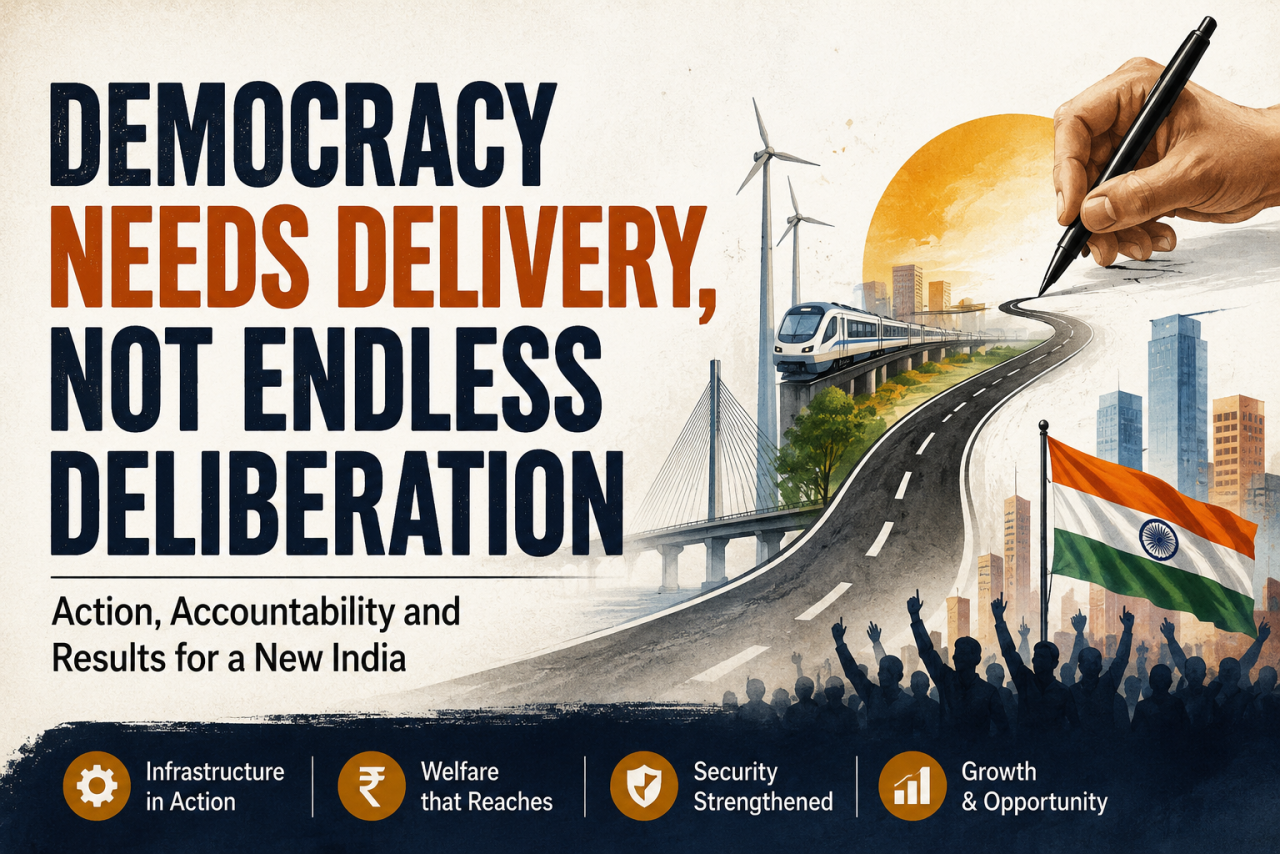
India's future will not be decided by who argues the loudest, but by who delivers the most. In an era of intense global competition, governance is increasingly measured not by promises or rhetoric, but by roads built, jobs created, services delivered, and
In every democracy, debate is celebrated as a sign of vitality. Citizens question governments, institutions face scrutiny, and competing visions contest for public support. India has never lacked this energy. From Parliament to television studios, from university campuses to social media platforms, opinions flow freely and often passionately.
Yet there is a growing tendency in public discourse to confuse constant criticism with democratic engagement. A nation can debate endlessly, but it cannot develop endlessly through debate alone. At some point, decisions must be made, projects must be executed, and governments must govern.
The defining challenge of modern India is not a shortage of voices. It is the challenge of transforming aspirations into outcomes. For decades, Indians were promised development but encountered delays, bureaucratic paralysis, and political hesitation. Policies remained trapped between committees, consultations, and competing interests. The result was often stagnation disguised as consensus.
The past decade has demonstrated that governance can be different. Whether in the expansion of highways, the spread of digital infrastructure, the delivery of welfare benefits, or the strengthening of strategic capabilities, the emphasis has increasingly shifted from announcements to implementation. Citizens may disagree on individual policies, but they can see tangible evidence of a state that is attempting to act rather than merely discuss.
This shift has unsettled some sections of the political and intellectual establishment. For generations, influence was exercised through institutions that often stood at a comfortable distance from electoral accountability. Today, however, democratic legitimacy derives more directly from public endorsement. Governments are increasingly judged not by the elegance of their rhetoric but by the effectiveness of their delivery.
Critics frequently warn against majoritarianism, centralisation, or excessive executive authority. Such concerns deserve consideration in any democracy. Yet an equally important question is often ignored: what is the cost of indecision? A developing nation cannot afford permanent policy paralysis. Infrastructure delayed is opportunity denied. Reform postponed is growth sacrificed. Security neglected is sovereignty weakened.
India's voters understand this reality better than many commentators. Their expectations are practical. They seek employment, reliable services, efficient administration, and national confidence. They evaluate governments through lived experience rather than ideological purity. This explains why performance increasingly shapes political outcomes across the country.
None of this means that dissent should be discouraged. A confident democracy welcomes criticism and alternative viewpoints. But criticism acquires meaning only when accompanied by responsibility. Opposition cannot consist solely of resistance; it must offer viable alternatives. Public debate cannot become a perpetual exercise in questioning every decision while accepting responsibility for none.
The future of India will be determined not merely by the quality of its conversations but by the quality of its execution. The twenty-first century is intensely competitive. Nations that combine democratic legitimacy with administrative effectiveness will prosper. Those trapped in cycles of endless argument will struggle to keep pace.
India's democratic strength lies not only in its ability to speak freely but also in its ability to act collectively. The task before the nation is therefore clear: preserve debate, encourage accountability, but never lose sight of the larger objective—delivering results for the people.
History rarely remembers those who argued the longest. It remembers those who built, transformed, and delivered.
In every democracy, debate is celebrated as a sign of vitality. Citizens question governments, institutions face scrutiny, and competing visions contest for public support. India has never lacked this energy. From Parliament to television studios, from university campuses to social media platforms, opinions flow freely and often passionately.
Yet there is a growing tendency in public discourse to confuse constant criticism with democratic engagement. A nation can debate endlessly, but it cannot develop endlessly through debate alone. At some point, decisions must be made, projects must be executed, and governments must govern.
The defining challenge of modern India is not a shortage of voices. It is the challenge of transforming aspirations into outcomes. For decades, Indians were promised development but encountered delays, bureaucratic paralysis, and political hesitation. Policies remained trapped between committees, consultations, and competing interests. The result was often stagnation disguised as consensus.
The past decade has demonstrated that governance can be different. Whether in the expansion of highways, the spread of digital infrastructure, the delivery of welfare benefits, or the strengthening of strategic capabilities, the emphasis has increasingly shifted from announcements to implementation. Citizens may disagree on individual policies, but they can see tangible evidence of a state that is attempting to act rather than merely discuss.
This shift has unsettled some sections of the political and intellectual establishment. For generations, influence was exercised through institutions that often stood at a comfortable distance from electoral accountability. Today, however, democratic legitimacy derives more directly from public endorsement. Governments are increasingly judged not by the elegance of their rhetoric but by the effectiveness of their delivery.
Critics frequently warn against majoritarianism, centralisation, or excessive executive authority. Such concerns deserve consideration in any democracy. Yet an equally important question is often ignored: what is the cost of indecision? A developing nation cannot afford permanent policy paralysis. Infrastructure delayed is opportunity denied. Reform postponed is growth sacrificed. Security neglected is sovereignty weakened.
India's voters understand this reality better than many commentators. Their expectations are practical. They seek employment, reliable services, efficient administration, and national confidence. They evaluate governments through lived experience rather than ideological purity. This explains why performance increasingly shapes political outcomes across the country.
None of this means that dissent should be discouraged. A confident democracy welcomes criticism and alternative viewpoints. But criticism acquires meaning only when accompanied by responsibility. Opposition cannot consist solely of resistance; it must offer viable alternatives. Public debate cannot become a perpetual exercise in questioning every decision while accepting responsibility for none.
The future of India will be determined not merely by the quality of its conversations but by the quality of its execution. The twenty-first century is intensely competitive. Nations that combine democratic legitimacy with administrative effectiveness will prosper. Those trapped in cycles of endless argument will struggle to keep pace.
India's democratic strength lies not only in its ability to speak freely but also in its ability to act collectively. The task before the nation is therefore clear: preserve debate, encourage accountability, but never lose sight of the larger objective—delivering results for the people.
History rarely remembers those who argued the longest. It remembers those who built, transformed, and delivered.




















Leave a Comment