
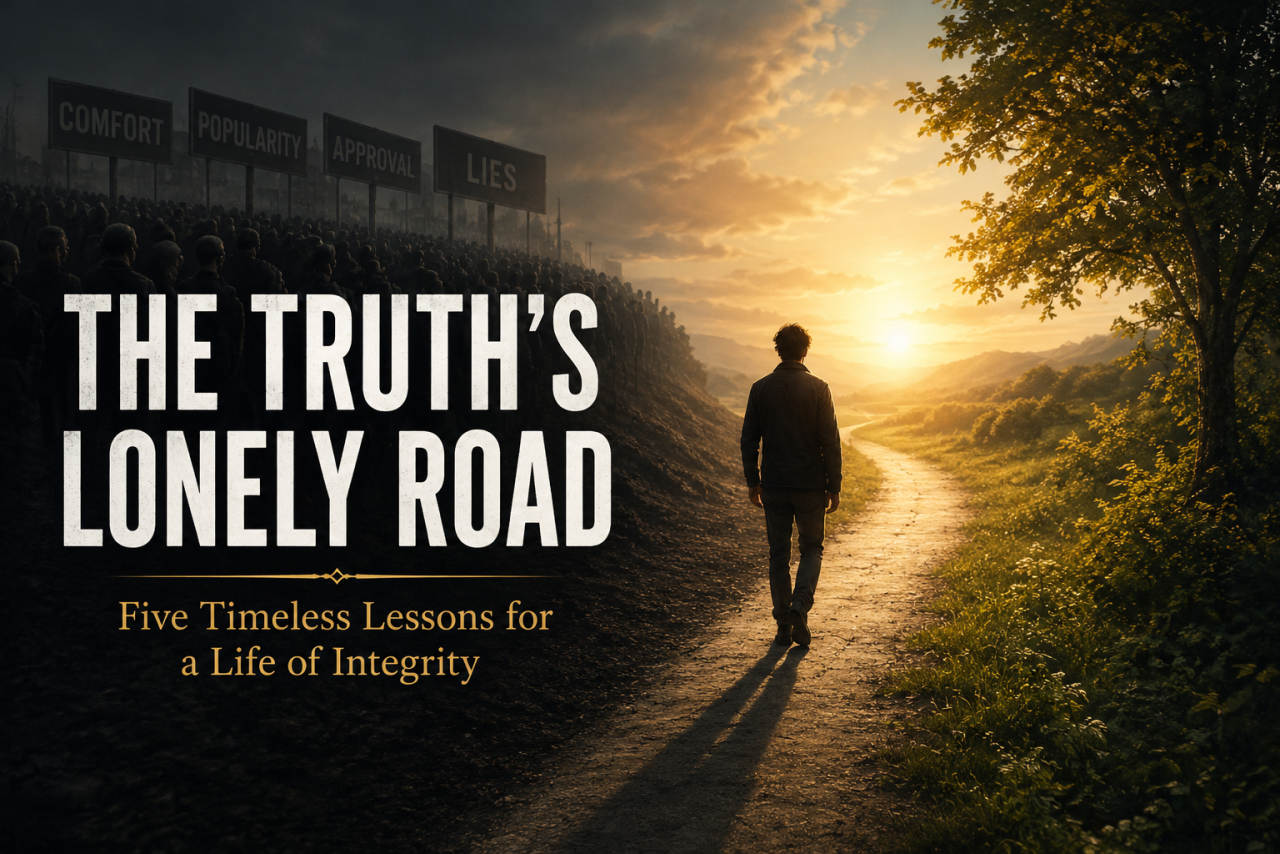
Truth rarely wins applause when it first arrives. More often, it walks alone through a crowd that finds comfort in convenient lies.
There is an old observation about human nature: the truth has many enemies, while a lie has many friends.
At first glance, it appears cynical. Yet a closer look at history, society, and even our personal lives reveals something unsettling. Truth rarely arrives dressed in comfort. It often comes carrying consequences. Lies, on the other hand, arrive with gifts. They flatter, reassure, entertain, and protect our illusions. That is why they gather companions so easily.
The struggle between truth and falsehood is not merely a political battle or a social phenomenon. It is a private contest that unfolds every day inside the human heart. Every generation encounters it in different forms, yet the moral challenge remains unchanged.
From this timeless conflict emerge five lessons worth carrying through life.
1. Truth Is Often Unpopular Before It Is Accepted
Human beings are creatures of habit. We become attached to familiar beliefs because they provide certainty. When a new truth challenges those beliefs, our first instinct is often resistance.
History is filled with individuals who faced ridicule simply for speaking what later became obvious. Reformers, scientists, writers, and whistleblowers frequently endured criticism long before receiving recognition. Society rarely welcomes uncomfortable truths with open arms.
This lesson extends beyond grand historical events. In families, workplaces, and friendships, the person who points out a difficult reality may become less popular than the person who maintains a pleasant illusion.
Popularity and correctness are not the same thing. The crowd may applaud what is convenient today and reject what is necessary. Wisdom lies in understanding the difference.
2. Lies Thrive Because They Offer Immediate Comfort
A lie succeeds not because it is stronger than the truth but because it often feels better.
People prefer hearing that success requires little effort, that problems will solve themselves, or that someone else is responsible for every difficulty. Such narratives provide temporary relief from responsibility and uncertainty.
Truth demands work. It asks us to examine our assumptions, admit mistakes, and confront realities we would rather avoid.
This explains why misinformation spreads rapidly while careful facts struggle to gain attention. The human mind is naturally attracted to stories that confirm existing beliefs.
The lesson is simple yet demanding: comfort should never be mistaken for accuracy. A pleasant falsehood remains false, no matter how attractive it appears.
3. Character Is Revealed by How We Respond to Unpleasant Facts
Anyone can accept truths that align with personal interests. Real character emerges when facts challenge our preferences.
Imagine discovering that a cherished opinion is wrong. The easy response is denial. The harder response is reflection. The first protects the ego; the second strengthens the mind.
Maturity is not measured by how strongly we hold beliefs but by how honestly we evaluate them.
The strongest individuals are not those who never err. They are those willing to revise their understanding when evidence demands it. Intellectual humility is one of the rarest virtues because it requires courage without applause.
A person who learns from truth grows wiser. A person who fights truth becomes trapped by pride.
4. Silence Can Be an Ally of Falsehood
Many lies survive not because everyone believes them but because too few people challenge them.
Fear of criticism often keeps honest voices quiet. Individuals worry about losing friendships, opportunities, or social approval. Consequently, false narratives continue unopposed.
Tolstoy often explored the moral responsibility of ordinary people. Evil, he suggested, does not flourish solely because of the actions of wrongdoers. It flourishes because decent people sometimes choose comfort over conviction.
Speaking truth does not require aggression. It requires integrity.
There are moments when silence becomes a form of participation. Not every battle must be fought, but some realities deserve a voice. Progress in society has often begun with a small number of people refusing to remain silent.
5. Truth Ultimately Requires No Defenders but Courageous Witnesses
A lie survives through constant maintenance. It needs repetition, protection, and reinforcement. Truth operates differently.
Facts may be delayed, distorted, or ignored, but they possess a stubborn quality. Reality eventually reveals itself. Time has a remarkable habit of exposing deception.
This does not mean truth automatically triumphs in every moment. Sometimes falsehood enjoys long periods of success. Yet history repeatedly demonstrates that reality cannot be permanently hidden.
The responsibility of individuals is therefore not to guarantee victory but to remain faithful witnesses. We cannot control outcomes, but we can control our honesty.
In the end, a truthful life offers something that deception never can: peace of conscience.
The Final Reflection
The world will always provide incentives to follow convenient narratives. Lies promise acceptance, applause, and immediate comfort. Truth often offers uncertainty, criticism, and solitude.
Yet every meaningful human achievement—justice, knowledge, trust, and progress—rests upon a commitment to reality.
The challenge before each of us is not simply to recognize the truth when it appears. It is to stand beside it when it becomes inconvenient.
For while a lie may gather many friends, truth possesses something greater than popularity: permanence.
And in a noisy age crowded with comforting illusions, that permanence remains humanity's most reliable guiding light.
There is an old observation about human nature: the truth has many enemies, while a lie has many friends.
At first glance, it appears cynical. Yet a closer look at history, society, and even our personal lives reveals something unsettling. Truth rarely arrives dressed in comfort. It often comes carrying consequences. Lies, on the other hand, arrive with gifts. They flatter, reassure, entertain, and protect our illusions. That is why they gather companions so easily.
The struggle between truth and falsehood is not merely a political battle or a social phenomenon. It is a private contest that unfolds every day inside the human heart. Every generation encounters it in different forms, yet the moral challenge remains unchanged.
From this timeless conflict emerge five lessons worth carrying through life.
1. Truth Is Often Unpopular Before It Is Accepted
Human beings are creatures of habit. We become attached to familiar beliefs because they provide certainty. When a new truth challenges those beliefs, our first instinct is often resistance.
History is filled with individuals who faced ridicule simply for speaking what later became obvious. Reformers, scientists, writers, and whistleblowers frequently endured criticism long before receiving recognition. Society rarely welcomes uncomfortable truths with open arms.
This lesson extends beyond grand historical events. In families, workplaces, and friendships, the person who points out a difficult reality may become less popular than the person who maintains a pleasant illusion.
Popularity and correctness are not the same thing. The crowd may applaud what is convenient today and reject what is necessary. Wisdom lies in understanding the difference.
2. Lies Thrive Because They Offer Immediate Comfort
A lie succeeds not because it is stronger than the truth but because it often feels better.
People prefer hearing that success requires little effort, that problems will solve themselves, or that someone else is responsible for every difficulty. Such narratives provide temporary relief from responsibility and uncertainty.
Truth demands work. It asks us to examine our assumptions, admit mistakes, and confront realities we would rather avoid.
This explains why misinformation spreads rapidly while careful facts struggle to gain attention. The human mind is naturally attracted to stories that confirm existing beliefs.
The lesson is simple yet demanding: comfort should never be mistaken for accuracy. A pleasant falsehood remains false, no matter how attractive it appears.
3. Character Is Revealed by How We Respond to Unpleasant Facts
Anyone can accept truths that align with personal interests. Real character emerges when facts challenge our preferences.
Imagine discovering that a cherished opinion is wrong. The easy response is denial. The harder response is reflection. The first protects the ego; the second strengthens the mind.
Maturity is not measured by how strongly we hold beliefs but by how honestly we evaluate them.
The strongest individuals are not those who never err. They are those willing to revise their understanding when evidence demands it. Intellectual humility is one of the rarest virtues because it requires courage without applause.
A person who learns from truth grows wiser. A person who fights truth becomes trapped by pride.
4. Silence Can Be an Ally of Falsehood
Many lies survive not because everyone believes them but because too few people challenge them.
Fear of criticism often keeps honest voices quiet. Individuals worry about losing friendships, opportunities, or social approval. Consequently, false narratives continue unopposed.
Tolstoy often explored the moral responsibility of ordinary people. Evil, he suggested, does not flourish solely because of the actions of wrongdoers. It flourishes because decent people sometimes choose comfort over conviction.
Speaking truth does not require aggression. It requires integrity.
There are moments when silence becomes a form of participation. Not every battle must be fought, but some realities deserve a voice. Progress in society has often begun with a small number of people refusing to remain silent.
5. Truth Ultimately Requires No Defenders but Courageous Witnesses
A lie survives through constant maintenance. It needs repetition, protection, and reinforcement. Truth operates differently.
Facts may be delayed, distorted, or ignored, but they possess a stubborn quality. Reality eventually reveals itself. Time has a remarkable habit of exposing deception.
This does not mean truth automatically triumphs in every moment. Sometimes falsehood enjoys long periods of success. Yet history repeatedly demonstrates that reality cannot be permanently hidden.
The responsibility of individuals is therefore not to guarantee victory but to remain faithful witnesses. We cannot control outcomes, but we can control our honesty.
In the end, a truthful life offers something that deception never can: peace of conscience.
The Final Reflection
The world will always provide incentives to follow convenient narratives. Lies promise acceptance, applause, and immediate comfort. Truth often offers uncertainty, criticism, and solitude.
Yet every meaningful human achievement—justice, knowledge, trust, and progress—rests upon a commitment to reality.
The challenge before each of us is not simply to recognize the truth when it appears. It is to stand beside it when it becomes inconvenient.
For while a lie may gather many friends, truth possesses something greater than popularity: permanence.
And in a noisy age crowded with comforting illusions, that permanence remains humanity's most reliable guiding light.






















Leave a Comment